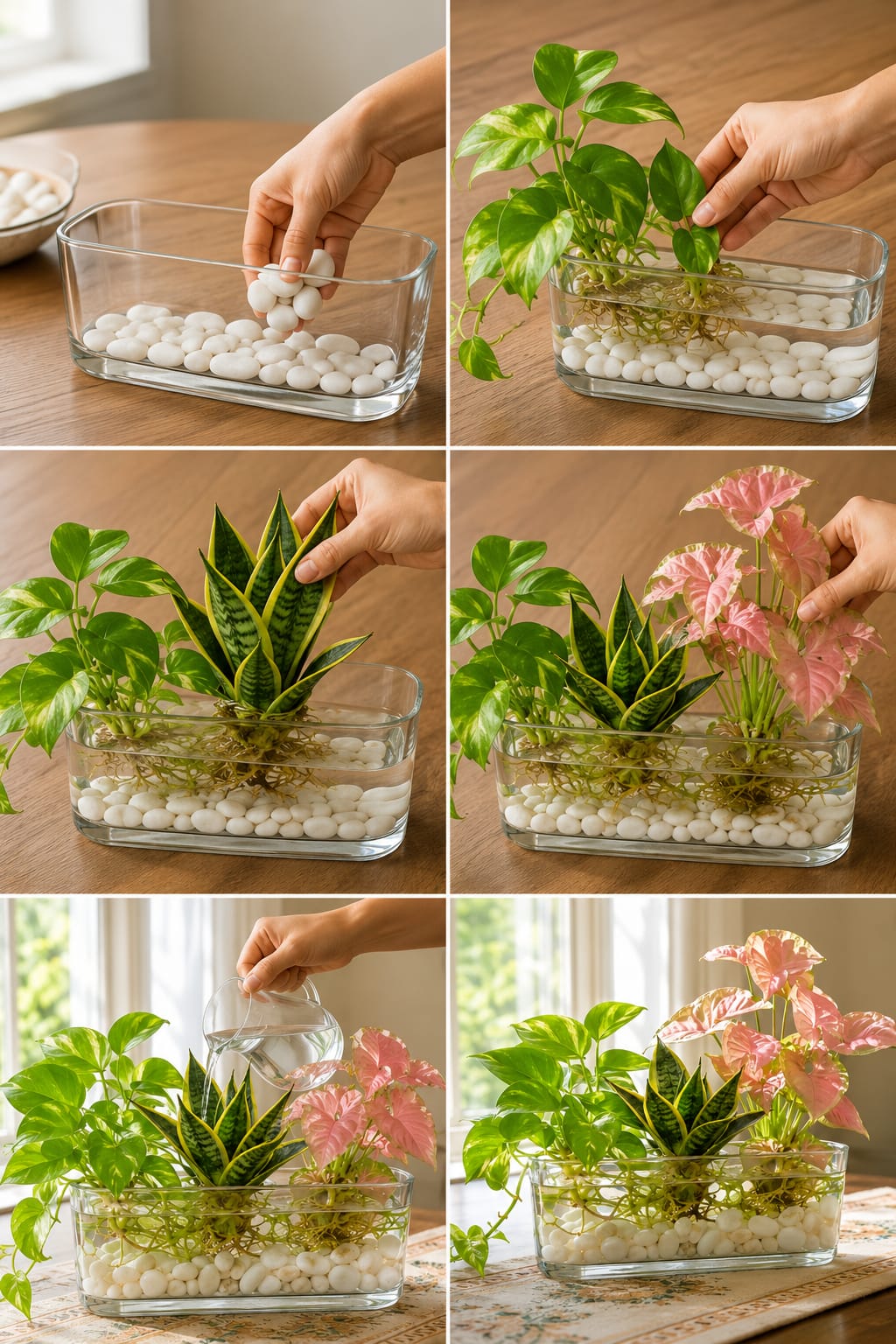
A mixed houseplant water display is one of the cleanest indoor plant decor ideas for people who want fresh greenery, visible roots, decorative white pebbles, and a bright modern tabletop arrangement without the heavy look of traditional soil pots. This style combines easy indoor plants with a clear glass vessel, smooth decorative stones, and clean water to create a polished living centerpiece for living rooms, bedrooms, home offices, apartments, windowsills, sunrooms, shelves, and premium indoor plant displays. When designed carefully, it can look elegant, fresh, and expensive while still feeling natural and simple.
This type of display works especially well when different plants are combined for contrast. Golden pothos adds trailing green leaves and soft movement. Snake plant adds upright structure and sharp architectural lines. Pink Syngonium adds soft color, arrow-shaped leaves, and a decorative blush tone that brightens the arrangement. Together, these plants create height, texture, color, and balance inside one clear container. The white pebbles give the display a clean spa-like base, while the visible roots make the arrangement feel alive and artistic.
However, a water display must be made carefully. Not every houseplant should be treated like a permanent aquatic plant. Pothos can adapt well to water. Syngonium can also root in water with regular care. Snake plant can survive in water only when the crown stays dry and the roots remain clean. If the water level is too high, if the crown is submerged, if the water becomes stagnant, or if the glass sits in harsh sun, the display can develop algae, bad smell, root rot, soft stems, and cloudy water. The decorative look should never come before plant health.
This guide explains how to create a mixed houseplant water display safely, how to use white pebbles without damaging roots, how to combine pothos, snake plant, and pink Syngonium, how much water to add, how to keep the glass clean, what mistakes to avoid, how to protect each plant’s crown, and how to maintain a bright decorative arrangement suitable for living room styling, bedroom decor, modern apartment interiors, office plant design, luxury home staging, commercial interior landscaping, and polished property presentation.
Quick Answer
A mixed houseplant water display can be created safely by using a clean clear glass container, rinsed white pebbles, room-temperature water, and healthy rooted plant divisions that can tolerate water culture. Pothos and Syngonium can grow well in water when nodes and roots are submerged, while leaves and stems remain mostly above the water line. Snake plant can be included only if its roots touch water while the crown and leaf bases remain above the water. The water should be changed regularly, the pebbles should be cleaned, and the display should sit in bright indirect light rather than harsh direct sun. This arrangement is decorative and beautiful, but it still needs maintenance to prevent algae, cloudy water, root rot, and pest problems.
What This Display Is
This display is a mixed indoor water garden made with several houseplants arranged in a shallow clear glass container. The bottom layer contains smooth white pebbles, and the plants are positioned so their roots rest among the stones and water. The visible root systems become part of the design, while the leaves rise above the container and create a lush tabletop arrangement.
The main plants used in this style are commonly pothos, snake plant, and pink Syngonium. Pothos brings trailing vines and glossy heart-shaped leaves. Snake plant brings upright sword-like foliage with green patterning and yellow margins. Pink Syngonium brings soft pink leaves and a more delicate tropical texture. These three plants create a strong visual combination because each one has a different shape, color, and growth habit.
The container is usually low and wide, which makes the display look like a miniature indoor water garden. It can be placed on a dining table, coffee table, windowsill, office desk, console table, or plant shelf. The clean white pebbles and clear water create a bright decorative base that fits modern, coastal, minimalist, spa-style, and luxury interior decor.
Why This Method Looks So Attractive
This method looks attractive because it removes visual clutter from the root area. Instead of dark soil, the display shows white stones, clear water, and living roots. The result feels clean and decorative, especially in bright rooms. The glass container reflects light, the pebbles brighten the base, and the plants add fresh color above the water line.
The mix of plant shapes creates a professional design effect. Pothos softens the edges with trailing growth. Snake plant gives the center a strong upright shape. Pink Syngonium adds a gentle pastel accent that makes the display feel more styled. This type of contrast is often used in premium indoor plant styling because it creates balance between structure, softness, and color.
The display also feels easy and fresh because the roots are visible. Many people enjoy watching roots grow in water. It makes plant care feel more interactive. However, visible roots also mean visible problems. Cloudy water, algae, and rotten roots can quickly reduce the premium look. The display must stay clean to remain beautiful.
What This Method Should Not Be Misunderstood As
This method should not be misunderstood as a no-maintenance plant setup. A water display may look simple, but it needs regular cleaning and water changes. The glass, pebbles, and roots are all visible, so any algae, residue, or decay will show quickly. Clear water is part of the design, not just part of the care routine.
It should not be misunderstood as a safe method for every plant. Some plants adapt to water better than others. Pothos is one of the easiest. Syngonium can work well when rooted properly. Snake plant needs more caution because its crown can rot if kept too wet. Each plant must be positioned correctly instead of being placed at the same depth.
It should also not be misunderstood as a reason to fill the container too high. More water is not better. Water should cover the roots, not the crowns or leaf bases. If stems sit too deeply in water, they can soften. If the snake plant crown is submerged, it can rot. Water level control is one of the most important safety steps.
Choosing the Right Glass Container
The glass container should be wide, stable, and easy to clean. A rectangular glass vessel works well because it provides enough space for several plants without forcing them too close together. The opening should be large enough to arrange roots, remove plants for cleaning, and refresh the pebble layer when needed. A narrow container may look elegant but can become difficult to maintain.
The container should be heavy enough to stay stable when the plants grow. Snake plant leaves can add height, and pothos vines can pull toward one side. A low, wide container helps prevent tipping. It should sit on a flat surface that can tolerate occasional water drips during maintenance.
Clear glass is best for this style because it shows the water and pebbles. However, clear glass also encourages algae if placed in strong sun. The container should be displayed in bright indirect light rather than hot direct sunlight. This keeps the water cleaner and protects the roots from overheating.
Preparing the White Pebbles
White pebbles should be cleaned before use. Decorative stones often contain dust or mineral residue that can cloud the water. They should be rinsed thoroughly until the rinse water runs clear. If the pebbles have been stored outdoors or used before, they should be cleaned more carefully to remove dirt, algae, or old organic material.
The stones should be smooth enough that they do not cut or crush roots. Rounded pebbles are safer than sharp gravel. Roots need support, but they should not be squeezed tightly between rough stones. The pebbles should hold the plants upright while still allowing water to move around the roots.
A thick pebble layer can look beautiful, but it should not trap decaying material. If old roots or leaves fall between the stones, they should be removed during cleaning. White pebbles look premium only when they remain clean. Dirty stones can make the display look neglected very quickly.
Choosing the Right Plants
The best plants for this type of water display are healthy rooted cuttings or divisions that can tolerate water around their roots. Pothos is one of the easiest plants for water culture because it roots quickly from nodes and can live in water for long periods with regular maintenance. It brings bright green leaves and trailing growth that softens the glass edge.
Pink Syngonium can also grow in water when it has roots and healthy stems. It adds a soft decorative color that pairs beautifully with white stones and green foliage. The plant should have enough green or pale green tissue to stay strong. Very pale or heavily pink leaves may need bright indirect light to maintain energy.
Snake plant can be included as a structural accent, but it needs special care. The roots can touch water, but the crown should stay above the water line. If the base of the leaves sits too deeply in water, rot can develop. A snake plant division with clean healthy roots is safer than a fresh unrooted piece.
How to Position Pothos in the Display
Pothos should be placed so its roots and lower nodes contact the water while the leaves remain above the surface. If a leaf is submerged, it may rot and cloud the water. The vine can lean gently over the side of the container or stand upright at first. As it grows, it can trail naturally over the edge.
The roots can be tucked lightly among the pebbles. They should not be buried too tightly. Pothos roots need oxygenated water and space to grow. If the roots become too tangled or crowded later, they can be trimmed lightly or rearranged during cleaning.
Pothos usually adapts well to water displays. It may produce new water roots and continue growing. If leaves yellow, check the water quality, light, and root condition. Yellowing can happen when water is dirty, light is too low, or old roots are decaying.
How to Position Snake Plant Safely
Snake plant should be positioned higher than the other plants. The roots can reach into the water, but the rhizome and crown should remain above the water line. This is essential. Snake plant is not a true aquatic plant, and the base of the leaves can rot if kept wet.
White pebbles can help support the snake plant upright. The roots may sit between stones, while the leaf bases remain dry. If the plant sinks or leans, more pebbles can be arranged around the root area, but the crown should never be buried under wet stones.
The snake plant should be checked often. If the lower leaves soften, yellow, or smell bad near the base, remove the plant and inspect it. It may need to be moved back into a draining pot with cactus and succulent mix. Snake plant can look beautiful in water displays, but it requires more caution than pothos.
How to Position Pink Syngonium
Pink Syngonium should be placed so the roots are in water and the crown remains just above the water line. The stems should not be submerged too deeply. The leaves should stand freely above the container where they can receive bright indirect light. This helps the pink foliage stay attractive.
The roots can be supported with pebbles, but the base should not be pressed too tightly. Syngonium stems are softer than snake plant leaves and can bruise or rot if squeezed. A gentle placement is best. The plant should feel stable without being trapped.
Pink Syngonium may grow new roots in water and continue producing leaves. If the leaves become pale, weak, or limp, the plant may need better light, fresher water, or eventual transfer into an airy potting mix. Water displays can be decorative, but long-term health depends on regular care.
Best Water Level
The water level should be high enough to cover the active roots but low enough to keep crowns and leaf bases dry. This means the water may not be at the same ideal level for every plant. Pothos can sit slightly lower. Syngonium should sit with roots wet but stems protected. Snake plant should sit highest, with only roots reaching the water.
The container should not be filled to the top. A shallow water level is often safer than a deep one. The roots need water, but the upper plant tissue needs air. If water evaporates, it can be topped up with room-temperature water. During full cleaning, the level should be reset carefully.
After placing the plants, look through the side of the glass. Check where the water touches each plant. If the water line reaches the snake plant crown or covers soft stem tissue, remove some water immediately. This small check can prevent serious rot.
Water Quality and Water Changes
Water quality is one of the most important parts of this display. Room-temperature water is best. Very cold water can stress roots, and warm stagnant water can encourage bacteria. Filtered water may help if tap water leaves heavy mineral marks on the glass or stones.
The water should be changed regularly. If it becomes cloudy, smells bad, or develops green algae, clean the display immediately. The plants should be lifted gently, the pebbles rinsed, and the container washed. Fresh water should be added before replacing the plants.
Even if the water looks clear, it should not be ignored for too long. Roots release organic material, dust enters the container, and algae can begin slowly. A clean water routine keeps the display healthy and beautiful. Clear water is part of the premium look.
Light for This Water Display
Bright indirect light is best. Pothos, Syngonium, and snake plant can all tolerate indoor conditions, but they look better and grow stronger with good indirect light. A bright windowsill with filtered light, a table near a sunny window, or a room with strong natural brightness can work well.
Harsh direct sun should be avoided. Direct sun through glass can heat the water and encourage algae. It can also scorch sensitive Syngonium leaves and stress the roots. Morning light may be acceptable if gentle, but hot afternoon sun is usually too strong for a clear water container.
If the room is dark, growth will slow. Pothos may survive, snake plant may tolerate it, but Syngonium may lose strength and color. A grow light can help maintain the display in darker rooms. Light supports both plant health and clean water balance.
Feeding Plants in Water
Plants grown in water may eventually need mild nutrients because plain water contains very limited food. However, feeding should be done carefully. Strong fertilizer in a glass container can burn roots, leave residue, and encourage algae. A very diluted hydroponic or houseplant fertilizer is safer than a strong dose.
Fertilizer should be used only after the plants are stable and actively growing. New or stressed roots should not be fed heavily. If the water becomes cloudy soon after feeding, the dose may be too strong. The display should be cleaned and future feeding reduced.
Homemade liquids such as milk water, sugar water, juice, coffee, or thick compost tea should not be added to a decorative water display. They can spoil, smell bad, attract insects, and make the glass dirty. A clean display needs clean water and measured nutrients only when needed.
Can This Display Last Long Term?
This display can last for a while when maintained carefully, especially with pothos and Syngonium. These plants can adapt well to water culture if water is clean and light is appropriate. Their roots can continue growing among the pebbles and create a beautiful visible root network.
Snake plant is the part that needs the most attention. It may remain stable if the crown stays dry, but long-term water culture is not always ideal for every snake plant division. If it begins to soften, yellow, or rot, it should be removed and planted into fast-draining soil.
For long-term low-risk growth, some plants may eventually do better in soil or a semi-hydroponic setup designed for that purpose. The glass water display is beautiful and can be maintained, but it is not completely maintenance-free. Success depends on cleaning, water level, light, and plant selection.
When to Move Plants Back Into Soil
Plants should be moved into soil if the roots become mushy, the water clouds repeatedly, the stems soften, leaves yellow often, or the display becomes difficult to keep clean. Pothos and Syngonium can transition into a light potting mix, while snake plant should go into a fast-draining cactus and succulent mix.
When moving from water to soil, roots should be handled gently because water roots can be delicate. The new pot should have drainage holes. The soil should be lightly moist at first for pothos and Syngonium, but not soggy. Snake plant should be placed into a dry-friendly mix and watered carefully.
The transition should be gradual and patient. Water-grown roots may need time to adapt to soil. Bright indirect light and stable conditions help the plants recover. Fertilizer should wait until the plants are settled.
Possible Damage If the Display Is Done Incorrectly
Damage can happen if the water level is too high. Submerged crowns and stems can rot. Snake plant is especially vulnerable at the base. Syngonium stems can also soften if kept too deep. Pothos is more forgiving, but submerged leaves will still decay.
Damage can also happen if the water is not changed. Stagnant water can develop bacteria, algae, bad smell, and slime. Roots may turn brown or mushy. The display can go from clean and decorative to cloudy and unhealthy very quickly.
Another risk is overcrowding. Too many plants in one container can reduce airflow and make cleaning difficult. Roots can tangle tightly among stones. A full look is attractive, but the arrangement should still allow water movement and easy maintenance.
Warning Signs to Watch For
Warning signs include cloudy water, green algae, bad smell, slimy roots, brown mushy roots, yellowing leaves, soft snake plant base, limp Syngonium stems, submerged leaves, or white pebbles turning dirty. These signs mean the display needs attention.
If the roots are slimy, clean the container immediately. Rinse the roots gently and remove any rotten sections with clean scissors. Wash the pebbles and refill with fresh room-temperature water. Check the water level before replacing the plants.
If the snake plant base is soft, remove it from the display. It may need to dry and be replanted in soil. Do not leave a rotting plant in the water with the others. Rot can foul the water and affect the entire arrangement.
Continue to Page 2
Continue to page 2 for more details about this article and the key points many readers miss on the first page.