Common Mistakes
One common mistake is placing all plants at the same depth. Different plants have different tolerance levels. Pothos can sit lower, Syngonium needs stem protection, and snake plant must keep its crown dry. Depth control is essential.
Another mistake is putting the display in direct sun because the glass looks beautiful in bright light. Direct sun can heat the water and produce algae. Bright indirect light is safer and more stable. The display should glow without overheating.
Leaving old water too long is also common. A water display still needs care. If the container is not cleaned, the pebbles can collect residue and the roots can decline. Cleanliness is the main difference between a premium display and a neglected one.
What to Do If the Water Turns Cloudy
If the water turns cloudy, the display should be cleaned immediately. Remove the plants gently and place them temporarily in clean water. Empty the container, rinse the pebbles thoroughly, and wash the glass until no residue remains. Check the roots for rot before rebuilding the display.
Cloudiness may come from dirty pebbles, decaying roots, submerged leaves, fertilizer overdose, algae, or old water. The cause should be corrected. If leaves are touching the water, raise the plant. If roots are mushy, trim them. If fertilizer caused cloudiness, reduce feeding.
After cleaning, refill with fresh room-temperature water and set the level lower than before if rot was a concern. Place the display in bright indirect light. If cloudiness returns quickly, one plant may be decaying or the setup may be too crowded.
Cleaning the Glass and Pebbles
The glass should be cleaned regularly because water lines, fingerprints, algae, and mineral marks can reduce the elegant look. A soft cloth or bottle brush can help clean the inside. Any cleaning product must be rinsed away completely before the plants return.
The pebbles should be rinsed whenever they look dirty. White pebbles show residue easily, so they need more attention than darker stones. This is part of their beauty and part of their maintenance. Clean pebbles make the arrangement look fresh and high-end.
Roots should be handled gently during cleaning. Do not scrub healthy roots harshly. Remove only dead, mushy, or slimy sections. The goal is to refresh the display while keeping the root systems intact.
Indoor Decor Value
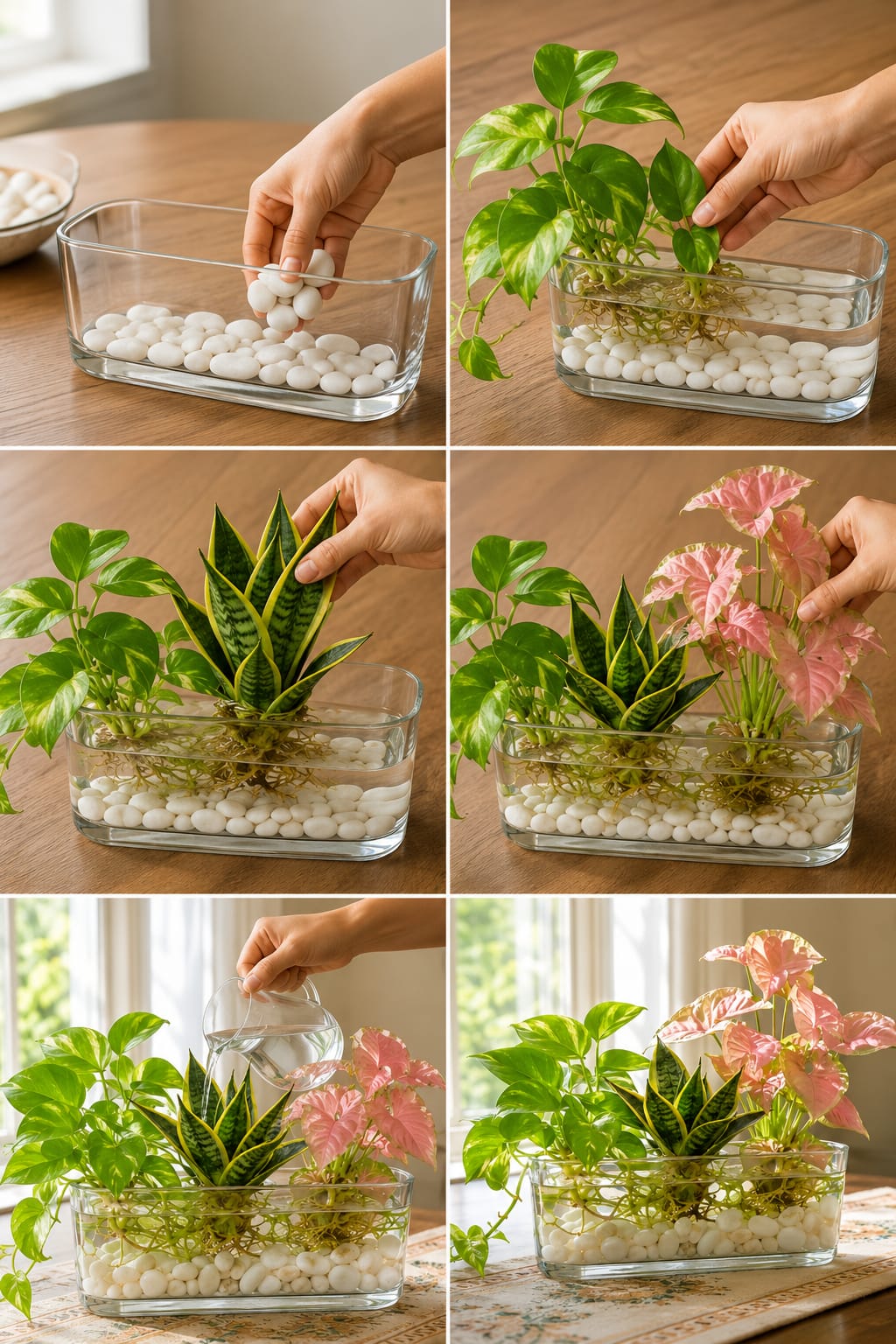
This mixed water display has strong indoor decor value because it combines clear glass, white pebbles, visible roots, and multiple plant colors. It feels fresh, modern, and decorative. The green pothos, upright snake plant, and pink Syngonium create a complete arrangement that can function like a living centerpiece.
The display works well on dining tables, coffee tables, console tables, windowsills, office desks, plant shelves, and sunroom surfaces. It pairs beautifully with wood furniture, white curtains, neutral walls, glass decor, stone accents, woven trays, and soft modern interiors. The white pebble base gives it a clean spa-inspired look.
The decorative value depends on clarity. Cloudy water, algae, dirty stones, or rotting roots will reduce the effect. A clear water display is meant to look clean from every angle. Maintenance is part of the style.
Room-by-Room Styling
In the living room, this display can sit on a coffee table, side table, console, or bright window area. The mixed plants create enough visual interest to stand alone. The container should be placed where it will not be knocked over and where water changes are easy.
In the bedroom, the display can create a calm botanical accent. It should remain odor-free and clean. Avoid adding homemade liquids or strong fertilizer because smell, algae, or insects would be unpleasant in a sleeping space. Plain clean water is usually best.
In a home office, the arrangement can make a desk or shelf feel fresh and styled. The glass and white stones give a professional modern look. The container should be kept away from electronics during water changes and placed in bright indirect light.
In a sunroom, the display can look beautiful, but direct sun should be filtered. A sunroom can heat glass containers quickly. Place the arrangement where it receives brightness without hot water or algae growth. A sheer curtain can help soften the light.
Office and Commercial Styling
A mixed houseplant water display can work in commercial interior styling when it is maintained carefully. It can look attractive in reception areas, boutique displays, wellness spaces, salon counters, office shelves, hotel-style interiors, and staged homes. The clean glass and white pebbles create a polished impression.
For commercial spaces, maintenance should be assigned clearly. Someone must change the water, clean the glass, rinse the pebbles, and remove any declining plant. If maintenance is inconsistent, a soil-planted arrangement may be more practical. A water display looks premium only when it is clean.
A professional display should have clear water, healthy roots, firm leaves, and no odor. The plants should be arranged neatly, and the container should match the interior. The care routine should be invisible, while the design looks fresh and intentional.
Product and Tool Guide
Helpful materials for this display include a wide clear glass container, smooth white pebbles, healthy rooted pothos cuttings, a small snake plant division, rooted pink Syngonium, room-temperature water, clean scissors, a soft cloth, a bottle brush, and optional very diluted hydroponic or houseplant fertilizer. A bright indirect light location is also essential.
A small pitcher makes water changes easier. A fine mesh strainer can help rinse pebbles. Clean scissors are useful for trimming damaged roots. A soft cloth keeps the glass clear. These simple tools help maintain a clean premium display.
The arrangement does not need complicated products. It needs clean water, clean stones, healthy roots, correct water level, and bright indirect light. These basics are more important than decorative tricks or homemade additives.
Care Timeline After Creating the Display
During the first 24 hours, check that the water level is correct for every plant. The snake plant crown should be above water. Syngonium stems should not be buried too deeply. Pothos leaves should not touch the water. The glass should be placed in bright indirect light.
During the first week, watch for cloudiness, algae, soft stems, yellow leaves, or smell. If the water becomes cloudy, clean the container early. Do not wait until the roots decline. Early cleaning prevents bigger problems.
After two to four weeks, healthy plants should remain firm and may begin producing new roots. After one to two months, pothos and Syngonium may show steady water growth. The snake plant should still be monitored carefully. Long-term success depends on regular water changes and crown protection.
Professional Styling Note
In high-end indoor plant styling, mixed water displays are valued because they create a clean, transparent, sculptural look. They combine greenery, visible roots, decorative stones, and glass into one polished arrangement. This style works especially well in modern apartments, spa-inspired rooms, bright offices, boutique interiors, and luxury home staging.
However, the premium effect depends completely on cleanliness and correct plant placement. White pebbles should stay bright, water should stay clear, roots should look healthy, and crowns should remain dry. If the display becomes cloudy or crowded, it loses its refined appearance.
A beautiful mixed houseplant water display depends on healthy plant choices, clean stones, bright indirect light, careful water level, and regular maintenance. Simple controlled care creates a stronger result than overfilling the container or treating every plant like a true aquatic plant.
Final Thoughts
A mixed houseplant water display with white pebbles, clear glass, pothos, snake plant, and pink Syngonium can become a beautiful indoor centerpiece when it is created carefully. The white stones brighten the base, the visible roots add natural detail, the pothos brings trailing greenery, the snake plant adds structure, and the pink Syngonium adds soft color. Together, they create a fresh decorative arrangement for modern indoor spaces.
The safest method is to keep the water clean, use room-temperature water, place the display in bright indirect light, and protect the crowns of the plants. Pothos and Syngonium can adapt well to water, but snake plant must be positioned so only the roots touch water and the crown stays dry. Water should be changed regularly, and the glass and pebbles should be cleaned before algae or odor develops.
With clean care and the right presentation, a mixed houseplant water display can remain a beautiful accent for living rooms, bedrooms, home offices, windowsills, sunrooms, modern apartments, commercial interior landscaping, luxury home staging, decorative glass vessels, and polished property presentation. Clear water, healthy roots, clean white pebbles, and balanced plant placement will always create a stronger display than stagnant water, submerged crowns, or neglected decorative containers.