How to Combine Aloe and Eggshell Water
If you want to combine both, keep the final solution weak.
Gentle Orchid Recovery Tonic
- 1 cup strained aloe water
- 1 cup strained eggshell water
- 2 cups plain water
Mix these together and use the same day. This creates a mild diluted tonic. Do not store it for many days. Do not allow it to ferment. Do not add sugar, milk, vinegar, oil, or fertilizer.
How to Apply the Tonic to Orchids
Step 1: Inspect the Orchid
Before using the tonic, look at the plant. Check leaves, flower spikes, roots, and medium. Remove dead flowers and fallen petals. If the pot is clear, look for root color and moisture.
Step 2: Check Moisture
Only use the tonic when the orchid is due for watering. If the bark is still wet, wait.
Step 3: Apply to the Root Zone
Pour a small amount through the orchid bark. Let it touch the roots and medium, but do not soak the crown.
Step 4: Let It Drain
The pot must drain completely. Empty any saucer or outer pot.
Step 5: Do Not Repeat Too Soon
Use this tonic no more than once every 4 to 6 weeks. Use plain water between applications.
Can You Spray Aloe Water on Orchid Leaves?
You can lightly mist leaves with very diluted aloe water, but it is usually better to focus on root care. If you spray leaves, do it in the morning and wipe away excess moisture. Avoid the crown, flowers, and buds.
Do not spray thick aloe gel. Do not leave wet spots sitting in leaf joints. Orchids can rot when moisture remains trapped in the crown.
Can You Use This on Blooming Orchids?
Yes, but carefully. Blooming orchids are sensitive to changes. If an orchid is blooming beautifully, there is no need to disturb it with homemade tonics. Use plain water and normal care.
If a blooming orchid looks weak, apply the tonic only to the bark and roots, not the flowers. Avoid wetting open blooms. Wet orchid flowers can develop spots or fade faster.
What to Do With Yellow Orchid Leaves
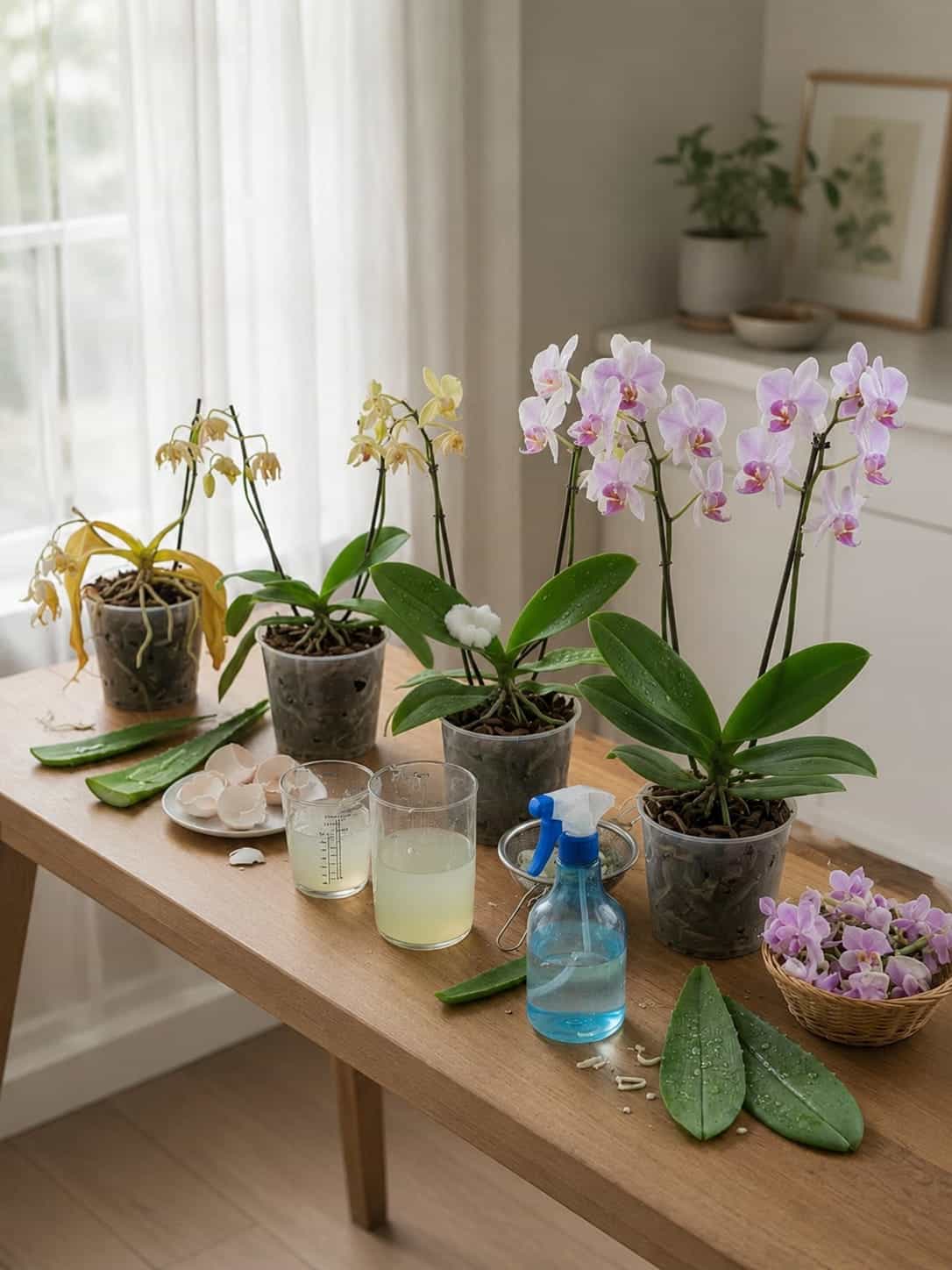
Yellow leaves are visible in the image. Yellowing can be natural, but it can also mean stress.
A yellow leaf will usually not turn green again. If it is fully yellow and soft, you can remove it gently once it loosens. Do not rip a leaf that is still firmly attached. Let the plant withdraw energy from it if it is naturally aging.
If many leaves turn yellow at once, check roots immediately. The problem may be overwatering, old bark, or crown stress.
What to Do With Spent Orchid Flowers
Some orchids in the image have fallen flowers in a basket. That is normal after blooming. Orchids do not bloom forever. Once flowers fade, remove fallen blooms from the table and pot area to keep things clean.
If the flower spike remains green, you may leave it or trim above a node for possible branching on some orchids. If the spike turns brown and dry, cut it near the base with clean scissors.
How to Inspect Orchid Roots
Root inspection is the most important step in orchid recovery.
Healthy roots are:
- Firm
- Green when wet
- Silvery when dry
- Plump
- Not smelly
Unhealthy roots are:
- Mushy
- Black
- Brown and collapsing
- Hollow
- Slimy
- Sour-smelling
If the orchid has many unhealthy roots, remove it from the pot and repot into fresh orchid mix.
How to Repot a Weak Orchid
Step 1: Remove the Plant
Gently remove the orchid from its pot. If roots cling to the sides, squeeze the pot or soak briefly in plain water to loosen them.
Step 2: Remove Old Medium
Shake away old bark or moss. Discard compacted, sour, or decomposed material.
Step 3: Trim Dead Roots
Use sterilized scissors to remove mushy or hollow roots. Keep firm roots even if they are pale.
Step 4: Choose Fresh Orchid Mix
Use chunky bark, perlite, and optional charcoal. Do not use dense houseplant soil.
Step 5: Repot Gently
Place the orchid in the pot and fill around the roots with fresh medium. Do not pack too tightly.
Step 6: Water Carefully
Water lightly after repotting, or wait a day if many roots were trimmed. Let the pot drain completely.
Best Potting Mix for Orchids
Orchids need an airy medium. A good mix for common indoor orchids is:
- 4 parts orchid bark
- 1 part perlite
- 1 part horticultural charcoal
- Optional small amount of sphagnum moss for dry homes
If you tend to overwater, use less moss. If your home is very dry, a little moss can help. The key is air and drainage.
How Often to Water Orchids During Recovery
Watering depends on the pot, medium, temperature, and roots. Clear pots help because you can see root color.
A simple method:
- Check the roots.
- If roots are green and the pot has condensation, wait.
- If roots are silvery and bark is nearly dry, water.
- Pour water through the pot.
- Let it drain completely.
- Do not leave water in the saucer.
Most orchids in bark prefer drying slightly between waterings. Do not water daily.
Best Light for Orchid Recovery
The orchids in the image are near a bright window with soft curtains. This is ideal for many indoor orchids. They need bright indirect light, not harsh direct sun.
Good light helps orchids produce energy for new roots, leaves, and future blooms.
Best locations include:
- Bright east-facing window
- Filtered south-facing window
- Bright room with sheer curtains
- Grow light for dark rooms
If leaves are very dark green and growth is slow, the plant may need more light. If leaves develop pale burned patches, the sun may be too strong.
How to Use the Spray Bottle Safely
The image includes a blue spray bottle. Spray bottles are useful, but they can also cause trouble if used too much.
Use a spray bottle for:
- Lightly misting aerial roots
- Cleaning leaves with plain water
- Applying very diluted aloe water sparingly
- Increasing humidity around, not inside, the crown
Do not use a spray bottle to soak flowers, buds, or the crown. Do not mist orchids late at night. Moisture should dry before evening.
Can Aloe and Eggshell Water Replace Fertilizer?
No. This tonic is not a complete orchid fertilizer. Orchids still benefit from a balanced orchid fertilizer during active growth. Aloe and eggshell water can be occasional support, but they do not provide all essential nutrients in the correct amounts.
Once the orchid is growing new roots and leaves, use a weak orchid fertilizer according to label directions. Do not fertilize a severely weak orchid heavily.
How Often Should You Use Aloe and Eggshell Water?
Use it occasionally. More is not better.
A safe schedule:
- Once after repotting or cleanup, if the plant is stable
- Then once every 4 to 6 weeks at most
- Use plain water between applications
- Stop if the medium smells sour or pests appear
If your orchid is healthy and blooming, you may not need this tonic at all.
Common Mistakes With This Orchid Trick
Mistake 1: Using Thick Aloe Gel
Thick aloe can coat bark and roots. Always dilute and strain it.
Mistake 2: Leaving Eggshells in the Pot
Eggshells break down slowly indoors. Use strained eggshell water instead.
Mistake 3: Applying to Wet Bark
Never add tonic to a pot that is already wet. Wait until the orchid is ready for watering.
Mistake 4: Spraying the Crown
Water trapped in the crown can cause rot. Keep the center dry.
Mistake 5: Using It Too Often
Frequent homemade tonics can create buildup and stress. Use rarely.
Mistake 6: Ignoring Rotten Roots
If roots are rotten, repotting matters more than tonic.
Quick Recipe Card
Gentle Aloe and Eggshell Water for Orchids
Ingredients
- 1 cup strained aloe water
- 1 cup strained eggshell water
- 2 cups plain water
Steps
- Prepare aloe water by blending a tiny amount of clear aloe gel with water.
- Strain well.
- Prepare eggshell water by soaking clean dried crushed eggshells overnight.
- Strain well.
- Mix 1 cup aloe water, 1 cup eggshell water, and 2 cups plain water.
- Apply lightly to orchid bark when the plant is due for watering.
- Keep away from flowers and crown.
- Let the pot drain fully.
- Use no more than once every 4 to 6 weeks.
Short Caption for This Trick
Smart homeowners are using a gentle aloe and eggshell water tonic to support weak orchids, but the safe method is light and careful. Dilute aloe gel heavily, strain it, prepare clean strained eggshell water, then mix with extra plain water. Apply only to the orchid bark when the plant is ready for watering, never into the crown or flowers. This tonic can support recovery, but real orchid health comes from clean roots, fresh bark, bright indirect light, proper drainage, and patient care.
Frequently Asked Questions
Is aloe vera water good for orchids?
Very diluted aloe water can be used occasionally as a gentle support, but it should be strained and watery, not thick or sticky.
Can I put aloe gel directly on orchid roots?
It is better not to use thick gel directly. Dilute it well with water and strain before applying.
Are eggshells good for orchids?
Eggshells contain calcium, but they break down slowly. For orchids, strained eggshell water is cleaner than placing shell pieces in the pot.
Can this tonic save a dying orchid?
Not by itself. A dying orchid needs root inspection, removal of rotten roots, fresh orchid medium, proper watering, and good light.
How often should I use aloe and eggshell water?
No more than once every 4 to 6 weeks. Use plain water between applications.
Can I spray this tonic on orchid flowers?
No. Avoid spraying flowers. Wet blooms can spot, fade, or rot faster.
Can yellow orchid leaves turn green again?
Usually no. Yellow leaves rarely recover. Focus on helping the plant grow new healthy leaves and roots.
Should I use this on healthy blooming orchids?
Healthy blooming orchids do not need extra homemade tonic. Use regular orchid care and avoid disturbing them.
Can I mix this with orchid fertilizer?
No. Use homemade tonics and fertilizer separately to avoid overloading the roots.
What is the best first step for a weak orchid?
Inspect the roots. If roots are rotten or the medium is old, repotting into fresh airy orchid bark is more important than any tonic.
Final Thoughts
The aloe and eggshell orchid trick looks gentle, natural, and promising, especially when you see weak orchids beside healthy blooming ones. It gives homeowners a simple way to feel involved in the recovery process. Aloe suggests soothing support, while eggshells suggest mineral strength. Together, they create a mild homemade tonic that can be used carefully on stressed orchids.
But the smartest approach is not to rely on the tonic alone. Orchids recover from the roots upward. If the roots are healthy, the plant can absorb water, support leaves, and eventually bloom again. If the roots are rotten, no pale liquid in a cup will solve the problem until the dead roots and old medium are handled.
Use this trick as a support, not a shortcut. Prepare the aloe water thin and strained. Prepare the eggshell water clean and strained. Dilute everything well. Apply only when the orchid needs watering. Keep the crown dry. Avoid flowers. Let the pot drain fully. Use it rarely.
Most importantly, give the orchid what it truly needs: bright indirect light, fresh airy bark, good drainage, moderate humidity, and patient watering. With those basics in place, a weak orchid has a much better chance of producing firm roots, stronger leaves, and future flower spikes.
A tired orchid may not recover overnight, but it can surprise you. With gentle care, clean roots, and the right environment, the same plant that once looked yellow and weak can slowly return to a fresh, elegant, blooming display. That is the real secret behind this smart homeowner orchid trick.