How to Use Garlic Water During Orchid Recovery
If your orchid is weak, follow a full recovery process. Garlic water comes after inspection, not before.
Step 1: Remove the Orchid From Its Pot
If the orchid is declining, carefully remove it from its pot. Hold the base gently and loosen the bark. If roots cling to the pot, do not pull hard. Squeeze the pot or soak briefly in plain water to loosen the roots.
Step 2: Remove Old Bark
Take away old bark, moss, or broken-down medium. If the medium is dark, soft, sour, or compacted, discard it.
Step 3: Inspect Every Root
Healthy roots are firm. They may be green, white, or silver. Dead roots are mushy, hollow, brown, black, or papery.
Step 4: Trim Dead Roots
Use clean scissors. Cut away only dead or rotten roots. Do not remove firm roots just because they look dry or pale.
Step 5: Let Cut Areas Dry Briefly
After trimming, let the orchid rest for a short time in a clean airy place. This helps fresh cuts dry slightly before repotting.
Step 6: Repot Into Fresh Orchid Mix
Use a chunky orchid mix. Do not use regular garden soil. A good mix includes bark, perlite, and charcoal.
Step 7: Water Carefully
After repotting, water lightly or wait a day depending on how much root trimming was done. Let the pot drain completely.
Step 8: Use Garlic Water Later If Needed
Once the plant is stable, you can use mild garlic water as an occasional support. Do not overwhelm freshly trimmed roots immediately with strong homemade tonics.
The Best Orchid Mix for Weak Plants
A weak orchid needs air. Dense soil is one of the worst things for orchid recovery. Choose a chunky mix that lets roots breathe.
Simple Orchid Recovery Mix
- 4 parts medium orchid bark
- 1 part perlite
- 1 part horticultural charcoal
- A small amount of sphagnum moss only if your home is very dry
If you tend to overwater, use less moss. If your balcony or indoor space is humid, bark and perlite may be enough. The goal is to keep the roots moist but never suffocated.
Why Clear Pots Help Orchid Recovery
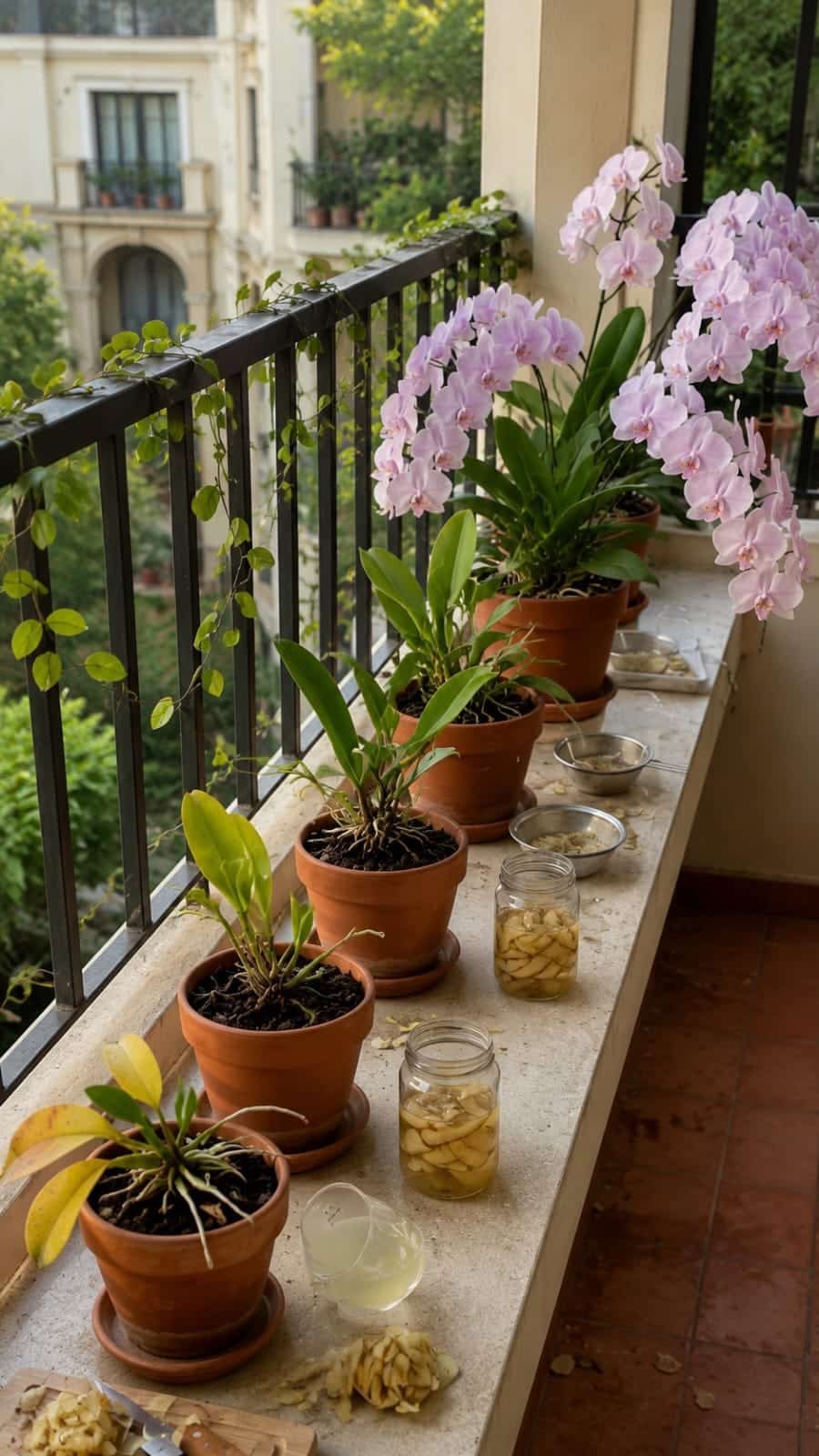
Many orchids in the image are in terracotta pots, but clear pots and clear inner liners are also common for orchids. Clear pots help because you can see the roots and moisture level. This is especially useful when recovering a weak orchid.
Clear pots let you see:
- Green roots after watering
- Silvery roots when dry
- Condensation inside the pot
- Rotten roots
- New growing root tips
- Whether bark is breaking down
If you like the look of terracotta, you can still use a clear plastic orchid pot inside a decorative terracotta outer pot. Remove the inner pot for watering and let it drain before placing it back.
Why Terracotta Pots Can Be Helpful
The image shows orchids in terracotta pots. Terracotta can be useful because it breathes and allows moisture to evaporate more evenly. This can help reduce soggy conditions if the pot has proper drainage.
However, terracotta also dries faster. On a warm balcony, orchids in terracotta may need more frequent checking. Do not assume the plant is dry just because the surface looks dry. Check the bark and roots.
Best Light for Recovering Orchids
Weak orchids need bright indirect light. They cannot recover well in a dark corner. Light gives the plant energy to grow new roots and leaves. But harsh direct sun can burn leaves, especially if the plant is stressed.
Good light options include:
- Bright balcony shade
- East-facing window light
- Filtered south or west light
- A bright windowsill with no harsh afternoon sun
- A grow light if natural light is weak
The orchids in the image appear to be on a balcony with bright filtered light. This can be excellent if the plants are protected from intense midday sun and drying wind.
How to Water Weak Orchids Correctly
Watering is more important than garlic water. A weak orchid will not recover if watering is wrong.
For orchids in bark:
- Check the roots and bark before watering.
- Water when the bark is nearly dry.
- Use room-temperature water.
- Pour water through the pot slowly.
- Let it drain completely.
- Never let water sit in the saucer.
- Keep water out of the crown.
If the orchid has very few roots, water more carefully. A plant with few roots cannot absorb much water, so constant soaking can worsen rot.
How Garlic Water Fits Into Watering
Garlic water should replace one normal watering only occasionally. It should not be added on top of regular watering when the pot is already wet.
Use garlic water only when:
- The bark is ready for watering
- The mixture is fresh and diluted
- The orchid has some healthy roots
- The pot can drain completely
- You are not fertilizing on the same day
After using garlic water, return to plain water for the next several waterings.
Should You Use Garlic Water With Fertilizer?
No. Do not mix garlic water with fertilizer. Use them separately. Orchids are sensitive to buildup, and combining treatments can make the root zone too strong.
If you fertilize orchids, use a proper orchid fertilizer at a weak dose during active growth. Wait at least one or two weeks between fertilizer and garlic water.
Can Garlic Water Replace Orchid Fertilizer?
No. Garlic water is not a balanced fertilizer. It does not provide the complete nutrients orchids need. It may support cleanliness or mild pest discouragement, but it does not replace nitrogen, phosphorus, potassium, and trace nutrients.
For healthy growth, use a weak orchid fertilizer during the growing season. For weak orchids, wait until roots begin recovering before feeding heavily.
How to Encourage New Roots After Garlic Water
New roots are the best sign that an orchid is recovering. Garlic water may support the routine, but new roots grow because the plant has the right environment.
To encourage roots:
- Use fresh airy orchid bark
- Keep the plant warm
- Provide bright indirect light
- Water only when the medium is nearly dry
- Keep humidity moderate
- Do not move the plant constantly
- Do not overfeed
- Keep the crown dry
New root tips are delicate. They are often bright green or pale green. Avoid touching, scraping, or coating them with strong mixtures.
Can Garlic Water Help Orchids Bloom Again?
Garlic water does not directly make orchids bloom. A weak orchid should focus on roots and leaves before flowers. Blooming takes energy. If the plant is struggling, forcing bloom is not the goal.
Once the orchid is healthy, blooming depends on:
- Mature plant size
- Healthy roots
- Firm leaves
- Bright indirect light
- Light feeding during growth
- A slight nighttime temperature drop for many orchids
- Patience after the previous bloom cycle
The blooming orchids in the image likely have strong roots and good light. The weaker orchids nearby need recovery first.
How to Know Your Orchid Is Recovering
Orchid recovery is slow. Do not expect dramatic changes in one week. Look for small signs.
Good signs include:
- Leaves becoming firmer
- New root tips appearing
- No more yellowing
- No sour smell from the pot
- Roots staying firm after watering
- New leaf growth from the center
- The plant staying stable in the pot
Flowers may come much later. Roots are the first victory.
What If the Leaves Are Yellow?
Yellow leaves can mean many things. One old lower leaf turning yellow is often normal. Several yellow leaves may indicate stress.
Possible causes include:
- Overwatering
- Root rot
- Old bark
- Too much direct sun
- Cold damage
- Natural aging
- Nutrient stress
- Recent repotting shock
Garlic water will not turn a yellow leaf green again. Once a leaf has yellowed, it usually will not recover. Focus on protecting the remaining healthy leaves and encouraging new roots.
What If the Roots Are Dry and Silvery?
Silvery roots are not automatically bad. Many orchid roots turn silver when dry and green when wet. If they are firm, they are alive. If they are hollow, papery, or brittle, they may be dead.
Do not cut roots just because they are silver. Feel them gently. Firm roots should stay.
What If the Roots Are Brown?
Brown roots need closer inspection. Some older roots may be stained by bark but still firm. Rotten roots are mushy, slimy, hollow, or collapsing. Trim only the dead ones.
If many roots are rotten, garlic water is not enough. Repot the orchid into fresh bark and water carefully.
Can You Leave Garlic Slices Around Orchids?
No. Do not leave garlic slices in the orchid pot. They can decay, smell bad, and attract pests. The image shows jars of sliced garlic, which is fine for making an infusion, but the solid pieces should be strained out before use.
For orchids, use only the liquid, and only after it is diluted.
Can You Use Garlic Skins?
Garlic skins or onion skins can be used to make mild plant infusions, but they should not be left on top of orchid bark for long. They can trap moisture and become messy.
If using skins, soak them in water, strain well, and discard the solids. Keep the orchid pot clean and airy.
Can Garlic Water Attract Pests?
Properly strained garlic water is less likely to attract pests than garlic pieces. However, if the liquid is strong, old, fermented, or full of particles, it may create odor and attract gnats. If the orchid bark stays too wet, fungus gnats may appear regardless of garlic.
To avoid pests:
- Strain the liquid completely
- Use it fresh
- Do not leave garlic pieces in the pot
- Let bark dry properly between watering
- Replace old decaying medium
Can You Use Store-Bought Garlic Powder?
No. Garlic powder is not recommended for orchids. It may contain additives, anti-caking agents, or concentrated particles that can create residue in the bark. Fresh garlic, soaked and strained, is safer.
Can You Use Garlic Oil?
No. Do not use garlic oil on orchids. Oils can coat roots and leaves, block airflow, attract dust, and cause damage. Orchids need breathable roots and clean leaf surfaces.
Can You Ferment Garlic Water?
Fermented kitchen tonics are popular online, but they are risky for indoor orchids. Fermented garlic water can become too strong, smelly, acidic, or biologically active. It may create problems in orchid bark.
For orchids, fresh mild garlic water is safer than fermented garlic water.
How to Keep Orchids Decorative During Recovery
Weak orchids can still look attractive if cared for neatly. The image shows a balcony orchid station, which feels organized and intentional. You can create the same feeling indoors or outdoors.
To keep recovering orchids decorative:
- Remove dead flower spikes carefully
- Trim dead roots during repotting
- Use matching terracotta pots or clear inner pots
- Wipe leaves gently with a damp cloth
- Keep jars and tools clean
- Remove fallen leaves and bark pieces
- Group healthy blooming orchids behind weaker recovering ones
- Use trays to catch mess during care
A recovery area can still look beautiful if it is clean and organized.
Common Mistakes With Garlic Water for Orchids
Mistake 1: Making the Mixture Too Strong
A strong garlic smell does not mean better results. Strong garlic water can irritate delicate roots. Use one small clove and dilute well.
Mistake 2: Leaving Garlic Pieces in the Bark
Garlic pieces can rot. Always strain them out.
Mistake 3: Using It Too Often
Garlic water should not become the main watering routine. Use it rarely.
Mistake 4: Ignoring Rotten Roots
If roots are rotten, the plant needs trimming and fresh bark. Garlic water alone will not fix rot.
Mistake 5: Spraying the Crown
Water in the crown can cause crown rot. Keep the center of the orchid dry.
Mistake 6: Mixing Many Remedies
Do not combine garlic water with fertilizer, peroxide, vinegar, soap, milk, cinnamon, or other homemade treatments. Keep care simple.
Quick Garlic Water Recipe Card
Gentle Garlic Water for Weak Orchids
Ingredients
- 1 small fresh garlic clove
- 2 cups room-temperature water
- 2 extra cups plain water for dilution
Method
- Peel and lightly crush the garlic clove.
- Place it in a clean jar.
- Add 2 cups water.
- Soak for 2 to 4 hours.
- Strain very well.
- Dilute with 2 more cups water.
- Apply lightly to the orchid bark when the plant is due for watering.
- Keep away from the crown, buds, and flowers.
- Let the pot drain completely.
- Use no more than once every 4 to 6 weeks.
Short Caption for This Orchid Trick
Smart homeowners are using mild garlic water to support weak orchids, but the safe method is gentle. Crush one small garlic clove, soak it in 2 cups of water for 2 to 4 hours, strain completely, then dilute with 2 more cups of water. Use it lightly on the bark or root zone only when the orchid is due for watering. Do not leave garlic pieces in the pot, do not spray the crown, and do not use it often. Real orchid recovery comes from fresh airy bark, clean roots, bright indirect light, careful watering, and patience.
Frequently Asked Questions
Is garlic water good for orchids?
Garlic water can be used occasionally as a mild support rinse, but it is not essential. It should be weak, strained, diluted, and used sparingly.
Can garlic water save a dying orchid?
Not by itself. A dying orchid usually needs root inspection, removal of rotten roots, fresh orchid bark, better light, and careful watering. Garlic water is only optional support.
How often should I use garlic water on orchids?
No more than once every 4 to 6 weeks. Many orchids do not need it at all.
Can I spray garlic water on orchid leaves?
You can mist very lightly if needed, but avoid the crown, buds, and flowers. For weak orchids, applying lightly to the bark is usually safer.
Can I leave garlic slices in the orchid pot?
No. Garlic slices can rot, smell bad, and attract pests. Always strain the liquid and discard the solids.
Can garlic water make orchids bloom?
No. Garlic water is not a bloom booster. Healthy roots, good light, balanced feeding, and stable conditions encourage future blooms.
Can I mix garlic water with orchid fertilizer?
No. Use them separately. Do not combine garlic water with fertilizer or other treatments.
Can I use garlic powder instead of fresh garlic?
No. Garlic powder may contain additives and can leave residue. Fresh garlic, soaked and strained, is safer.
What is the best first step for a weak orchid?
Inspect the roots. If the roots are rotten or the bark is old, repotting into fresh airy orchid mix is more important than any homemade tonic.
Why are my orchid leaves yellow?
Yellow leaves can be caused by natural aging, overwatering, root rot, sunburn, cold damage, or old medium. Garlic water will not turn yellow leaves green again.
Final Thoughts
Garlic water is a simple, natural orchid-care trick that many homeowners love because it feels practical and gentle. It uses an everyday kitchen ingredient and turns it into a mild support rinse for orchids that look weak, tired, or slow to recover. In a beautiful balcony setup like the one in the image, it fits perfectly into a thoughtful plant-care routine: jars of prepared infusion, clean tools, fresh bark, and orchids at different stages of health.
But the smartest part of this trick is not the garlic itself. It is the care and attention that comes with it. When you prepare garlic water properly, you also slow down and inspect the plant. You look at the roots. You notice whether the bark is old. You check the pot drainage. You pay attention to light and watering. That careful attention is what truly helps orchids recover.
Use garlic water lightly. Make it fresh. Strain it completely. Dilute it well. Apply it only to the bark or root zone. Keep it away from the crown and flowers. Do not use it often. Do not leave garlic pieces in the pot. Do not expect it to fix severe rot or force instant blooms.
If your orchid is weak, begin with the basics: clean roots, fresh airy bark, bright indirect light, careful watering, and stable conditions. Once those foundations are in place, a mild garlic water rinse can be used as an occasional support. Over time, the orchid may begin to firm up, send new roots, grow fresh leaves, and eventually bloom again.
Orchid recovery is not about rushing. It is about patience. A weak orchid needs time to rebuild itself from the roots upward. When you give it the right environment and use natural tricks gently, the plant has a better chance to return to the elegant, blooming display that makes orchids so beloved in the first place.