Room-by-Room Styling
In the living room, a blooming snake plant can stand beside a sofa, console table, media unit, or window. Its upright leaves add height, and the flowers create a subtle decorative detail. A sturdy planter can make the display feel intentional and refined.
In the bedroom, snake plant creates a calm and organized look. If it blooms, the flower stalks can add a gentle surprise without overwhelming the room. The pot should remain clean and odor-free. Watering should be careful because bedrooms often have lower light.
In a home office, snake plant looks professional and low-maintenance. A blooming plant can improve the workspace background and make the room feel more alive. Leaves should be wiped clean so the plant looks polished during video calls or daily work.
On a balcony or covered patio, snake plant can create a strong vertical accent. The plant should be protected from standing rainwater and intense sun. A blooming snake plant outdoors can look especially striking when placed near railings, seating areas, or garden corners.
Office and Commercial Styling
Snake plant is widely used in commercial interior landscaping because it is structured, dependable, and visually clean. A blooming snake plant can be even more impressive because the flowers make the display unusual. It can work well in reception areas, office corners, meeting rooms, hotel-style interiors, wellness spaces, and property staging.
For professional spaces, maintenance should stay simple and clean. Old flowers should be removed after fading. Soil should not be soggy, and water should not collect in saucers. Fertilizer pellets or soil amendments should not be visibly piled around the crown. A premium plant display should look tidy from every angle.
Commercial styling depends on reliability. Snake plant is valuable because it does not need constant attention, but it still needs correct watering and occasional cleaning. A flowering display can look luxurious when the plant remains firm, upright, and well maintained.
Product and Tool Guide
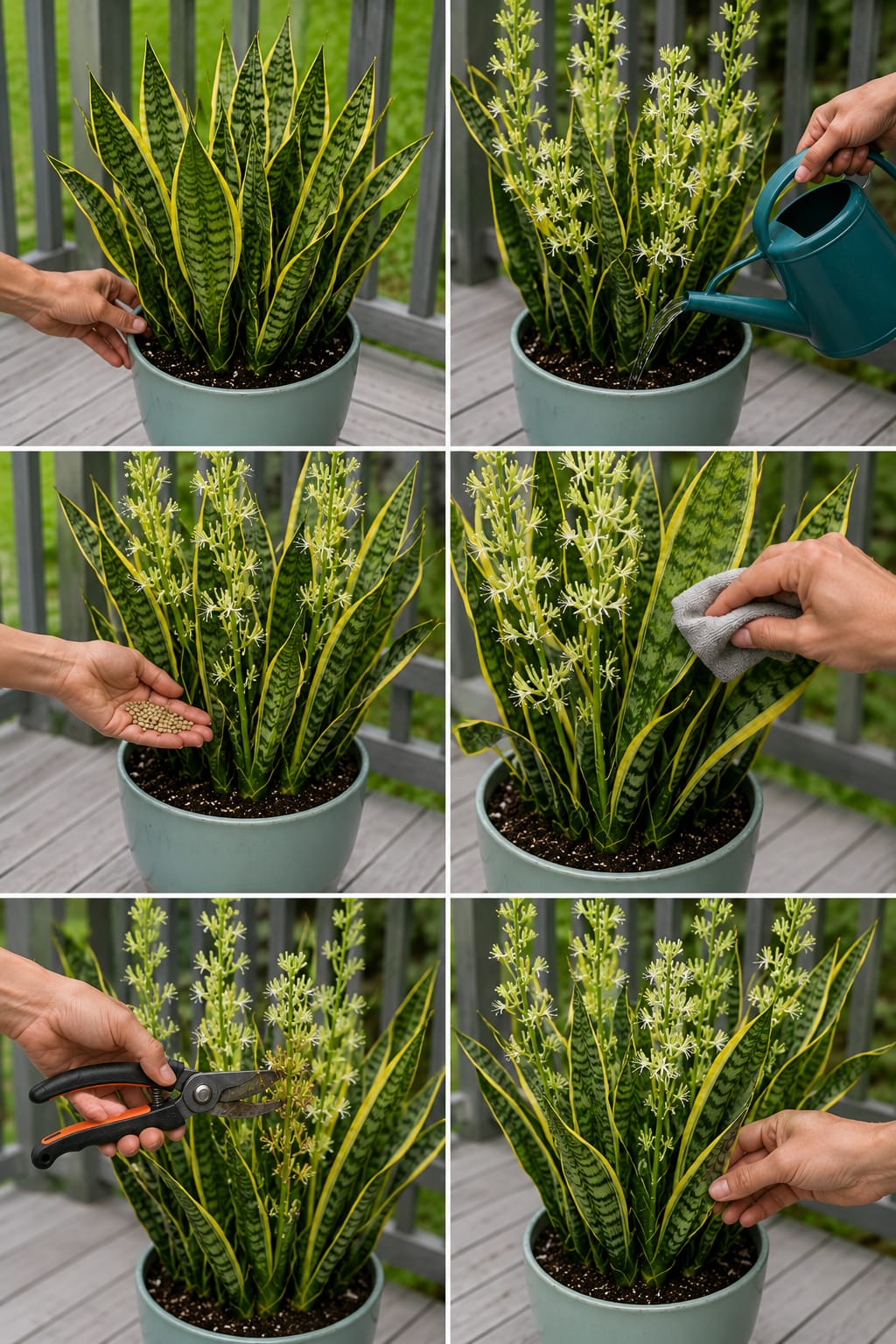
Helpful materials for blooming snake plant care include a pot with drainage holes, cactus and succulent potting mix, perlite, pumice, a moisture meter, a narrow-spout watering can, clean pruning scissors, a soft cloth for leaf cleaning, a diluted cactus and succulent fertilizer, and a stable decorative planter. If fertilizer pellets are used, they should be suitable for houseplants or succulents and applied lightly.
A grow light can help if the plant is indoors in a darker room. A sturdy plant stand can improve presentation. A saucer can protect furniture, but it should not hold standing water after watering. A soft brush can help remove fallen flower debris from the soil surface.
These tools support better plant care and a cleaner display. Snake plant does not need complicated products. The most important materials are good soil, good drainage, controlled watering, and clean tools. Blooming is best supported by stable care, not by excessive treatment.
Care Timeline During Blooming
During the first 24 hours after noticing flower stalks, the plant should be checked for soil moisture, light, and general health. No sudden changes are needed if the plant looks firm and stable. The pot should remain in bright indirect light, and watering should continue only when the soil is dry enough.
During the first week, the flower stalks can be watched as they open. The leaves should be kept clean, and the plant should not be moved repeatedly. Avoid heavy fertilizer, heavy watering, or repotting. The goal is stability.
After the flowers fade, the stalks can be trimmed with clean scissors. The soil surface should be cleaned of fallen flower pieces. Over the following weeks, the plant should return to normal care. If the plant remains healthy, it may continue producing strong leaves and possibly pups over time.
Professional Styling Note
In high-end indoor horticulture, snake plant is valued because it offers bold structure, low visual clutter, and dependable performance. When it blooms, it adds a rare decorative detail that can make the plant feel more special. This is useful for luxury home staging, premium office styling, commercial interior landscaping, and modern apartment decor.
However, the display must stay clean. Faded flower stalks, dust on leaves, soggy soil, or visible fertilizer piles can reduce the premium effect. A professional-looking snake plant should have firm upright leaves, a tidy soil surface, and a planter that suits the space. The flower stalks should be treated as a temporary decorative feature and removed when they decline.
A beautiful blooming snake plant does not need dramatic care. It needs stability, light, drainage, and restraint. The best result comes from allowing the plant to bloom naturally while continuing the same careful routine that kept it healthy.
Final Thoughts
A blooming snake plant is a special and attractive indoor plant event, but it should be cared for with restraint. The flowers may look delicate and exciting, yet the plant still needs the same basic care that supports healthy roots and strong leaves. Bright indirect light, dry-friendly soil, drainage holes, controlled watering, and gentle feeding are more important than heavy bloom boosters or sudden changes.
The flower stalks can be enjoyed while fresh and trimmed after they fade. Leaves should be wiped clean, water should be kept out of the crown, and the soil should never remain soggy. If fertilizer pellets are used, they should be applied lightly and kept away from the leaf bases. A blooming snake plant should be supported, not forced.
With clean care and the right presentation, snake plant can remain a strong decorative accent for living rooms, bedrooms, home offices, balconies, entryways, modern apartments, commercial interior landscaping, luxury home staging, premium ceramic planters, and polished property presentation. Healthy roots, firm leaves, and a stable routine will always matter more than trying to force flowers with excessive care.