N’Joy pothos is one of the most beautiful indoor trailing plants for people who want bright variegated leaves, easy care, soft cascading growth, and a clean decorative display that fits beautifully in living rooms, bedrooms, home offices, kitchens, apartments, windowsills, plant shelves, tabletops, and premium indoor plant styling. Its green-and-white leaves, compact trailing stems, and fresh polished look make it a favorite for modern apartment decor, low-maintenance houseplant care, luxury home staging, commercial interior landscaping, office plant design, and polished property presentation.
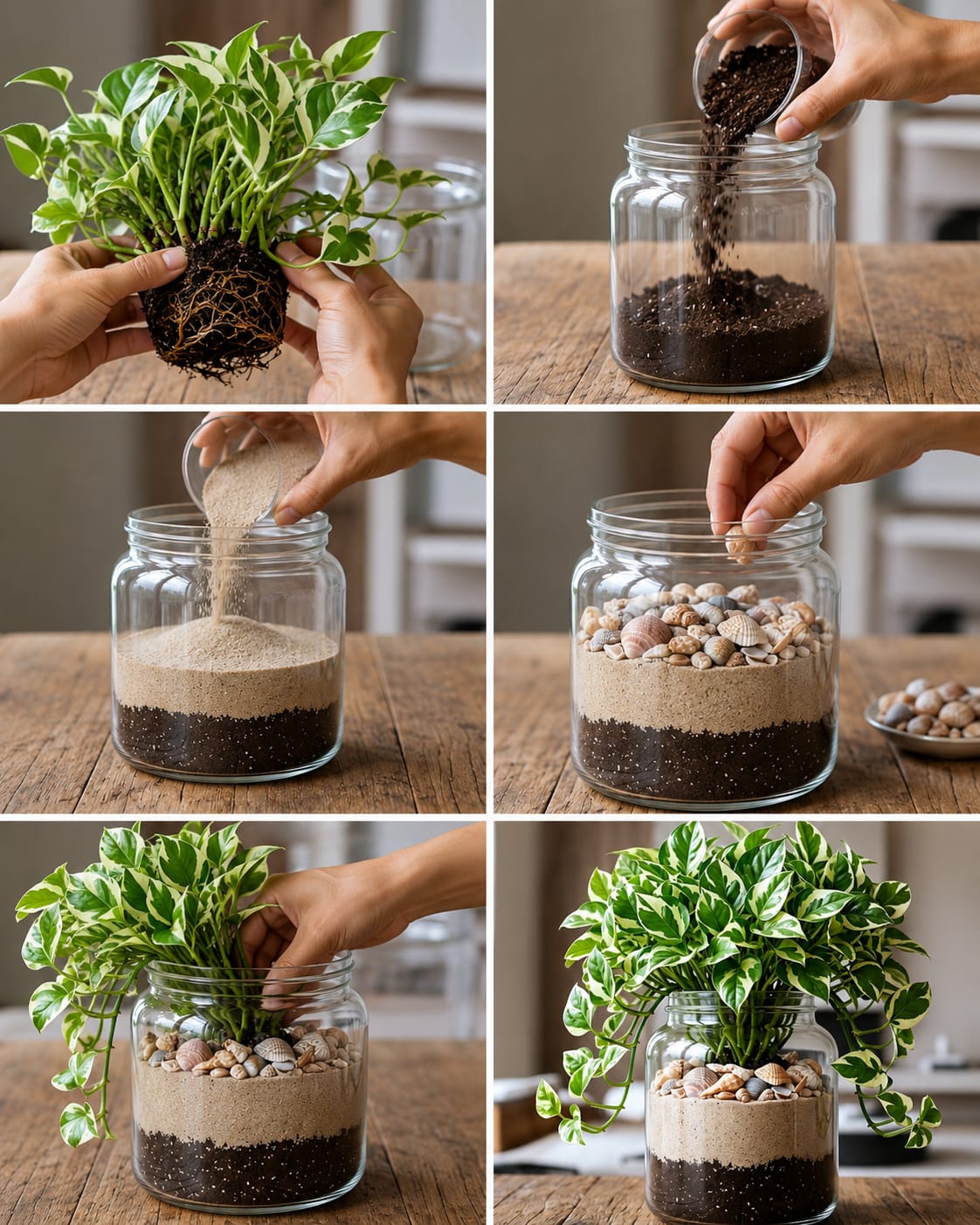
A layered glass jar display can make N’Joy pothos look especially decorative because the roots, soil layers, sand, shells, and clear container become part of the design. Instead of hiding the root zone inside a normal pot, this style turns the plant into a small indoor garden arrangement. The dark soil layer gives depth, the pale sand creates contrast, and the decorative shells add a clean coastal or spa-like look. When done carefully, the result can look fresh, premium, and very suitable for a bright tabletop or shelf.
However, this style must be handled with care. A glass jar often has no drainage holes, and pothos roots can rot if water collects at the bottom. Sand and shells can look beautiful, but they should not trap moisture around the stems or make the root zone compact. N’Joy pothos grows best when its roots receive oxygen, the soil drains well, and watering is controlled. The decorative layers should support the plant, not suffocate it.
This guide explains how to build a layered glass jar N’Joy pothos display safely, what each layer may do, what mistakes to avoid, how to water without causing root rot, and how to keep the plant clean, full, and suitable for indoor plant styling, modern home decor, commercial plant displays, luxury home staging, and premium houseplant presentation.
Quick Answer
A layered glass jar N’Joy pothos display can look beautiful, but it must be built with moisture control in mind. Use a clean glass jar, a small drainage-friendly lower layer, a well-draining indoor potting mix, a thin decorative sand layer, and shells only on the top surface. Do not pack the sand deeply around the roots. Do not bury the stems too low. Water lightly and only when the soil begins to dry. Because most jars do not have drainage holes, avoid heavy watering and never let water pool at the bottom. N’Joy pothos still needs bright indirect light, fresh airflow, clean leaves, and occasional pruning to stay full and decorative.
What Plant This Is
The plant is N’Joy pothos, a variegated cultivar of Epipremnum aureum. It is recognized by its small heart-shaped leaves with green centers, creamy white variegation, and sometimes pale green markings. Compared with some other pothos varieties, N’Joy often grows more compactly and has a crisp, tidy leaf pattern.
N’Joy pothos is a trailing or climbing indoor plant. It can spill over the edge of a container, climb a small support, or be pruned to stay bushy. In a glass jar display, it usually looks best when the top growth is full and some vines gently trail down the sides.
A healthy N’Joy pothos usually has firm leaves, clear variegation, flexible stems, and fresh new growth. A stressed plant may show yellow leaves, brown spots, limp vines, mushy stems, or roots that smell sour. Since glass displays can hold extra moisture, root health is the most important part of this setup.
Why a Glass Jar Display Works
A glass jar display works because it turns the plant into a decorative living arrangement. The transparent container allows the layered base to become visible, creating a styled look that feels intentional. This is especially effective with N’Joy pothos because the bright variegated leaves contrast beautifully with dark soil, pale sand, and natural shells.
The jar gives the plant a clean tabletop shape. It can look elegant on a kitchen counter, desk, coffee table, windowsill, bathroom shelf, or plant stand. The compact size of N’Joy pothos makes it suitable for smaller containers, as long as watering is controlled.
The display also works because pothos can adapt well indoors. It does not need intense light or constant feeding. With the right moisture routine, it can remain attractive for a long time.
What This Method Should Not Be Misunderstood As
This method should not be misunderstood as a terrarium that should stay wet all the time. N’Joy pothos does not need a sealed, swampy environment. If the jar has no drainage, excess water can collect and cause root rot.
It should not be misunderstood as a reason to plant directly into thick sand. Sand may look clean, but it can compact and reduce airflow if used too deeply. The roots need a breathable potting mix, not a dense decorative layer.
It should also not be misunderstood as a maintenance-free plant display. A glass jar arrangement still needs careful watering, light, pruning, cleaning, and inspection. The decorative container makes the plant more visible, so any yellow leaves, algae, mold, or water pooling will also be more visible.
Choosing the Right Glass Jar
The jar should be wide enough for the root ball and stable enough not to tip when the vines grow. A wide-mouth jar is easier to plant and maintain than a narrow-neck container. The opening should allow airflow around the soil surface.
Clear glass looks beautiful because it shows the layers, but it also exposes moisture problems. This can be useful because you can see if water is collecting at the bottom. If the lower layer stays wet for too long, watering should be reduced immediately.
A jar with drainage holes is safest. If the jar has no drainage, it can still be used decoratively, but watering must be very light and controlled. Another safe option is to keep the pothos in a small plastic nursery pot hidden inside the jar, then build decorative layers around it. This allows the plant to be removed for watering and draining.
Best Layering Method
The safest layering method begins with a small base layer that prevents the bottom from becoming muddy. Decorative stones, clay pebbles, or coarse material can be placed at the bottom, but this does not replace drainage holes. It only creates a small space where excess moisture may be visible.
The main root zone should be a light indoor potting mix with added perlite or fine bark. This layer is where the roots should grow. It should be breathable and not packed tightly. Pothos roots need oxygen as much as they need moisture.
The sand layer should be decorative and thin. It should not be used as the main growing medium. A thin layer of sand can create a clean visual line, but too much sand can slow drying and encourage moisture problems.
Shells should stay on the top as decoration. They should not be mixed deeply into the root zone. A few shells can create a coastal look, but a thick sealed shell layer can trap humidity at the surface and make it harder to judge soil dryness.
How to Plant N’Joy Pothos in the Jar
Start with a healthy N’Joy pothos. Gently remove it from its nursery pot and loosen only the outer roots. Do not tear the root ball apart aggressively. If the roots are tightly wrapped, loosen them just enough so they can settle into the new mix.
Add the lower decorative layer, then add the main potting mix. Place the plant at the correct height so the stems sit above the soil line. The crown should not be buried. Add soil around the roots and press very gently, leaving the mix airy rather than compacted.
Add a thin decorative sand layer only after the plant is stable. Then place shells lightly on top. Keep shells away from the base of the stems so moisture does not collect around them. The final display should look clean, but the plant should still be able to breathe.
Watering a Glass Jar Pothos Display
Watering is the most important part of this setup. Because a glass jar may not drain, use less water than you would in a normal pot. Water slowly near the soil, not over the leaves. Stop before water pools at the bottom.
Check the soil before watering. If the top layer still feels damp, wait. N’Joy pothos prefers the soil to dry slightly between waterings. Constant wetness can cause yellow leaves and root rot.
If water collects at the bottom of the jar, tilt the jar carefully to remove excess water if possible, or use a paper towel wick near the edge to absorb some moisture. If the jar repeatedly holds water, consider moving the plant into a draining inner pot.
Best Light for N’Joy Pothos
N’Joy pothos grows best in bright indirect light. Good light helps maintain the white variegation and keeps the plant compact. In low light, the plant may grow slower and produce more green leaves with weaker variegation.
Direct harsh sun can burn the white parts of the leaves. A bright window with filtered light is ideal. Morning light may be acceptable, but strong afternoon sun through glass can scorch the foliage.
Rotate the jar occasionally so the plant grows evenly. Since the display is meant to look balanced, rotating helps prevent all vines from leaning toward one side.
Feeding for Fuller Growth
N’Joy pothos does not need heavy feeding. A diluted balanced houseplant fertilizer can be used during spring and summer if the plant is actively growing. Use a weak solution because glass jar displays are more sensitive to buildup.
Do not fertilize if the soil is wet, sour-smelling, or showing signs of mold. Fertilizer in a poorly draining jar can create salt buildup and root stress. Clean watering and proper light are more important than frequent feeding.
If the plant is in a no-drainage jar, use fertilizer rarely and lightly. A buildup of salts is harder to flush out without drainage. When in doubt, feed less.
How to Keep the Plant Full
Pruning helps N’Joy pothos stay bushy. If vines become long and thin, trim them just above a node with clean scissors. This can encourage branching and create a fuller top.
Cuttings can be rooted in water and planted back into the jar once they have roots. This is one of the best ways to make the display look dense and lush. Add rooted cuttings carefully so the jar does not become overcrowded.
Regular pruning also keeps the plant from looking messy. A layered jar display looks best when the foliage is full but controlled, with a few soft trailing vines rather than tangled growth everywhere.
Possible Problems With Sand and Shells
Sand and shells are decorative, but they can create problems if used too heavily. A thick sand layer can reduce airflow and slow evaporation. This can keep the root zone wetter than expected.
Shells can also affect the surface environment. Some shells contain calcium carbonate and may slowly influence the surface pH, especially if water sits around them. In small decorative amounts, this is usually not a major issue, but shells should not be crushed deeply into the soil.
If mold appears on the sand or shells, remove the top decorative layer, let the soil breathe, and reduce watering. Clean decoration should never become a source of odor or pests.
Warning Signs to Watch For
Watch for yellow leaves, black stems, mushy bases, sour smell, water pooling at the bottom, fungus gnats, mold on sand, algae inside the glass, or leaves becoming limp even when the soil is wet. These signs usually mean the root zone is too wet or not receiving enough airflow.
If the plant has yellow leaves and wet soil, stop watering and improve airflow. If the stems feel mushy, remove the plant and inspect the roots. Rotten roots should be trimmed and the plant should be moved into fresh airy mix.
If the leaves are crispy and the soil is dry, the plant may need a little more consistent moisture or less direct sun. The glass jar can make moisture management tricky, so check conditions carefully.
Common Mistakes
One common mistake is filling the jar with too much sand. Sand looks neat, but roots need potting mix. The sand should be a thin decorative layer, not the main root medium.
Another mistake is watering like a normal draining pot. In a jar, water has nowhere to go unless there are holes. Heavy watering can quickly lead to root rot.
A third mistake is burying the stems too deeply. Pothos stems can rot if they are covered with wet soil or sand. The plant should sit at the same depth it was growing before.
What to Do If the Jar Gets Too Wet
If the jar gets too wet, stop watering immediately. Move the plant to bright indirect light with good airflow. Remove some shells or top decoration so the surface can dry faster.
If water is visible at the bottom and cannot be removed, the safest option is to take the plant out, check the roots, and rebuild the display with drier mix. If the roots smell bad or look black and mushy, trim the damaged roots before replanting.
For long-term safety, consider placing the pothos in a small draining inner pot inside the jar. This keeps the decorative look while allowing proper watering and drainage.
Cleaning the Glass and Leaves
Clear glass looks best when it stays clean. Soil dust, water stains, algae, and fingerprints can make the display look neglected. Wipe the outside of the jar with a soft cloth. If algae forms inside, the jar may be receiving too much light on wet layers.
Leaves should also be cleaned gently with a damp cloth. N’Joy pothos has small leaves, so handle them carefully. Clean leaves look brighter and help the plant absorb light more effectively.
A clean jar, fresh leaves, and tidy layers create the premium look. The display should feel intentional, not like a wet container of mixed materials.
Indoor Decor Value
A layered glass jar N’Joy pothos display has strong indoor decor value because it combines living greenery with visible natural textures. The dark soil, pale sand, shells, clear glass, and variegated leaves create a soft decorative contrast.
This style works beautifully in coastal decor, boho interiors, modern apartments, neutral rooms, spa-style bathrooms, bright kitchens, plant shelves, and cozy living spaces. It can also work as a small centerpiece on a table or desk.
The best decorative result comes from restraint. The layers should look clean and balanced. The plant should be the focus, while the sand and shells support the look without overwhelming it.
Room-by-Room Styling
In the living room, a layered N’Joy pothos jar can sit on a coffee table, side table, shelf, or console. Its trailing vines soften the space and add fresh movement.
In the bedroom, the jar creates a calm and clean accent. A soft neutral sand layer and natural shells can make the display feel peaceful and decorative.
In a home office, it works well near a bright window or on a desk. The clear jar adds visual interest without looking heavy. Keep the plant trimmed so it stays tidy and professional.
In the kitchen, N’Joy pothos can look fresh on a bright counter or windowsill. Avoid placing it in harsh direct sun or near hot appliances. A stable, bright indirect location is best.
Continue to Page 2
Continue to page 2 for more details about this article and the key points many readers miss on the first page.