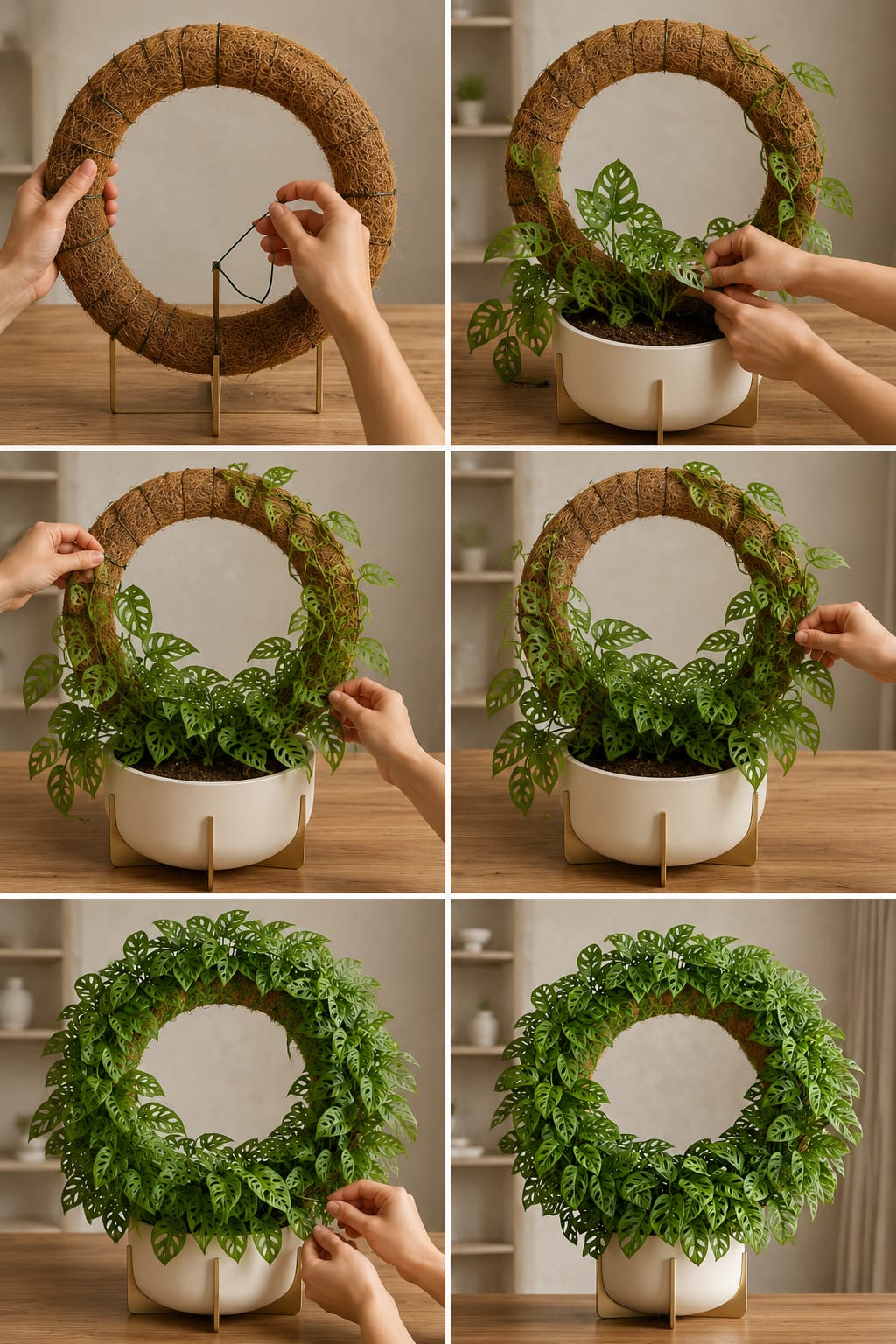
Swiss cheese plant is one of the most decorative indoor climbing plants for people who want lush greenery, delicate fenestrated leaves, soft tropical texture, and a clean modern display that works beautifully in living rooms, bedrooms, home offices, apartments, plant shelves, entryways, side tables, and premium indoor plant styling. Its heart-shaped leaves, natural holes, flexible vines, and fast-growing habit make it a favorite for modern apartment decor, indoor plant care, luxury home staging, commercial interior landscaping, biophilic office design, and polished property presentation.
One of the most beautiful ways to style a Swiss cheese plant is to train it around a circular coir ring. The round support gives the plant a sculptural shape while allowing the vines to climb, wrap, and spread naturally. Instead of letting the plant trail randomly from a pot, the circular frame turns it into a living wreath. This can make a tabletop plant look fuller, cleaner, more expensive, and more intentional.
This method works especially well for Monstera adansonii because the plant naturally wants to climb. In the wild, its vines attach to trees and grow upward toward better light. Indoors, a coir ring gives the vines something textured to hold onto. The result can be a lush circular display with layered green leaves covering the frame beautifully.
However, this method should be done carefully. The plant should not be forced tightly around the ring, the roots should not be disturbed too harshly, and the support should not keep the soil constantly wet. A coir ring can help the plant climb, but the plant still needs proper drainage, bright indirect light, airy soil, controlled watering, and gentle pruning to stay healthy.
Quick Answer
To train a Swiss cheese plant around a circular coir ring, place a stable coir-covered ring in or behind the pot, guide the flexible vines gently around the circle, and secure them loosely with soft plant ties. Keep the ties loose enough that the stems can grow without being squeezed. Use a well-draining indoor potting mix, water when the top layer begins to dry, provide bright indirect light, and mist the coir lightly only if the room is dry. Do not bend stems sharply, bury the crown too deeply, or keep the soil soggy. With steady care, Monstera adansonii can gradually cover the ring and create a lush decorative plant display.
What Plant This Is
The plant is a Swiss cheese plant, commonly known as Monstera adansonii. It is recognized by its thin green leaves with natural oval holes, also called fenestrations. These holes give the plant its famous airy appearance and make it look different from many other trailing houseplants.
Monstera adansonii is a climbing tropical plant. Its stems grow in long vines, and the plant looks fuller when those vines are supported. Without support, the plant may trail over the pot edge. With support, it can climb upward or around a frame, creating a more structured indoor display.
A healthy Swiss cheese plant usually has flexible green stems, fresh leaves, visible fenestrations, and active new growth. A stressed plant may show yellow leaves, crispy edges, limp vines, black spots, root rot, or slow growth. Training should be done only when the plant is healthy enough to handle gentle handling.
What the Circular Coir Ring Is Used For
The circular coir ring is used as a climbing and styling support. Coir is a natural coconut fiber material with texture. This texture gives the vines a surface to lean against and attach to. The ring shape creates a decorative circle that can be covered with leaves over time.
The support is not just for beauty. It can also help the plant grow in a more controlled way. A climbing Swiss cheese plant can produce larger and more mature-looking leaves when it has support, good light, and healthy roots.
The circular design is especially useful for small spaces. Instead of allowing vines to stretch across a shelf or hang unevenly, the ring keeps the plant compact and sculptural. It creates height, volume, and movement without taking up much extra table space.
What This Method Should Not Be Misunderstood As
This method should not be misunderstood as a way to force instant growth. The plant will not cover the ring overnight. It needs time to adjust, attach, and produce new leaves. The best results come from patient training and steady care.
It should not be misunderstood as a reason to tie the vines tightly. Tight ties can damage the stems, restrict growth, and leave scars. The stems should be guided, not strangled. Loose support is safer than aggressive wrapping.
It should also not be misunderstood as a replacement for proper care. A coir ring cannot fix poor soil, overwatering, low light, or root rot. The plant must have healthy roots and good growing conditions before the display can become lush.
Why This Display Looks So Elegant
The circular shape gives the plant a finished, designer-style appearance. The leaves naturally soften the edge of the ring, while the open center keeps the display light and airy. This balance makes the plant look decorative without feeling messy.
The fenestrated leaves add texture and detail. As the vines wrap around the ring, the holes in the leaves create a lace-like effect. This works beautifully in modern interiors, neutral rooms, boho spaces, Scandinavian decor, and natural home styling.
The display can also make a small plant look bigger. By spreading the vines around the circle, the plant appears fuller and more mature. This is why circular coir ring displays are popular for tabletop plant styling and premium indoor plant decor.
Choosing the Right Plant
The best Swiss cheese plant for this method has several flexible vines and healthy leaves. A very small plant can still be trained, but it may take longer to fill the ring. A fuller plant gives a faster decorative result.
The vines should be bendable but not weak. Stems that are too woody, brittle, yellow, or damaged should not be forced around the ring. Healthy green stems are easier to guide safely.
If the plant has pests, root rot, or many yellow leaves, fix those problems before training. A stressed plant may drop leaves after being handled. Healthy roots and steady growth make the training process safer.
Choosing the Right Coir Ring
The coir ring should be strong, stable, and large enough for the plant’s vines to wrap comfortably. A ring that is too small may require sharp bends. A ring that is too large may look empty for a long time unless the plant has many vines.
The coir should be firmly attached to the frame. Loose coir can shed, shift, or fall apart. A strong frame helps the display remain upright and neat. If the ring has a stand or metal base, it should sit securely in the pot or on the tabletop.
The ring should match the pot size. A heavy ring in a small pot may tip. A small ring in a large pot may look unbalanced. The best display feels stable and proportional.
Best Pot for This Setup
A wide, stable pot works best for a circular display. The pot should have drainage holes because Swiss cheese plants need moisture but do not like sitting in soggy soil. A decorative outer pot can be used, but excess water must not remain trapped inside.
A ceramic bowl planter can look beautiful because it creates a clean base for the circular frame. A white, cream, terracotta, matte black, stone-effect, or woven-style pot can all work depending on the room decor.
The pot should be heavy enough to support the ring. If the pot tips easily, the display may become unstable. A stable pot protects both the plant and the support.
Best Soil for Swiss Cheese Plant
Monstera adansonii grows best in an airy, well-draining potting mix that holds some moisture but still allows oxygen around the roots. A mix with indoor potting soil, orchid bark, perlite, coco coir, and pumice can work well.
Dense garden soil should not be used indoors. It can compact, stay too wet, and suffocate the roots. When roots lose oxygen, the plant may develop yellow leaves, black spots, and weak growth.
The soil should feel light and breathable. Water should move through it easily, but the mix should not dry instantly. A balanced root zone helps the plant climb and produce fuller leaves.
How to Place the Coir Ring
The ring should be placed firmly in the pot or behind the pot depending on the support design. If the frame has legs, push them carefully into the soil without damaging the root ball too much. If the roots are dense, work slowly and avoid forcing the support through the center of the root mass.
The support should stand upright before the vines are attached. If it wobbles, the plant may pull it out of position as it grows. Add soil around the base if needed to stabilize the frame.
Do not bury the plant crown deeply while placing the support. The crown should remain at the same soil level. Burying stems too deeply can cause rot.
How to Train the Vines
Guide the longest vines gently toward the ring. Wrap them loosely around the coir surface or place them along the curve. The vines should follow the circle naturally. If a stem resists, do not bend it sharply.
Use soft plant ties, coated wire, cotton string, raffia, or flexible clips to hold the vines in place. The ties should be loose enough that the stem can grow. A tight tie can cut into the vine and damage it.
As new growth appears, guide it toward empty areas of the ring. Over time, the plant will cover the support more evenly. The best display is built gradually, not forced in one day.
How Often to Adjust the Plant
Check the vines every one to two weeks during active growth. New stems may need gentle guidance. Old ties may need loosening. Leaves may need repositioning so they face outward and receive enough light.
Do not adjust the plant every day. Constant handling can stress the stems and damage tender new growth. Gentle periodic training is better.
If a vine grows away from the ring, guide it back while it is still flexible. Waiting too long can make the stem harder to bend. Small adjustments create a cleaner final shape.
Watering This Display
Water the plant when the top layer of soil begins to dry. Swiss cheese plants like consistent moisture, but they do not like soggy roots. The pot should drain fully after watering.
Water at the soil level rather than pouring water over the leaves. The coir ring can be lightly misted or moistened if the room is dry, but it should not stay constantly wet. A constantly wet coir ring can encourage mold or fungus gnats.
If the pot sits inside a decorative cover, remove excess water after watering. Hidden water at the bottom can cause root rot. A beautiful display still needs practical drainage.
Light for Fuller Growth
Bright indirect light is ideal for Monstera adansonii. Good light helps the plant produce stronger vines and better fenestrated leaves. A spot near a bright window with filtered light is usually best.
Low light can make the vines stretch, leaves become smaller, and the ring look sparse. Harsh direct sun can burn the leaves and create crispy patches. The goal is bright but gentle light.
Rotate the pot occasionally so all sides receive light. This helps the ring fill evenly. Avoid rotating too often once new vines are attached, but gentle periodic rotation can improve balance.
Humidity and Airflow
Swiss cheese plants enjoy moderate humidity. Dry air can cause crispy leaf edges and slower growth. A humidifier, pebble tray, or grouping with other plants can help if the room is very dry.
Humidity should be paired with airflow. Stagnant moisture can encourage fungal problems. The plant should not be placed in a closed, damp corner with no air movement.
The coir ring can hold moisture, which may help aerial roots attach, but it should not smell musty or grow mold. If mold appears, reduce moisture and improve airflow.
Feeding for Stronger Growth
During spring and summer, a diluted balanced houseplant fertilizer can support new vines and leaf growth. Feeding should be light because too much fertilizer can burn roots and cause brown tips.
Do not fertilize a stressed plant with root rot, yellowing from overwatering, or pest problems. Fix the care issue first. Healthy roots can use nutrients better.
Fertilizer helps support growth, but it does not replace light. A plant in low light may not respond well to feeding. Better light often improves the display more than extra fertilizer.
Pruning for a Fuller Ring
Pruning can help the plant become bushier. If a vine becomes too long or bare, it can be cut back with clean scissors. Cutting above a node may encourage branching and new growth.
Pruned cuttings can be propagated in water or soil. Once rooted, they can be planted back into the pot to make the base fuller. This is one of the best ways to create a dense circular display.
Do not remove too much growth at once. Heavy pruning can stress the plant. Light, strategic pruning creates better long-term shape.
Propagation for a Denser Display
Monstera adansonii is easy to propagate from stem cuttings with nodes. A cutting should include at least one node because roots grow from the node. Leaves alone will not create a new plant without a node.
Cuttings can be rooted in water, sphagnum moss, or light potting mix. Once roots are several centimeters long, the cutting can be planted into the same pot to fill gaps around the ring.
Adding rooted cuttings back into the pot helps the plant look fuller faster. This is useful when the ring has empty areas or the lower pot looks sparse.
Possible Damage If the Plant Is Forced
Forcing vines too tightly around the ring can break stems or damage nodes. A broken stem may wilt beyond the damaged point. Flexible stems can handle gentle curves, but they should not be sharply folded.
Tight ties can cut into the vine. Over time, this can block growth and cause the stem to weaken. Ties should always be checked and loosened when needed.
Overwatering after installing the ring can also cause problems. Some people water heavily because they want the plant to grow faster. Too much water can rot roots and make the plant decline instead.
Warning Signs to Watch For
Watch for yellow leaves, black spots, limp vines, mushy stems, sour soil smell, fungus gnats, mold on the coir ring, crispy edges, or slowed growth. These signs suggest that the plant is stressed or the environment needs adjustment.
If leaves turn yellow and the soil is wet, reduce watering and check drainage. If the leaves are crispy and the soil is dry, the plant may need more consistent moisture or higher humidity.
If the coir ring develops mold, let it dry more between misting and improve airflow. The ring should support the plant, not become a damp problem.
Common Mistakes
One common mistake is using a ring that is too small and forcing stems into tight curves. This can crack or damage the vines. A larger, softer curve is safer.
Another mistake is tying the stems too tightly. The plant needs room to grow. Loose ties keep the vine in place without cutting it.
A third mistake is placing the plant in low light after training. The ring may stay thin and bare if the plant does not receive enough light. Bright indirect light helps the display fill in.
Continue to Page 2
Continue to page 2 for more details about this article and the key points many readers miss on the first page.