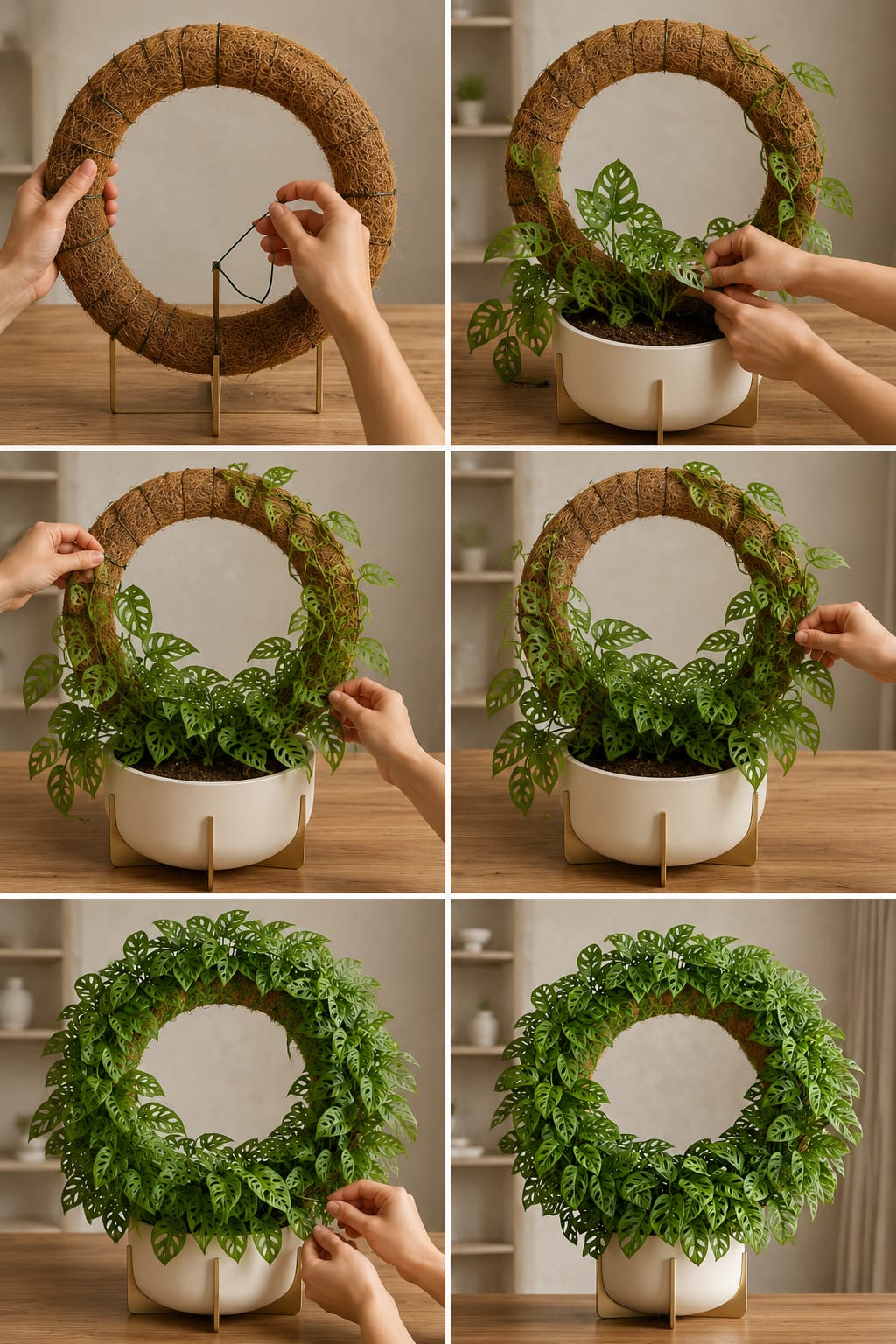
What to Do If a Vine Breaks
If a vine breaks, trim it cleanly below the damaged section with clean scissors. If the broken piece has a node, it may be propagated. Place it in water or another rooting medium and wait for roots to form.
Do not leave crushed or rotting stem pieces tied to the ring. Damaged tissue can attract disease. Clean cuts help the plant recover more neatly.
After a break, avoid handling the remaining vines too much. Let the plant stabilize. New growth can be guided later to fill the space.
How to Keep the Ring Looking Full
To keep the ring full, guide new vines toward empty areas. Prune overly long vines and propagate cuttings. Rotate the pot occasionally so growth is balanced. Keep the plant in bright indirect light so leaves stay larger and closer together.
Older leaves may yellow naturally over time. Remove them when they are mostly yellow or dry. This keeps the display clean and prevents the plant from looking messy.
Wipe dusty leaves gently with a damp cloth. Clean leaves reflect light better and look more premium. Avoid leaf shine products because they can leave residue.
Indoor Decor Value
A Swiss cheese plant on a circular coir ring has strong indoor decor value because it looks like a living wreath. The circular shape adds structure, while the leaves add softness and movement. This makes the display useful for rooms that need greenery without visual clutter.
The plant works beautifully on a side table, console, shelf, dining table, desk, or plant stand. It can add a tropical feel while still looking controlled and elegant. The open center keeps the display light rather than heavy.
This style pairs well with ceramic bowls, neutral planters, wood furniture, stone surfaces, woven baskets, and warm minimalist interiors. It can look natural, modern, boho, or luxury depending on the pot and placement.
Room-by-Room Styling
In the living room, the circular Swiss cheese plant can sit on a sideboard, coffee table, or plant stand. It creates a sculptural focal point and softens straight furniture lines.
In the bedroom, it adds a calm green accent. Place it near bright filtered light and away from cold drafts. A cream or white planter can keep the look peaceful and clean.
In a home office, it works well as a desk-side or shelf display. The round shape looks professional and organized, especially for video-call backgrounds and styled workspaces.
In an entryway, it can create a welcoming first impression if the space has enough light. A stable pot is important so the ring does not get bumped or tipped.
Office and Commercial Styling
This circular plant display can work beautifully in commercial interior landscaping. It is suitable for boutique counters, reception desks, wellness corners, hotel-style interiors, office shelves, staged apartments, and luxury home presentation.
For commercial spaces, the display should be especially clean and stable. Ties should be discreet, leaves should be dust-free, and the pot should drain properly. The coir ring should not smell damp or show mold.
A premium commercial display should look intentional and low-maintenance. The circular form gives the plant a designer-quality appearance while still using a natural climbing habit.
Product and Tool Guide
Helpful materials include a healthy Monstera adansonii, a circular coir ring, a stable pot with drainage holes, airy indoor potting mix, orchid bark, perlite, soft plant ties, clean scissors, a watering can, and a soft cloth for leaf cleaning.
A humidifier may help in dry rooms. A grow light can help if the plant is far from a bright window. A moisture meter can help beginners avoid overwatering, but checking the soil by touch is also useful.
The best setup is simple and controlled. A stable support, loose ties, bright indirect light, breathable soil, and careful watering create a fuller display than heavy fertilizer or forced bending.
Care Timeline
During the first day, install the ring gently and secure a few vines loosely. Do not try to cover the whole ring immediately. Water only if the soil actually needs it.
During the first week, watch for drooping, broken stems, or loose support. Adjust ties gently if needed. Keep the plant in bright indirect light and avoid moving it constantly.
After two to four weeks, new growth may begin to follow the support. Guide fresh vines while they are flexible. After several months of steady care, the ring can become noticeably fuller and more decorative.
Professional Styling Note
In high-end indoor horticulture, Monstera adansonii is valued because it offers delicate tropical foliage, natural fenestrations, and flexible climbing growth. Training it around a circular coir ring creates a premium sculptural display that works beautifully in modern apartment decor, bedroom styling, home office greenery, commercial plant design, luxury home staging, and polished property presentation.
However, the luxury look depends on clean technique. The vines should not be crushed, the ring should not wobble, the soil should not be soggy, and the pot surface should remain tidy. A refined display should look lush, natural, and healthy.
A beautiful circular Swiss cheese plant depends on healthy roots, bright indirect light, airy soil, drainage holes, loose ties, and patient training. The plant should be guided into shape, not forced.
Final Thoughts
A Swiss cheese plant can be trained around a circular coir ring to create a lush, elegant, and sculptural indoor display. The method works because Monstera adansonii naturally climbs and responds well to textured support. A coir ring gives the vines a clear path while turning the plant into a living wreath.
The safest method is to use a stable ring, guide the vines gently, secure them with loose soft ties, and provide bright indirect light, airy soil, drainage, and careful watering. Avoid tight bends, tight ties, soggy soil, and constant handling. The plant needs time to cover the ring naturally.
With clean care and the right presentation, a circular Swiss cheese plant display can become a beautiful accent for living rooms, bedrooms, home offices, entryways, plant shelves, modern apartments, commercial interior landscaping, luxury home staging, and polished property presentation. Healthy roots, flexible vines, clean leaves, and patient training will always create a stronger result than rushed shaping or risky shortcuts.