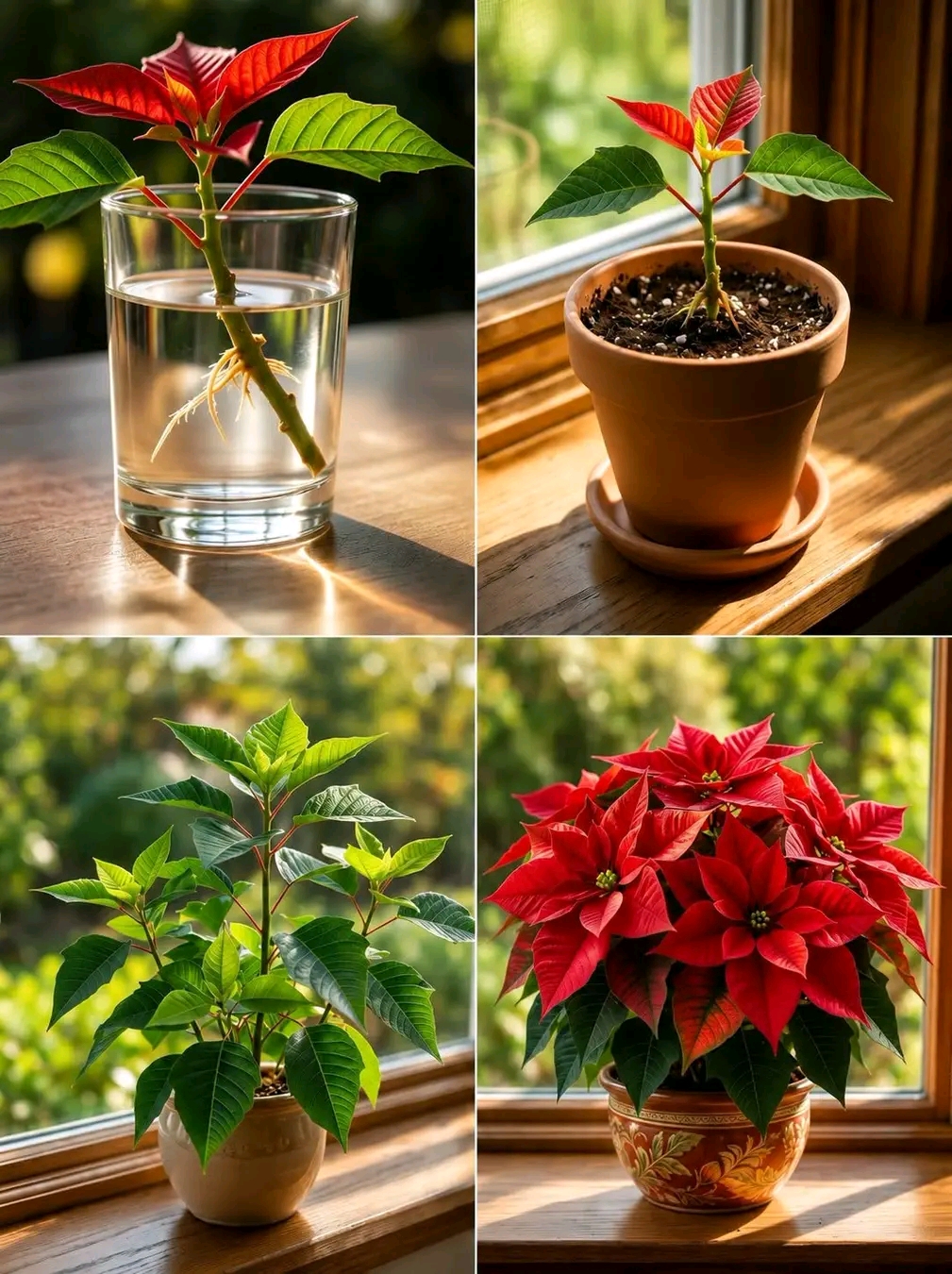
Can You Grow Poinsettia in Water Forever?
A poinsettia cutting can root in water, but it is better to move it to soil once roots are strong. Long-term water growing is not ideal for poinsettias because they need stable root support and nutrients from a growing medium.
Use water rooting as a starting method. Then plant in soil for stronger long-term growth.
Water Rooting vs Soil Rooting
Water rooting is easy to watch and fun for beginners. Soil rooting can create roots that adapt better to potting mix. If you root in water, move the cutting to soil when roots are still young. Very long water roots can be more delicate when transferred.
How to Root Poinsettia Directly in Soil
- Take a healthy 4 to 6 inch cutting.
- Remove lower leaves.
- Rinse away excess sap.
- Dip in rooting hormone if desired.
- Plant in moist light soil.
- Cover loosely with a clear bag for humidity.
- Keep warm in bright indirect light.
- Open the bag daily for airflow.
Soil should stay lightly moist, not wet. Roots may form in several weeks.
How to Care for Poinsettia After the Holidays
After the red bracts fade, do not throw the plant away. Keep it in bright light and water when the soil dries slightly. In spring, prune it back to encourage new growth. Feed lightly during active growth.
With patience, the same plant can grow again and turn red next season with the proper dark treatment.
Seasonal Poinsettia Care
Spring
Prune the plant, repot if needed, and begin light feeding as new growth appears. This is also the best time for cuttings.
Summer
Keep in bright indirect light. Water when the top inch dries. Pinch tips to encourage bushy growth.
Fall
Start the dark treatment routine. Give bright days and long dark nights to encourage red bracts.
Winter
Enjoy the color. Keep the plant warm, avoid drafts, and water carefully.
Best Indoor Styling Ideas
Poinsettias look beautiful in warm, bright spaces. Their red bracts create instant color and holiday charm.
- Place on a sunny windowsill with filtered light.
- Use a terracotta pot for a natural look.
- Style with candles and pinecones for holiday decor.
- Use a decorative ceramic pot for a classic display.
- Group several poinsettias together for strong color.
- Place near a bright entryway.
- Use as a dining table centerpiece.
- Pair with green houseplants for contrast.
Common Poinsettia Problems
Yellow Leaves
Yellow leaves often come from overwatering, poor drainage, low light, or cold stress. Check soil and location first.
Wilting
Wilting can mean underwatering or root rot. If soil is dry, water. If soil is wet, inspect roots.
Leaf Drop
Leaf drop can happen from temperature shock, drafts, low light, or watering stress.
No Red Color
No red color usually means the plant did not receive enough uninterrupted darkness.
Weak Growth
Weak growth may come from low light, lack of pruning, or poor soil.
Weekly Care Routine
- Check soil moisture.
- Inspect leaves for pests.
- Remove yellow leaves.
- Empty saucer water.
- Keep plant away from drafts.
- Rotate slightly for even light.
Monthly Care Routine
- Clean leaves with a damp cloth.
- Check root crowding.
- Feed lightly during active growth.
- Prune or pinch during spring and summer.
- Review light conditions.
- Check for pests under leaves.
Frequently Asked Questions
Can I grow poinsettia from a cutting?
Yes. Take a healthy cutting in spring or early summer and root it in water or light soil.
How long does a poinsettia cutting take to root?
Most cuttings root in 2 to 6 weeks, depending on warmth, light, and plant health.
Can poinsettia grow in water permanently?
It is better to move it into soil after roots form. Poinsettias grow stronger long-term in soil.
How do I make poinsettia turn red?
Give the plant about 14 hours of complete darkness every night for 8 to 10 weeks, with bright indirect light during the day.
Why are my poinsettia leaves falling off?
Leaf drop may come from cold drafts, low light, underwatering, overwatering, or sudden movement.
Does poinsettia need fertilizer?
Yes, during active growth. Use a balanced houseplant fertilizer diluted to half strength every 4 to 6 weeks.
Is poinsettia poisonous?
Poinsettia sap can irritate skin or mouths, but the plant is not as highly poisonous as many people believe. Keep it away from pets and children to be safe.
Final Thoughts
Growing a poinsettia from a cutting is a rewarding way to create a beautiful holiday plant from a simple stem. The process begins with a healthy cutting, clean water, bright indirect light, and patience. Once roots form, the young plant should be moved into well-draining soil and cared for with warmth, careful watering, and good light.
The most exciting part is turning the plant red again. This does not happen from fertilizer alone. Poinsettias need long dark nights for several weeks. With bright days, complete darkness at night, stable temperatures, and healthy roots, the green plant can transform into a brilliant red display.
Do not throw away poinsettias after the holidays. With the right care, they can live for years, produce new growth, and bring beautiful color back each season. A small cutting can become a full, bright, festive plant that adds warmth and charm to your home.