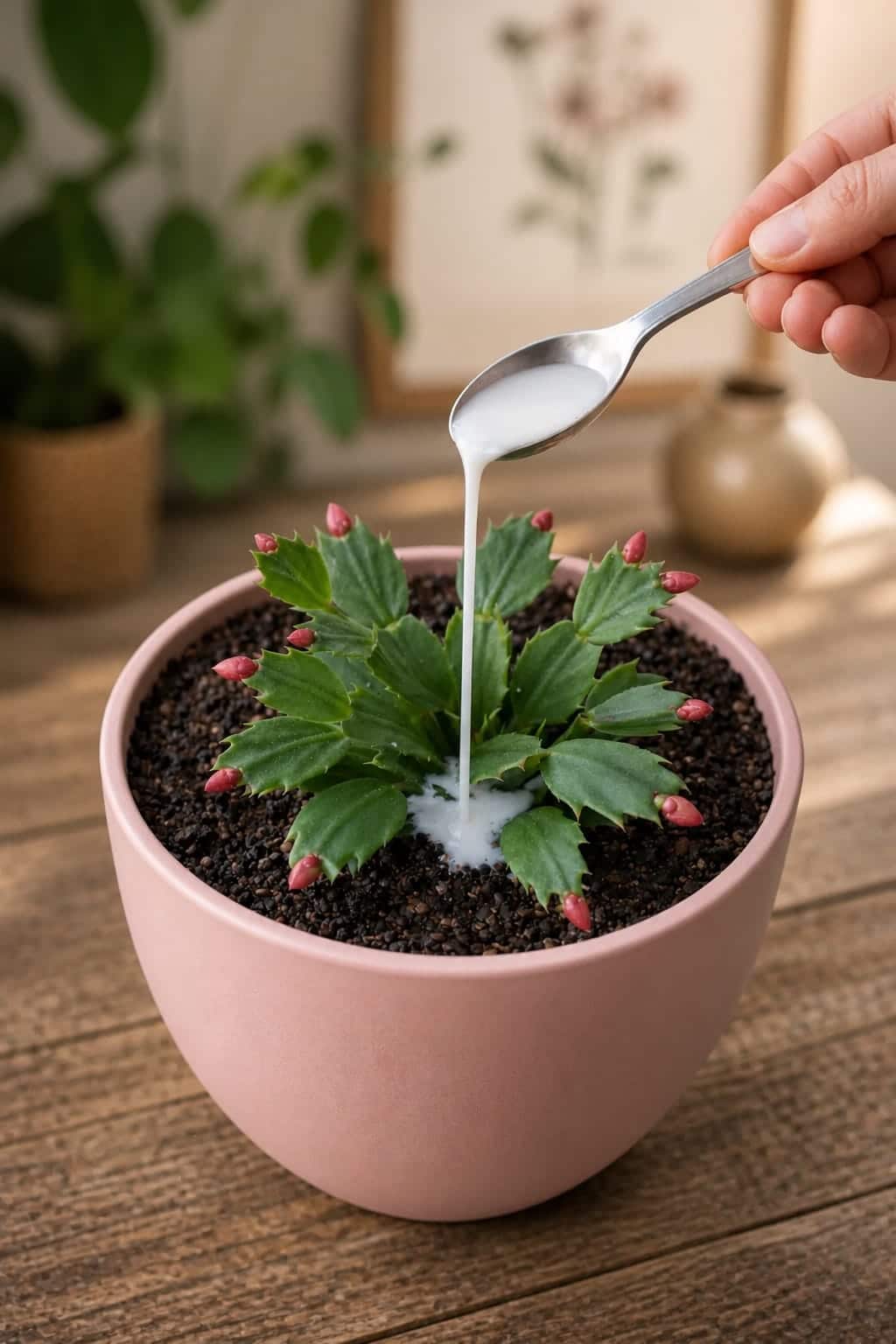
Should You Fertilize Thanksgiving Cactus?
Yes, but lightly and at the right time. During active growth in spring and summer, you can use a balanced houseplant fertilizer diluted to half strength. Stop heavy feeding when buds begin to form.
Rice water is not a full replacement for fertilizer. It is only a mild homemade tonic.
If your plant is already healthy and blooming, do not overdo extra feeding.
Can Rice Water Make It Bloom?
Rice water alone will not force a Thanksgiving cactus to bloom. Blooming depends mostly on maturity, light, temperature, and seasonal rhythm.
However, a healthy plant with good roots is more likely to bloom well. A gentle rice-water tonic may support the plant’s overall condition, but it is not the main bloom trigger.
Use it as support, not as a miracle bloom potion.
How to Use the Tonic During Bud Formation
When buds are small, use only a very small amount. Two spoonfuls around the soil is enough for a small plant. Avoid splashing the buds.
Do not use thick liquid. Do not use cold liquid. Room-temperature diluted rice water is best.
After applying, let the plant drain if the pot has drainage. Keep the soil lightly moist, not wet.
Can You Spray Rice Water on the Leaves?
It is better not to spray rice water on Thanksgiving cactus leaves. Starchy water can leave residue on the segments and may encourage fungal spots or dust buildup.
Apply it to the soil only. The roots are the place where the plant can use the tonic.
If any liquid gets on the leaves, wipe it gently with a damp cloth.
What If the Soil Smells Sour?
If the soil smells sour after using rice water, stop using it immediately. Sour smell means the soil may be staying too wet or the organic material is fermenting.
Let the soil dry slightly. Improve airflow. If the smell continues, repot the plant into fresh airy mix.
Rice water should never make the pot smell bad. If it does, it was too strong or used too often.
What If Fungus Gnats Appear?
Fungus gnats love moist organic soil. If they appear after using rice water, stop the tonic and let the top layer dry more between waterings.
You can also use yellow sticky traps and refresh the top layer of soil. Avoid overwatering and avoid repeated starchy liquids.
This is another reason to use rice water only occasionally and diluted.
Can You Use Boiled Rice Water?
You can use water from boiled rice only if it is completely plain, unsalted, unseasoned, and heavily diluted. However, boiled rice water is usually starchier than rinse water, so it is easier to overuse.
For indoor Thanksgiving cactus, rinse water is safer than boiled rice water.
If you use boiled rice water, dilute it until it is only faintly cloudy.
Can You Use Fermented Rice Water?
Fermented rice water is sometimes used in gardening, but it can smell strong and may be too active for small indoor pots. For Thanksgiving cactus, especially indoors, simple fresh diluted rice water is safer.
Fermented mixtures can attract pests if not prepared correctly.
Keep this trick simple and fresh.
Can You Use Rice Water on Cuttings?
For Thanksgiving cactus cuttings, plain water or barely moist soil is better at first. Cuttings need to callus before planting. Too much moisture or starchy liquid can cause rot.
After cuttings root and begin growing, you can use a very diluted rice-water tonic occasionally.
Do not pour rice water on fresh unrooted cuttings.
How to Propagate Thanksgiving Cactus
Thanksgiving cactus is easy to propagate from stem segments. Twist off a piece with two to four segments. Let it dry for one or two days so the end calluses. Then place it lightly into airy potting mix.
Keep the soil barely moist until roots form. Bright indirect light is best.
Once the cutting is rooted and growing, treat it like a small plant.
How to Keep the Plant Full
After blooming, you can lightly prune the plant by twisting off a few segments. This encourages branching and makes the plant fuller over time.
Do not prune heavily while buds are forming. Wait until after flowering.
The removed segments can be used as cuttings to grow new plants.
Why the Leaves Look Wrinkled
Wrinkled Thanksgiving cactus segments can mean underwatering, root stress, or old soil. If the soil is dry, water thoroughly and let it drain. If the soil is wet and the segments are wrinkled, check the roots for rot.
Rice water will not fix root rot. If the roots are damaged, repotting is needed.
Always diagnose before using any tonic.
Best Temperature for Thanksgiving Cactus
Thanksgiving cactus prefers normal indoor temperatures, but cooler nights in fall help with blooming. Avoid freezing temperatures and cold drafts.
Keep it away from heaters, fireplaces, and hot vents. Sudden heat can dry buds and cause drop.
Stable conditions help the plant bloom longer.
Humidity Needs
Because Thanksgiving cactus is a tropical forest cactus, it appreciates moderate humidity. If your home is very dry, place the pot near other plants or use a humidity tray with pebbles and water. Make sure the pot does not sit directly in water.
Do not compensate for dry air by overwatering the soil.
Humidity helps, but soggy roots hurt.
Common Mistakes to Avoid
- Using milk as the white liquid
- Using thick, starchy rice water
- Watering with rice water too often
- Pouring liquid into already wet soil
- Using a pot without drainage
- Keeping the plant in dark corners
- Moving the plant repeatedly after buds form
- Letting the soil dry completely during budding
- Using strong fertilizer while buds are forming
- Spraying rice water on the leaves
Quick White Liquid Thanksgiving Cactus Routine
- Make plain rice rinse water.
- Dilute one tablespoon rice water into one cup clean water.
- Check that the soil is slightly dry.
- Pour two to four tablespoons around the soil.
- Avoid the crown, leaves, and buds.
- Let the pot drain completely.
- Use only once every three to four weeks.
- Keep the plant in bright indirect light.
- Maintain steady moisture during bud formation.
- Stop using it if the soil smells sour or pests appear.
Short Caption for This Trick
“For Thanksgiving cactus, the white liquid should be a very diluted rice-water tonic, not milk. Mix one tablespoon of plain rice water into one cup of clean water, then use only a few spoonfuls around slightly dry soil. It gives a gentle boost while the real bloom secret stays the same: bright indirect light, airy soil, steady moisture, and cooler fall nights.”
Frequently Asked Questions
What is the white liquid for Thanksgiving cactus?
The safest version is diluted rice water made from rinsing plain rice. It should be weak and only faintly cloudy.
Can I use milk on Thanksgiving cactus?
No. Milk can sour, smell bad, attract pests, and encourage mold in the soil.
How often should I use rice water?
Use it once every three to four weeks during active growth or early bud formation.
Can rice water make Thanksgiving cactus bloom?
Rice water alone will not force blooming. Blooming depends mostly on seasonal light, cooler nights, plant maturity, and stable care.
Should I pour rice water on the leaves?
No. Apply it to the soil only. Avoid splashing the leaves and buds.
Can I use cooked rice water?
Only if it is plain, unsalted, unseasoned, and heavily diluted. Rice rinse water is safer.
Why are my Thanksgiving cactus buds falling off?
Bud drop can happen from sudden movement, overwatering, underwatering, drafts, heat vents, low humidity, or sudden changes in light.
What soil is best for Thanksgiving cactus?
Use an airy mix with indoor potting soil, orchid bark, and perlite. It should hold light moisture but drain well.
Does Thanksgiving cactus need direct sun?
It prefers bright indirect light. Gentle morning sun is fine, but harsh afternoon sun can burn the segments.
Can I use rice water on cuttings?
Wait until cuttings are rooted. Fresh cuttings should callus first and be rooted in barely moist airy soil.
Final Thoughts
The white liquid trick in the image can be useful when it is done safely. For Thanksgiving cactus, the best version is not milk, cream, or any sweet liquid. It is a very diluted rice-water tonic used only occasionally and only on the soil.
This gentle tonic can support a healthy plant during active growth or early bud formation, but it is not the main secret to flowers. Thanksgiving cactus blooms best when it has bright indirect light, airy soil, balanced watering, cooler fall nights, and stable care once buds appear.
Use the white liquid lightly. Keep the soil breathable. Avoid overwatering. Do not move the plant too much when buds form. With the right care, those tiny pink buds can open into the beautiful holiday flowers that make Thanksgiving cactus so loved.