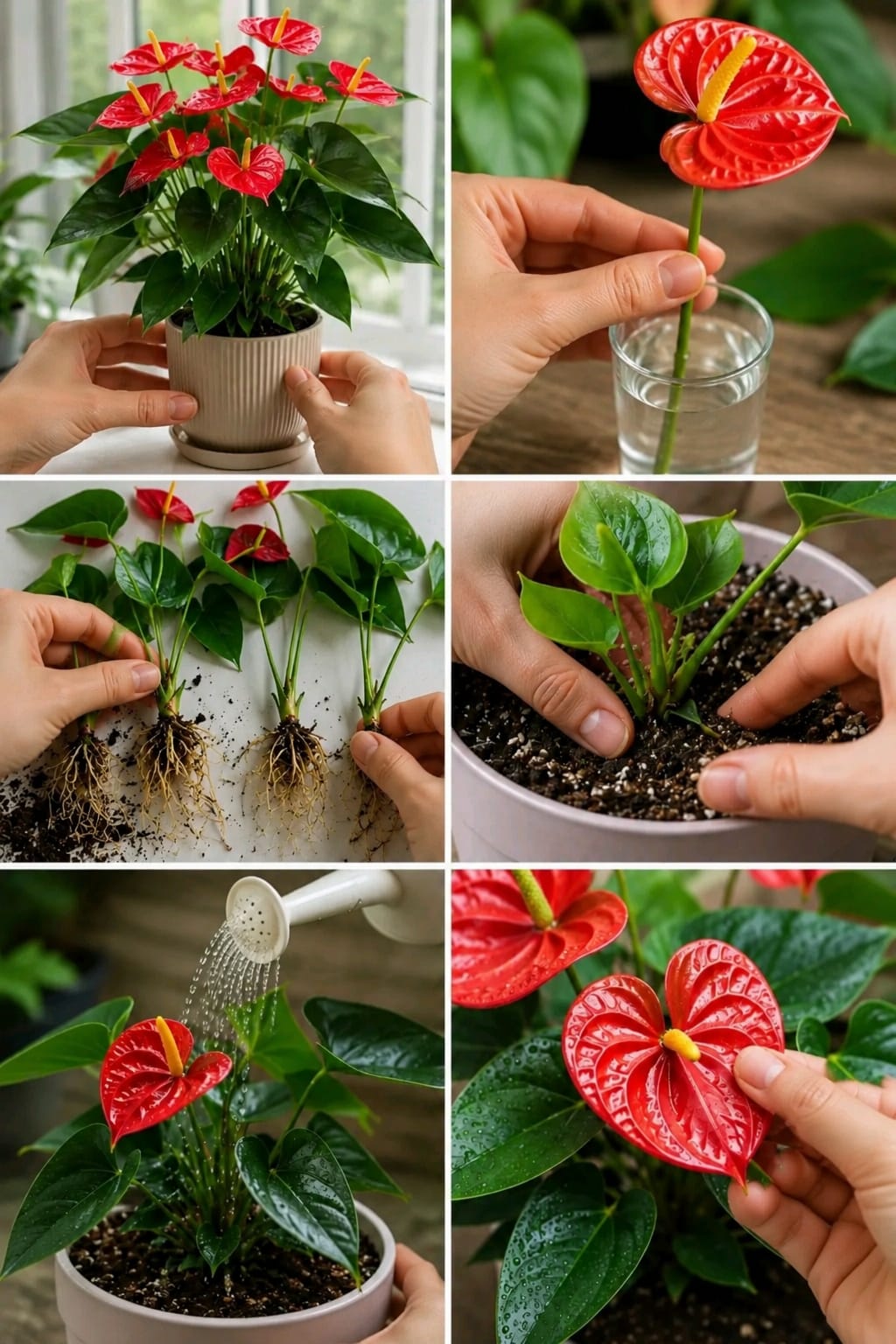
Anthuriums are among the most eye-catching indoor plants because they bring together glossy green leaves, sculptural stems, and bright heart-shaped blooms that can look almost like polished roses. A healthy red anthurium in a clean pot can instantly brighten a windowsill, coffee table, office corner, balcony shelf, or indoor plant stand. Its flowers have a modern tropical look, but when arranged well, the plant can also feel romantic, soft, and luxurious.
This is why many homeowners search for creative ways to grow anthuriums, multiply them, and style them into a fuller “rose pot” look. The goal is simple: more leaves, more clean stems, stronger roots, and a pot that looks full enough to become a natural centerpiece. Anthuriums can be elegant on their own, but when several healthy crowns are grouped together in one container, the result feels more expensive, more decorative, and more intentional.
The important thing to understand first is that anthuriums do not grow from the red flower alone. The colorful part is called a spathe, and the yellow or cream spike is the spadix. A cut anthurium flower can stay beautiful in water for decoration, but it will not normally become a new plant unless it includes a real stem section with nodes and roots. For actual propagation, the best method is division, stem cuttings with nodes, or growing small plantlets from an established mother plant.
This guide focuses on a practical anthurium growing trick: using healthy rooted divisions and young shoots to create a fuller, rose-style pot display. It also covers watering, soil, light, root care, bloom support, and styling ideas so the plant looks clean, fresh, and elegant indoors.
Why Anthuriums Make Such Beautiful Indoor Displays
Anthuriums are popular because they look both tropical and polished. Their leaves are deep green, glossy, and heart-shaped. Their flowers rise above the foliage on smooth stems, creating a clean vertical look. Red anthuriums are especially dramatic because the bright red spathes contrast beautifully with the dark leaves.
A well-grown anthurium can make a room feel:
- Brighter and fresher
- More tropical and relaxing
- More elegant and expensive
- Cleaner and more styled
- More colorful without needing artificial decor
Unlike many flowering plants that fade quickly, anthurium blooms can last for weeks when the plant is healthy. This makes them excellent for people who want a long-lasting flower display without replacing fresh flowers every few days.
The Truth About Growing Anthuriums From Flowers
Many people see a single anthurium flower placed in water and wonder if it can grow roots. A cut flower stem may stay fresh for a while, but it is usually not enough to create a new plant. Anthuriums need living growing points, nodes, or roots to form a real plant.
The red “flower” is not the part that grows into a new anthurium. It is mainly a decorative spathe. The actual tiny flowers are found on the central spike. For propagation, the plant needs a crown, node, root section, or healthy stem base.
The safest propagation methods are:
- Dividing a mature plant
- Separating rooted side shoots
- Using stem cuttings with nodes
- Growing from seeds, although this is much slower
A cut bloom in a glass is perfect for decor, but a rooted shoot is what creates a new plant.
The Best Trick for a Fuller Rose-Style Anthurium Pot
The easiest way to create a full, rose-like anthurium pot is to divide a healthy plant into several rooted sections, then replant them together with enough space for airflow. This gives the container a fuller look faster than waiting for one small plant to grow large.
This trick works because each division already has roots and leaves. Instead of starting from nothing, you are rebuilding the pot using living plant sections. When the divisions settle into fresh soil, the pot can quickly look lush, balanced, and decorative.
For the best result, each division should have:
- At least one healthy growing crown
- A few strong roots
- One or more leaves
- No mushy or black root sections
- No soft stem base
This method is especially useful when an old anthurium becomes crowded, uneven, or too tall. Dividing and replanting can refresh the whole plant and create a cleaner display.
How to Divide Anthuriums Safely
Dividing an anthurium should be done gently. The roots can be thick but still sensitive. Pulling too hard can snap healthy roots and slow recovery.
Step-by-step division method:
- Water the plant lightly one day before dividing so the roots are flexible.
- Remove the plant carefully from the pot.
- Shake away loose old soil from the roots.
- Look for natural sections where the plant separates easily.
- Use clean fingers or sterilized scissors to separate rooted crowns.
- Trim only dead, black, mushy, or hollow roots.
- Keep healthy white, cream, tan, or firm roots.
- Plant each division into fresh airy potting mix.
- Water lightly after planting.
- Place the pot in bright indirect light while it recovers.
The goal is not to cut the plant into tiny pieces. Bigger divisions recover faster. Small weak pieces may survive, but they usually take longer to look decorative.
Best Soil for Anthuriums
Anthuriums do not like heavy compact soil. Their roots need both moisture and oxygen. If the potting mix stays soggy, the roots can rot. If it dries too hard, the plant may wilt and stop producing healthy leaves.
A good anthurium mix should be chunky, airy, and lightly moisture-retentive. It should feel more open than regular indoor potting soil.
A simple anthurium soil mix:
- 2 parts high-quality potting mix
- 1 part orchid bark
- 1 part perlite or pumice
- Optional: a small amount of coco coir
- Optional: a little horticultural charcoal
This type of mix helps water pass through while still holding enough moisture for the roots. Anthuriums are tropical plants, but they do not want swampy soil.
Choosing the Right Pot
The pot plays a big role in both plant health and decoration. A beautiful anthurium can look ordinary in the wrong container, while a simple plant can look expensive in a clean, balanced pot.
Choose a pot that has:
- Drainage holes
- A size only slightly bigger than the root ball
- Enough depth for roots
- A stable base for tall stems
- A clean color that matches your decor
White, cream, terracotta, matte black, soft gray, or ribbed ceramic pots all work well with red anthuriums. A neutral pot allows the red blooms and glossy leaves to stand out beautifully.
How to Plant Anthurium Divisions for a Rose Pot Look
To create a fuller rose-style display, place several healthy divisions in the same pot while keeping enough space between crowns. The pot should look full but not crowded.
Planting steps:
- Add a layer of fresh chunky mix to the bottom of the pot.
- Place the strongest division in the center.
- Add smaller divisions around it in a balanced circle.
- Keep crowns slightly above the soil line.
- Fill gently around the roots with potting mix.
- Press lightly, but do not compact the soil.
- Water gently until excess drains away.
- Wipe the pot rim for a cleaner finished look.
The crown should not be buried too deep. If the base sits too low in wet soil, the plant can rot. A slightly raised crown helps the plant breathe and keeps the display cleaner.
Watering Anthuriums the Right Way
Watering is one of the most important parts of anthurium care. These plants like consistent moisture, but they do not want soggy roots. The best routine is to water when the top layer of soil begins to dry.
A good watering routine includes:
- Check the soil before watering
- Water when the top 2 to 3 cm feel slightly dry
- Use room-temperature water
- Water the soil, not the flowers
- Let extra water drain away
- Never leave the pot sitting in a full saucer
If the leaves droop and the soil is dry, the plant may need water. If the leaves yellow and the soil is wet, the plant may be overwatered. Always check the root zone before reacting.
Why Anthurium Leaves Turn Yellow
Yellow leaves are common and can happen for many reasons. One older yellow leaf is not always a problem, but many yellow leaves usually mean the care routine needs adjustment.
Common causes include:
- Overwatering
- Poor drainage
- Low light
- Cold air
- Old compact soil
- Root stress after repotting
- Too much fertilizer
- Natural aging of older leaves
If the soil smells bad or stays wet for too long, check the roots. Healthy roots should feel firm. Rotten roots often feel mushy, dark, or slimy.
How Much Light Anthuriums Need
Anthuriums bloom best in bright indirect light. They can survive in medium light, but they may produce fewer flowers. Direct harsh sun can burn the leaves, especially near hot windows.
Good light locations include:
- Near an east-facing window
- Near a bright window with sheer curtains
- A few feet from a south-facing window
- A bright bathroom with natural light
- A covered balcony with filtered sun
If the plant grows leaves but no flowers, it may need brighter indirect light. If the leaves develop pale scorched patches, the sun may be too strong.
Continue to Page 2
Continue to page 2 for more details about this article and the key points many readers miss on the first page.