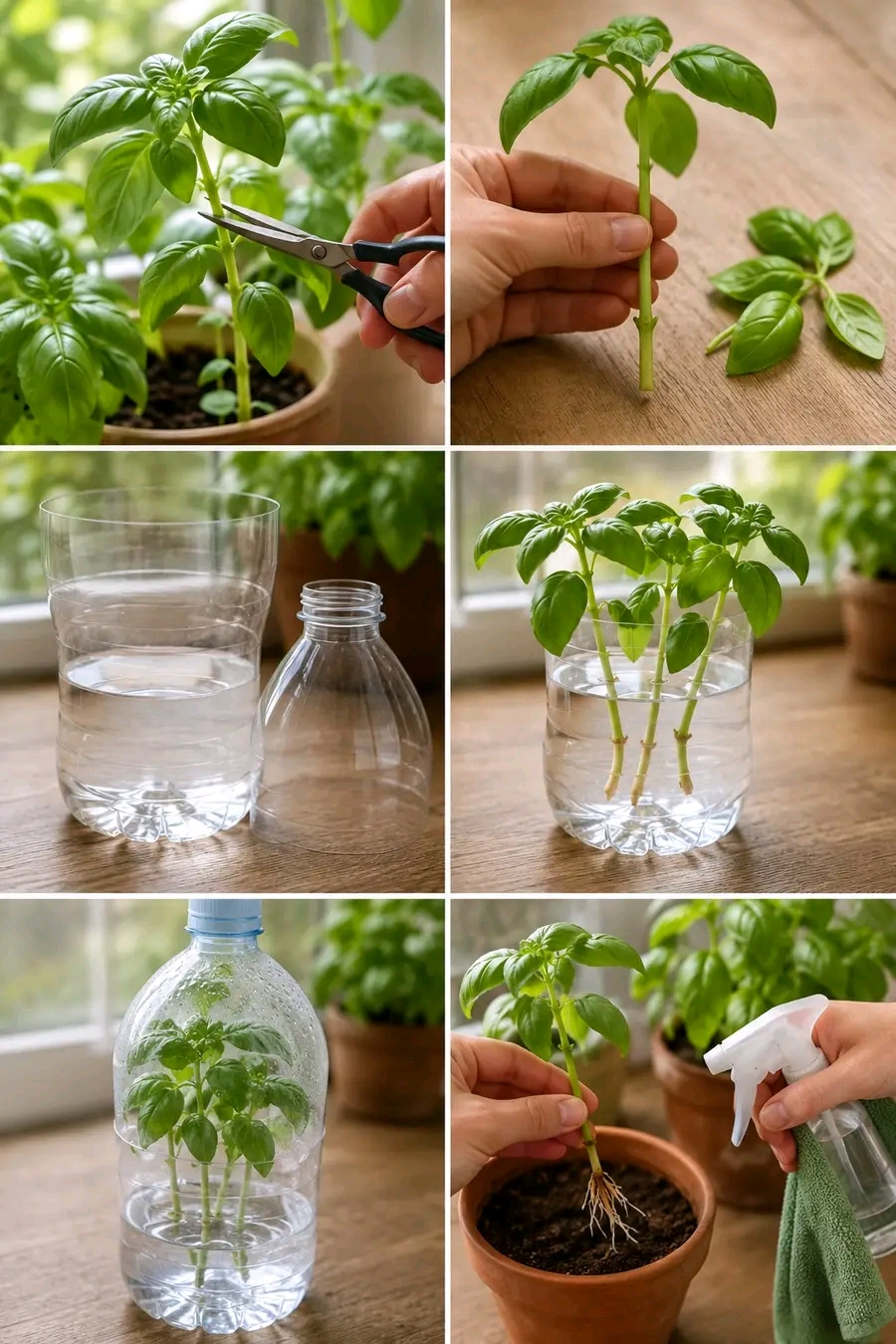
Basil is one of the most useful and beautiful herbs for anyone who wants fresh flavor, bright green leaves, a fragrant windowsill garden, and a simple plant-care project that can turn one healthy stem into several new plants. Its glossy leaves, sweet herbal scent, tender green stems, and fast-growing nature make it one of the easiest herbs to propagate at home. A small basil plant on a kitchen windowsill can quickly become a steady supply of fresh leaves for pasta, salads, soups, sandwiches, sauces, herbal drinks, and summer recipes when it is cared for correctly.
One of the easiest ways to multiply basil is by taking stem cuttings and rooting them in water. The method looks simple because it is simple: a healthy stem is cut below a node, lower leaves are removed, the stem is placed in clean water, and the cutting is kept in bright indirect light until roots appear. Some growers also place a clear bottle or plastic cover over the cuttings to create a small humidity dome. This can help the leaves stay fresh while the stems adjust, especially in dry indoor air. Once the roots are long enough, the cutting can be planted into soil and grown as a new basil plant.
This method is popular because basil roots quickly compared with many other herbs. A healthy cutting can begin showing small root bumps within days and develop visible roots within one to two weeks in warm bright conditions. However, success still depends on clean water, healthy stems, correct light, airflow, and gentle handling. A cutting placed in dirty water, harsh sun, cold conditions, or a sealed bottle with no airflow can rot before it roots. The goal is to create a fresh, clean rooting environment, not a wet stagnant container.
Why Basil Roots So Easily in Water
Basil stems contain nodes, which are the small joints where leaves grow from the stem. These nodes are important because they can produce roots when placed in water or moist soil. When a basil cutting is made correctly, at least one node sits below the water line. This gives the cutting the best chance to form roots. If only a plain stem section is placed in water with no node, rooting may be slower or may not happen well.
Basil is a soft-stemmed herb, which makes it naturally responsive to propagation. Unlike woody herbs that may take longer, basil grows quickly during warm seasons and often roots with very little help. This is why many gardeners prefer cuttings over seeds when they want faster results. A seedling takes time to germinate and grow, while a cutting already has leaves and a stem ready to develop roots.
Water propagation also lets the grower see the roots forming. This makes the method satisfying and easy to monitor. If the water becomes cloudy, it can be changed. If the stem begins to rot, it can be removed. If roots look strong and white, the cutting is ready for soil. This visibility makes the method especially helpful for beginners, kitchen gardeners, apartment growers, and anyone creating a small indoor herb garden.
Choosing the Right Basil Stem
The best basil cutting comes from a healthy plant with firm green stems and fresh leaves. Choose a stem that is not flowering, not woody, and not weak or yellowing. A stem that is actively growing will root better than one that is old, stressed, or already producing flowers. Flowering stems can root, but they often put energy into blooms instead of roots, so leafy young stems are better.
A good cutting is usually several inches long and has multiple leaf nodes. The top leaves should look fresh and strong. Lower leaves will be removed before placing the cutting in water, so the upper leaves are the ones that will keep the cutting alive while roots form. Avoid stems with pests, sticky residue, black spots, mildew, or damaged leaves. Propagating from a weak plant can carry problems into the new plant.
Cuttings taken in the morning often hold moisture well because the plant is naturally hydrated. Use clean scissors or pruning shears so the cut is smooth and less likely to rot. A crushed or torn stem can decay more easily in water. Clean tools also reduce the chance of introducing bacteria into the cutting.
Making the Cut Correctly
The cut should be made just below a node. This is where root formation is most likely to happen. After cutting, remove the lower leaves that would sit under the water. Leaves underwater will rot quickly, making the water cloudy and unpleasant. Only the bare stem and lower nodes should be submerged.
The top leaves can be kept, but if they are very large, removing a few can reduce moisture loss. A cutting with too many leaves may wilt because it has no roots yet to replace lost water. The goal is to leave enough foliage for energy while reducing stress. A small cluster of healthy top leaves is usually enough.
The stem should be placed into clean water immediately after cutting. If the cutting sits dry for too long, it may wilt. A clear glass, jar, or cut plastic bottle can work. The container should be clean, and the water should be fresh. If tap water is heavily chlorinated or very hard, filtered water or water left to sit for a while may be gentler.
Using a Bottle or Humidity Cover
A clear plastic bottle can be used as a simple humidity dome for basil cuttings. This can help keep moisture around the leaves while the cutting is still rootless. A bottle cover is most useful in dry rooms, near sunny windows, or in homes where cuttings wilt quickly. It creates a small greenhouse effect around the cutting.
However, the bottle should not create stagnant, trapped moisture for too long. Basil leaves need humidity, but they also need airflow. If condensation becomes heavy and the leaves stay wet all day, fungal problems can develop. The cover should be lifted daily to refresh the air. If the leaves look too wet or the smell becomes unpleasant, remove the cover and allow better ventilation.
The bottle should also stay out of direct hot sun. A closed clear cover in strong sunlight can heat up quickly and cook the cutting. Bright indirect light is safer. The goal is warmth and humidity, not heat stress. A covered cutting near a bright window with soft light can root well, while one in direct afternoon sun may collapse.
Water Care While Roots Form
Clean water is essential. Basil cuttings release organic material into the water, and bacteria can build up quickly if the water is ignored. Change the water every one to two days, or whenever it becomes cloudy. Rinse the container gently if slime appears on the sides. Fresh water keeps oxygen available and reduces rot risk.
The water level should cover the lower nodes but not drown the leaves. If leaves touch the water, remove them. A submerged leaf can rot and ruin the whole container. If several cuttings are placed together, make sure they are not packed too tightly. Crowded stems can reduce airflow and increase decay.
The cutting should remain upright enough that the leaves stay above the water. A narrow jar, glass, or bottle opening can help hold stems in place. If the container is too wide, stems may fall sideways and leaves may dip into the water. Simple support makes rooting cleaner.
Best Light for Basil Cuttings
Basil needs bright light to stay strong, but fresh cuttings should not be placed in harsh direct sun. Without roots, they cannot replace moisture quickly, so intense sunlight can cause wilting. Bright indirect light is ideal during the rooting stage. A windowsill with filtered light, a bright kitchen counter near a window, or a warm room with gentle daylight works well.
Once the cutting has roots and is planted in soil, it can gradually receive more direct sun. Basil loves bright conditions and often grows best with several hours of sun, especially outdoors or near a very bright window. Indoors, basil may become leggy if it does not receive enough light. A grow light can help if natural light is weak.
If basil cuttings stretch, lean, or produce small pale leaves, they may need more light. If the leaves droop, curl, or scorch, the light may be too strong or the cutting may be drying too quickly. Adjust placement gradually rather than making extreme changes.
How Long Basil Takes to Root
In warm bright conditions, basil can begin rooting quickly. Small root bumps may appear within several days, and visible roots may form within one to two weeks. Cooler rooms may slow the process. Old or stressed stems may also root more slowly. Patience is important, but the cutting should be checked regularly for rot.
Healthy new roots are usually white or pale and firm. They may begin as tiny points near the nodes and then grow into longer strands. Once the roots are about one to two inches long, the cutting can be planted into soil. Waiting too long can make water roots very long and delicate, which may be harder to adjust to soil.
If the stem turns brown, soft, or slimy before roots form, the cutting is rotting. Remove it and start again with a fresher stem and cleaner water. Rot usually comes from dirty water, submerged leaves, old stems, low oxygen, or overly warm stagnant conditions.
Planting Rooted Basil Into Soil
When the roots are long enough, prepare a small pot with drainage holes and fresh potting mix. Basil likes soil that stays lightly moist but does not become waterlogged. A good indoor herb mix or quality potting soil with added perlite can work well. The pot should not be too large at first because excess soil can stay wet around young roots.
Plant the cutting gently so the roots are covered and the stem stands upright. Water lightly after planting to settle the soil. Do not press the soil too hard because young roots need air. Keep the plant in bright indirect light for a few days while it adjusts from water to soil.
Water-grown roots can be delicate. The cutting may droop slightly after transplanting, but it should recover if the soil stays lightly moist and the light is not too harsh. Avoid strong fertilizer immediately after planting. Let the roots adapt first.
Helping Basil Adjust After Transplanting
The transition from water to soil is an important stage. In water, roots are constantly surrounded by moisture. In soil, roots must adapt to air pockets and changing moisture levels. Keep the soil evenly moist for the first week, but not soggy. After the plant begins growing, allow the top layer to dry slightly between watering.
A humidity cover can be used for a short time after transplanting if the cutting wilts, but it should be ventilated daily. Do not leave basil sealed in a damp bottle for long periods. Basil enjoys moisture but can develop fungal issues if leaves stay wet and airflow is poor.
Once new growth appears, the plant can be moved gradually into stronger light. This helps basil become bushy and flavorful. A rooted cutting that receives enough light can grow quickly into a harvestable plant.
Pinching Basil for Fuller Growth
Basil becomes fuller when it is pinched regularly. Instead of letting one tall stem grow straight upward, pinch above a set of leaves to encourage side branches. Each cut can create a bushier plant with more harvestable leaves. This is one of the most important basil care habits.
When harvesting, avoid removing all leaves at once. Take small amounts from the top and allow the plant to continue growing. Regular light harvesting encourages new growth and prevents the plant from becoming tall and weak. If flower buds appear, pinch them off unless you want seeds. Flowering can make basil leaves taste stronger and reduce leafy growth.
A basil cutting that was rooted in water can become a strong new plant if it is pinched early. Once it has settled into soil and is growing well, begin shaping it into a compact, leafy herb plant. This creates a better kitchen display and more usable leaves.
Watering Basil in Soil
Basil likes consistent moisture, but it does not like soggy roots. Water when the top layer of soil begins to dry. In hot weather or bright windows, basil may need water often. In cooler indoor conditions, it may dry more slowly. Always check the soil rather than watering only by schedule.
A pot with drainage holes is essential. Water should move through the soil and out of the pot. If basil sits in standing water, roots can rot. Empty saucers after watering. A terracotta pot can help soil dry faster, while plastic or glazed ceramic holds moisture longer.
Wilting basil may be thirsty, but it can also wilt from root problems. If the soil is dry, water it. If the soil is wet and the plant wilts, the roots may be stressed. Overwatering is a common problem for herbs grown indoors.
Feeding Basil Without Overdoing It
Basil grows quickly and can benefit from gentle feeding, especially if it is harvested often. A diluted balanced liquid fertilizer can be used during active growth. However, too much fertilizer can make basil grow soft and less flavorful. The plant should be fed lightly, not aggressively.
If basil is growing in fresh potting mix, it may not need fertilizer immediately. Once it begins producing steady new growth, light feeding can support leaf production. Organic options such as diluted compost tea can be used carefully, but they should not smell sour or create fungus gnats indoors.
For kitchen herbs, clean care is important. Avoid heavy homemade mixtures that leave odor or residue. Basil should smell fresh and herbal, not sour or spoiled. Balanced moisture, bright light, and regular pinching often matter more than fertilizer.
Common Problems With Basil Cuttings
One common problem is rotting stems in water. This usually happens when leaves are left underwater, water is not changed often, or the cutting was weak to begin with. Clean water and bare lower stems prevent many issues. Another problem is wilting leaves. This can happen when the cutting receives too much direct sun, dry air, or not enough humidity before roots form.
A third problem is leggy growth. Basil becomes tall and weak when light is too low. Moving it closer to a bright window or using a grow light can help. A fourth problem is yellow leaves after transplanting. This may happen from transplant shock, overwatering, or poor light. Keep the plant stable and avoid strong feeding until it recovers.
A fifth problem is pests. Basil can attract aphids, whiteflies, spider mites, and fungus gnats. Inspect leaves regularly, especially the undersides and new growth. Clean care and good airflow help prevent pest problems.
Using Basil Cuttings for a Kitchen Herb Display
Basil cuttings can create a beautiful kitchen herb display. A few rooted cuttings planted together in a terracotta pot can look full and fresh on a sunny windowsill. The green leaves add color to the room, and the fragrance makes the kitchen feel alive. For modern apartment decor, basil also works well in simple white pots, clear glass jars during rooting, or small herb planters grouped with parsley, mint, thyme, or oregano.
A clear water container can look attractive while roots develop, but it should still be cleaned often. Cloudy water or slimy stems reduce the beauty of the display. Once planted, a healthy basil pot can become both decorative and useful. It brings natural texture to countertops, breakfast nooks, balcony shelves, and bright home office windows.
For a more premium look, keep the plant compact by pinching it regularly. Remove yellow leaves, wipe dust from nearby surfaces, and rotate the pot so growth stays balanced. A tidy basil plant looks much better than a tall stretched plant with bare stems.
Growing Basil Indoors
Growing basil indoors is possible, but light is the biggest challenge. Basil needs stronger light than many common houseplants. A bright south or west-facing window may work, depending on climate and heat. In lower-light homes, a grow light can make a big difference. Without enough light, basil may survive but become thin and weak.
Indoor basil also needs warmth. It dislikes cold drafts and chilly windows. Keep it away from cold glass in winter and avoid placing it near air-conditioning vents. Warm stable conditions help basil grow fresh leaves. A kitchen can be a good place if it is bright and not too cold.
Airflow matters too. Basil does not like stagnant damp leaves. If using a humidity dome or bottle cover, ventilate daily. Once rooted and growing, basil should not remain covered constantly. Healthy airflow keeps the plant stronger.
Growing Basil Outdoors After Rooting
Rooted basil cuttings can also be moved outdoors when temperatures are warm. They should be hardened off gradually before being placed in full outdoor sun. A cutting grown indoors is tender and can burn if suddenly moved into direct sunlight. Start with shaded outdoor light, then slowly increase exposure over several days.
Outdoor basil grows quickly in warm weather with consistent moisture. It can be planted in containers, raised beds, balcony planters, or herb gardens. The soil should drain well, and the plant should be protected from cold. Basil is sensitive to frost and cool temperatures.
Outdoor plants may attract pests, but they also benefit from stronger light and airflow. Regular harvesting keeps the plant bushy. If flowers appear, pinch them off to keep leaf production going.
Continue to Page 2
Continue to page 2 for more details about this article and the key points many readers miss on the first page.