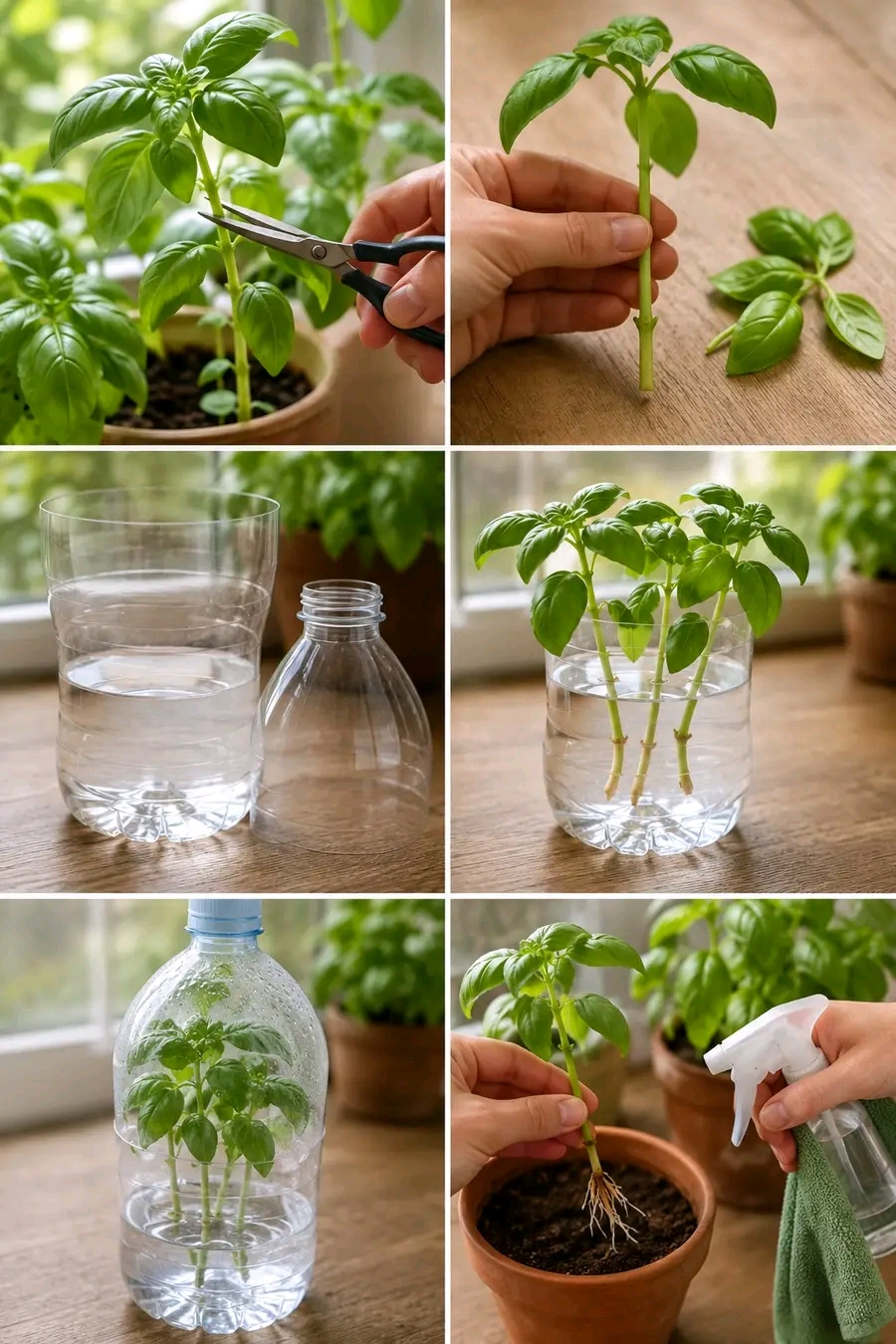
Why the Bottle Method Can Help
The bottle method can help basil cuttings by increasing humidity around the leaves while roots are forming. A cut stem cannot absorb water efficiently until roots develop, so the leaves may lose moisture faster than the stem can replace it. A humidity cover slows this moisture loss and helps the cutting stay upright.
The bottle also creates a controlled mini environment. It protects the cutting from drafts and sudden dry air. This can be especially useful in homes with air conditioning, heating, or dry indoor conditions. However, it should not be sealed tightly without ventilation. Fresh air is still necessary.
Condensation inside the bottle is normal, but heavy dripping and constantly wet leaves are not ideal. If the bottle becomes too wet inside, lift it off for a while. The best setup is humid but fresh, bright but not hot, and moist but not stagnant.
Safety and Cleanliness
Because basil is an edible herb, cleanliness matters. Use clean scissors, clean containers, and fresh water. Do not root basil in containers that held chemicals or cleaning products. If using a recycled plastic bottle, wash it well before use. The cutting should be healthy and free from pests before propagation.
Before eating basil leaves from newly propagated plants, rinse them gently. If any sprays, fertilizers, or homemade treatments were used, follow safe waiting and washing practices. Basil grown for food should be cared for with simple, food-safe routines.
Avoid using strong pest sprays on basil unless they are labeled safe for edible plants. Natural does not always mean safe to eat. Clean water, hand removal of pests, and proper growing conditions are often the first steps.
Common Mistakes With Basil Propagation
One common mistake is cutting too low or using a stem with no node below the water. Roots form best from nodes. Another mistake is leaving leaves underwater, which causes rot. A third mistake is placing cuttings in direct sun before roots form. This can wilt them quickly.
A fourth mistake is never changing the water. Stale water becomes cloudy and low in oxygen. A fifth mistake is waiting too long to plant rooted cuttings into soil. Very long water roots can be fragile and may struggle when transferred. A sixth mistake is planting into a pot without drainage. Basil needs moisture, but it also needs oxygen around the roots.
A seventh mistake is forgetting to pinch after planting. Without pinching, basil may grow tall and thin. Regular trimming creates the full leafy shape most growers want. An eighth mistake is keeping basil indoors in low light and expecting thick growth. Basil needs strong brightness to perform well.
Final Thoughts
Growing basil from cuttings in water is one of the easiest ways to create new herb plants from a single healthy stem. The method is simple, inexpensive, and rewarding. A clean cut below a node, fresh water, bright indirect light, and patience can produce roots quickly. A clear bottle or humidity cover can help the cutting stay fresh, but it should be ventilated so the plant does not rot.
The real secret to successful basil propagation is cleanliness and balance. Keep leaves out of the water, change the water often, avoid harsh sun, and plant the cutting into well-draining soil once roots are ready. After transplanting, give the plant bright light, steady moisture, gentle feeding, and regular pinching. These habits turn a small cutting into a full, useful herb plant.
With the right care, basil cuttings can become a beautiful and practical part of a kitchen windowsill, balcony garden, patio herb planter, apartment plant shelf, or sunny indoor herb display. Fresh roots, glossy leaves, clean water, healthy soil, and steady maintenance will always create better results than complicated shortcuts. One healthy basil plant can become many, and each new cutting can bring more fragrance, flavor, and green beauty into the home.