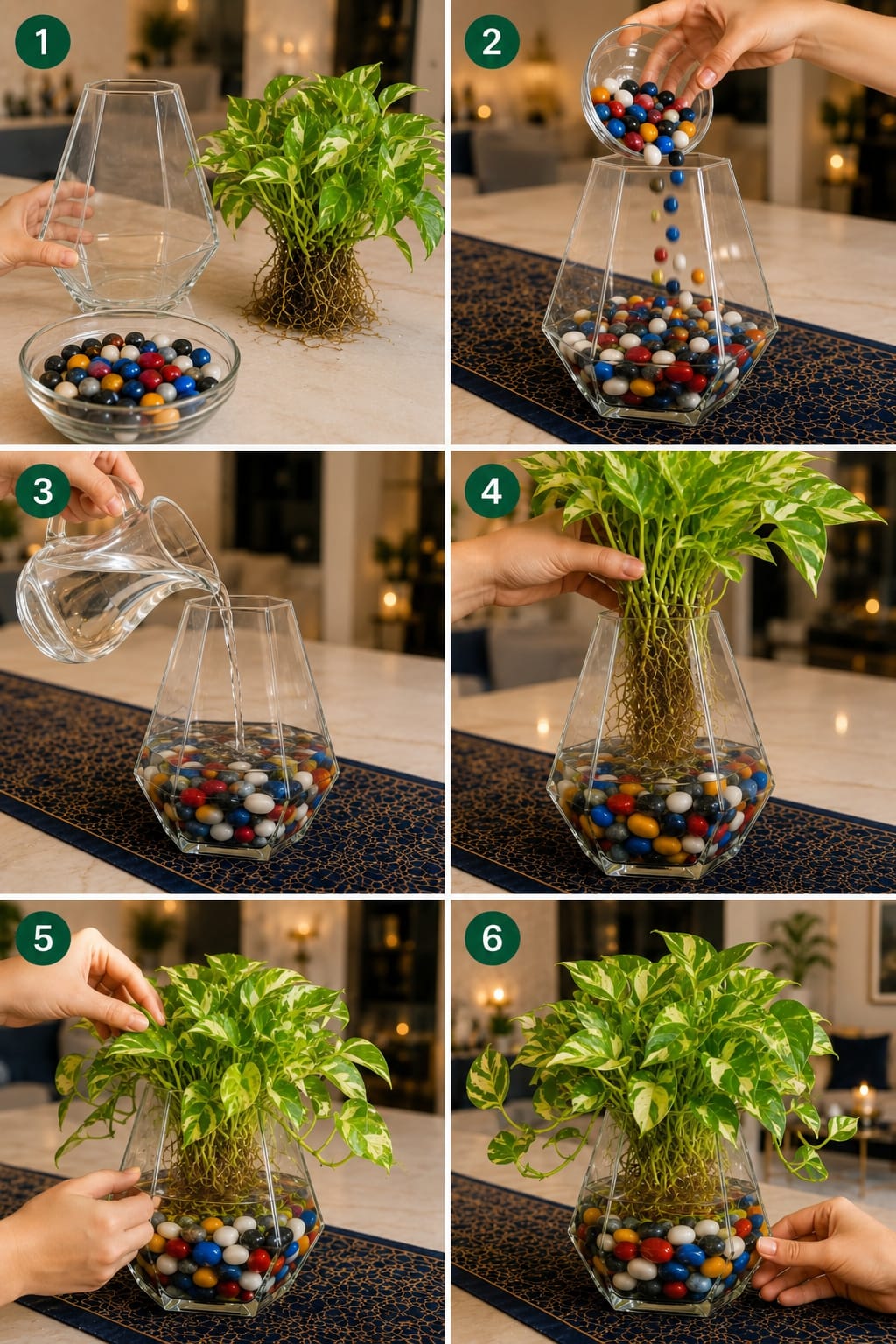
Pothos is one of the easiest and most beautiful plants to grow in water. Its bright green leaves, soft trailing stems, and fast-growing roots make it perfect for a simple glass vase display. When you place the roots in clean water and add decorative pebbles at the bottom, the plant becomes both a living indoor decoration and a low-maintenance plant-care project.
A glass vase filled with colorful pebbles creates a cheerful base, while the clear water lets you see the roots as they grow. The plant looks fresh, modern, and playful. It works well on a dining table, coffee table, kitchen counter, office desk, windowsill, shelf, or plant corner. This method is also perfect for people who do not want soil mess indoors.
The best part is that pothos adapts very well to water. You can grow cuttings in water for months or even years if you keep the water clean and give the plant enough light. A full pothos in a clear vase can look lush, bright, and elegant with very little effort.
Why Pothos Grows Well in Water
Pothos is naturally flexible. It can grow in soil, climb supports, trail from baskets, or root easily in water. Each stem has small nodes where roots can form. When those nodes stay under water, new roots begin to grow.
This makes pothos one of the best beginner plants for water propagation and water displays. The roots are strong, the leaves stay attractive, and the plant does not need complicated care.
Growing pothos in water also lets you watch the root system develop. This makes the display more interesting because the roots become part of the decoration.
Why Use a Glass Vase?
A glass vase gives the arrangement a clean and decorative look. It allows light to pass through the water and shows the colorful pebbles at the bottom. The transparency makes the plant look light and fresh instead of heavy.
A wide glass vase is especially useful because it gives roots room to spread. It also creates a stable base for the plant. If you use a narrow jar, the plant may tip as it grows fuller.
Choose a vase that is strong, stable, and easy to clean.
Why Decorative Pebbles Are Helpful
Pebbles do more than decorate the vase. They help anchor the roots and hold the plant upright. Without pebbles, the plant may float, lean, or shift every time you move the vase.
Colored pebbles create a playful look. White pebbles create a clean modern look. Natural river stones create a soft earthy look. Dark stones create dramatic contrast with bright green leaves.
Whatever color you choose, rinse the pebbles well before adding them to the vase. Dusty stones can cloud the water.
Best Pothos Varieties for This Display
Many pothos varieties grow well in water. Choose one based on the leaf color you want.
- Golden pothos: Green leaves with yellow variegation.
- Marble queen pothos: Cream and green marbled leaves.
- Neon pothos: Bright lime-green leaves.
- Jade pothos: Solid green leaves and strong growth.
- Manjula pothos: Cream, green, and soft variegated leaves.
- N’Joy pothos: Compact leaves with white and green patterns.
Golden pothos and neon pothos are especially easy for beginners because they grow quickly and root strongly in water.
Materials You Need
- Clear glass vase or wide jar
- Clean decorative pebbles
- Healthy pothos plant or cuttings
- Clean water
- Sharp scissors or pruning snips
- Small bowl for rinsing roots
- Optional liquid fertilizer for water plants
- Soft cloth for cleaning the glass
Use clean tools and clean materials. Water displays look best when everything starts fresh.
Step 1: Choose a Healthy Pothos
Start with a healthy pothos plant or several rooted cuttings. The leaves should look firm and bright. Avoid stems with yellow leaves, mushy roots, or dark rotten sections.
If you are using a soil-grown pothos, remove it gently from the pot and rinse the roots very well. Soil left on the roots can make the water dirty and cloudy.
If you are using cuttings, make sure each cutting has at least one node that can sit under water.
Step 2: Rinse the Pebbles
Place the pebbles in a strainer and rinse them under running water until the water runs clear. This removes dust, powder, and small debris.
If the pebbles are very dusty, soak them for a few minutes and rinse again. Clean pebbles keep the vase water clearer for longer.
Do not skip this step. Dirty pebbles are one of the fastest ways to make a water planter look cloudy.
Step 3: Add Pebbles to the Vase
Pour a layer of pebbles into the bottom of the glass vase. The layer should be deep enough to hold roots in place, but not so deep that it takes away too much water space.
For a medium vase, 2 to 3 inches of pebbles usually works well. If the vase is tall, you can add more pebbles for stability.
Spread the pebbles evenly so the vase sits balanced.
Step 4: Add Water
Pour clean water into the vase until the pebbles are covered and there is enough water for the roots. Use room-temperature water. Very cold water can shock the plant.
If your tap water is very hard or treated heavily, filtered water, rainwater, or water left out overnight may work better.
The water level should cover the roots or nodes, but it should not cover the leaves.
Step 5: Place the Pothos in the Vase
Lower the pothos roots into the vase. Use the pebbles to anchor the roots gently. Do not crush the roots. Just position them so the plant stays upright.
If using cuttings, place the nodes under water and keep all leaves above the waterline. Leaves left underwater will rot and make the water smell bad.
Arrange the stems so the plant looks full from all sides.
Step 6: Adjust the Final Shape
Once the plant is in place, gently spread the stems and leaves. Let some stems trail naturally over the vase edge. Keep the center full and balanced.
If the plant leans to one side, move a few pebbles around the roots to support it. You can also use a wider vase for better stability.
A good arrangement should look natural, not forced.
Where to Place the Vase
Pothos grows best in bright indirect light. Place the vase near a window, on a bright table, or on a shelf with filtered daylight. Avoid harsh direct sun because it can heat the water and encourage algae.
Pothos can tolerate medium light, but growth will be slower. If the room is too dark, the plant may become leggy and lose some variegation.
A bright spot without hot sun is ideal.
Best Light for Healthy Water Roots
Light affects both the leaves and roots. Bright indirect light helps the plant produce energy and maintain strong growth. If the plant receives too little light, roots may grow slowly and leaves may become smaller.
If the vase is in direct sun, the water can warm up and algae can grow quickly. Move it slightly back from the window or use a sheer curtain if the sun is strong.
Morning light is usually safer than afternoon sun.
How Often to Change the Water
Change the water every 5 to 7 days for the freshest display. If the water stays clear, you may be able to change it every 1 to 2 weeks, but weekly changes are best for clean roots.
Fresh water gives the roots oxygen and prevents odor. It also keeps the glass vase looking beautiful.
If the water becomes cloudy, change it immediately.
How to Change the Water Without Disturbing the Plant
Hold the plant gently in place and pour out most of the old water. If the vase is heavy, use a small cup to remove water slowly. Then refill with clean room-temperature water.
Every few weeks, remove the plant carefully and rinse the pebbles if needed. Clean the glass with a soft cloth to remove algae or mineral marks.
Be gentle with the roots because water roots can be delicate.
How to Prevent Algae
Algae grows when water receives strong light and nutrients. A little algae is common in clear glass vases, but too much can make the display look dirty.
To prevent algae:
- Keep the vase in bright indirect light, not direct sun.
- Change the water regularly.
- Clean the glass when needed.
- Do not overuse fertilizer.
- Use darker pebbles if algae becomes very visible.
- Rinse roots gently during deep cleaning.
Clear water is one of the main things that makes this display look elegant.
Should You Add Fertilizer?
Water-grown pothos eventually needs nutrients because plain water does not provide enough food long-term. Use a very weak liquid fertilizer during spring and summer.
Add only a few drops or use the fertilizer at a much weaker strength than the label suggests. Too much fertilizer can burn roots and cause algae.
Fertilize once a month during active growth, then reduce or stop during winter.
Signs the Pothos Needs Nutrients
- New leaves are very small
- Growth slows during warm months
- Leaves look pale
- Older leaves yellow one at a time
- Roots look healthy but growth is weak
If the plant has enough light and clean water but still grows slowly, a weak fertilizer may help.
Signs of Too Much Fertilizer
- Brown root tips
- Cloudy water after feeding
- Algae growth increases quickly
- Leaf tips turn brown
- Roots look slimy
If this happens, pour out the water, rinse the roots gently, clean the vase, and refill with fresh water.
How to Keep the Plant Bushy
Pothos naturally grows long vines. If you want a bushier vase display, trim the long stems and place the cuttings back into the vase.
Each cutting should have a node under water. Over time, the new cuttings will root and make the plant look fuller.
Regular trimming keeps the plant compact and attractive.
How to Take Pothos Cuttings
Use clean scissors and cut below a node. Remove the lower leaves from the cutting. Place the node under water and keep the upper leaves above the waterline.
Roots can appear within a couple of weeks in good conditions. Some cuttings root faster than others.
Adding several cuttings creates a lush display quickly.
Can Pothos Live in Water Forever?
Pothos can live in water for a long time if the water is changed regularly and the plant receives light and nutrients. It may not grow as fast as a soil-grown pothos, but it can stay healthy and decorative.
Long-term water growth requires maintenance. The vase must stay clean, roots need oxygen, and the plant needs occasional weak feeding.
If the plant becomes too large, you can move it to soil or divide it into several water planters.
Moving Water-Grown Pothos to Soil
If you decide to move the plant to soil, use a pot with drainage holes and a light potting mix. Water roots are different from soil roots, so the plant may need time to adjust.
Keep the soil lightly moist for the first couple of weeks after planting. Do not let it dry completely during the transition.
After the plant adjusts, water normally when the top soil begins to dry.
Can You Use Soil-Grown Pothos in Water?
Yes, but you must clean the roots well. Remove as much soil as possible before placing the plant in the vase. Soil in water can rot, cloud the vase, and create odor.
After rinsing, some older soil roots may decline. New water roots can grow over time. Trim any roots that become mushy.
Cuttings often adjust to water more easily than full soil-grown plants.
Common Problems With Water-Grown Pothos
- Cloudy water: Dirty pebbles, rotting leaves, old water, or too much fertilizer.
- Yellow leaves: Old leaves, poor water quality, low nutrients, or root stress.
- Rotting stems: Leaves or stem sections rotting underwater.
- Algae: Too much direct light or too much fertilizer.
- Slow growth: Low light, no nutrients, or cold conditions.
- Bad smell: Rotting plant material or dirty water.
Most problems can be fixed by cleaning the vase, refreshing the water, trimming damaged parts, and improving light.
Continue to Page 2
Continue to page 2 for more details about this article and the key points many readers miss on the first page.