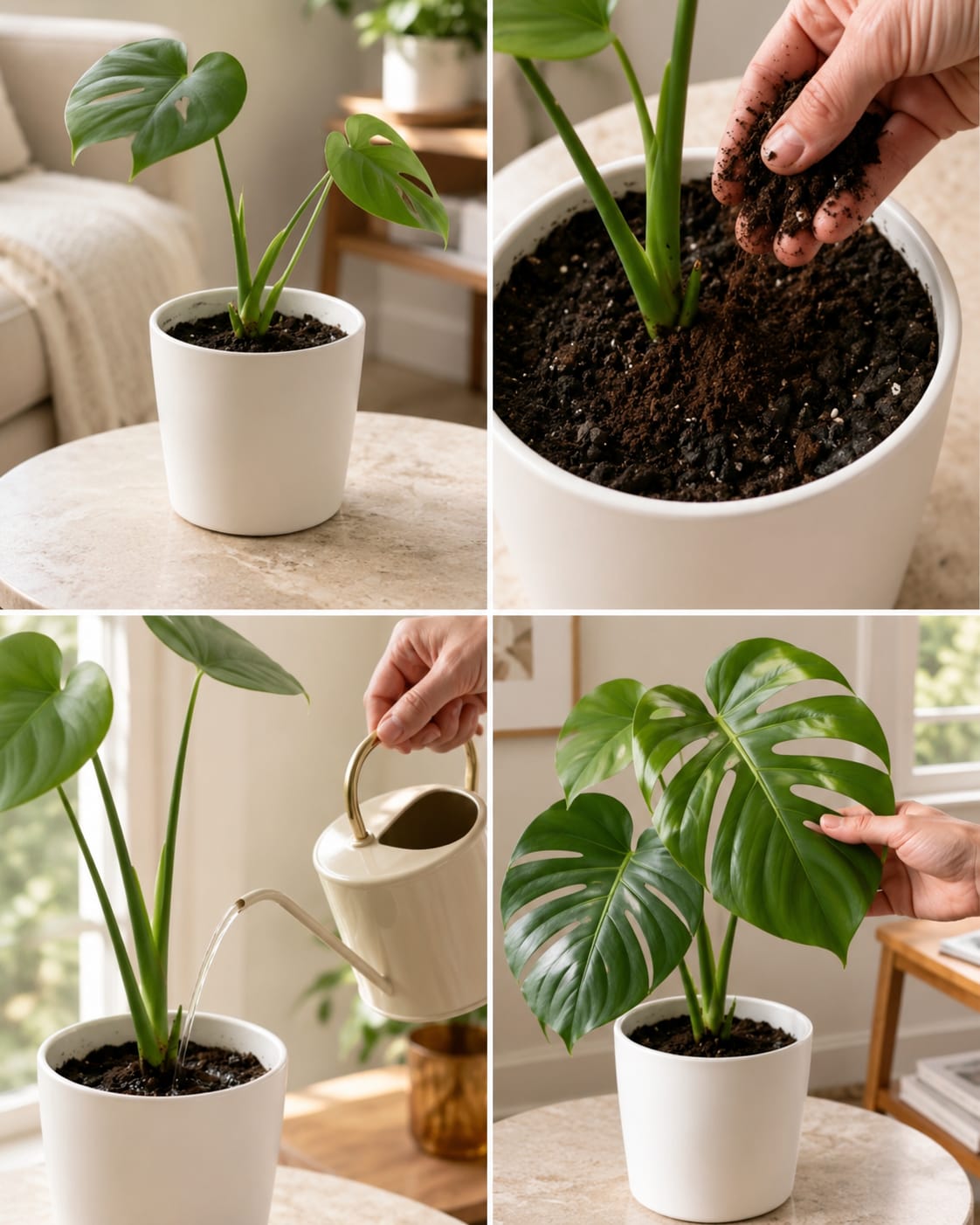
Monstera is one of the most loved indoor plants because of its bold tropical leaves, dramatic splits, and strong jungle-style look. A healthy Monstera can turn a simple corner into a beautiful green feature. But when the plant grows slowly, produces small leaves, or looks weak, many plant lovers start searching for a simple natural boost.
One popular plant-care idea is using coffee grounds around Monstera plants. Coffee grounds can be useful when used correctly, but they must be handled carefully. Too much coffee can cause compacted soil, excess moisture, fungus gnats, mold, or root stress. The goal is not to dump coffee grounds into the pot. The goal is to use a very small amount as part of a balanced soil routine.
Monstera needs airy soil, bright indirect light, careful watering, and steady nutrition. Coffee grounds can support the soil when used lightly, especially if they are dry, mixed with other organic material, or added through compost. They should never replace proper fertilizer, good drainage, or correct watering.
Why Monstera Plants Need Good Soil
Monstera plants grow best when their roots can breathe. In nature, they climb trees and grow in loose organic material. Indoors, they need a chunky potting mix that holds light moisture but does not stay soggy.
If the soil becomes dense, wet, or compacted, the roots may struggle. The plant may stop producing large leaves, the stems may weaken, and yellow leaves may appear. A Monstera with healthy roots can grow bigger leaves and stronger stems over time.
This is why any soil amendment, including coffee grounds, must be used carefully. The soil should remain loose, airy, and well-draining.
Can Coffee Grounds Help Monstera?
Coffee grounds can help in small amounts because they contain organic matter and small amounts of nutrients. They can also improve compost when mixed properly. But fresh or wet coffee grounds added directly in thick layers can cause problems.
Used coffee grounds are best when dried first or composted. A tiny sprinkle mixed into the top layer of soil may be fine, but a thick pile on top of the pot can block airflow and hold too much moisture.
For Monstera, coffee grounds should be treated as a light soil booster, not a miracle fertilizer.
The Best Way to Use Coffee Grounds
The safest method is to dry used coffee grounds before applying them. Spread the grounds on a tray and let them dry completely. Once dry, use only a small amount.
For a medium Monstera pot, sprinkle about one teaspoon of dry used coffee grounds over the soil. Then gently mix it into the top inch of soil. Do not leave it as a thick layer on the surface.
After mixing, water normally only if the soil is ready for watering. Do not water just because you added coffee grounds.
How Often to Use Coffee Grounds
Coffee grounds should not be used every week. Once every 6 to 8 weeks during spring and summer is enough for most indoor Monstera plants.
Do not use coffee grounds during winter if the plant is not actively growing. Slow winter growth means the soil dries more slowly, and extra organic material can increase the risk of mold or gnats.
Less is better. A small amount can be helpful. Too much can harm the plant.
Do Not Use Wet Coffee Grounds in Thick Layers
Wet coffee grounds can form a dense mat on top of soil. This mat can block oxygen, trap moisture, and encourage mold. Monstera roots need airflow, so a thick wet layer is risky.
If coffee grounds look clumpy, sticky, or moldy, do not add them to the pot. Dry them first or place them in compost instead.
The soil surface should stay open and breathable.
Best Soil Mix for Monstera
A good Monstera mix should be chunky and airy. Coffee grounds should only be a tiny addition, not the base of the soil.
A strong Monstera soil mix can include:
- 2 parts indoor potting mix
- 1 part orchid bark
- 1 part perlite
- 1 part coco coir
- A small amount of pumice
- A small amount of compost or worm castings
This kind of mix supports healthy roots and prevents water from staying trapped around the root system.
Why Orchid Bark Helps
Orchid bark creates air pockets in the soil. This is very helpful for Monstera because the roots like oxygen. Bark also helps water drain faster, which reduces the chance of root rot.
If your Monstera soil feels heavy or muddy, add orchid bark and perlite when repotting. Coffee grounds cannot fix dense soil by themselves.
Healthy soil structure is more important than any single ingredient.
Watering After Adding Coffee Grounds
Watering should always depend on soil moisture. Check the top 1 to 2 inches of soil with your finger. If it feels dry, water thoroughly. If it still feels damp, wait.
When you water, pour slowly until excess water drains from the bottom of the pot. Empty the saucer afterward.
Do not keep Monstera soil constantly wet. Moisture plus coffee grounds can attract fungus gnats if the pot stays damp for too long.
Signs Your Monstera Needs Water
- Top soil feels dry
- Leaves droop slightly
- Pot feels lighter
- Leaf edges curl slightly
- New growth looks slower than usual
Water deeply when the soil is ready, then allow the top layer to dry again.
Signs of Overwatering
- Yellow leaves
- Soft stems
- Wet soil for many days
- Fungus gnats around the pot
- Brown mushy roots
- Bad smell from the soil
- Dark spots on leaves with yellow edges
If these signs appear, stop adding coffee grounds and check the roots. The plant may need fresh airy soil.
Best Light for Large Monstera Leaves
Coffee grounds will not create large leaves if the plant does not receive enough light. Monstera needs bright indirect light to grow big leaves and develop splits.
Place the plant near a bright window where it receives strong filtered daylight. Avoid harsh direct afternoon sun that can burn the leaves.
If new leaves are small and plain, low light may be the real problem, not lack of coffee grounds or fertilizer.
How to Encourage Leaf Splits
Leaf splits, also called fenestrations, usually appear as Monstera matures. The plant needs age, good light, healthy roots, and support.
To encourage larger split leaves:
- Give bright indirect light.
- Use a moss pole or support.
- Keep roots healthy in chunky soil.
- Water correctly.
- Feed lightly during active growth.
- Do not constantly move the plant.
Coffee grounds can be part of soil care, but they are not the main reason leaves split.
Should You Use Coffee as Liquid Fertilizer?
Pouring brewed coffee into Monstera soil is not the best routine. Coffee can be too acidic or too strong depending on how it is prepared. It can also make the soil smell unpleasant if used often.
If you want to try coffee water, it must be very diluted and used rarely. A safer option is using dry used coffee grounds in tiny amounts or adding coffee grounds to compost first.
For indoor plants, controlled fertilizer is usually safer than random coffee watering.
Composting Coffee Grounds First
The best way to use coffee grounds for plants is often through compost. Composting breaks the grounds down and balances them with other organic materials.
Mix coffee grounds with dry leaves, shredded paper, plant waste, and other compost materials. Once the compost is finished, you can add a small amount to Monstera soil as a gentle organic amendment.
Composted coffee grounds are safer than fresh wet grounds placed directly on the soil.
Using Coffee Grounds With Worm Castings
Worm castings are a gentle natural soil amendment. They improve soil biology and provide mild nutrients. If you already use worm castings, you do not need much coffee ground at all.
A small top dressing of worm castings is often more balanced than direct coffee grounds. You can mix a tiny amount of dry coffee grounds with worm castings before applying.
This creates a softer, safer soil boost.
Feeding Monstera Properly
During spring and summer, Monstera benefits from light feeding. Use a balanced liquid houseplant fertilizer at half strength every 4 to 6 weeks.
If you use coffee grounds, do not overdo fertilizer at the same time. Too many nutrients can stress roots and cause brown tips.
A simple feeding routine is better than constant experimenting.
When Not to Use Coffee Grounds
Avoid coffee grounds if:
- The soil is already wet or compacted
- The plant has fungus gnats
- The pot has no drainage holes
- The plant has root rot
- The room is cold and dark
- The plant is newly repotted and stressed
- You already fertilized recently
- The soil surface has mold
In these situations, coffee grounds can make the problem worse.
How to Fix Mold From Coffee Grounds
If mold appears on the soil after using coffee grounds, remove the top layer of soil. Let the pot dry slightly and improve airflow around the plant.
Stop using coffee grounds for a while. Check whether the soil is staying too wet. If the mold keeps returning, repot the plant into fresh chunky soil.
Mold usually means too much moisture, too much organic material, or poor airflow.
How to Prevent Fungus Gnats
Fungus gnats love damp organic soil. Coffee grounds can attract them if the pot stays wet.
To prevent gnats:
- Let the top soil dry before watering.
- Use airy soil with perlite and bark.
- Do not leave wet coffee grounds on the surface.
- Remove dead leaves from the pot.
- Use sticky traps if gnats appear.
- Water less often in winter.
Clean soil habits matter more than adding extra ingredients.
How to Apply Coffee Grounds Safely
Use this simple method:
- Use only used coffee grounds, not fresh coffee powder.
- Dry the grounds completely.
- Sprinkle a very small amount on the soil.
- Mix it into the top inch of soil.
- Do not cover the whole surface thickly.
- Wait 6 to 8 weeks before repeating.
- Stop if mold, gnats, or yellowing appears.
This keeps the routine gentle and safer for indoor use.
Repotting a Weak Monstera
If your Monstera is weak, small, yellowing, or growing poorly, repotting may help more than coffee grounds. Remove the plant from the pot and inspect the roots. Healthy roots are firm and light-colored. Rotten roots are mushy, dark, and smelly.
Trim rotten roots with clean scissors. Repot into a pot with drainage holes and chunky soil.
After repotting, keep the plant in bright indirect light and avoid heavy feeding for several weeks.
Choosing the Right Pot
Use a pot with drainage holes. Monstera roots do not like sitting in trapped water. A decorative outer pot is fine, but the inner pot should drain properly.
Choose a pot only slightly larger than the root ball. A pot that is too large holds extra wet soil, which can increase root rot risk.
For a young Monstera, a simple nursery pot inside a decorative ceramic pot can work very well.
Using a Moss Pole for Stronger Growth
Monstera is a climbing plant. A moss pole, coir pole, plank, or trellis gives it support. When the plant can climb, it may produce larger leaves over time.
Guide the stem gently to the support with soft ties. Do not tie too tightly. Aerial roots can attach to the pole and help the plant climb naturally.
Support plus light often makes a bigger difference than coffee grounds.
Cleaning Monstera Leaves
Large Monstera leaves collect dust. Dust blocks light and makes the plant look dull. Wipe leaves with a soft damp cloth every few weeks.
Clean leaves absorb light better and look glossier. This helps the plant use the bright indirect light it receives.
Do not use oily leaf shine products. Plain water is enough.
Humidity for Monstera
Monstera can handle normal home humidity, but it grows better with moderate humidity. If the air is very dry, leaf edges may brown and new leaves may struggle to open smoothly.
Use a humidifier, group plants together, or place the plant away from heaters and air vents.
Humidity supports fresh growth, but roots still need airy soil and correct watering.
Indoor Decor Ideas
A healthy Monstera looks beautiful in almost any room. Its large leaves create a tropical statement without needing many plants.
- Place it near a bright window in a white ceramic pot.
- Use a terracotta pot for a natural warm look.
- Style it on a wooden plant stand beside a sofa.
- Place it in a bedroom corner for calm greenery.
- Use a moss pole for vertical jungle style.
- Pair it with pothos and snake plants for texture contrast.
- Place it near neutral walls so the leaves stand out.
Monstera works especially well with wood, rattan, linen, stone, and simple modern furniture.
Continue to Page 2
Continue to page 2 for more details about this article and the key points many readers miss on the first page.