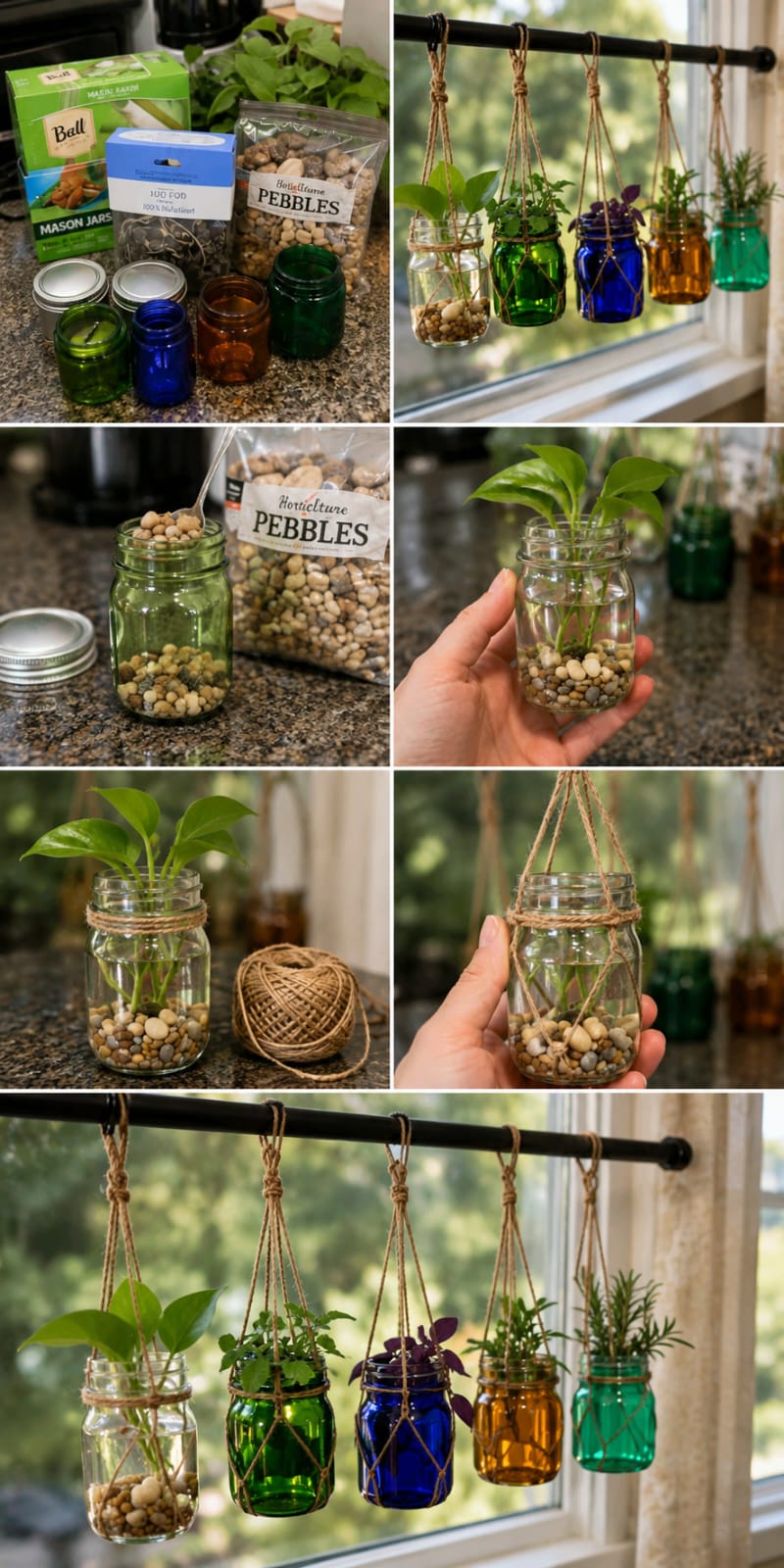
Hanging mason jar water planters are one of the easiest and prettiest ways to grow small plants indoors. They look fresh, simple, colorful, and handmade. With a few small jars, clean pebbles, water, plant cuttings, and twine, you can create a beautiful mini window garden that does not need soil. The jars catch the light, the roots become part of the display, and the hanging style saves space on counters and shelves.
This idea is perfect for plant lovers who enjoy water propagation, small-space gardening, and simple DIY decor. It works beautifully in kitchens, sunny windows, bathrooms with light, bedrooms, plant rooms, offices, and balconies. The jars can be clear, green, blue, amber, or any color that matches your style. When several jars are hung together from a rod, branch, or hook, they create a soft floating garden effect.
The best part is that this project is beginner-friendly. You do not need expensive materials. Small mason jars, horticultural pebbles, strong twine, and healthy plant cuttings are enough. You can grow pothos, philodendron, lucky bamboo, spider plant babies, wandering plants, mint cuttings, basil cuttings, and many other easy water-rooting plants.
Why Hanging Mason Jar Planters Are So Popular
Hanging jar planters combine plant care and home decor in a very simple way. They give you a clean, natural display without bulky pots. Because the plants grow in water, you can see the roots, pebbles, stems, and water level. This makes the planter feel alive and decorative at the same time.
They are also practical for small homes. If you do not have enough shelf space, a hanging jar garden lets you use vertical space near a window. A simple curtain rod, wall hook, wooden branch, or metal rail can hold several jars.
The look can be rustic, boho, farmhouse, cottage, modern, or colorful depending on the jars and twine you choose.
Best Plants for Hanging Water Jars
Not every plant enjoys long-term water growing, but many common houseplants root beautifully in water. Choose plants with flexible stems and nodes. A node is the small bump on the stem where roots can grow.
Good plant choices include:
- Pothos
- Heartleaf philodendron
- Scindapsus
- Tradescantia
- Spider plant babies
- Lucky bamboo
- Mint cuttings
- Basil cuttings
- Coleus cuttings
- Monstera adansonii cuttings
- Syngonium cuttings
Pothos is one of the easiest options because it roots quickly, grows well in water, and looks beautiful trailing from a jar.
Why Pebbles Are Useful
Pebbles are not just decoration. They help hold stems upright inside the jar. They also add weight to the bottom, which makes the jar feel more stable when hanging. Light-colored pebbles create a clean natural look, while dark pebbles create contrast.
Use clean horticultural pebbles, river stones, aquarium gravel, clay pebbles, or small polished stones. Rinse them well before placing them in the jar. Dusty stones can make the water cloudy.
Do not use stones that dissolve, crumble, or release minerals heavily into the water.
Materials You Need
- Small mason jars or glass jars
- Clean horticultural pebbles
- Healthy plant cuttings
- Strong jute twine, rope, or macrame cord
- Scissors
- Water
- Small spoon or scoop
- Metal rod, curtain rod, branch, or hooks
- Optional beads or labels
Choose jars that are not too large or too heavy. Small jars are easier to hang and safer near windows.
Choosing the Right Jars
Mason jars work well because they have a lip around the rim. This makes it easier to tie twine securely. Small jars are best for cuttings, while larger jars can hold more pebbles and bigger plants.
Colored jars add style. Green jars look natural, blue jars look fresh and coastal, amber jars feel warm and vintage, and clear jars look clean and simple.
Before using the jars, wash them well and remove any dust or label residue.
Step 1: Clean the Jars
Wash each jar with warm water and mild soap. Rinse thoroughly so no soap remains. Soap residue can harm delicate roots and make the water cloudy.
Dry the outside of the jars before tying twine. The inside can stay slightly wet because you will add water later.
Clean jars make the final hanging garden look brighter and more polished.
Step 2: Rinse the Pebbles
Place the pebbles in a strainer and rinse them under running water until the water runs clear. This removes dust, powder, and small debris.
If the pebbles are very dirty, soak them first, then rinse again. Clean pebbles keep the jar water clear for longer.
After rinsing, add a small layer of pebbles to each jar. You do not need to fill the jar. A layer at the bottom is enough to hold the cutting in place.
Step 3: Prepare the Plant Cuttings
Choose healthy stems from a strong plant. Cut below a node using clean scissors. Remove lower leaves that would sit underwater. Leaves left in water can rot and make the jar smell bad.
Each cutting should have at least one node underwater. More nodes can create more roots.
For pothos or philodendron, a cutting with 2 to 4 leaves is usually perfect for a small jar.
Step 4: Place the Cutting in the Jar
Place the stem into the jar and gently arrange the pebbles around it. The pebbles should support the cutting without crushing it. Keep the leaves above the jar opening.
Add enough water to cover the nodes, but do not submerge the leaves. The water level should sit below the lowest leaves.
If the cutting floats or leans, add a few more pebbles around the stem.
Step 5: Tie Twine Around the Jar
Wrap twine around the neck of the jar several times. Tie a strong knot. Then create two or three hanging strands that meet above the jar.
The jar must hang level. If one side is longer, the jar may tilt and spill water. Adjust the twine before hanging.
For extra security, wrap the twine under the jar lip so it cannot slip off.
Step 6: Make the Hanging Loop
Bring the twine strands together above the jar and tie a strong loop. This loop will hang from the rod or hook.
Test the jar over a soft surface before placing it near a window. Fill it with water and pebbles, then lift it gently. If the twine slips, retie it.
Safety matters because glass jars become heavier with water and stones.
Step 7: Hang the Jars
Hang the jars from a sturdy rod, branch, wall hook, ceiling hook, or window rail. Space them evenly so leaves have room to grow.
If hanging several jars in a row, vary the colors or plant types for a beautiful layered look. You can also use matching jars for a cleaner style.
Make sure the jars do not hit the window glass when the breeze moves them.
Best Light for Hanging Water Planters
Most water-grown cuttings prefer bright indirect light. A bright window is ideal, but strong direct sun can heat the water and stress the roots.
Morning light is usually safe. Harsh afternoon sun through glass may be too hot, especially for small jars. If the water becomes warm, move the jars slightly away from direct sun.
Bright indirect light helps roots grow and keeps leaves fresh.
How Often to Change the Water
Change the water every 5 to 7 days, or sooner if it becomes cloudy. Fresh water gives roots oxygen and prevents bad smells.
To change the water, carefully remove the jar from the hook, pour out old water, rinse the jar if needed, and refill with clean room-temperature water.
Try not to disturb the roots too much once they begin growing.
Should You Use Tap Water?
Many easy plants can root in tap water, but sensitive plants may prefer filtered water, rainwater, or water that has sat out overnight. If your water is very hard, you may notice mineral buildup on the jar.
Room-temperature water is best. Very cold water can shock young roots.
If the plant looks stressed or the roots turn brown, try changing the water source.
How to Prevent Cloudy Water
Cloudy water usually comes from bacteria, rotting leaves, dirty pebbles, or old water. To prevent it, rinse the pebbles well, remove any leaves below the waterline, and change water regularly.
Do not add fertilizer too early. Fresh cuttings should root first. Too much fertilizer in a small jar can cause algae and cloudy water.
Clean water keeps the display beautiful.
How to Prevent Algae
Algae grows when water receives strong light for long periods. Colored jars can help reduce algae slightly because they block some light. Clear jars may develop algae faster in direct sun.
To reduce algae:
- Keep jars in bright indirect light, not harsh direct sun.
- Change water regularly.
- Clean the glass when needed.
- Use colored jars if algae is frequent.
- Do not overuse fertilizer.
A small amount of algae is common, but heavy algae means the jar needs cleaning and less direct sun.
When Roots Start Growing
Roots may appear within one to several weeks depending on the plant. Pothos and Tradescantia often root quickly. Some plants take longer.
Healthy new roots are usually white, cream, or pale tan. They should look firm, not mushy.
Once roots are several inches long, you can leave the plant in water or move it to soil.
Can Plants Stay in Water Long-Term?
Some plants can live in water for a long time, especially pothos, lucky bamboo, and philodendron. They may grow more slowly than soil-grown plants, but they can still look beautiful.
Long-term water plants need clean water, occasional gentle feeding, and enough light.
If the plant stops growing or leaves become pale, it may need nutrients or a move to soil.
Feeding Water-Grown Plants
After roots are established, you can add a very weak liquid fertilizer. Use much less than you would for soil plants. A few drops in the jar once a month during active growth can be enough.
Too much fertilizer can burn roots or cause algae. Keep it light.
Do not fertilize fresh cuttings before roots form.
How to Move Cuttings From Water to Soil
If you want to plant the rooted cutting in soil, wait until roots are a few inches long. Use a small pot with drainage holes and light potting mix.
Keep the soil lightly moist for the first couple of weeks because water roots need time to adjust to soil. Do not let the soil dry completely during the transition.
After the plant adjusts, water normally based on the plant type.
How to Keep the Hanging Setup Safe
Because the jars are glass, safety is important. Use strong twine and secure knots. Do not hang jars over beds, chairs, or areas where they may fall and break.
Check the twine regularly for wear. Jute and natural rope can weaken over time, especially if they get wet often.
Use a strong rod or hook that can hold the combined weight of all jars.
Decor Ideas for Colorful Hanging Jars
Colored jars create a playful and stylish window garden. You can choose colors based on your room style.
- Clear jars for a clean minimalist look
- Green jars for a natural garden feel
- Blue jars for coastal or calm decor
- Amber jars for warm vintage style
- Mixed colors for a cheerful boho window
- Matching jars for modern simplicity
Pair the jars with wood, white curtains, woven baskets, terracotta pots, or brass accents for a beautiful indoor garden style.
Continue to Page 2
Continue to page 2 for more details about this article and the key points many readers miss on the first page.