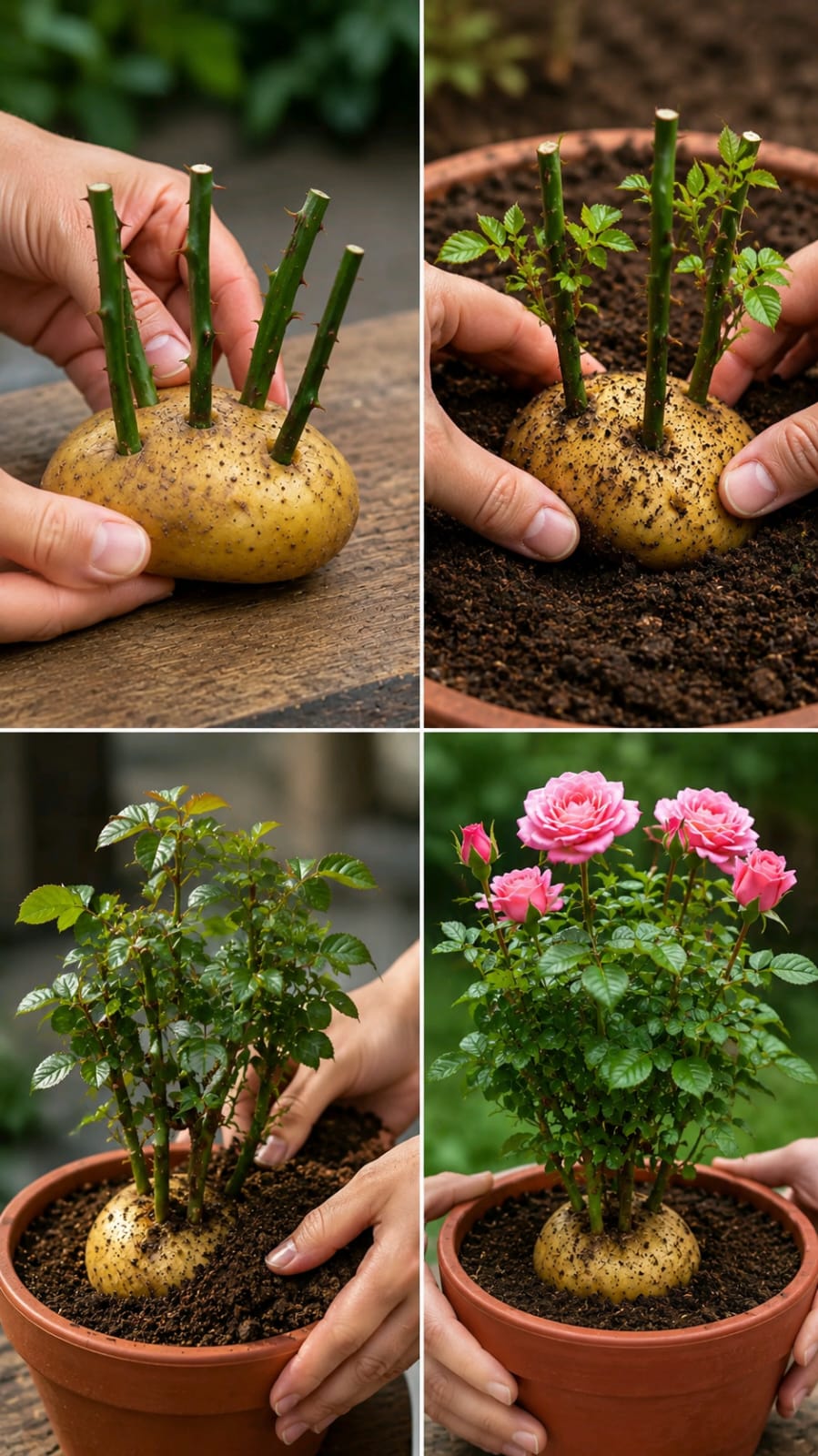
When to Move the New Rose Plant
Do not rush transplanting. A cutting needs time to form enough roots before being moved. Once the cutting has produced healthy new growth and feels stable, it can be carefully moved into its own pot.
When transplanting:
- Handle the roots gently
- Use fresh well-draining soil
- Keep the plant shaded for a few days
- Water lightly after moving
- Do not fertilize immediately
New rose plants need gradual care. Strong fertilizer too soon can burn young roots.
Common Mistakes to Avoid
- Using rotten or soft potatoes
- Using weak rose stems
- Planting in heavy wet soil
- Keeping the pot waterlogged
- Placing cuttings in harsh sun
- Pulling cuttings too early
- Leaving too many leaves on the stem
- Using dirty tools
- Expecting every cutting to survive
How This Trick Improves Garden Decor
Beyond propagation, this method creates a charming garden project. It fits beautifully into cottage gardens, balcony corners, patio displays, and small container gardens. Growing roses from cuttings feels personal and decorative because each plant begins from a simple stem and slowly becomes a living feature.
For a more elegant look, place young rose starts in terracotta pots, white ceramic planters, or rustic wooden boxes. Once the plants grow fuller, they can be styled near garden benches, balcony railings, entryways, or sunny windows.
Best Places to Display Young Rose Plants
- Sunny balcony corners
- Patio tables
- Garden borders
- Front porch steps
- Terracotta pot groupings
- Window boxes
- Outdoor shelves
- Small courtyard gardens
Roses look especially beautiful when grouped with lavender, rosemary, alyssum, ivy, or small ornamental grasses. These combinations make the garden feel fuller and more expensive without needing a large space.
Potato Rose Cutting Care Table
| Care Factor | Best Choice | Why It Matters |
|---|---|---|
| Cutting type | Healthy semi-hardwood stem | Roots better than weak or overly soft stems |
| Potato | Fresh and firm | Supports moisture without rotting too quickly |
| Soil | Loose and well-draining | Prevents rot around the cutting |
| Water | Light and consistent | Keeps the cutting hydrated without drowning it |
| Light | Bright indirect light | Supports growth without drying the cutting |
| Transplanting | After strong new growth | Protects delicate young roots |
Frequently Asked Questions
Can a potato really help rose cuttings grow roots?
A potato can help keep moisture near the stem base, but it does not guarantee rooting. Success depends on the cutting, soil, light, and watering routine.
Should the potato be fully buried?
It can be partly or mostly covered with soil, but the setup should not be kept soggy. Good drainage is important to prevent rot.
Can I use any type of potato?
A fresh firm potato is best. Avoid rotten, soft, moldy, or heavily sprouted potatoes.
How long before rose cuttings show growth?
Some cuttings may show new leaves in a few weeks, but roots can take longer. Do not pull them early to check.
Do I need rooting hormone?
Rooting hormone can improve chances, but it is optional. Clean cuts and good care are still very important.
Why did my cutting turn black?
Black stems often mean rot or failure. This can happen from too much moisture, weak cuttings, dirty tools, or poor airflow.
Final Thoughts
The potato rose cutting trick is a creative way to multiply roses at home using a simple moisture-support method. A fresh potato can help hold rose stems upright and keep the cut ends from drying too quickly while they begin the rooting process.
The secret is balance. Use healthy rose cuttings, a clean firm potato, loose soil, bright indirect light, and careful watering. Do not keep the pot soggy, do not pull the cuttings too early, and do not expect every stem to succeed. Propagation is always a patience game.
When it works, this method can turn a few rose stems into new plants that eventually bring color, softness, and elegance to the garden. Whether placed in terracotta pots, balcony planters, or a sunny patio corner, young roses grown from cuttings can create a more personal, romantic, and expensive-looking outdoor display.