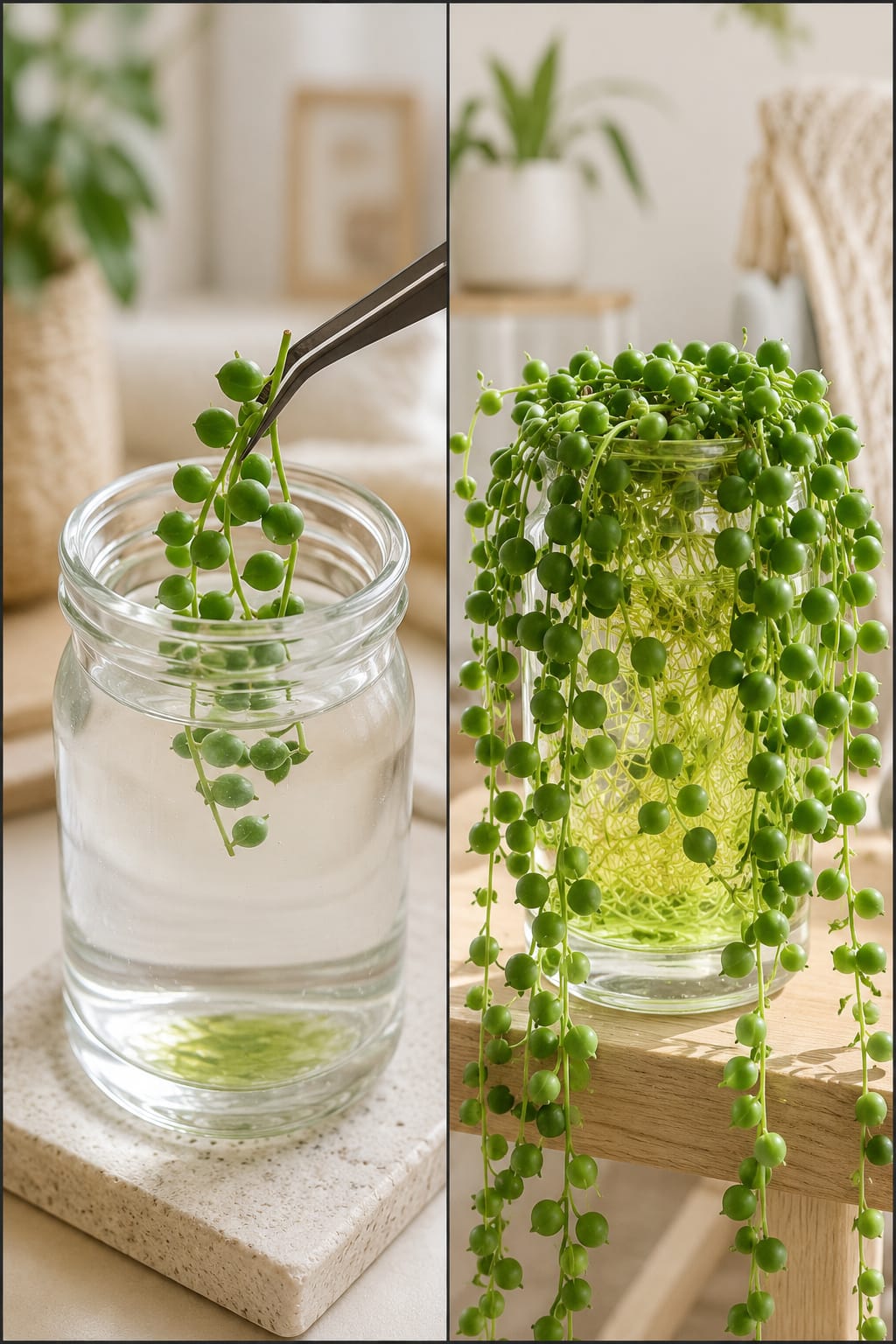
String of Pearls is one of the most eye-catching trailing succulents you can grow indoors. Its round bead-like leaves hang from thin green stems and create a soft cascading look that works beautifully on shelves, windowsills, hanging planters, plant stands, and bright kitchen corners. When the strands are full and healthy, the plant looks like a living necklace spilling over the edge of a pot or jar.
One of the easiest ways to multiply String of Pearls is by rooting cuttings in water. This method lets you watch the roots grow, save broken strands, and create fuller pots without buying new plants. A small cutting can turn into a long trailing plant with time, light, and careful watering. Water propagation also gives a clean decorative look, especially when the strands trail over a clear glass jar.
String of Pearls is a succulent, so it does not like soggy conditions forever. Water propagation works best as a temporary rooting method before moving the cuttings into a gritty succulent mix. Some cuttings can stay in water for a while, but long-term success is usually better when rooted strands are planted into well-draining soil.
Why String of Pearls Is Special
String of Pearls, also known as Curio rowleyanus or Senecio rowleyanus, stores water inside its round leaves. This is why the plant can survive dry periods better than many leafy houseplants. The pearl-shaped leaves are not just decorative. They are water-storage organs.
Because of this, the plant needs a different care routine from pothos, peace lily, or philodendron. It likes bright light, excellent drainage, and dry periods between waterings. Too much moisture around the roots can cause rot.
When propagating in water, the goal is to encourage roots, then move the cutting into a dry, airy soil mix before it becomes weak or mushy.
Can String of Pearls Root in Water?
Yes, String of Pearls can root in water. A healthy cutting with nodes can grow fine white roots when placed correctly in clean water. This method is useful when you want to save a broken strand, create new plants, or refresh a sparse pot.
The important part is keeping only the nodes or lower stem in water. Do not submerge too many pearls. Pearls that sit underwater for too long can turn soft and rot.
Water propagation works best in bright indirect light and clean water that is changed regularly.
Best Time to Propagate String of Pearls
The best time to propagate String of Pearls is during spring or early summer. The plant is usually more active during warmer months, so roots form faster.
You can still try propagation at other times of the year, but growth may be slower in winter, especially if your home is cold or dark.
Warmth, light, and healthy mother plant growth make propagation easier.
What You Need
- Healthy String of Pearls cuttings
- Clean glass jar or small cup
- Room-temperature water
- Clean scissors or pruning snips
- Bright indirect light
- Optional small amount of rooting support
- Succulent soil mix for later planting
- Small pot with drainage holes
Keep the setup simple. String of Pearls does not need heavy fertilizer or rich water to root. Clean water and good light are usually enough.
Step 1: Choose Healthy Cuttings
Choose strands that look firm, green, and plump. Avoid cuttings with shriveled pearls, yellow stems, black spots, or mushy sections. A strong cutting has a much better chance of rooting.
Cut a strand about 4 to 6 inches long. Use clean scissors to avoid spreading disease.
Each cutting should have several nodes. Nodes are the small points along the stem where pearls attach and where roots can form.
Step 2: Remove a Few Lower Pearls
Remove a few pearls from the lower part of the cutting. This exposes the nodes. These bare nodes should go into the water.
Do not place a whole strand with many pearls underwater. The pearls can rot and cloud the water.
Only the bare stem area and nodes need to touch the water.
Step 3: Let the Cutting Callus
Because String of Pearls is a succulent, it is helpful to let the cut end dry for a few hours before placing it in water. This short callus period can reduce the chance of rot.
Place the cutting on a clean dry surface in indirect light. Let the cut end dry slightly. You do not need to wait days, but a few hours can help.
Do not place freshly cut mushy stems into water.
Step 4: Place the Cutting in Water
Fill a small jar with clean room-temperature water. Place the lower bare nodes into the water. Let the leafy pearl section hang over the rim of the jar.
The cutting should not sink fully. The pearls should stay mostly above the waterline.
A narrow jar can help hold the cutting in place. You can also use plastic wrap with a small hole, a propagation lid, or a clip to support the stem.
Step 5: Put the Jar in Bright Indirect Light
Place the jar near a bright window but away from harsh direct sun. Strong sun can heat the water and stress the cutting.
Bright indirect light helps the cutting produce energy and grow roots. Low light can make the cutting weak and slow.
An east-facing window or a bright spot with filtered light is usually ideal.
Step 6: Change the Water Regularly
Change the water every 3 to 5 days. Fresh water helps prevent rot and keeps oxygen available for the new roots.
If the water turns cloudy, smells bad, or looks slimy, change it immediately. Rinse the jar before adding fresh water.
Clean water is one of the most important parts of successful propagation.
When Roots Start to Grow
Roots may appear in 1 to 3 weeks, depending on light, temperature, and cutting health. Some cuttings take longer. Healthy roots usually look white or pale cream.
Wait until the roots are at least 1 to 2 inches long before planting in soil. Do not wait too long if the cutting begins to weaken or the stem becomes soft.
Once roots appear, handle the cutting gently. New water roots are delicate.
Can You Add Anything to the Water?
Plain water is usually safest. Some people like to add a very mild natural rooting support, but it must be gentle. Avoid strong fertilizers, oils, sugar water, milk, or unknown liquids.
A tiny amount of diluted liquid seaweed or a safe rooting solution may be used by experienced growers, but it is not required. Too much added material can make the water dirty and increase rot risk.
For beginners, clean water is the best choice.
Important Warning About Yellow or Oily Liquids
String of Pearls should not sit in oil, strong plant food, thick yellow liquid, or sugary mixtures. These can coat the stem, block oxygen, encourage bacteria, and cause rot.
If the water looks colored because of a rooting product, it should be extremely diluted and plant-safe. If you are unsure what the liquid is, do not use it.
Clear clean water is safer than experimental mixtures.
How to Move Rooted Cuttings to Soil
Once roots are 1 to 2 inches long, prepare a small pot with drainage holes. Use a gritty succulent mix. You can make one with cactus soil, perlite, pumice, and a little coarse sand.
Place the rooted cutting on top of the soil and lightly cover the rooted nodes. Do not bury too many pearls. The pearls should sit above the soil surface.
Water lightly after planting, then let the soil dry before watering again.
Best Soil for String of Pearls
String of Pearls needs fast-draining soil. Regular potting soil alone is usually too heavy.
A good mix can include:
- 2 parts cactus or succulent soil
- 1 part perlite
- 1 part pumice
- A small amount of coarse sand
- A small amount of orchid bark, optional
The soil should dry quickly and never stay soggy for many days.
Best Pot for Rooted Cuttings
Use a shallow pot with drainage holes. String of Pearls has a delicate root system and does not need a deep pot. A pot that is too large can hold too much wet soil and cause rot.
Terracotta is a good choice because it dries faster. Ceramic and plastic can work if you water carefully.
A small pot is better for young cuttings.
How to Water After Planting
After moving water-rooted cuttings to soil, water lightly. The roots need time to adjust from water to soil. Keep the soil slightly moist for the first few days, but not wet.
After the plant settles, switch to normal succulent watering. Water only when the soil is dry.
Overwatering newly planted cuttings is one of the most common mistakes.
How to Make a Fuller String of Pearls Pot
To create a fuller plant, root several cuttings at the same time. Plant them together in one shallow pot. Lay the strands across the soil surface and pin the nodes down gently with small plant pins or bent wire.
Each node that touches soil can root. This creates a denser top and more trailing stems over time.
A full pot usually comes from many rooted strands, not one single cutting.
Best Light for a Full String of Pearls
String of Pearls needs bright light to grow full and strong. Indoors, place it near a bright window. Morning sun can be helpful. Harsh afternoon sun may be too intense if the plant is not acclimated.
If the plant does not get enough light, stems become thin, pearls become smaller, and the top of the pot may go bald.
Bright light is essential for compact growth.
Signs Your String of Pearls Needs More Light
- Long spaces between pearls
- Small pearls
- Weak thin stems
- Slow growth
- Pale green color
- Bald top of the pot
Move the plant closer to a bright window or use a grow light if needed.
Signs of Too Much Direct Sun
- Scorched brown spots
- Shriveled pearls even when watered correctly
- Yellowing on exposed strands
- Dry crispy stems
If this happens, move the plant to filtered light and avoid sudden harsh sun exposure.
How to Water Mature String of Pearls
Water only when the soil is dry. The pearls store water, so they do not need constant moisture. When thirsty, the pearls may look slightly wrinkled or less firm.
Water thoroughly until water drains out of the bottom, then let the pot dry again. Never leave the pot sitting in water.
In winter, water less often because growth slows and soil dries more slowly.
How to Know If the Plant Is Thirsty
A thirsty String of Pearls may show slightly wrinkled pearls. The little translucent “window” on each pearl may look less visible. The pot may also feel very light.
Do not water only by schedule. Always check the soil and the pearls.
It is safer to wait a little longer than to water too soon.
Signs of Overwatering
- Mushy pearls
- Yellow or translucent pearls
- Soft black stems
- Bad smell from the soil
- Stems collapsing near the soil
- Soil staying wet too long
If these signs appear, stop watering. Take healthy cuttings from the plant and restart them in water or dry soil before the rot spreads.
Can String of Pearls Stay in Water Forever?
String of Pearls can root in water, but it is not the best long-term water plant. It is a succulent and usually does better in gritty soil after roots form.
Some people keep cuttings in water for decorative displays, but the risk of rot is higher than with plants like pothos or philodendron.
For long-term growth, move rooted cuttings to succulent soil.
Continue to Page 2
Continue to page 2 for more details about this article and the key points many readers miss on the first page.