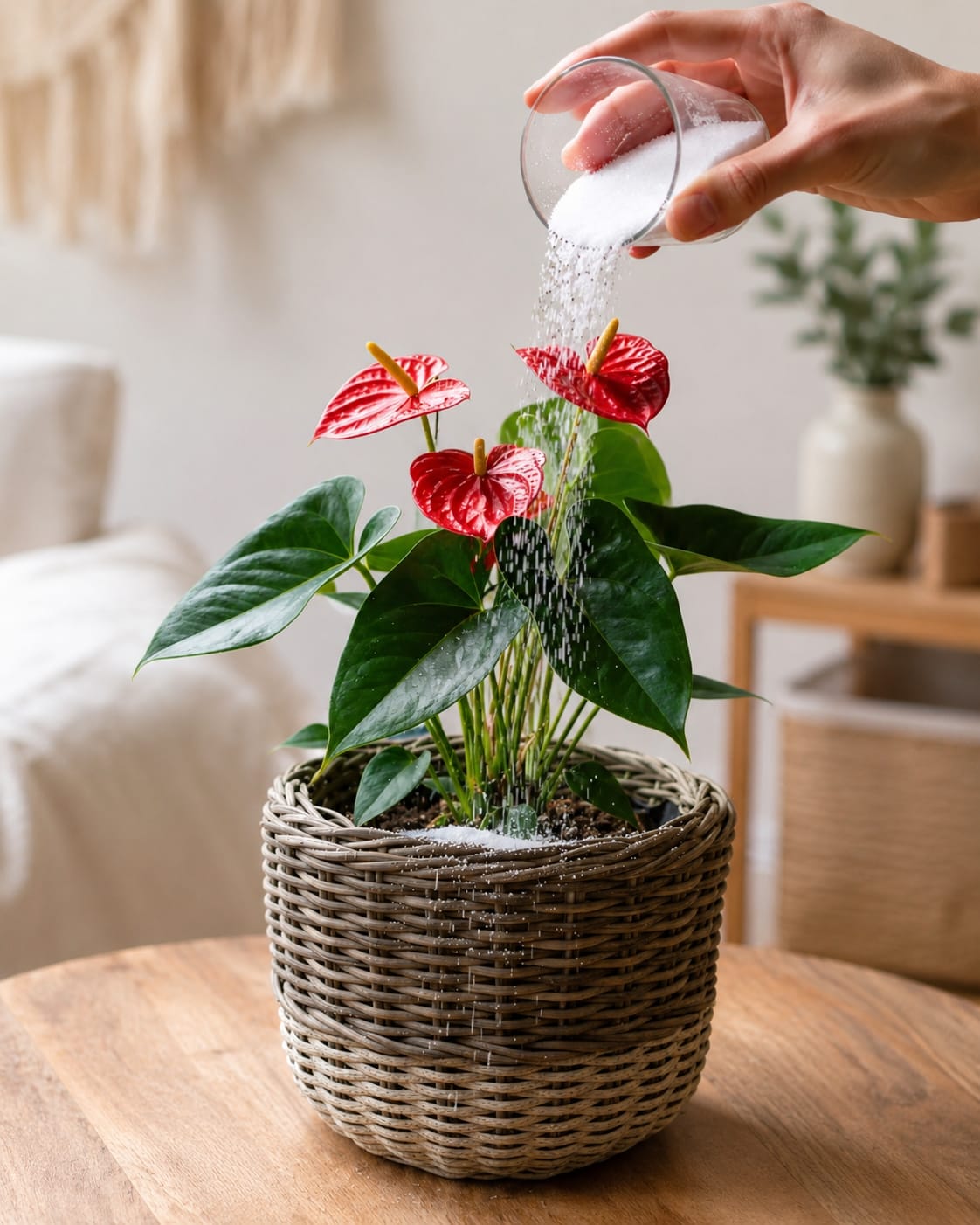
Anthurium plants are loved for their shiny heart-shaped leaves, bright red or pink spathes, and elegant tropical look. They can make a window corner, coffee table, office desk, bedroom shelf, or living room feel fresh and expensive with very little decoration. But to keep an Anthurium looking beautiful indoors, the roots need the right balance of air, moisture, and gentle nutrition.
A popular plant-care idea is using a white powder around Anthurium plants to refresh the soil and support blooming. The important thing is to use the right kind of powder in the right amount. Anthuriums do not like heavy, soggy, compacted soil. A thick layer of unknown powder can damage the roots, burn the plant, attract pests, or create mold. A safe soil booster should be light, measured, and added only when the plant actually needs it.
This guide explains how to use a safe white powder-style soil booster for Anthuriums, what ingredients are better, what to avoid, how often to apply it, and how to combine it with proper watering, humidity, light, and indoor styling.
Why Anthurium Roots Need Special Care
Anthuriums are tropical plants with roots that love oxygen. In nature, many Anthuriums grow in loose organic material where air moves easily around the roots. Indoors, they can suffer when placed in dense potting soil that stays wet for too long.
Healthy Anthurium roots should be firm, light-colored, and not smelly. If the soil becomes heavy and wet, the roots can rot. Once root rot begins, the leaves may yellow, flowers may fade quickly, and the plant may stop producing new growth.
Before adding any soil booster, the potting mix should already be airy and well-draining.
What Is the White Powder Trick?
The “white powder” idea usually refers to adding a small amount of dry powdered amendment to the top layer of soil. Safe options may include finely crushed eggshell powder, a tiny amount of dolomite lime, worm casting powder, rice water residue, or a balanced slow-release houseplant fertilizer.
But not every white powder is safe. Sugar, salt, flour, baking soda, laundry products, or mystery powders should never be added to Anthurium soil. These can harm roots and ruin the potting mix.
The safest approach is to use a gentle plant-safe amendment and apply only a thin sprinkle.
Best Safe White Powder Options for Anthurium
- Finely crushed eggshell powder: Adds slow calcium, but breaks down slowly.
- Worm casting powder: Gentle organic nutrition for roots.
- Dolomite lime: Can help if soil is too acidic, but use very little.
- Balanced slow-release fertilizer: Useful when labeled safe for houseplants.
- Powdered orchid fertilizer: Can work when diluted or measured correctly.
For most indoor Anthuriums, worm castings or a balanced houseplant fertilizer are safer than random kitchen powders.
What Not to Use
- Table salt
- Sugar
- Baking soda
- Flour
- Powdered milk
- Detergent powder
- Bleach powder
- Unknown garden chemicals
- Strong fertilizer in large amounts
Anthurium roots are sensitive. A wrong powder can cause root burn, leaf yellowing, brown tips, or sudden decline.
How to Apply a Safe White Soil Booster
Use only a small amount. For a medium Anthurium pot, start with half a teaspoon to one teaspoon of a safe dry amendment. Sprinkle it lightly over the soil surface, keeping it away from the crown where stems meet the soil.
Gently mix it into the top half inch of soil. Do not leave a thick white layer sitting on top. A thick layer can block airflow and hold moisture against the plant base.
After applying, water only if the soil is ready for watering. Do not water a wet Anthurium just because you added the powder.
How Often to Use It
Use a gentle soil booster once every 6 to 8 weeks during spring and summer. Avoid using it too often. Anthuriums prefer steady, light feeding rather than heavy feeding.
In fall and winter, reduce feeding because growth often slows. If the plant is not producing new leaves or flowers, it does not need extra fertilizer.
Too much nutrition can create salt buildup and root stress.
Best Soil Mix for Anthurium
A good Anthurium soil mix should be chunky, airy, and moisture-retentive without staying soggy.
- 2 parts orchid bark
- 1 part indoor potting mix
- 1 part perlite
- 1 part coco coir
- A small amount of charcoal
- A small amount of worm castings
This type of mix gives roots air while holding enough moisture for tropical growth.
Watering After Adding Powder
Water Anthurium when the top inch of soil feels slightly dry. Use room-temperature water and pour slowly around the soil, not directly into the crown.
Let extra water drain fully from the bottom of the pot. Never allow the plant to sit in standing water.
If the soil is still damp, wait before watering. Overwatering is more dangerous than light dryness.
Best Light for Anthurium Blooms
Anthuriums need bright indirect light to bloom well. Place the plant near a bright window with filtered light. Avoid harsh direct afternoon sun because it can burn the leaves and flowers.
If your Anthurium has dark green leaves but no flowers, it may need more light. If the leaves look scorched or faded, the light may be too strong.
Good light is more important than any powder trick.
Humidity for Glossy Leaves
Anthuriums enjoy humidity. Dry indoor air can cause brown tips and slow flower production. Aim for moderate humidity around the plant.
You can increase humidity by grouping plants together, using a pebble tray, placing the plant in a bright bathroom, or using a small humidifier nearby.
Do not keep the leaves constantly wet in a dark room. Wet leaves plus poor airflow can create fungal issues.
Signs the Soil Booster Is Helping
- New leaves appear firm and glossy
- Flowers last longer
- Roots stay healthy
- The plant grows steadily
- Leaves keep strong color
- No mold appears on the soil
Healthy results are gradual. Anthuriums do not transform overnight.
Signs You Used Too Much
- White crust on the soil
- Brown leaf tips
- Yellow leaves
- Wilting after watering
- Root burn
- Mold on the surface
- Fungus gnats
- Soil smells sour
If these signs appear, remove the top layer of soil, flush the pot with clean water, or repot if the damage is severe.
Indoor Decor Ideas for Anthurium
Anthuriums look beautiful in woven baskets, white ceramic pots, terracotta planters, modern stone pots, and neutral plant stands. Their red, pink, or white flowers add color without needing extra decor.
- Place one near a bright window for a fresh tropical look.
- Use a woven basket cover for warm natural style.
- Pair it with peace lilies and pothos for a lush corner.
- Style it on a wooden table with a simple tray.
- Use a white pot to make red flowers stand out.
- Place it in a bathroom with bright filtered light.
The plant’s glossy leaves and bright flowers make it a strong focal point in small spaces.
Continue to Page 2
Continue to page 2 for more details about this article and the key points many readers miss on the first page.