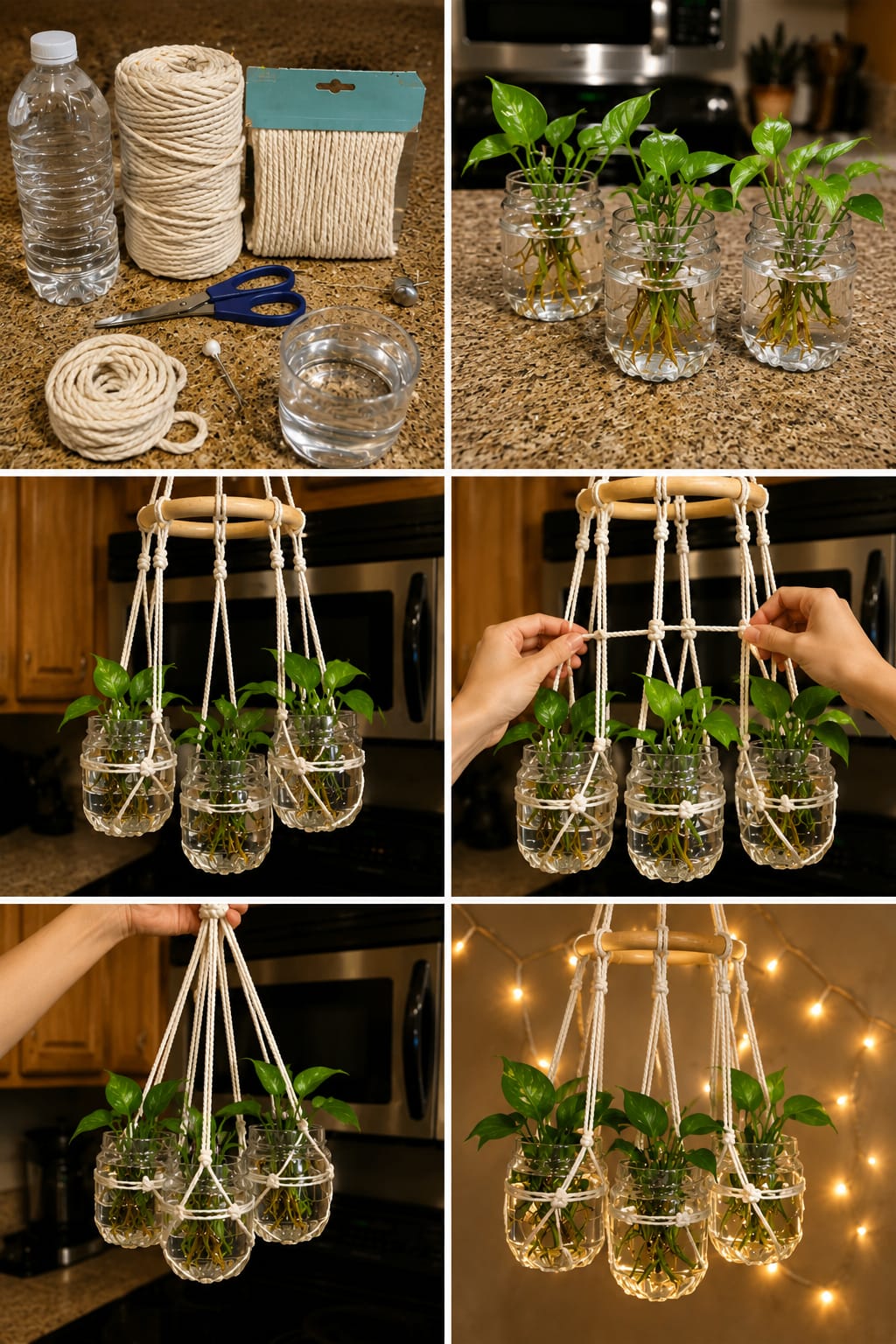
A hanging pothos water garden is one of the easiest ways to bring fresh greenery into a room without using soil. It combines simple glass jars, clean water, rooted pothos cuttings, cotton rope, and a wooden ring or rod to create a soft handmade plant display. The result looks natural, cozy, and decorative, especially when placed near a bright window, kitchen corner, plant shelf, or warm indoor wall with fairy lights.
Pothos is perfect for this project because it roots easily in water, stays attractive for a long time, and grows with very little effort. Its green leaves look fresh above the clear jars, while the roots create a beautiful natural pattern inside the water. When several jars are hung together in a macrame-style holder, the whole display becomes a living decoration.
This project is also great for small spaces. Instead of filling your table or windowsill with pots, you can hang the jars vertically. It works well in apartments, kitchens, bedrooms, bathrooms with light, offices, balconies, and plant corners. The style can be boho, farmhouse, rustic, modern, or cozy depending on the rope, jars, and hanging frame you choose.
Why Pothos Is Perfect for a Hanging Water Garden
Pothos is one of the most beginner-friendly houseplants. It grows from stem nodes, and those nodes can produce roots when placed in water. This makes pothos one of the easiest plants to propagate and display in jars.
Unlike many plants that struggle long-term in water, pothos can live in water for months or even years if the water is changed regularly and the plant receives enough light. It may grow slower than in soil, but it can stay healthy, green, and beautiful.
Pothos also has a trailing habit. As the stems grow longer, they can hang over the jar edges and create a soft cascading look. This makes the plant ideal for hanging displays.
Best Pothos Varieties for This Project
Several pothos varieties can be used in hanging water jars. Choose the type based on the color and style you want.
- Golden pothos: Green leaves with yellow marbling, very easy to grow.
- Jade pothos: Solid green leaves, strong and classic.
- Neon pothos: Bright lime-green leaves, perfect for a colorful display.
- Marble queen pothos: Cream and green leaves, elegant but needs brighter light.
- N’Joy pothos: Compact white and green leaves, great for small jars.
- Manjula pothos: Soft variegation with creamy patches, decorative and unique.
Golden pothos and jade pothos are the easiest choices for beginners because they adapt well and root quickly.
Why Glass Jars Work So Well
Glass jars are excellent for water plants because they let you see the root system. This makes the display more interesting and helps you monitor root health. If the water becomes cloudy or roots begin to rot, you can see it quickly.
Small jars are also lightweight enough to hang when filled with water. Wide-mouth jars make it easy to place cuttings, clean the inside, and change water.
Clear jars create a clean look. Colored jars create a more playful or vintage effect. You can use mason jars, recycled food jars, small glass cups, or cut plastic bottle bottoms if you want a lightweight version.
Materials You Need
- Small glass jars or recycled jar bottoms
- Healthy pothos cuttings
- Clean water
- Cotton rope, jute rope, or macrame cord
- Wooden ring, embroidery hoop, branch, or rod
- Scissors
- Small pebbles, optional
- Metal hook or ceiling hook
- Fairy lights, optional
- Soft cloth for cleaning jars
Choose strong rope and secure jars carefully. Water adds weight, so the hanging structure must be safe and balanced.
Choosing the Best Jars
Use jars that are small, sturdy, and easy to clean. Wide jars are better than very narrow jars because they give roots more space and are less likely to tip while you prepare the hanger.
The jar should have a rim or lip near the top so the rope can grip it securely. If the jar sides are completely smooth, make extra support knots under the jar body.
For a matching look, use jars of the same size. For a handmade rustic look, mix different jar shapes.
Step 1: Prepare the Pothos Cuttings
Choose healthy pothos stems with several leaves. Use clean scissors and cut just below a node. The node is the small bump on the stem where roots grow.
Remove any leaves that would sit underwater. Leaves left in water will rot and make the jar smell bad. Each cutting should have at least one node under the waterline.
For a fuller jar, place 3 to 5 cuttings together.
Step 2: Clean the Jars
Wash each jar with warm water and mild soap. Rinse very well so no soap residue remains. Soap can harm delicate roots and cloud the water.
Dry the outside before tying the rope. The inside can stay slightly damp because you will add water.
Clean jars make the finished display look brighter and more professional.
Step 3: Add Water
Fill each jar with room-temperature water. The water level should cover the nodes and roots, but it should not touch the leaves.
If your tap water is very hard, use filtered water, rainwater, or water left out overnight. Pothos is tolerant, but cleaner water usually keeps the roots healthier and the jars clearer.
Do not fill jars all the way to the top. Leave space so water does not spill when the display moves.
Step 4: Place the Cuttings in the Jars
Put the pothos cuttings into the jars. Arrange the stems so the leaves spread naturally. If the cuttings float or lean, add a few small clean pebbles to hold the stems in place.
The roots or nodes should stay underwater. The leaves should remain above the rim.
For a fuller look, place several cuttings in each jar instead of one.
Step 5: Create the Rope Holder for Each Jar
Cut several equal lengths of rope for each jar. A simple jar holder can be made with four long cords. Fold them in half and create a top loop, or tie them to a wooden ring.
Place the jar in the center of the cords. Tie knots around the lower part of the jar, then tie more knots around the upper rim. The goal is to create a secure net that holds the jar from the bottom and sides.
Make sure the jar sits level before moving to the next one.
Step 6: Attach the Jars to a Wooden Ring or Rod
A wooden ring, embroidery hoop, branch, or short rod can hold several jars together. Tie each jar holder to the frame at equal spacing.
If you use three jars, place them in a triangle shape for balance. If you use four or five jars, space them evenly around the ring or along the rod.
Lift the frame slowly to check balance. Adjust rope lengths until all jars hang evenly.
Step 7: Add a Decorative Horizontal Rope
A horizontal rope between the hanging strands can make the design look more finished and stable. Tie it around the vertical cords, using small knots to hold everything in place.
This gives the display a macrame-style look and helps prevent jars from swinging too far apart.
Keep the knots neat. Trim loose rope ends when finished.
Step 8: Hang the Display Safely
Use a strong hook, ceiling hook, wall bracket, or rod. The hook must support the total weight of jars, water, plants, and rope.
Hang the display where it receives bright indirect light. Avoid placing it where people may bump into it or where jars may hit a wall or window.
After hanging, check each knot again. Safety is very important when using glass and water overhead.
Best Light for Hanging Pothos Jars
Pothos grows best in bright indirect light. A bright kitchen, living room, bedroom, or window area is ideal. Avoid harsh direct sun because it can heat the water, burn leaves, and encourage algae.
If the room is medium-light, pothos can still survive, but growth may slow. Variegated pothos types need brighter light to keep their patterns strong.
If the stems become long and thin with small leaves, the display likely needs more light.
How Often to Change the Water
Change the water every 5 to 7 days for the cleanest results. Fresh water gives roots oxygen and prevents bad smells.
If the water stays clear, you may stretch it to 10 to 14 days, but weekly changes are better for a decorative display. Water jars look best when the water stays clean.
Top up the jars whenever the water level drops below the roots.
How to Change Water in a Hanging Display
Carefully lift each jar from its holder if the holder allows it. Pour out the old water and refill with clean room-temperature water. If the jars cannot be removed easily, use a small cup or turkey baster to remove water, then refill slowly.
Designing the holder so jars can be removed is best. It makes cleaning much easier.
Always support the jar with one hand while changing water.
How to Prevent Cloudy Water
Cloudy water usually comes from rotting leaves, dirty roots, old water, or too much fertilizer. Keep leaves above the waterline and remove any dead plant material quickly.
Rinse the roots gently if they become slimy. Clean the jar when needed.
Do not add soil to the water jars. Soil will make the water dirty and may cause rot.
How to Prevent Algae
Algae grows when water receives strong light and nutrients. Clear jars in direct sun can turn green quickly.
To reduce algae:
- Keep jars in bright indirect light.
- Avoid hot direct sun.
- Change water regularly.
- Use very little fertilizer.
- Clean the glass when algae appears.
- Use colored jars if algae is a frequent issue.
A little algae is normal, but heavy algae means the jars need cleaning and less direct sun.
Feeding Pothos in Water
Water-grown pothos needs nutrients after roots are established. Plain water can keep cuttings alive, but long-term growth is better with light feeding.
Use a balanced liquid houseplant fertilizer at very weak strength. A few drops in each jar once a month during spring and summer is usually enough.
Do not overfeed. Too much fertilizer can burn roots and create algae.
Signs the Pothos Needs Nutrients
- New leaves are very small
- Growth slows in warm months
- Leaves look pale
- Roots look healthy but stems are weak
- Older leaves yellow one at a time
Before feeding, make sure the plant is getting enough light. Low light can also cause slow growth.
Signs of Too Much Fertilizer
- Brown root tips
- Slimy roots
- Cloudy water
- Fast algae growth
- Brown leaf tips
- Weak or stressed cuttings
If this happens, dump the water, rinse the roots, clean the jar, and refill with plain water.
Can Pothos Live in Water Long-Term?
Yes, pothos can live in water long-term if you keep the water clean and provide nutrients occasionally. It may grow more slowly than in soil, but it can remain beautiful and healthy.
Long-term water-grown pothos needs regular care. The roots should be monitored, water should be changed, and the jars should be cleaned when needed.
If the plant becomes too large, trim it and place the cuttings back into the jars to create a fuller display.
How to Make the Display Fuller
To make the hanging jars look lush, use multiple cuttings in each jar. You can also trim long stems and root the cut pieces in the same jar.
Each cutting should have at least one node underwater. Over time, the jar will fill with more stems and leaves.
Rotate the display occasionally so all sides receive light evenly.
How to Keep the Rope Clean
Cotton rope and jute rope can collect dust and moisture. Try not to spill water on the rope when refilling jars. If the rope gets wet often, it may stain or weaken over time.
Dust the rope gently with a dry cloth. If it becomes dirty, remove the jars and clean the rope carefully according to the material.
Natural rope gives the display warmth, but it needs dry conditions to stay attractive.
Best Places to Hang This Indoor Garden
This hanging pothos garden can work in many areas of the home:
- Kitchen window
- Bright bathroom
- Bedroom corner
- Living room wall
- Office plant corner
- Covered balcony
- Sunroom
- Near a shelf with fairy lights
- Above a plant table
Choose a spot that is bright, safe, and easy to reach for water changes.
Kitchen Styling Ideas
A kitchen is a great place for hanging water jars. The display looks fresh and natural near cabinets, counters, or a bright window. Pothos cuttings can soften the hard surfaces of appliances and countertops.
Use clear jars and cream rope for a clean farmhouse look. Add warm fairy lights in the background for a cozy evening effect.
Make sure the jars are away from stove heat and steam.
Bathroom Styling Ideas
A bright bathroom can be excellent for pothos because the humidity is often higher. Hang the jars near a window, not in a dark corner.
The water jars, rope, and green leaves create a spa-like feel. Use white rope for a clean look or jute rope for a natural boho style.
Avoid placing the display where it will be splashed constantly.
Bedroom Styling Ideas
In a bedroom, the hanging jars create a soft relaxing plant feature. Hang them near a window, above a small table, or beside a reading corner.
Use warm lights, neutral rope, and clear jars for a calm look. Keep the arrangement simple so the room stays peaceful.
Pothos is also easy to trim if the vines become too long.
Continue to Page 2
Continue to page 2 for more details about this article and the key points many readers miss on the first page.