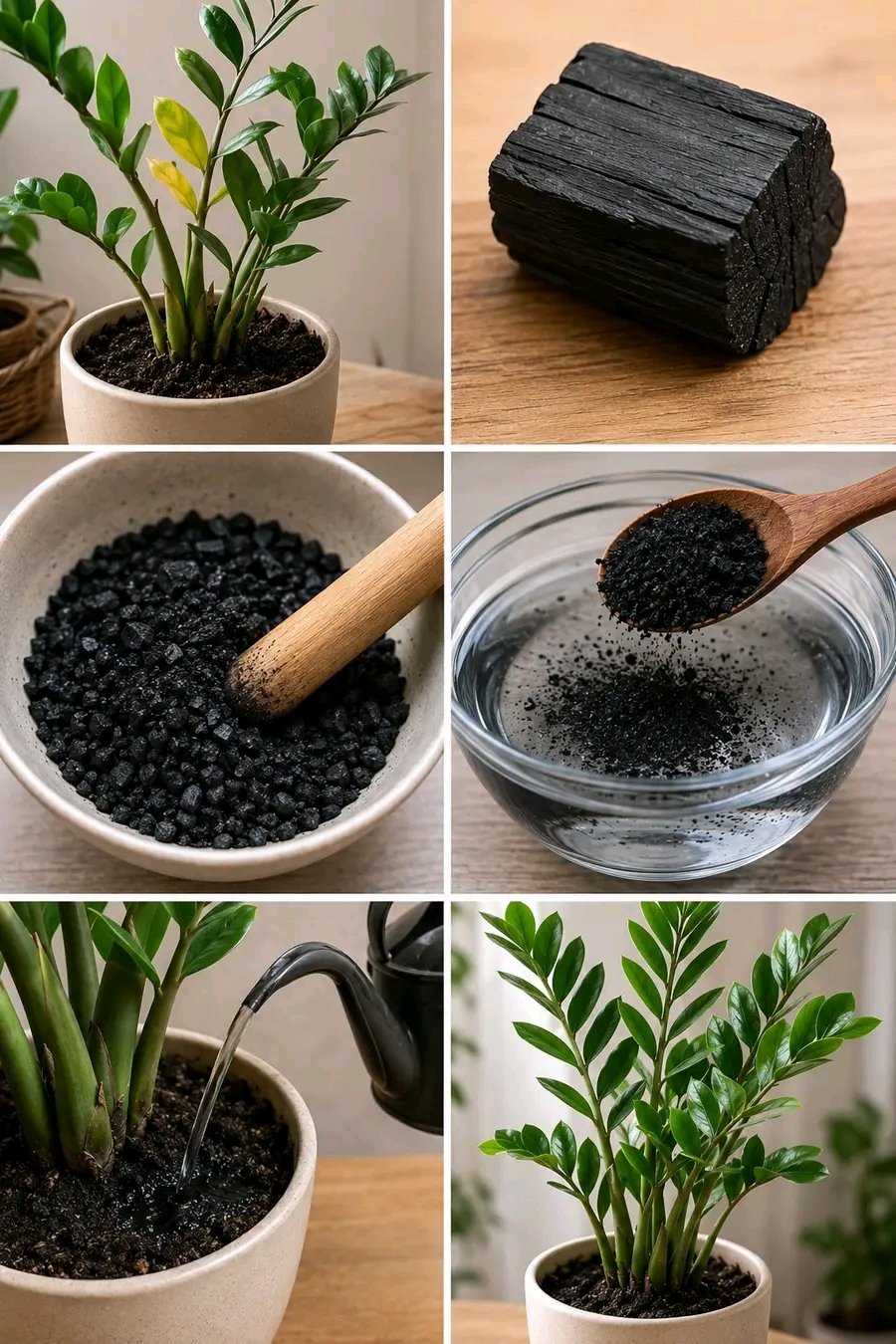
ZZ plants are famous for being strong, glossy, and easy to care for. Their upright stems, thick potato-like rhizomes, and shiny green leaves make them one of the best indoor plants for beginners. They can tolerate low light, missed watering, and dry indoor air better than many houseplants. But even a tough ZZ plant grows better when its roots stay healthy and its soil stays fresh.
One simple plant-care trick many indoor gardeners like to use is charcoal water. This is made by soaking clean horticultural charcoal or activated charcoal in water, then using that water lightly around the plant. Charcoal is often used in terrariums, orchid mixes, and potting blends because it can help keep the growing environment fresher. For ZZ plants, the goal is not to force fast growth. The goal is to support cleaner soil, reduce stale smells, and protect the roots from staying in sour, heavy conditions.
Charcoal water must be used carefully. ZZ plants do not like wet soil, and they should never be watered too often. The charcoal water should only replace a normal watering when the soil is already dry. Used correctly, it can become a gentle part of a healthy ZZ plant routine.
Why ZZ Plants Need Clean, Airy Soil
ZZ plants grow from thick underground rhizomes. These rhizomes store water and energy, which is why the plant can survive dry periods. But the same rhizomes can rot if the soil stays wet for too long. This is the main reason many ZZ plants fail indoors.
Healthy ZZ plant soil should be loose, airy, and quick-draining. It should not smell sour, stay muddy, or remain wet for many days. If the soil becomes compacted, the roots receive less oxygen. When roots cannot breathe, the plant may yellow, droop, soften, or stop growing.
Charcoal can help support a fresher root zone when used properly, but it cannot fix poor drainage by itself. Good soil and careful watering are still the foundation.
What Charcoal Does for Plant Soil
Horticultural charcoal is often added to potting mixes because it can help absorb odors and improve freshness in the soil environment. It can also help keep the mix more open when used as a chunky ingredient.
For indoor plants, charcoal is not a complete fertilizer. It does not replace nutrients, light, or water. Instead, it works more like a soil-support ingredient.
For ZZ plants, charcoal may help by:
- Keeping the soil environment fresher
- Reducing stale smells in the pot
- Supporting better airflow when used in chunky form
- Helping with moisture balance in small amounts
- Improving the quality of a dry-care routine
The key phrase is “small amounts.” Too much charcoal or too much charcoal water can still create problems if the plant is watered too often.
Use the Right Type of Charcoal
Not all charcoal is safe for houseplants. You should use clean horticultural charcoal or activated charcoal made for plant, aquarium, or terrarium use. These types are usually cleaner and safer for indoor plant care.
Do not use charcoal briquettes made for grilling. Many grilling briquettes contain additives, binders, lighter fluid, or chemicals that should not be added to plant soil.
Use only plain, clean charcoal with no fragrance, fuel, or chemical treatment.
Horticultural Charcoal vs Activated Charcoal
Horticultural charcoal is often used in potting mixes. It usually comes in small chunks and helps keep the mix airy. Activated charcoal is more processed and is often used for filtration or terrariums.
Both can be useful in small amounts, but they should be clean and additive-free. For ZZ plants, chunky horticultural charcoal is excellent for mixing into soil, while powdered or crushed activated charcoal can be used lightly in water.
If you are making charcoal water, use a small amount and strain the water if it becomes too dark or dusty.
How to Make Charcoal Water
Making charcoal water is simple. You only need clean charcoal and water.
- Place 1 teaspoon of crushed horticultural charcoal or activated charcoal in a bowl.
- Add 1 liter of room-temperature water.
- Let it sit for a few hours.
- Stir lightly.
- Strain if there are many fine particles.
- Use the water only when your ZZ plant soil is dry.
The water should look lightly tinted, not thick and muddy. Do not make a strong black mixture and pour it heavily into the pot.
How to Apply Charcoal Water to a ZZ Plant
Before using charcoal water, check the soil. Push your finger or a wooden stick into the pot. If the soil is still damp, wait. ZZ plants should dry well between waterings.
If the soil is dry, water slowly around the soil surface. Avoid pouring directly into the crown where the stems meet the soil. Let the water soak evenly through the pot and drain from the bottom.
After watering, empty the saucer. Never let the pot sit in standing water.
How Often to Use Charcoal Water
Charcoal water should not be used every week. ZZ plants do not need frequent watering, and too much liquid can harm them.
A safe routine is to use charcoal water once every 6 to 8 weeks during spring or summer, and only when the soil is dry. In fall and winter, use it less often or skip it completely if the plant is not actively growing.
Think of charcoal water as an occasional soil refresh, not a daily or weekly treatment.
Do Not Overwater After Adding Charcoal
One common mistake is believing charcoal makes overwatering safe. It does not. Charcoal may help keep soil fresher, but ZZ plant roots can still rot in wet conditions.
If your plant is in a pot with no drainage holes, charcoal water is risky. Water can collect at the bottom, and the rhizomes may sit in moisture. Always use a pot with drainage holes for ZZ plants.
Dry soil is safer than constantly moist soil for this plant.
Best Soil Mix for ZZ Plants
A ZZ plant needs a fast-draining mix. Regular potting soil can work if amended with gritty ingredients. If the soil is too dense, add materials that improve airflow.
A good ZZ plant soil mix can include:
- 2 parts cactus or succulent soil
- 1 part perlite
- 1 part pumice or coarse sand
- A small amount of orchid bark
- A small amount of horticultural charcoal
This mix helps prevent soggy roots and gives the rhizomes a healthier environment.
Adding Charcoal Directly to the Soil
You can also add small charcoal pieces directly to the potting mix. This is often more useful than charcoal water because it improves the soil structure for longer.
When repotting, mix a small handful of horticultural charcoal into the soil. Do not fill the pot with charcoal. It should be only one part of a balanced, airy mix.
Small charcoal chunks can help keep the soil open and reduce stale conditions.
When Charcoal Water May Help
Charcoal water may be helpful if your ZZ plant soil smells slightly stale, the potting mix is older, or you want a gentle refresh during active growth. It can also be useful after cleaning up the soil surface, removing dead leaves, and improving airflow.
Use it only if the plant is otherwise healthy. If the ZZ plant has yellow leaves, mushy stems, or root rot, charcoal water is not the first solution. In that case, the plant needs root inspection and fresh dry soil.
When Not to Use Charcoal Water
Avoid charcoal water if:
- The soil is still damp
- The pot has no drainage holes
- The plant has mushy stems
- The roots smell rotten
- The plant was watered recently
- The room is cold and dark
- The potting mix is already heavy and wet
- You are using grilling charcoal
In these cases, charcoal water can make the problem worse.
Signs Your ZZ Plant Is Healthy
A healthy ZZ plant has firm upright stems, glossy leaves, and slow but steady growth. The leaves should feel firm, not limp or soft. The soil should dry between waterings and should not smell bad.
New shoots often emerge from the soil as thick green spikes. These shoots open into fresh stems with shiny leaves. ZZ plants grow slowly, so do not worry if you do not see new growth every week.
Slow growth is normal, especially in low light or winter.
Signs Your ZZ Plant Needs Water
- Soil is dry deep down
- Pot feels very light
- Leaves look slightly less firm
- Stems may wrinkle slightly
- Soil pulls away from the pot edge
Water thoroughly only when the soil is dry. Then let the pot drain completely.
Signs of Overwatering
- Yellow leaves
- Mushy stems near the soil
- Soft rhizomes
- Wet soil for many days
- Bad smell from the pot
- Black roots
- Leaves dropping suddenly
- Fungus gnats around the soil
If these signs appear, stop watering. Remove the plant from the pot, check the rhizomes and roots, trim rotten parts, and repot in fresh dry soil.
Best Light for ZZ Plants
ZZ plants tolerate low light, but they grow better in bright indirect light. A brighter spot helps the plant use water more efficiently and produce stronger new shoots.
Place the plant near a window with filtered light. Avoid harsh direct afternoon sun, which can scorch leaves. Morning light is usually gentle enough.
If the plant is in a dark corner, water much less often because the soil will dry slowly.
Why Light Matters Before Any Booster
No soil booster can replace light. If a ZZ plant receives very little light, it will grow slowly no matter what you add to the soil. Charcoal water can support soil freshness, but it cannot create energy for the plant.
If your ZZ plant has not grown for months, try moving it to brighter indirect light before adding more amendments.
Good light and proper watering often improve growth more than any special ingredient.
How to Clean ZZ Plant Leaves
ZZ leaves are naturally glossy, but dust can hide their shine. Wipe the leaves with a damp cloth every few weeks. Support each stem gently while cleaning.
Do not use oily leaf shine products. They can clog the leaf surface and attract dust. Plain water on a soft cloth is enough.
Clean leaves make the plant look healthier and help it absorb more light.
Feeding ZZ Plants
ZZ plants are light feeders. They do not need heavy fertilizer. During spring and summer, you can feed with a balanced liquid houseplant fertilizer at half strength once every 6 to 8 weeks.
If you use charcoal water, avoid fertilizing at the same time. Keep the routine simple. Too many treatments can stress the plant.
Do not fertilize a stressed, overwatered, or newly repotted ZZ plant until it recovers.
Repotting a ZZ Plant
Repot a ZZ plant when the rhizomes are crowded, the pot is cracking, the soil is old and compacted, or the plant dries too quickly. Spring is usually the best time.
Choose a pot only slightly larger than the old one. A pot that is too big holds extra soil and extra moisture, which can increase the risk of rot.
Use a fast-draining soil mix and a pot with drainage holes.
Continue to Page 2
Continue to page 2 for more details about this article and the key points many readers miss on the first page.