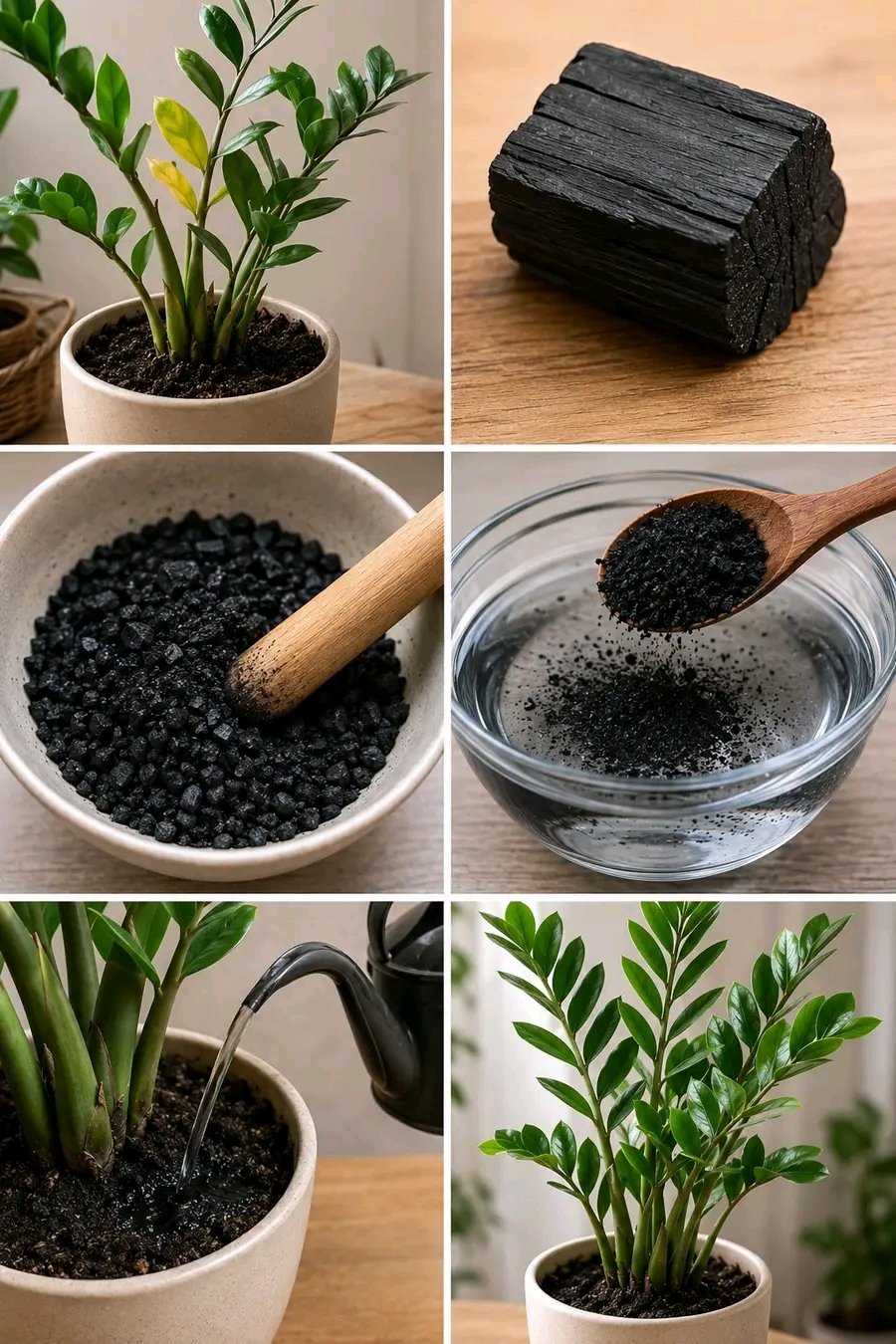
How to Refresh the Soil Without Repotting
If your ZZ plant is healthy but the soil surface looks old, remove the top half inch of soil and replace it with fresh succulent mix. You can mix in a small pinch of horticultural charcoal.
This refreshes the surface without disturbing the roots too much.
Do not dig deeply around the rhizomes because they can be damaged.
Using Charcoal for Root Rot Prevention
Charcoal is sometimes used after trimming damaged plant parts because it helps keep cut surfaces dry. If you cut a rotten rhizome or damaged stem, you can dust the cut lightly with clean activated charcoal powder before letting it callus.
This is not a cure for severe rot, but it can help keep the cut area cleaner while it dries.
Always remove rotten tissue completely before repotting.
How to Rescue a ZZ Plant With Root Rot
If the plant is yellowing and the stems are soft, remove it from the pot. Shake away wet soil and inspect the rhizomes. Healthy rhizomes are firm. Rotten rhizomes are mushy, dark, and may smell bad.
Cut away rotten sections with clean scissors or a sterile knife. Let the healthy parts dry for a day. Dust cut areas with a little activated charcoal if desired. Repot into fresh dry soil.
Wait several days before watering after a serious rot cleanup.
Common Charcoal Mistakes
- Using barbecue charcoal with additives
- Pouring strong black charcoal water too often
- Using charcoal water when soil is already damp
- Expecting instant new growth
- Using charcoal instead of fixing drainage
- Adding too much fine powder to the soil
- Watering a ZZ plant on a strict schedule
- Using charcoal water in a cold, dark room
Charcoal is helpful only when used as part of good care.
Indoor Decor Ideas for ZZ Plants
ZZ plants are excellent for home styling because they look clean and sculptural. Their upright stems fit well in modern, rustic, minimalist, boho, and office-style interiors.
- Place a ZZ plant in a white ceramic pot for a clean look.
- Use a terracotta pot for a warm natural style.
- Place it on a wooden side table near filtered light.
- Style it with woven baskets and neutral fabrics.
- Use a black pot for a bold modern contrast.
- Place smaller ZZ plants on desks or shelves.
- Group it with snake plants and pothos for easy-care greenery.
The glossy leaves make the plant look polished even with very simple styling.
Best Rooms for ZZ Plants
ZZ plants work well in living rooms, bedrooms, offices, hallways, kitchens, and entryways. They tolerate lower light better than many plants, but they still look best with some brightness.
Avoid placing the plant near cold drafts, heating vents, or constantly wet areas. Stable conditions keep the plant healthier.
If the room is darker, reduce watering.
How to Keep ZZ Leaves Glossy
Leaf shine comes from health and cleanliness. Give the plant bright indirect light, avoid overwatering, and wipe dust from the leaves. A healthy ZZ plant naturally has glossy leaves.
Avoid spraying oils or heavy shine products. These can collect dust and may damage the leaves over time.
Simple care keeps the plant looking elegant.
Can Charcoal Water Make Leaves Greener?
Charcoal water may support cleaner soil, but it does not directly color the leaves. Greener growth usually comes from good light, healthy roots, and balanced nutrition.
If leaves are pale or yellow, check watering, root health, and light first. Do not keep adding charcoal water to a stressed plant.
Healthy roots create healthy leaves.
A Simple ZZ Plant Care Routine
- Place in bright indirect light if possible.
- Use a pot with drainage holes.
- Grow in fast-draining soil.
- Water only when soil is dry.
- Use charcoal water only occasionally.
- Clean leaves every few weeks.
- Feed lightly during spring and summer.
- Repot only when needed.
- Check for soft stems or root rot if leaves yellow.
This routine is simple, safe, and effective for long-term ZZ plant health.
Final Thoughts
Charcoal water can be a gentle way to refresh ZZ plant soil, but it must be used with care. ZZ plants are tough, but they are very sensitive to soggy soil. Use only clean horticultural charcoal or activated charcoal, never grilling charcoal with additives. Make the mixture light, apply it only when the soil is dry, and do not use it too often.
The real secret to a healthy ZZ plant is proper drainage, dry periods between waterings, bright indirect light, and a loose soil mix. Charcoal can support this routine, but it cannot replace the basics.
When used correctly, a little charcoal water or a small amount of charcoal in the soil can help keep the root zone fresher and support strong, glossy growth. With simple care and patience, your ZZ plant can stay upright, green, and beautiful for years.