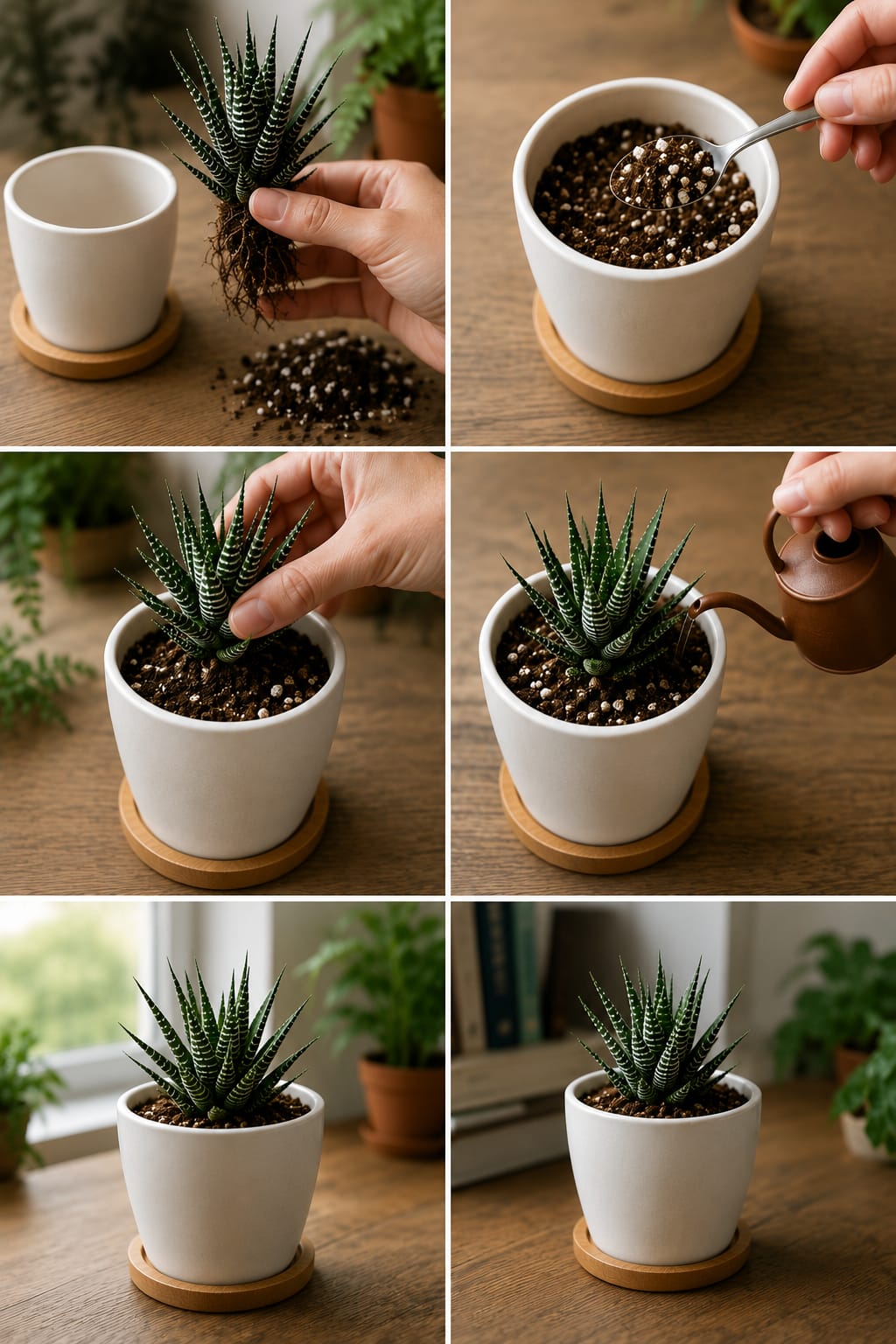
Zebra Plant, also called Haworthia or Haworthiopsis, is one of the easiest small succulents to grow indoors. It has dark green pointed leaves covered with bright white raised stripes, giving it a bold zebra-like pattern. This tiny plant looks clean, sculptural, and modern, which makes it perfect for desks, shelves, windowsills, coffee tables, kitchen corners, bathrooms with light, and small indoor plant displays.
Unlike many dramatic houseplants, Zebra Plant does not need constant attention. It grows slowly, stays compact, and handles dry periods well. That makes it a great choice for beginners, busy plant lovers, small apartments, offices, dorm rooms, and anyone who wants a beautiful plant without complicated care. But even though it is easy, it still needs the right soil, the right pot, careful watering, and enough light to stay healthy.
The most important thing to understand is that Zebra Plant is a succulent. It stores water in its thick leaves. Because of that, it does not like wet soil for long periods. Overwatering is the fastest way to damage it. A healthy Zebra Plant needs a small pot with drainage, gritty soil, bright indirect light, and a watering routine that allows the soil to dry between drinks.
This guide explains how to grow Zebra Plant step by step, how to repot it safely, how to choose the best soil, how to water without causing root rot, how to encourage strong roots, how to fix common problems, and how to style it beautifully indoors. If you want a compact, striped succulent that looks elegant all year, this care routine will help you grow it with confidence.
What Is Zebra Plant Haworthia?
Zebra Plant is a small rosette-forming succulent known for its dark green leaves and white horizontal stripes. Many people call it Haworthia, though many striped types are now classified as Haworthiopsis. The common name is still widely used because the plant is famous for its zebra-like markings.
This plant naturally grows in dry, rocky environments where water drains quickly. That is why indoor care should copy those conditions. It needs soil that does not stay soggy and a pot that allows excess water to escape. When grown correctly, Zebra Plant can live for many years and slowly produce offsets, also called pups, around the base.
Why Zebra Plant Is Perfect for Indoors
- It stays small and compact.
- It does not need frequent watering.
- It grows well in bright indoor light.
- It looks beautiful in small decorative pots.
- It is beginner-friendly.
- It can fit on desks, shelves, and windowsills.
- It produces baby plants over time.
- It has a clean, modern, sculptural look.
Zebra Plant is especially useful for people who want greenery but do not have space for large plants. A small white ceramic pot, terracotta pot, or simple clay planter can turn this succulent into a stylish indoor accent.
The 6-Step Zebra Plant Potting Method
Step 1: Choose a Small Pot With Drainage
Start with a small pot that has at least one drainage hole. Zebra Plant has a compact root system, so it does not need a large container. A pot that is too big holds extra soil, and extra soil holds extra moisture. That can lead to root rot.
Choose a pot only slightly larger than the root ball. Terracotta is a great choice because it dries faster and helps prevent soggy soil. Ceramic pots are also fine if they have drainage holes.
Step 2: Prepare a Gritty Soil Mix
Zebra Plant needs loose, gritty soil. Regular potting soil alone is usually too heavy. Use a cactus or succulent mix, then improve it with extra drainage materials.
- 2 parts cactus or succulent soil
- 1 part perlite
- 1 part pumice or coarse sand
- A small amount of orchid bark, optional
The soil should feel airy and crumbly. Water should pass through it easily. If the soil feels dense, muddy, or sticky, it is not ideal for Zebra Plant.
Step 3: Place the Plant at the Right Depth
Hold the Zebra Plant gently by the lower leaves or root ball. Place it in the pot so the base of the plant sits just above the soil line. Do not bury the leaves too deeply. If soil sits against the leaf base, moisture can collect and cause rot.
Add soil around the roots and press lightly. Do not pack the soil too hard. Roots need air as well as moisture.
Step 4: Let the Plant Settle Before Heavy Watering
If the roots were disturbed during repotting, wait a few days before giving a full watering. This gives small root injuries time to dry and reduces the risk of rot.
If the plant was only moved gently with an intact root ball, you can water lightly after potting. Always make sure excess water drains completely.
Step 5: Water Carefully
When it is time to water, pour slowly around the soil, not into the center of the rosette. Water trapped between the leaves can cause rot. Give enough water so the soil becomes evenly moist and excess drains from the bottom.
After watering, empty the saucer. Never let the pot sit in water.
Step 6: Place in Bright Indirect Light
Put the Zebra Plant in bright indirect light. A bright windowsill, desk near a window, or plant shelf with filtered sunlight can work well. Avoid harsh direct afternoon sun because it can scorch the leaves.
Once placed correctly, leave the plant alone and let it adjust. Zebra Plants grow slowly, so patience is important.
Best Light for Zebra Plant
Zebra Plant likes bright light, but it does not need intense direct sun all day. Indoors, it often grows best near an east-facing window or a bright south or west window with filtered light. Morning sun is usually gentle and helpful. Strong afternoon sun can be too intense, especially through glass.
If the plant receives too little light, it may stretch upward and lose its compact shape. The leaves may become longer, thinner, and less attractive. If it receives too much sun, the leaves may turn brown, red, or dry at the tips.
The best light keeps the plant compact, firm, and rich green with clear white stripes.
How Often to Water Zebra Plant
Zebra Plant should be watered only when the soil is completely dry or almost completely dry. This may mean every 2 to 4 weeks in warm bright conditions. In winter, it may need water only once every 4 to 6 weeks or even less.
Do not water by calendar alone. Check the soil first. Push your finger into the soil or use a wooden stick. If the stick comes out with damp soil attached, wait. If it comes out dry, the plant may be ready for water.
Overwatering is more dangerous than underwatering for Zebra Plant.
Signs Your Zebra Plant Needs Water
- The soil is dry all the way down.
- The pot feels very light.
- Leaves look slightly thinner.
- Leaf tips begin to curl inward slightly.
- The plant looks less firm than usual.
When these signs appear and the soil is dry, water thoroughly and let the pot drain completely.
Signs of Overwatering
- Leaves become soft or mushy.
- The base feels wet or weak.
- Lower leaves turn yellow.
- Soil stays wet for many days.
- The pot smells sour.
- Roots turn brown or black.
- The plant collapses suddenly.
If you notice these signs, stop watering immediately. Remove the plant from the pot if needed, trim rotten roots, and repot into fresh dry succulent mix.
Best Soil for Zebra Plant
The best soil is fast-draining and airy. Zebra Plant roots need oxygen. Dense soil holds too much water and can suffocate the roots.
A good succulent mix should contain gritty particles such as perlite, pumice, coarse sand, lava rock, or small bark pieces. These materials create spaces in the soil so water drains faster.
If you buy a store-bought cactus mix and it still feels heavy, add extra perlite or pumice. This simple step can prevent many problems.
Best Pot for Zebra Plant
Terracotta pots are excellent because they breathe and help soil dry faster. White ceramic pots look beautiful for modern indoor styling, but they must have drainage holes. Plastic pots are lightweight and affordable, but they hold moisture longer.
The pot should be stable, small, and well-draining. A saucer can protect furniture, but it should never hold standing water after watering.
How to Repot Zebra Plant
Zebra Plants grow slowly and do not need frequent repotting. Repot every 2 to 3 years or when the soil becomes old, compacted, or the plant has many offsets.
- Choose a pot slightly larger than the old one.
- Prepare fresh gritty succulent soil.
- Remove the plant gently from the old pot.
- Shake away old soil carefully.
- Trim dead or rotten roots.
- Place the plant at the same depth.
- Fill around roots with fresh mix.
- Wait a few days before deep watering if roots were disturbed.
Do not repot into a huge pot. Small succulents prefer snug containers.
How to Grow Strong Roots
Strong roots come from the right balance of dryness, oxygen, and moisture. Zebra Plant roots should not stay wet. They should receive water, absorb what they need, and then dry again.
To support strong roots, use gritty soil, a drainage pot, bright indirect light, and careful watering. Do not keep moving the plant or repotting too often. Stability helps roots settle.
Healthy roots are the foundation of a firm, upright, beautiful Zebra Plant.
How to Propagate Zebra Plant Pups
Mature Zebra Plants often produce small baby plants around the base. These pups can be separated and grown into new plants.
- Wait until the pup has its own small roots.
- Remove the mother plant from the pot.
- Separate the pup gently with clean fingers or a clean knife.
- Let the cut area dry for a day if needed.
- Plant the pup in a small pot with gritty soil.
- Keep in bright indirect light.
- Water lightly after the plant settles.
Do not overwater new pups. Young succulents are small and can rot quickly in wet soil.
Should You Fertilize Zebra Plant?
Zebra Plant does not need heavy fertilizer. During spring and summer, you can feed it once every 6 to 8 weeks with a diluted cactus or succulent fertilizer. Use half strength or weaker.
Do not fertilize in winter when growth slows. Do not fertilize a sick or recently repotted plant. Too much fertilizer can burn roots and cause weak growth.
Common Zebra Plant Problems
Leaves Turning Brown
Brown leaves may come from too much direct sun, underwatering, old leaf aging, or root stress. Check the light and soil moisture.
Leaves Becoming Soft
Soft leaves usually mean overwatering or root rot. Check the roots and let the soil dry.
Plant Stretching Tall
Stretching means the plant needs more light. Move it to a brighter spot with indirect sun.
White Stripes Fading
Faded markings may happen with poor light or general stress. Improve light and care routine.
Roots Dry and Brittle
Some dry roots are normal, but if the plant is shrinking, it may need a proper deep watering.
Cleaning Zebra Plant Leaves
Dust can collect between the pointed leaves. Use a soft dry brush to clean the leaves gently. Avoid pushing water into the center of the rosette. A small paintbrush works well for removing dust from the white ridges.
Do not use leaf shine products. Zebra Plant leaves look best when clean and natural.
Indoor Styling Ideas
Zebra Plant is small, so it can fit almost anywhere. Its striped leaves make it look decorative even when it is not flowering.
- Place it in a white ceramic pot for a clean modern look.
- Use terracotta for warm rustic styling.
- Place it on a desk beside books and candles.
- Style it on a kitchen windowsill with herbs.
- Use it on a bathroom shelf if the room has bright light.
- Group it with snake plants, aloe, and small cacti.
- Place it on a wooden tray with pebbles.
- Use several small Zebra Plants as table accents.
Because it stays compact, Zebra Plant is perfect for small-space decorating.
Continue to Page 2
Continue to page 2 for more details about this article and the key points many readers miss on the first page.