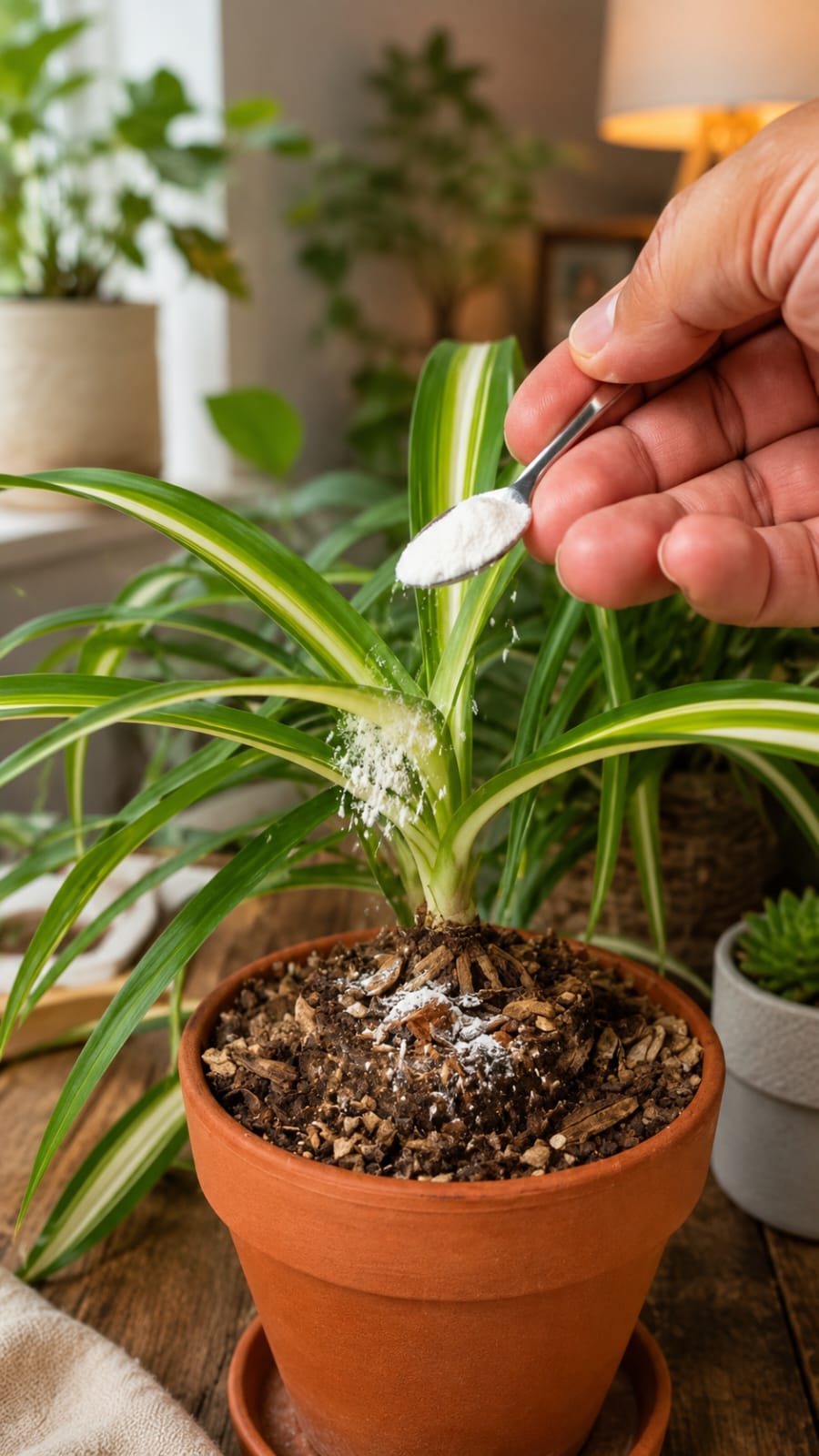
Spider plants are one of the most loved indoor plants because they are simple, graceful, and full of life. Their long striped leaves bring movement to a room, and their baby plantlets can trail beautifully from shelves, hanging baskets, windowsills, and plant stands. A healthy spider plant looks fresh, bright, and full, making it perfect for living rooms, kitchens, bedrooms, bathrooms with light, and cozy indoor plant corners.
One simple houseplant care idea that often gets attention is using a small amount of white powder around the base of a spider plant. Many plant lovers use this trick when the plant looks dull, when the soil feels tired, when the leaf bases need a cleaner environment, or when they want to freshen the potting mix naturally. The white powder is usually baking soda, crushed eggshell powder, or a light mineral-style soil refresher. But with spider plants, this method must be used carefully.
Spider plants are forgiving, but they do not like harsh treatments. Too much powder can change the soil balance, irritate roots, create crust on the surface, or make watering uneven. A small amount used correctly may help refresh the surface of the soil, reduce musty odor, or support a cleaner pot environment, but it should never be treated as a miracle fertilizer. The true secret to a strong spider plant is bright indirect light, steady watering, good drainage, fresh soil, moderate humidity, and clean leaves.
This guide explains how to use a white powder trick safely for spider plants, what kind of powder is safer, how much to use, when to avoid it, how to protect the roots, how to fix brown tips, how to encourage baby plants, how to water correctly, and how to style spider plants beautifully indoors. The goal is to keep the plant healthy, fresh, and attractive without damaging the soil or roots.
What Is the Spider Plant White Powder Trick?
The spider plant white powder trick is a light soil-surface care method. It usually means sprinkling a very small amount of fine white powder around the top of the soil near the plant base. The powder is not meant to cover the whole pot heavily. It is used as a light touch.
The most common safe options are crushed eggshell powder or a tiny amount of baking soda used only for soil-surface freshness. Crushed eggshell powder is gentler and is often preferred because it breaks down slowly. Baking soda should be used with more caution because it can affect soil chemistry if too much is added.
For spider plants, the safest rule is simple: use less than you think. A light dusting is enough. A thick layer is not helpful and can become a problem.
Best White Powder Options for Spider Plants
Not every white powder is safe for houseplants. Some powders can harm roots, attract pests, or create buildup in the soil. Use only plant-safe materials.
- Crushed eggshell powder: A slow, gentle calcium source when cleaned and finely ground.
- Very tiny amount of baking soda: Used only rarely for soil-surface freshness, not as a fertilizer.
- Diatomaceous earth: Sometimes used on dry soil surfaces for crawling pests, but only when dry and used carefully.
- Garden lime: Not recommended unless you understand your soil pH and the plant actually needs it.
For most spider plant owners, finely crushed eggshell powder is the safest white powder choice. Baking soda should be treated as a rare surface-care trick, not a regular plant food.
What Not to Use
Never sprinkle random household powders on your spider plant. Many products are too strong or unsafe for roots.
- Do not use laundry powder.
- Do not use cleaning powder.
- Do not use borax.
- Do not use powdered sugar.
- Do not use flour.
- Do not use salt.
- Do not use powdered detergent.
- Do not use strong garden chemicals indoors.
- Do not use unknown white powder from unmarked containers.
Spider plants need gentle care. If you are not sure what the powder is, do not use it.
Safe Eggshell Powder Method
Eggshell powder is one of the gentlest white powder options for spider plants. It is not fast fertilizer, but it can slowly add minerals to the potting mix over time. It may also help improve the look of the soil surface when used lightly.
How to Make Eggshell Powder
- Save clean eggshells after cooking.
- Rinse them well to remove egg residue.
- Let them dry completely.
- Bake briefly on low heat if you want extra dryness.
- Crush them into a very fine powder.
- Store in a clean dry jar.
How to Use It
- Use only 1/2 teaspoon for a small pot.
- Use 1 teaspoon for a medium pot.
- Sprinkle lightly around the soil surface.
- Keep powder away from direct contact with wet leaf bases.
- Gently mix into the top layer of soil.
- Water normally when the plant needs water.
Do not pile eggshell powder against the plant crown. A light surface mix is better than a thick mound.
Safe Baking Soda Method
Baking soda is more delicate to use because it can change soil balance if overused. It should not be used as a regular fertilizer. For a spider plant, it may be used only as a tiny soil-surface freshener when the top of the soil smells musty or looks stale.
Very Light Baking Soda Use
- Use only a tiny pinch.
- Do not use more than 1/8 teaspoon for a small pot.
- Sprinkle on the outer soil surface, not directly into the plant crown.
- Use rarely, not weekly.
- Do not use if the plant is weak or root-rotted.
- Do not combine with fertilizer at the same time.
If the soil smells bad, baking soda is not the real fix. A bad smell usually means the soil is too wet, compacted, or beginning to rot. In that case, repotting is better than adding powder.
When to Use the White Powder Trick
This trick is best used when the spider plant is healthy but the soil surface needs a small refresh. It can also be used when you want to add finely crushed eggshell powder as a slow mineral support.
The best time is during active growth, usually spring or summer. The plant can handle small soil changes better when it is growing. Avoid using any powder when the plant is stressed, newly repotted, overwatered, or suffering from root rot.
When Not to Use White Powder
- Do not use it if the soil is wet and sour.
- Do not use it if fungus gnats are active.
- Do not use it if leaves are yellowing from overwatering.
- Do not use it on a plant with soft roots.
- Do not use it after heavy fertilizing.
- Do not use it during winter dormancy.
- Do not use it if you recently repotted the plant.
- Do not use it as a thick layer over the soil.
If your spider plant looks sick, diagnose the problem first. Powder cannot fix poor drainage, root rot, low light, or bad watering habits.
Why Spider Plants Get Brown Tips
Brown tips are one of the most common spider plant problems. Many people think brown tips mean the plant needs powder, milk, fertilizer, or a special trick. Most of the time, brown tips come from water quality, dry air, inconsistent watering, fertilizer buildup, or too much direct sun.
Spider plants can be sensitive to chemicals and minerals in tap water. If your water is hard or contains high mineral levels, the leaf tips may brown over time. Dry indoor air can also make the leaf ends crispy. Too much fertilizer can leave salts in the soil, which can burn tips.
A white powder trick will not solve brown tips unless the real issue is addressed. Cleaner water and better watering habits usually help more.
How to Reduce Brown Tips
- Use filtered water, rainwater, or rested tap water.
- Water when the top inch of soil feels dry.
- Do not let the pot sit in water.
- Flush the soil once in a while to remove buildup.
- Avoid overfertilizing.
- Keep the plant away from harsh direct sun.
- Increase humidity if the room is very dry.
- Trim brown tips with clean scissors.
When trimming brown tips, follow the natural shape of the leaf. Do not cut too deep into healthy green tissue.
Best Watering Routine for Spider Plants
Spider plants like evenly moist soil, but they do not like soggy roots. Water when the top inch of soil feels dry. Water deeply until excess drains from the bottom, then empty the saucer.
Do not water a spider plant every day. Frequent small watering can keep the top layer damp and encourage fungus gnats. Deep watering followed by slight drying is better.
In bright warm rooms, the plant may need water more often. In winter or low light, it may need much less.
Signs Your Spider Plant Needs Water
- The top inch of soil feels dry.
- The pot feels lighter than usual.
- Leaves look slightly dull.
- Leaf edges fold inward.
- Baby plants look a little limp.
Water thoroughly when needed, then let the plant drain well.
Signs of Overwatering
- Yellow leaves
- Soft leaf bases
- Sour soil smell
- Fungus gnats
- Mushy roots
- Wet soil that does not dry
- Plant wilts even though the soil is wet
If the plant is overwatered, do not add white powder. Let the soil dry. Improve airflow. If the smell continues, repot into fresh soil.
Best Soil for Spider Plants
Spider plants grow best in light, well-draining potting mix. The soil should hold some moisture but still allow air to reach the roots.
Simple Spider Plant Soil Mix
- 2 parts indoor potting mix
- 1 part perlite
- 1 part coco coir or peat moss
- A small amount of compost, optional
If your soil is dense, compacted, or staying wet too long, repot the plant. Fresh airy soil helps more than surface powder.
Best Pot for Spider Plants
A pot with drainage holes is essential. Spider plants do not like standing water. Terracotta pots are great if you tend to overwater because they dry faster. Plastic pots hold moisture longer and can work well in dry rooms.
Choose a pot only slightly larger than the root ball. A pot that is too large holds extra wet soil and may cause root problems.
How to Repot a Spider Plant
- Water lightly a day before repotting.
- Remove the plant from its pot.
- Loosen crowded roots gently.
- Trim dead or mushy roots.
- Add fresh soil to the new pot.
- Place the plant at the same depth.
- Fill around the roots with soil.
- Water lightly and let drain.
Do not apply white powder immediately after repotting. Let the plant settle first.
How to Encourage Baby Spider Plants
Spider plant babies grow from long arching stems. A mature plant often produces more babies when it gets bright indirect light, steady watering, and light feeding during active growth.
Do not overpot the plant. Spider plants often produce more plantlets when slightly snug in their container. A huge pot may encourage root growth before baby production.
Good light is one of the biggest keys. A dark corner may keep the plant alive, but it may not produce many babies.
How to Propagate Spider Plant Babies
Spider plant propagation is easy and fun. You can root baby plants in water or soil.
Water Propagation
- Cut a baby plant with small root bumps.
- Place the base in a small jar of water.
- Keep the leaves above water.
- Place in bright indirect light.
- Change water every few days.
- Move to soil once roots are longer.
Soil Propagation
- Place the baby plant on moist soil.
- Pin the base gently to the surface.
- Keep the soil lightly moist.
- Wait for roots to form.
- Cut from the mother plant once established.
Do not use white powder on fresh baby plants. Their young roots need gentle plain care.
Feeding Spider Plants Safely
Spider plants are not heavy feeders. Too much fertilizer can cause brown tips and salt buildup. During spring and summer, use a balanced houseplant fertilizer diluted to half strength once every 4 to 6 weeks.
Do not fertilize in winter if the plant is not actively growing. Do not fertilize a weak or root-rotted plant. Do not use fertilizer and white powder heavily at the same time.
Gentle feeding is better than strong feeding.
How to Flush Soil Buildup
If your spider plant has brown tips and you fertilize often, flushing can help. Take the pot to a sink. Run room-temperature water through the soil until it drains from the bottom. Let it drain fully.
Only flush pots with drainage holes. Do not leave the plant sitting in runoff. After flushing, wait until the top inch of soil dries before watering again.
Light Requirements for Spider Plants
Spider plants prefer bright indirect light. They can tolerate lower light, but their growth slows and their variegation may become less bright. Too much harsh direct sun can burn the leaves.
An east-facing window is often excellent. A bright north-facing window can work. South or west windows may need a sheer curtain to soften the sun.
Good light supports strong leaves, healthy roots, and more baby plants.
Humidity and Airflow
Spider plants appreciate moderate humidity. Dry indoor air can cause crispy leaf tips. A humidifier, pebble tray, or plant grouping can help. However, humidity should not mean soggy soil.
Airflow matters too. A plant in a damp, still corner may develop mold or fungus gnats. Keep the plant in a spot with gentle air movement.
Cleaning Spider Plant Leaves
Dust can collect on spider plant leaves, especially indoors. Wipe leaves gently with a damp cloth or rinse the plant lightly in the sink. Let it drain and dry afterward.
Do not use oily leaf shine products. Spider plants look best with naturally clean leaves.
How to Use White Powder Without Making a Mess
Use a tiny spoon and apply slowly. Sprinkle the powder only on the soil surface, not all over the leaves. If powder lands on leaves, wipe it off gently with a damp cloth.
Do not create a thick white crust. A thick layer can block water movement and look messy. The powder should disappear into the top layer of soil after gentle mixing.
Signs the White Powder Trick Is Not Working
- Soil develops a crust.
- Leaves yellow after use.
- Soil smells strange.
- Fungus gnats appear.
- Water sits on the surface.
- Leaf bases become soft.
- Plant looks stressed.
If these signs appear, stop using powder. Remove the top layer of soil if needed and replace it with fresh mix.
Indoor Styling With Spider Plants
Spider plants are perfect for home decor because they add movement and softness. Their long leaves look beautiful when placed where they can arch naturally.
- Use a hanging basket near a bright window.
- Place a mature spider plant on a high shelf.
- Use terracotta for a warm natural look.
- Use white ceramic pots for clean modern styling.
- Place baby plants in small jars for propagation decor.
- Group with pothos, snake plant, and peace lily.
- Use a wooden plant stand beside a sofa.
- Place in a bright bathroom for a fresh spa look.
A spider plant with trailing babies can become a living decoration that makes the room feel softer and greener.
Continue to Page 2
Continue to page 2 for more details about this article and the key points many readers miss on the first page.