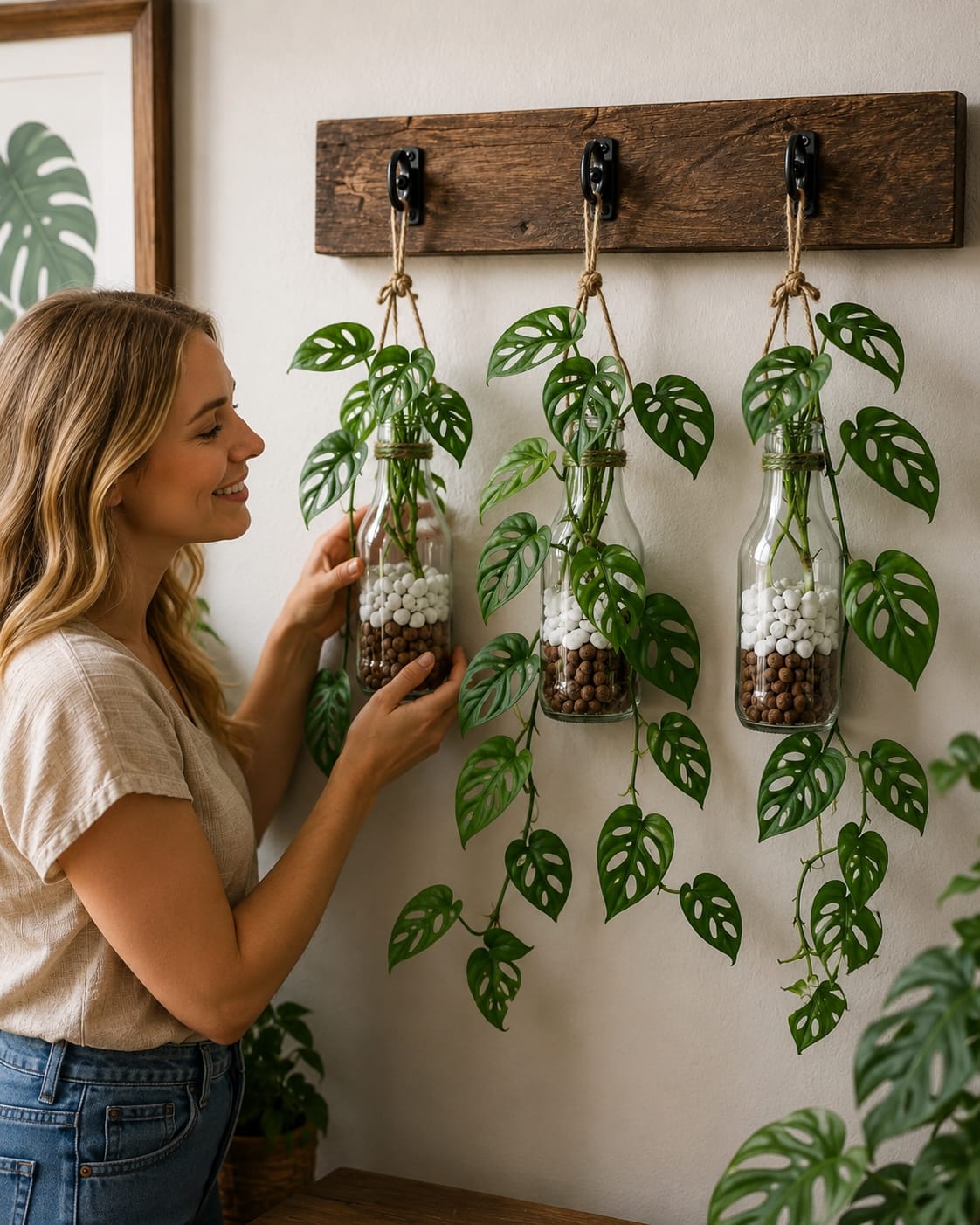
Monstera adansonii is one of those houseplants that instantly makes a room feel more styled, fresh, and alive. Its delicate trailing vines, heart-shaped leaves, and natural leaf holes give it a tropical look without needing a huge floor planter. When displayed in hanging glass bottles, this plant becomes even more eye-catching. Instead of sitting on a crowded shelf or taking up space on a table, the vines can fall naturally from the wall, creating a clean vertical garden that looks creative, modern, and surprisingly expensive.
This hanging bottle planter idea is perfect for small apartments, balconies, kitchen corners, bright hallways, plant rooms, and cozy living spaces. It uses simple bottles, rope, hooks, and lightweight growing media to turn plain wall space into a soft green feature. The final result looks like a boutique plant display, but the materials can be affordable and easy to find.
The trick is not only decorative. It also helps organize trailing plants in a cleaner way. Instead of vines spreading across shelves or tangling around other pots, each cutting gets its own vertical space. The glass bottles make the display feel lighter, while the wooden rail and natural rope add warmth. The mix of clear glass, brown clay pebbles, white stones, and green leaves creates a layered look that fits rustic, boho, Scandinavian, farmhouse, and modern indoor decor.
Why Monstera Adansonii Works So Well for Bottle Wall Planters
Monstera adansonii is a climbing and trailing plant, which makes it ideal for hanging displays. Its vines naturally search for support, and when allowed to trail, they create a soft curtain of greenery. The leaves are smaller than classic Monstera deliciosa leaves, so they do not overpower a wall arrangement. They hang gracefully, and the holes in the leaves make the plant look airy rather than heavy.
This plant also roots easily from stem cuttings. A small cutting with a node can grow roots in water, leca, moss, or a light propagation setup. That makes it useful for bottle planters because you can start with smaller pieces and let them fill out over time. As the vines grow longer, the wall display becomes more dramatic.
Another reason this plant works beautifully is its flexible styling. It can look wild and jungle-like, or it can be trained neatly around hooks and cords. You can let the vines fall freely for a soft natural look, or guide them sideways for a fuller wall-garden effect. This flexibility makes it one of the easiest plants to use in a decorative hanging system.
The Main Idea Behind the Bottle Wall Planter
The main idea is to turn glass bottles into small hanging plant vessels. Each bottle holds a lightweight base such as leca clay balls, decorative stones, or a small amount of water depending on the growing method. The plant cutting grows inside the bottle, while the vines trail outside. The bottle is wrapped or supported with rope and hung from hooks attached to a wooden board.
The wooden board gives the display structure. It keeps the bottles aligned and makes the arrangement look intentional rather than random. The hooks make it easy to remove each bottle for cleaning, watering, or trimming. The rope adds a handmade natural detail, while the glass keeps the design clean and modern.
This type of display works especially well on a plain wall because the leaves become the main decoration. A simple white, beige, gray, or brick-textured wall will make the green foliage stand out. If the room already has a lot of decor, this planter can replace wall art with something living and fresh.
Materials You Need
To create this hanging Monstera bottle wall planter, gather three or more clear glass bottles. Tall bottles with narrow necks work best because they hold stems upright and look elegant. You can reuse drink bottles, decorative vases, or small glass jars, but the bottles should be strong enough to hang safely.
You will also need a wooden board, wall hooks, screws, rope or jute twine, scissors, a drill or screwdriver, lightweight clay pebbles, white decorative stones, clean water, and Monstera adansonii cuttings. If you want a more polished finish, you can stain or seal the wood before attaching it to the wall. A dark rustic stain creates a warm farmhouse look, while a pale natural wood finish feels softer and more Scandinavian.
Choose rope that is strong enough to hold the bottle when it contains water and stones. Thin decorative twine may look pretty but may not be safe for heavier bottles. Jute rope, macrame cord, or cotton rope are better options. Always test the strength before hanging the bottles permanently.
Choosing the Right Bottles
The bottle shape affects the final look. Tall narrow bottles create a sleek vertical style. Rounder bottles create a softer cottage look. Clear bottles are the most elegant because they show the layers inside: clay pebbles at the bottom, white stones above, water level, and roots. Green or amber glass can also look beautiful, especially in rustic rooms, but clear glass gives the cleanest plant-care visibility.
A bottle with a narrow neck helps hold the Monstera stem upright. If the opening is too wide, the cutting may lean too much. If the opening is too narrow, it may be difficult to remove the plant later without damaging the roots. The best opening is wide enough for stems and roots but narrow enough to support the cutting.
Before using any bottle, clean it thoroughly. Remove labels, glue, dust, and residue. Wash the inside with warm water and mild soap, then rinse well. If the bottle smells like an old drink, soak it with warm water and a little vinegar, then rinse again. Let it dry before adding stones or clay pebbles.
Preparing the Wooden Wall Rail
The wooden rail is the foundation of the display. Choose a board long enough to hold all the bottles with comfortable spacing between them. If the bottles are too close, the vines can become crowded. If they are spaced evenly, the display looks more professional.
Sand the board lightly to smooth rough edges. Then decide whether you want to stain, paint, or leave it natural. A dark brown board creates a warm rustic feeling. A black board looks modern and dramatic. A white board blends into a white wall and makes the leaves appear to float. A natural wood board gives a calm organic look.
Attach sturdy hooks to the board. Place them evenly across the length of the wood. Three hooks are enough for a small display, while five or seven hooks can create a larger vertical garden. Make sure each hook is screwed in tightly. The board itself must also be attached securely to the wall. Use wall anchors if needed, especially if the wall is drywall or plaster.
How to Tie the Bottles
The rope should support the bottle from the neck and create a hanging loop above it. Wrap the rope around the neck of the bottle several times, then knot it tightly. Create two side strands that meet above the bottle and form a loop. The loop will hang from the hook.
For extra security, add a decorative wrap around the bottle neck. This not only looks beautiful but also helps keep the rope from slipping. A thick band of jute around the neck gives the bottle a handcrafted finish. You can secure the wrap with a tight knot, waterproof glue, or a hidden tie.
Before adding the plant, test the bottle by filling it with the intended materials and hanging it low over a soft surface. Leave it for a few minutes and check whether the rope slips. If anything feels unstable, retie it before hanging it on the wall.
Preparing Monstera Cuttings
Use healthy Monstera adansonii vines with visible nodes. A node is the small bump on the stem where roots and new growth can form. A cutting without a node may survive for a short time but will not grow properly. Each cutting should have at least one node and one or two leaves.
Cut the vine with clean scissors or pruning shears. Make the cut just below a node. Remove any leaf that would sit below the waterline or inside the bottle. Leaves submerged in water rot quickly and make the display smell bad. Only stems and nodes should be in the moist area.
If the cutting already has aerial roots, that is a bonus. Aerial roots often adapt well to water or leca. Place the rooted area gently into the bottle, making sure it has contact with moisture but is not crushed by stones.
Using Leca and Decorative Stones
Leca clay balls are useful because they hold moisture while still allowing air around the roots. They are lightweight, reusable, and cleaner than soil in a glass bottle. Place a layer of clay balls at the bottom of the bottle. Then add a small layer of white decorative stones above or around them for contrast.
The white stones are mostly decorative. They brighten the bottle and make the display look more finished. They also help hold stems in place. However, do not pack the bottle too tightly. Roots need space to grow. A tight bottle filled with heavy stones can trap moisture and limit airflow.
Rinse both leca and stones before use. Clay pebbles often contain dust, and decorative stones may have residue. Clean materials keep the water clearer and make the bottle look better.
Water Level for Bottle Planters
The water level should be low enough to avoid drowning the entire stem but high enough to keep the node or roots moist. Usually, the bottom layer of leca should sit in water, while the upper stones remain mostly dry. The leca will wick moisture upward, keeping the roots hydrated without fully submerging everything.
If you are starting cuttings directly in water, keep only the node and root area submerged. Do not let leaves sit in water. Change the water every one to two weeks, or sooner if it becomes cloudy. If you are using leca, flush the bottle regularly with fresh water to prevent buildup.
Clear glass makes it easy to monitor the waterline. This is one of the biggest benefits of the display. You can see when the bottle needs topping up, when roots are growing, and when the water needs changing.
Where to Hang the Display
Monstera adansonii prefers bright indirect light. Hang the bottle wall planter near a window but not in harsh direct sun. Strong sun through glass can heat the bottle and damage roots. It can also burn the leaves. A bright wall beside an east-facing or north-facing window is often ideal.
Avoid dark corners. Monstera vines may survive in lower light, but they will grow slowly, stretch, and produce smaller leaves with fewer holes. If the vines become long and weak with large gaps between leaves, the plant likely needs more light.
Also avoid placing the display directly above heaters, air conditioners, or drafty doors. Sudden temperature changes dry out leaves and stress roots. A stable indoor wall with gentle light is best.
How to Keep the Display Clean
Glass bottle planters look beautiful when clean, but they can look messy if algae, cloudy water, or dust builds up. Clean each bottle regularly. Remove the bottle from the hook, pour out old water, rinse the inside gently, and refill with fresh water. If algae appears, wash the bottle with mild soap and rinse very well before returning the plant.
Wipe the outer glass with a soft cloth. Dust can make the display look dull. Also wipe the leaves every few weeks. Monstera leaves collect dust, and clean leaves absorb light better. Use a damp cloth and support each leaf with your hand while wiping.
Trim yellow leaves and old damaged vines. A clean wall planter depends on selective pruning. Removing weak growth keeps the arrangement fresh and prevents it from looking neglected.
How to Train the Vines
As the Monstera vines grow, you can let them trail naturally or guide them across the wall. For a soft waterfall look, allow each vine to hang down. For a fuller living wall, use small clear clips or soft plant ties to guide vines sideways between bottles.
Do not tie stems tightly. Monstera stems need room to thicken and move. Use soft ties, loose loops, or small adhesive plant clips. Avoid wire that can cut into the vine.
If one vine becomes too long, trim it and propagate the cutting. This helps keep the wall display balanced and gives you more plants to add to other bottles. Regular trimming also encourages a fuller shape.
Decor Styling Ideas
This hanging bottle planter can fit many decor styles. For a rustic look, use dark wood, jute rope, and recycled glass bottles. Add terracotta pots nearby to warm up the space. For a modern look, use a black or walnut board, clean hooks, and identical bottles in a straight line.
For a boho look, pair the bottle wall with woven baskets, macrame details, rattan furniture, and soft neutral textiles. The trailing vines will make the area feel relaxed and natural. For a minimalist look, keep the wall plain and use only three bottles with simple rope and no extra decorations.
In a kitchen, this planter can hang near a breakfast corner or bright window. In a living room, it can replace framed art above a console table. On a balcony, it can brighten a protected wall as long as the bottles are not exposed to strong wind or harsh sun.
Continue to Page 2
Continue to page 2 for more details about this article and the key points many readers miss on the first page.