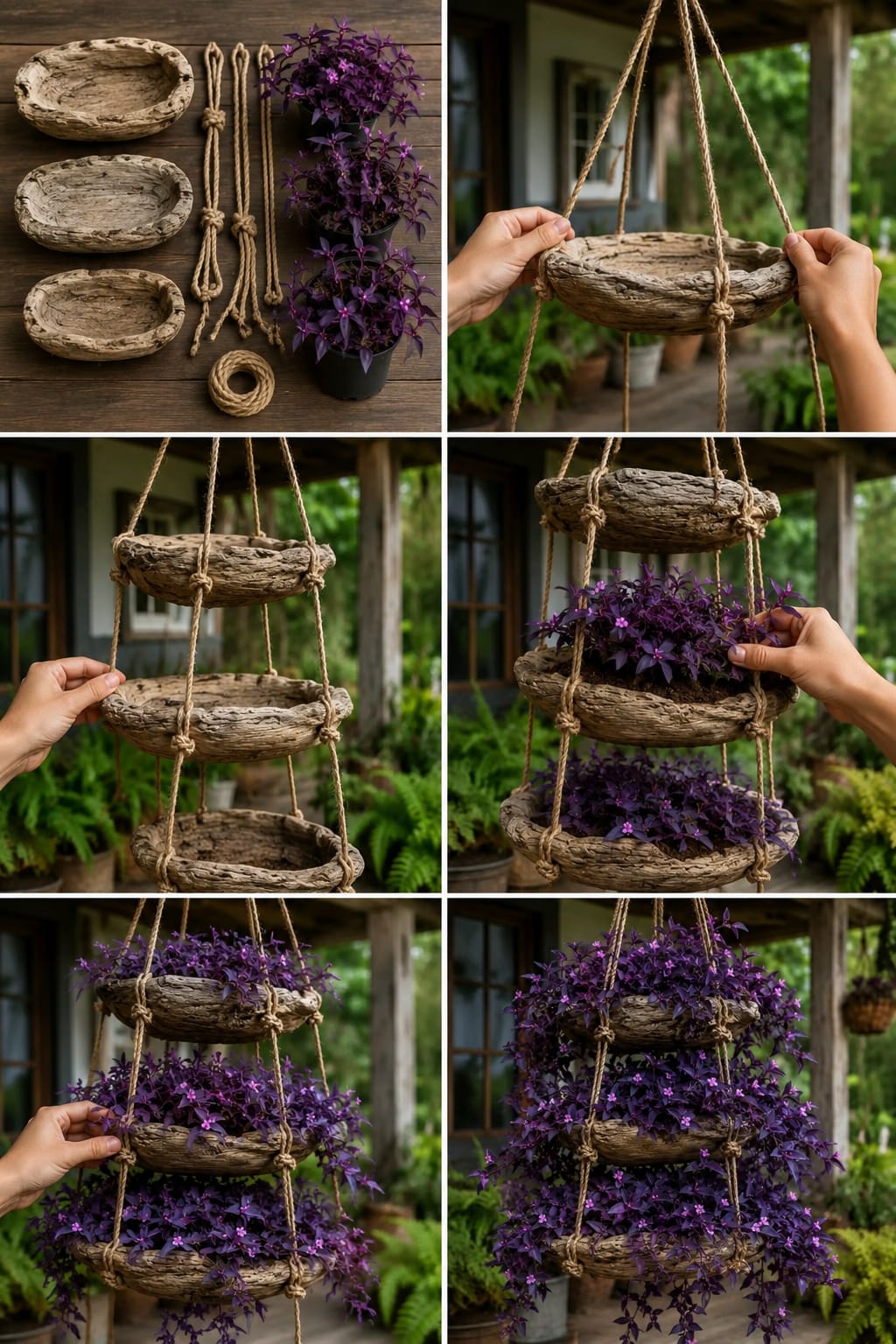
A rustic tiered hanging planter filled with Purple Heart is one of the most beautiful ways to add color, texture, and movement to a porch, balcony, patio, or bright indoor corner. The deep purple leaves spill over each level like a living waterfall, while the rope and weathered wood create a warm handmade look. It feels natural, cozy, and dramatic at the same time.
Purple Heart, also known as Tradescantia pallida, is perfect for this kind of planter because it grows quickly, trails beautifully, and keeps its best purple color when it receives enough bright light. The tiny pink flowers add a soft contrast against the dark foliage, making the whole display look full and lively.
This style works especially well for small spaces because it grows upward and downward at the same time. Instead of using floor space, the planter hangs from above and creates a vertical garden effect. With three tiers, you can grow more plants in one compact design while creating a bold focal point.
Why Purple Heart Is Perfect for a Tiered Hanging Planter
Purple Heart has long trailing stems that naturally spill over the edge of containers. This makes it ideal for hanging baskets, wall planters, window boxes, and tiered displays. The stems grow fast and can be trimmed often, which helps the planter stay full instead of becoming thin.
The rich purple foliage also gives instant impact. Many green plants blend into the background, but Purple Heart stands out. Against rustic wood and natural rope, the color becomes even stronger. The mix of purple leaves, pink flowers, rough wood, and thick rope creates a beautiful cottage-style display.
This plant also roots easily from cuttings. That means you can keep filling empty spaces in the planter without buying more plants. Every trimmed stem can become a new piece of the display.
Best Place to Hang This Planter
Choose a spot with bright light. Purple Heart needs strong brightness to stay deeply purple. A covered porch with morning sun, a bright balcony, a patio with filtered light, or a sunny window area can all work well.
If the plant receives too little light, the leaves may turn greener and the stems may stretch. If the sun is extremely harsh and hot, especially in the afternoon, the leaves may dry or scorch. The best balance is bright light with some protection from extreme heat.
A porch beam, pergola, balcony hook, strong wall bracket, or ceiling hook can support the planter. Make sure the hook is strong because soil, water, wood, rope, and plants become heavy together.
Materials You Need
- Three shallow wooden bowls, rustic trays, or driftwood-style planters
- Strong natural rope or jute rope
- Purple Heart plants or cuttings
- Light well-draining potting mix
- Perlite or pumice
- Small amount of compost, optional
- Scissors or pruning snips
- Drill for drainage holes, if needed
- Strong hanging hook
- Small stones or mesh for drainage hole cover, optional
The containers should be strong enough to hold soil. They also need drainage. If the wooden bowls do not already have drainage holes, drill several small holes in each level before planting.
Why Drainage Is Important
Purple Heart can grow quickly, but it does not like soggy soil. A tiered planter can hold moisture in different ways because each level may dry at a different speed. Without drainage, water can collect at the bottom of each bowl and cause root rot.
Good drainage keeps the roots healthy. It also prevents the planter from becoming too heavy after watering. If water sits inside the tiers, the rope and wood may also weaken over time.
Always make sure each level can drain freely.
Choosing the Right Soil Mix
Use a light, airy potting mix. Heavy garden soil is not a good choice for hanging planters because it becomes compact, holds too much water, and adds unnecessary weight.
A simple mix can include:
- 2 parts quality potting mix
- 1 part perlite or pumice
- 1 small handful of compost for gentle nutrition
- A little fine bark for extra airflow, optional
The soil should hold light moisture but still drain quickly. This gives Purple Heart enough hydration without drowning the roots.
Building the Tiered Planter
Start by arranging the three bowls or trays from largest to smallest, or use similar sizes for a balanced stacked look. The lowest tier often looks best when it is the widest because it carries the most trailing growth. The middle tier adds fullness, and the top tier creates height.
Attach rope at three or four points around each tier. The rope must be evenly spaced so the planter hangs level. Tie strong knots below each bowl to support it. Then connect the ropes upward to create a single hanging point.
Before planting, test the structure. Hang it empty first. Then add some soil and test again. If any level tilts, adjust the knots before adding plants.
How to Plant Purple Heart in Each Tier
Fill each tier with soil, leaving a little space at the top so water does not spill out. Plant Purple Heart cuttings or small rooted plants around the edges and center of each bowl.
For a full look, place several cuttings in each tier. The edge cuttings will trail down, while the center cuttings fill the top. This creates a lush layered effect.
Press the soil gently around the roots, but do not compact it too tightly. Water lightly after planting and let extra water drain away.
How Many Cuttings to Use
For a small tier, use 4 to 6 cuttings. For a medium tier, use 6 to 10 cuttings. For a wide tier, use 10 or more cuttings if you want a full display quickly.
Purple Heart fills in fast, so you do not need to overcrowd the planter. Leave a little space between cuttings for airflow and new growth.
As the plant grows, trim long stems and replant them into empty areas.
Watering a Tiered Purple Heart Planter
Water when the top inch of soil feels dry. Hanging planters often dry faster than regular pots because air moves around them. In hot weather, you may need to check the planter often.
Water slowly from the top tier and allow each level to drain. Make sure the water does not simply run off without soaking the soil. If the planter is very dry, water in two light rounds instead of one heavy pour.
Do not leave the planter dripping over furniture or indoor floors. If used indoors, take it to a sink or shower for watering, let it drain, then hang it back.
Signs the Plant Needs Water
- Leaves look limp
- Soil feels dry
- Stems lose firmness
- Pot feels lighter than usual
- Leaf edges begin to dry
Water deeply when the plant is dry, then allow the top layer to dry again before watering.
Signs of Too Much Water
- Yellow leaves
- Soft stems near the soil
- Soil stays wet for days
- Rotten smell
- Fungus gnats
- Leaves drop suddenly
If this happens, reduce watering, improve airflow, and check that all tiers drain properly.
How to Keep Purple Heart Deep Purple
Light is the biggest factor. The brighter the light, the richer the purple color usually becomes. In low light, the plant may turn dull purple-green and become leggy.
Place the planter where it receives bright indirect light or gentle direct sun. Morning sun is often ideal. If moving the plant from shade to sun, do it gradually so the leaves do not burn.
Regular pruning also helps because new growth often looks more vibrant than old tired stems.
Pruning for a Fuller Waterfall Effect
Pruning is essential for a thick tiered planter. If you never trim Purple Heart, the stems may become long and bare near the top. Cutting encourages branching and keeps the display lush.
Trim stems just above a leaf node. New side shoots can grow from that area. Use the cut pieces as new cuttings and plant them back into the tiers.
For the fullest look, pinch the growing tips every few weeks during active growth.
Propagating Cuttings Back Into the Planter
Purple Heart roots very easily. Cut a healthy stem, remove the lower leaves, and place the bare node into moist soil. Keep the soil lightly moist until roots form.
You can also root cuttings in water first, then plant them. But for filling a hanging planter, direct soil propagation is simple and effective.
This trick keeps the basket full for months.
Feeding Purple Heart
Purple Heart grows well with light feeding during spring and summer. Use a balanced liquid fertilizer at half strength once every 4 to 6 weeks.
Do not overfeed. Too much fertilizer can create weak, soft, fast growth that breaks easily. The goal is strong colorful growth, not stretched growth.
If your soil already contains compost, feed less often.
Protecting the Rope and Wood
Rustic rope and wooden planters look beautiful, but they can weaken if constantly wet. Try to hang the planter in a covered area where it receives light but is protected from heavy rain.
If the planter is outdoors, check the rope regularly. Replace rope if it becomes frayed, soft, or weak. Check knots often, especially after watering.
A strong structure keeps the display safe and long-lasting.
Indoor Styling Ideas
This planter can look beautiful indoors if you have enough light. Hang it near a bright window where the purple stems can cascade freely. It works well in boho, rustic, cottage, farmhouse, and plant-filled rooms.
- Hang it near a sunny kitchen window.
- Place it in a bright reading corner.
- Use it near a sliding glass door.
- Pair it with terracotta pots and woven baskets.
- Hang it above a plant shelf for a layered jungle look.
Indoors, remember to protect floors and furniture from dripping water.
Continue to Page 2
Continue to page 2 for more details about this article and the key points many readers miss on the first page.