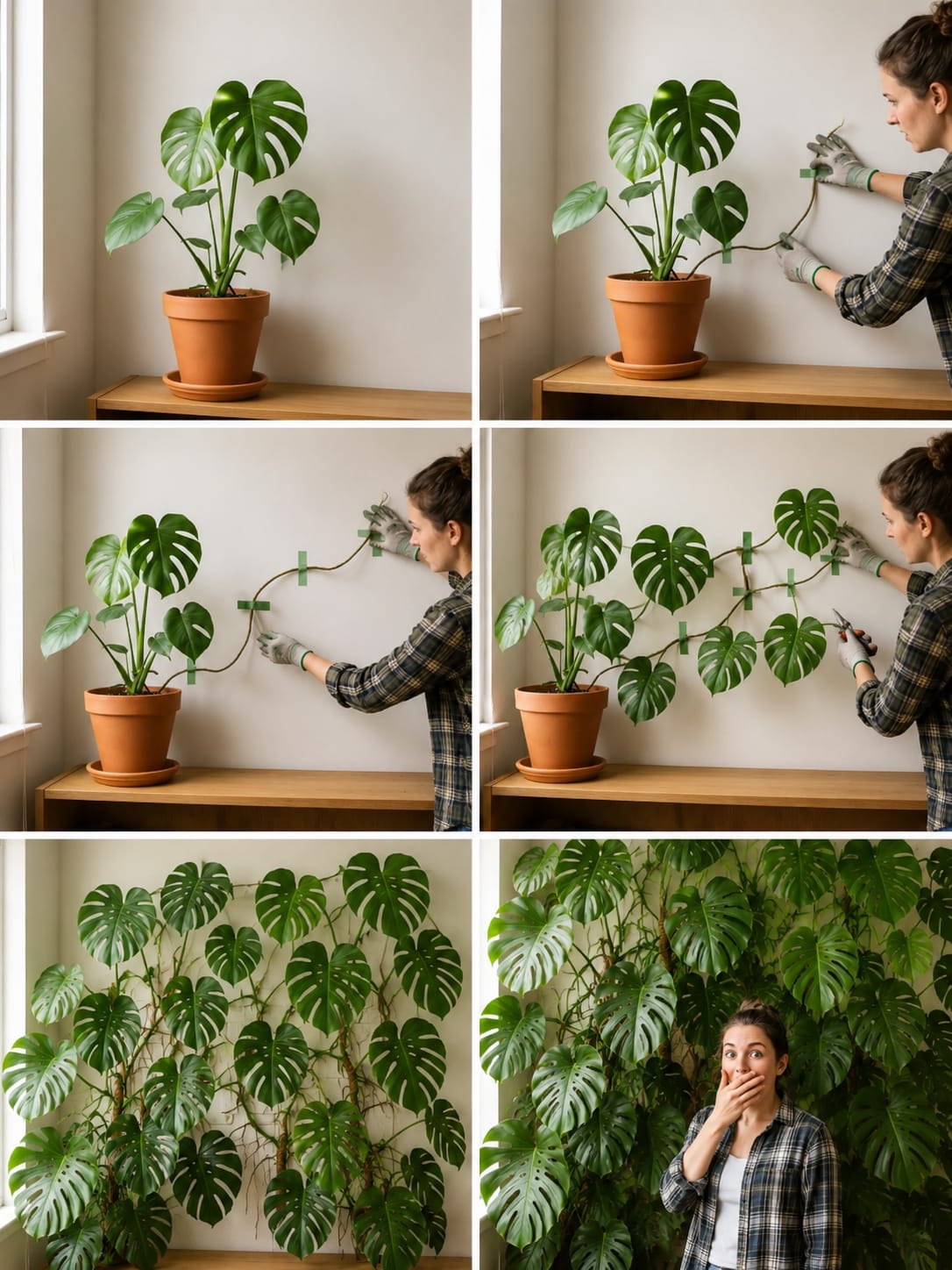
Monstera is one of the most dramatic indoor plants you can grow. Its large heart-shaped leaves, natural splits, climbing stems, and tropical personality make it perfect for anyone who wants a bold green statement at home. Most people grow monstera in a pot with a moss pole, but there is another beautiful way to style it: training the vines across a wall.
This wall-training trick turns a simple potted monstera into a living green feature. Instead of letting long stems fall randomly or crowd the pot, you guide the vines along the wall using soft plant ties, small clips, or removable plant supports. Over time, the plant can cover a blank wall with big glossy leaves and create a lush indoor jungle effect.
The secret is gentle guidance. A monstera should not be forced, bent sharply, or taped too tightly. Its stems are flexible when young, but they can snap if handled roughly. The goal is to support the plant’s natural climbing habit while creating a beautiful decorative shape.
Why Monstera Loves to Climb
Monstera is a climbing plant by nature. In tropical forests, it grows upward by attaching itself to trees with aerial roots. Indoors, it still wants to climb. That is why mature monstera plants often produce long stems and roots that reach outward looking for support.
When the plant has something to climb, it often grows stronger and produces larger leaves. Good support also keeps the plant from becoming messy, floppy, or uneven.
A wall can act like a wide support system. Instead of one vertical pole, the wall gives the plant space to spread and become a decorative green backdrop.
Why Wall Training Looks So Beautiful
Monstera leaves have a bold shape. When they spread across a wall, each leaf becomes part of a natural pattern. The vines create movement, and the leaves add depth and texture.
This styling method works especially well on plain walls. A blank white, cream, beige, or soft gray wall can become a living plant display. The plant adds color without needing artwork, wallpaper, or shelves.
It is also a smart idea for small spaces. Instead of taking up more floor space, the plant grows vertically and sideways across the wall.
Best Monstera Types for Wall Training
Several monstera varieties can be trained against a wall, but some are easier than others.
- Monstera deliciosa: Best for large dramatic leaves and bold wall coverage.
- Monstera adansonii: Great for a lighter trailing wall look with smaller fenestrated leaves.
- Monstera siltepecana: Beautiful for slimmer vines and softer decor.
- Monstera standleyana: Works well for narrow leaves and vertical growth.
For the classic indoor jungle look, Monstera deliciosa is the strongest choice. It has thick stems and large leaves that create a dramatic wall display.
Choose the Right Wall
The wall should receive bright indirect light. Monstera needs good light to grow big leaves and develop splits. A wall near a window is ideal, but avoid harsh direct sun that can burn the leaves.
Good wall choices include:
- A wall beside an east-facing window
- A bright living room wall
- A wall near a sliding glass door
- A bright bedroom corner
- A plant room wall with filtered light
- A home office wall with natural light
A dark wall far from a window will not give the best results. The plant may stretch, grow small leaves, and lose its full shape.
Best Light for Large Monstera Leaves
Bright indirect light is the key to large leaves. Monstera can survive in medium light, but it grows best with stronger filtered brightness.
If the plant receives enough light, new leaves become larger and more mature. Mature leaves can develop beautiful splits and holes. If the plant receives too little light, the leaves may stay small and plain.
Place the plant where it can “see” the sky but is not roasted by hot afternoon sun.
Signs Your Monstera Needs More Light
- Small new leaves
- No leaf splits
- Long spaces between leaves
- Stems stretching toward the window
- Slow growth during spring and summer
- Pale or weak leaves
If you notice these signs, move the plant closer to a brighter window or add a grow light.
Tools You Need for Wall Training
You only need simple supplies. The most important rule is to use gentle materials that will not damage the stems or wall.
- Soft plant ties
- Removable wall clips
- Clear plant clips
- Small command hooks
- Garden tape
- Twine, optional
- Clean pruning scissors
- A sturdy pot
- Fast-draining potting mix
- Moss pole or small support, optional
Avoid tight wire directly on the stem. Avoid strong tape wrapped around the plant. The stem needs room to grow and move.
Step 1: Start With a Healthy Monstera
Before training the plant, make sure it is healthy. The leaves should be firm and green. The stems should not be mushy, weak, or broken. The soil should not smell bad or stay wet for too long.
If the plant is stressed, fix the care problem first. A weak plant will not respond well to styling.
A healthy monstera trains more easily and grows into the wall design faster.
Step 2: Choose the Main Vine
Look at the plant and find the longest, strongest vine. This will become the first vine you guide along the wall. If the plant has several stems, choose the one that naturally leans toward the wall.
Do not force a stem in the opposite direction. Work with the plant’s natural growth. This makes the design safer and more natural.
If the vine is very stiff, move it little by little over several days instead of bending it all at once.
Step 3: Add Wall Supports
Place removable clips or hooks along the wall where you want the vine to travel. Create a soft path, not a sharp zigzag. Monstera stems look best when guided in gentle curves.
Space the supports several inches apart. Large leaves need room to open and face the light.
Make sure each support is secure before attaching the plant.
Step 4: Attach the Vine Gently
Use soft plant ties to hold the stem near the support. The tie should be loose enough that you can slide a finger under it. The stem should not be squeezed.
Attach the stem at strong points, not on delicate new growth. Avoid tying directly around new leaf tips or aerial roots.
The plant should look supported, not trapped.
Step 5: Guide New Growth Over Time
As the monstera grows, keep guiding new stems along the wall. Check the plant every one or two weeks during active growth. Add new clips when needed.
New growth is easier to train than old stiff growth. If you guide it early, the plant will follow the wall naturally.
Do not rush the process. A beautiful plant wall grows over time.
Step 6: Keep the Pot Stable
A wall-trained monstera can become heavy. The pot must be stable. A lightweight plastic pot may tip if the vine pulls to one side.
Choose a heavy ceramic, terracotta, or weighted planter. Make sure it has drainage holes. If the plant is large, place the pot on a sturdy cabinet, plant stand, or floor base.
The pot should support the plant’s weight and keep the arrangement safe.
Should You Use a Moss Pole Too?
You can use a moss pole together with wall training. A moss pole helps support the plant near the pot, while the wall supports longer vines. This works well for large Monstera deliciosa plants.
The moss pole keeps the base upright. The wall creates the decorative spread.
If you do not want a moss pole, use a strong stake or guide the main stem directly toward the wall.
How to Handle Aerial Roots
Monstera aerial roots are normal. They help the plant climb. You can gently direct them toward the soil, moss pole, or wall support area.
Do not cut all aerial roots unless they are dry, damaged, or in the way. Healthy aerial roots can help the plant stabilize itself.
If aerial roots become too long and messy, you can tuck them into the pot or attach them loosely along the support path.
Watering a Wall-Trained Monstera
Water when the top 1 to 2 inches of soil feel dry. Monstera likes evenly moist soil, but it does not like soggy roots. Water thoroughly until extra water drains from the bottom, then empty the saucer.
A plant with larger leaves may use more water during active growth. But always check the soil before watering.
Do not water by schedule only. The soil tells you when it is time.
Signs Your Monstera Needs Water
- Top soil feels dry
- Leaves slightly droop
- Pot feels lighter
- Leaf edges curl slightly
- Plant looks less firm than usual
Water deeply, then allow the top layer to dry again before the next watering.
Signs of Overwatering
- Yellow leaves
- Soft stems
- Wet soil for many days
- Fungus gnats
- Black or mushy roots
- Bad smell from the pot
- Brown patches with yellow halos
If these signs appear, reduce watering and check drainage. Repot if the soil is compacted or sour.
Best Soil for Monstera
Monstera needs a chunky, airy soil mix. The roots like moisture, but they also need oxygen. A dense potting mix can hold too much water and cause root problems.
A good monstera mix can include:
- Indoor potting soil
- Orchid bark
- Perlite
- Coco coir
- Pumice
- A small amount of compost or worm castings
The mix should feel chunky and loose, not muddy.
Why Chunky Soil Helps Wall Growth
A wall-trained monstera may become large, so strong roots matter. Chunky soil gives the roots oxygen and helps prevent rot. Healthy roots support bigger leaves and stronger vines.
If the soil stays wet too long, the plant may stop growing or drop leaves. A good soil mix keeps the plant stable while supporting fast growth.
Feeding Monstera for Bigger Leaves
Feed during spring and summer when the plant is actively growing. Use a balanced liquid houseplant fertilizer at half strength every 4 to 6 weeks.
Do not overfeed. Too much fertilizer can burn roots or cause weak growth. In fall and winter, reduce feeding or stop if growth slows.
Good light, proper watering, and healthy roots are more important than heavy feeding.
Pruning for Shape
Pruning helps keep the wall design neat. If a vine grows in the wrong direction, trim it back. If the plant becomes too crowded, remove weak stems.
Cut just above a node. This is where new growth can form. Use clean scissors or pruning shears.
You can propagate the cuttings and plant them back into the pot for a fuller base.
Propagating Monstera Cuttings
Monstera is easy to propagate from stem cuttings. Each cutting needs at least one node. A node is the small bump where roots and new growth can form.
Place the cutting in water or moist chunky soil. Keep it in bright indirect light. Once roots form, plant it in a pot with airy soil.
Propagated cuttings can help fill empty areas near the base of the wall display.
How to Make the Wall Look Fuller
One vine can look beautiful, but several vines create a lush wall. To make the display fuller, train multiple stems in different directions. Add new cuttings to the pot and guide them as they grow.
Place leaves at different heights so the wall looks layered. Avoid putting every vine in one straight line. A natural pattern looks better.
Over time, the plant can create a rich green wall effect.
Cleaning the Leaves
Large monstera leaves collect dust. Dust blocks light and makes the plant look dull. Wipe leaves gently with a damp cloth every few weeks.
Support each leaf with one hand while wiping with the other. Be careful around splits and holes because mature leaves can tear.
Clean leaves look glossier and help the plant absorb more light.
Rotating the Pot
With wall training, you may not rotate the plant as much because the vines are attached. Instead, try to place the plant where light reaches the leaves evenly.
If one side grows faster, guide new vines to balance the display. You can also adjust the pot slightly before the stems become too attached.
Good light balance keeps the wall looking full.
How to Avoid Wall Damage
Use removable plant clips or hooks designed for walls. Avoid strong tape that can peel paint. Avoid nails unless you are comfortable making holes.
Do not allow damp moss, wet soil, or dripping water to touch the wall. Keep the pot and watering area clean.
If aerial roots attach to a painted wall, they may leave marks. Use a moss pole or clips if you want to avoid direct attachment.
Indoor Decor Ideas
A wall-trained monstera is a powerful decor feature. It can replace wall art and create a living tropical backdrop.
- Train it above a wooden cabinet for a clean natural display.
- Let it climb beside a bright window for a jungle corner.
- Use it behind a reading chair for a cozy plant nook.
- Grow it across a blank office wall for a fresh background.
- Pair it with rattan baskets and neutral furniture.
- Use a terracotta pot for a warm natural look.
- Add smaller plants below for layered indoor jungle style.
The large leaves bring softness to plain walls and make the room feel alive.
Best Rooms for a Wall-Trained Monstera
Good rooms include living rooms, bedrooms, sunrooms, home offices, bright hallways, and dining rooms. The room should have enough light and enough wall space for the plant to spread.
Avoid very dark rooms or rooms with dry hot air from heaters. Also avoid placing the plant where people brush against the leaves often.
Give the plant space to grow and be seen.
Continue to Page 2
Continue to page 2 for more details about this article and the key points many readers miss on the first page.