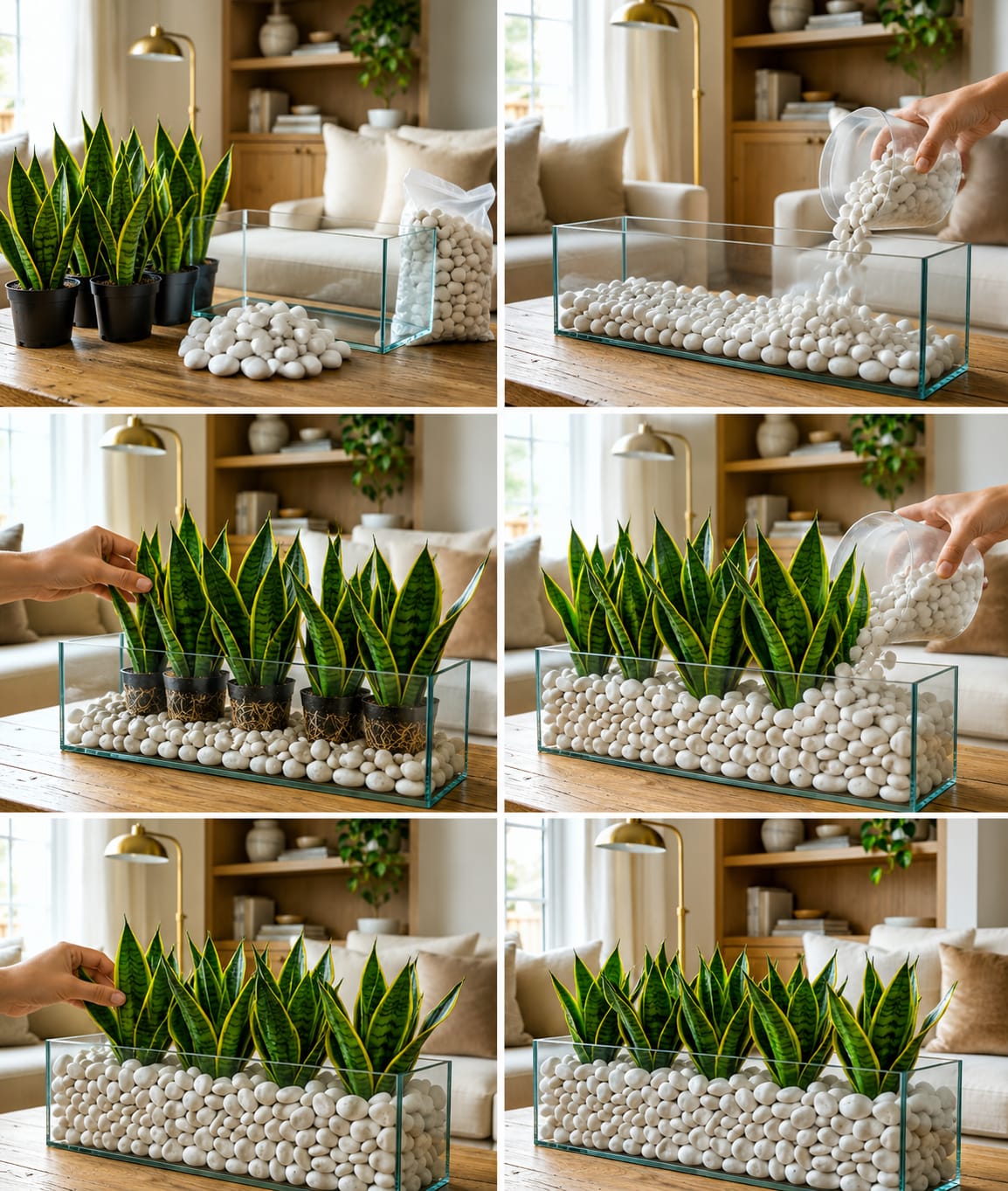
A snake plant glass rectangle display is one of the cleanest and most modern ways to style indoor greenery. Snake plants already have a bold architectural shape, with upright sword-like leaves, dark green patterns, and bright yellow edges. When you place several snake plants inside a clear rectangular glass container and surround them with smooth white stones, the result looks fresh, elegant, and high-end.
This type of arrangement works beautifully on a coffee table, console table, dining table, office desk, kitchen island, shelf, or bright living room corner. The clear glass gives the display a light and open look. The white stones create a neat decorative base. The snake plants bring strong vertical lines and natural color. Together, they create a simple indoor garden that feels polished without looking complicated.
The most important thing to understand is that snake plants are succulents. They store water in their thick leaves and rhizomes, so they do not like sitting in wet soil. A glass container can look beautiful, but it can also trap moisture if it has no drainage holes. That means this display must be built carefully and watered lightly. The stones are decorative, but they do not replace drainage holes.
Why Snake Plants Look So Good in Glass Displays
Snake plants are perfect for glass arrangements because their leaves grow upright instead of spreading too wide. This makes them ideal for narrow rectangular containers. The shape of the plant matches the clean lines of the glass box.
The white stones add contrast to the green leaves. The yellow leaf edges become more visible, and the whole arrangement looks brighter. This is why snake plants are often used in modern interior styling. They look structured, clean, and calm.
A rectangular planter also allows several small snake plants to be arranged in a row, creating a living centerpiece that feels balanced and intentional.
Important Note About Glass Containers
Many glass containers do not have drainage holes. This is the main challenge. Snake plants can rot if water stays trapped at the bottom. Even if the top looks dry, the lower layer may still be wet.
For this reason, a glass rectangle display should be treated as a dry-style decorative planter. Water should be added in small amounts only when the soil around the roots is dry. Never flood the container.
If you want the easiest version, keep each snake plant in its small nursery pot and hide the pots with white stones. This gives you the decorative look while still allowing each plant to drain properly when removed for watering.
Two Ways to Build This Display
There are two safe ways to create this type of snake plant arrangement.
Option 1: Hidden Nursery Pots
This is the safest method. Keep each snake plant inside its plastic nursery pot with drainage holes. Place the pots inside the glass container, then fill around them with white stones until the pots are hidden.
When it is time to water, remove the nursery pots, water them over a sink, let them drain fully, then place them back into the glass display.
This method protects the roots from sitting in trapped water.
Option 2: Direct Planting
This method means planting the snake plants directly into the glass container. It looks very clean, but it requires careful watering. You must use fast-draining soil and avoid overwatering.
Direct planting works best if the container is shallow, the soil layer is not too deep, and the plants receive bright indirect light.
Beginners should choose the hidden nursery pot method.
Materials You Need
- Rectangular glass container
- Small snake plants or snake plant pups
- Smooth white decorative stones
- Fast-draining cactus or succulent soil
- Small nursery pots with drainage, optional
- Activated charcoal, optional
- Perlite or pumice
- Small scoop or spoon
- Soft cloth for cleaning glass
- Watering cup with narrow spout
Choose clean stones and healthy plants. Healthy roots are the secret to a long-lasting display.
Choosing the Best Snake Plants
Small or medium snake plants work best for a rectangular glass planter. Very tall plants may become top-heavy. Compact plants create a fuller, neater look.
Good choices include:
- Small Laurentii snake plants
- Bird’s nest snake plants
- Golden hahnii snake plants
- Young snake plant divisions
- Compact variegated snake plants
Choose plants with firm leaves, strong color, and no mushy base. Avoid plants with yellowing lower leaves or wet soil.
Choosing the Right Glass Container
A rectangular glass container should be wide enough to hold several plants without crowding them too tightly. It should also be stable and thick enough to hold stones safely.
Low rectangular containers are best. A very deep glass box can hold too much moisture and become difficult to manage. A shallow container keeps the display lighter and easier to monitor.
Before planting, wash and dry the container well. Clean glass makes the finished display look more professional.
Why White Stones Work So Well
White stones make the display look clean and bright. They cover nursery pots, hide soil, and create a calm decorative base. They also reflect light and make the green leaves stand out.
Use smooth stones rather than sharp gravel. Smooth stones are safer around plant bases and easier to arrange.
Do not pack stones too tightly around the crown of the plant. The base of the leaves needs airflow.
Best Soil for Snake Plants
If you plant directly into the glass container, use a gritty, fast-draining soil mix. Regular potting soil alone can hold too much moisture.
A good mix includes:
- 2 parts cactus or succulent soil
- 1 part perlite
- 1 part pumice or coarse sand
- A small amount of orchid bark, optional
The soil should feel loose and airy. It should never feel muddy or heavy.
Step 1: Add a Stone Base
Start with a layer of white stones at the bottom of the glass container. This creates the decorative base and helps lift the plants visually.
If using hidden nursery pots, add enough stones so the pots sit at the right height. The plant leaves should rise above the glass edge comfortably.
If planting directly, keep the stone layer moderate. Too many stones can reduce the space available for roots.
Step 2: Place the Snake Plants
Arrange the snake plants in a row. Place taller plants toward the back or center and smaller plants near the front. This creates depth and balance.
If using nursery pots, test the spacing before filling with stones. Make sure each plant has room and does not press too hard against the glass.
If planting directly, gently spread the roots and position each plant upright before adding soil around it.
Step 3: Fill Around the Plants
For the nursery pot method, pour white stones around the pots until the pots are hidden. Keep the stones level and neat.
For direct planting, add fast-draining soil around the roots first. Then place a light layer of white stones on top for decoration.
Do not bury the base of the leaves too deeply. The crown should stay dry and slightly above the soil line.
Step 4: Finish the Surface
Add more white stones until the surface looks full and even. Use your hands to arrange larger stones at the front for a polished look.
Leave a little space around each plant crown. This prevents trapped moisture and gives the display a cleaner finish.
Wipe the glass after finishing to remove dust and fingerprints.
How to Water the Hidden Pot Method
This is the easiest and safest method. Remove each nursery pot from the glass container when it needs water. Water the plant over a sink until water drains from the bottom. Let it drain completely.
Once the pot is no longer dripping, place it back into the glass display and cover it with stones again.
This prevents water from collecting inside the glass container.
How to Water Direct Planting
If the plants are directly planted into the glass container, water very carefully. Use a small cup or narrow-spout watering can. Add a small amount of water around each plant base only when the soil is dry.
Do not pour water across the entire container. Do not flood the stone layer. Watch the glass bottom for trapped moisture.
If water collects at the bottom, wait much longer before watering again.
How Often to Water
Snake plants usually need water only when the soil is dry. In a glass display, this may be every 3 to 5 weeks, depending on light, room temperature, humidity, plant size, and soil depth.
Do not water on a strict schedule. Check the soil first. If the soil feels damp, wait.
Snake plants prefer dry roots over wet roots.
Signs the Display Has Too Much Water
- Foggy glass near the bottom
- Water pooling under the stones
- Green algae on the glass
- Yellowing leaves
- Soft leaf bases
- Bad smell from the container
- Fungus gnats
- Soil staying wet for many days
If you notice these signs, stop watering immediately. If planted directly, remove the plants and repot them into dry soil if needed.
Best Light for a Snake Plant Display
Snake plants can tolerate low light, but they look best in bright indirect light. Good light keeps the leaves firm, upright, and colorful. The yellow edges stay brighter with better light.
Place the glass display near a bright window, but avoid hot direct sun through glass. Strong sun can heat the container and stress the roots.
Morning light or filtered daylight is ideal.
Can This Be a Coffee Table Centerpiece?
Yes, this arrangement makes a beautiful coffee table centerpiece. It looks clean, modern, and natural. But the table must be near enough to light. If the room is too dark, move the display closer to a window for part of the week.
Snake plants can handle some lower light, but they will grow better with regular brightness.
For decor, this display works well with wooden tables, neutral sofas, books, candles, ceramic bowls, and woven baskets.
Feeding Snake Plants in a Glass Display
Snake plants do not need much fertilizer. If using hidden nursery pots, feed lightly during spring and summer with a diluted cactus fertilizer.
If planted directly into the glass container, fertilize even less. There is no drainage to flush extra salts, so fertilizer can build up over time.
Use quarter-strength fertilizer once or twice during active growth, or skip feeding if the plant looks healthy.
Cleaning the Glass
Glass displays look best when the container stays clean. Dust, fingerprints, water spots, and soil marks can make the arrangement look messy.
Wipe the outside with a soft cloth. If the inside becomes dirty, remove stones from the area and clean carefully. If algae appears, the container may be too wet or receiving too much direct sun.
A clean glass container keeps the display elegant.
Cleaning the Leaves
Snake plant leaves collect dust. Wipe each leaf gently with a damp cloth. Support the leaf with one hand and clean with the other.
Do not use oily leaf shine products. They can leave residue and make the plant look unnatural.
Clean leaves absorb light better and look more beautiful in a display.
How to Keep the Arrangement Balanced
Rotate the glass display every couple of weeks so all plants receive light evenly. This prevents leaning and keeps the leaves growing upright.
If one plant becomes much taller than the others, move it to the center or back. Smaller plants can fill the front.
A balanced arrangement looks more intentional and decorative.
When to Refresh the Display
Refresh the arrangement if the stones become dusty, the plants outgrow the container, the soil becomes old, or the glass becomes difficult to clean.
For hidden pots, refreshing is easy. Remove the pots, wash the stones, clean the glass, and rebuild the display.
For direct planting, refresh the soil every year or two, especially if watering has been difficult.
Can You Use Artificial Stones?
Yes, decorative stones can be natural or polished. Choose stones that do not dissolve, stain, or release chemicals into the soil.
Rinse stones before using them. Dust from stones can cloud the glass and make the display look dirty.
White river stones are a popular choice because they look smooth and natural.
Continue to Page 2
Continue to page 2 for more details about this article and the key points many readers miss on the first page.