How to Water Anthurium Correctly – Moisture Management
Watering matters more than fertilizer. Anthuriums like moisture, but they hate soggy roots. This anthurium watering guide for beginners will prevent root rot.
Watering Rules
- Water when the top inch of soil feels slightly dry
- Use room-temperature water
- Water thoroughly until excess drains out
- Empty the saucer
- Do not water again while the pot is still wet
- Reduce watering in cooler months
If the leaves turn yellow and the soil is wet, the plant may be overwatered.
Signs Your Anthurium Likes the Fertilizer – Positive Indicators
When orange peel water is used correctly, your anthurium should remain stable and gradually show healthy growth. These are positive signs of anthurium health.
Good signs include:
- Firm glossy leaves
- New leaf growth
- Strong upright stems
- Healthy green roots
- Longer-lasting flowers
- No sour smell from the soil
- No fungus gnats
- No yellowing after application
Remember that results take time. A homemade fertilizer will not transform a weak anthurium overnight.
Signs the Mixture Is Too Strong – Overfertilization Symptoms
If the orange peel water is too strong or used too often, the plant may show stress. Recognizing anthurium overfertilization symptoms helps you act fast.
Warning signs include:
- Yellow leaves
- Brown leaf tips
- Drooping after feeding
- Sour smell from the soil
- White mold on the potting mix
- Fungus gnats
- Soft stems
- Slow-drying soil
- Root rot symptoms
If this happens, stop using homemade fertilizer. Flush the pot with clean water, let it drain, and allow the soil to dry slightly. If the soil smells bad, repot into fresh airy mix.
Can You Use Orange Peel Fertilizer on Flowering Anthuriums? – Yes, Carefully
Yes, but carefully. Do not pour the liquid over flowers or leaves. Apply only to the soil.
Flowering anthuriums still need nutrition, but strong homemade mixtures can stress blooms. Use the weakest dilution if the plant is already flowering heavily.
Can You Spray Orange Peel Water on Anthurium Leaves? – No, Soil Only
No. It is better not to spray orange peel water on anthurium leaves. Citrus residue can leave marks, attract pests, or irritate leaf surfaces if too strong. For shiny anthurium leaves naturally, stick to gentle wiping.
For shiny leaves, wipe them gently with a soft damp cloth. Clean leaves reflect light better and look glossier naturally.
Can Orange Peel Water Repel Pests? – Not a Reliable Treatment
Some gardeners believe citrus smell may discourage certain insects, but orange peel water is not a reliable pest treatment. If your anthurium has pests, inspect the plant carefully and use proper care methods. For natural pest control for anthuriums, use targeted treatments.
Common anthurium pests include:
- Mealybugs
- Scale
- Spider mites
- Thrips
- Fungus gnats
For pests, isolate the plant, clean leaves manually, and use appropriate insecticidal soap or neem treatment if needed. Do not rely on orange peel fertilizer as pest control.
What About Banana Peel Fertilizer for Anthurium? – Similar Caution
Banana peel fertilizer is another popular homemade method. It may provide small amounts of potassium, which supports overall plant strength. But like orange peels, banana peels should not be buried fresh in the pot. This banana peel water for anthuriums should be used with the same caution.
Use banana peel water only when:
- It is fresh
- It is strained
- It is diluted
- The soil is not wet
- The plant is healthy
A mild banana peel and orange peel infusion can be used occasionally, but a balanced commercial anthurium fertilizer may still be needed for long-term nutrition.
Complete Anthurium Fertilizer Care Table – Quick Reference
| Care Factor | Best Method | Why It Matters |
|---|---|---|
| Homemade fertilizer | Diluted orange peel water | Gentle organic support |
| Soaking time | 12 to 24 hours | Prevents strong fermentation |
| Dilution | 1 part infusion to 3–5 parts water | Protects roots |
| Frequency | Every 4–6 weeks | Avoids buildup |
| Application | Soil only | Prevents leaf and flower damage |
| Light | Bright indirect | Encourages blooming |
| Soil | Chunky, airy mix | Prevents root rot |
| Watering | When top inch is slightly dry | Keeps roots healthy |
Step-by-Step Quick Recipe – Homemade Anthurium Fertilizer Summary
- Wash peels from 1 orange.
- Cut the peels into small pieces.
- Place them in a clean glass jar.
- Add 1 liter of room-temperature water.
- Soak for 12 to 24 hours.
- Strain completely.
- Dilute 1 part orange peel water with 3 to 5 parts clean water.
- Apply to the soil only when the top inch feels slightly dry.
- Let the pot drain fully.
- Use once every 4 to 6 weeks during active growth.
Common Mistakes to Avoid – Anthurium Fertilizer Don’ts
- Putting fresh orange peels directly into the pot
- Using fermented citrus water indoors
- Applying orange peel water every week
- Pouring it on leaves or flowers
- Using it on wet soil
- Skipping dilution
- Using peels from moldy fruit
- Leaving peel chunks in the potting mix
- Using a pot without drainage
- Expecting instant blooms from one treatment
Short Caption for This Trick
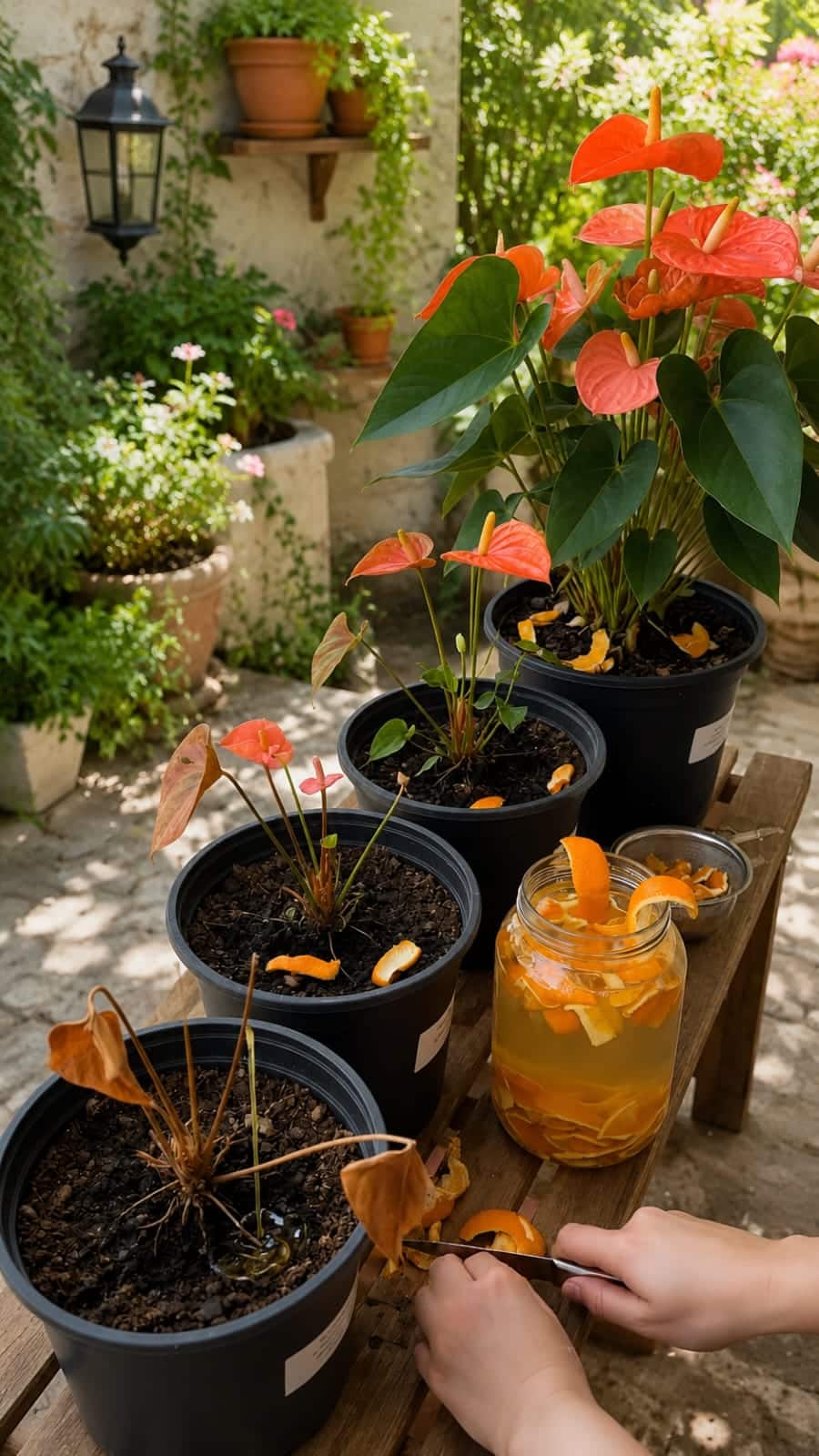
“To make homemade fertilizer for anthurium, soak clean orange peels in 1 liter of water for 12 to 24 hours, strain well, then dilute 1 part orange peel water with 3 to 5 parts clean water. Pour lightly around the soil only, avoid leaves and flowers, and use once every 4 to 6 weeks during active growth – this natural anthurium bloom booster is gentle and effective.”
Frequently Asked Questions – Anthurium Orange Peel Fertilizer Q&A
Is orange peel fertilizer good for anthurium?
Diluted orange peel water can be used occasionally as a gentle homemade soil tonic, but it should not replace balanced fertilizer or proper anthurium care.
How do you make orange peel fertilizer for anthuriums?
Wash orange peels, soak them in water for 12 to 24 hours, strain the liquid, dilute it with clean water, and apply it lightly to the soil.
Can I put orange peels directly in anthurium soil?
It is not recommended. Fresh orange peels can mold, attract pests, and make the soil too acidic or wet.
How often should I use homemade fertilizer on anthurium?
Use diluted orange peel water once every 4 to 6 weeks during spring and summer. Use plain water between treatments.
Can orange peel water make anthuriums bloom?
It may support healthy growth, but blooming depends more on bright indirect light, healthy roots, humidity, warmth, and proper care.
Should I spray orange peel water on anthurium leaves?
No. Apply it to the soil only. Wipe leaves with plain water if you want them clean and glossy.
Can orange peel fertilizer burn roots?
Yes, if it is too strong, fermented, or used too often. Always dilute it heavily.
What is the best soil for anthurium?
A chunky, airy mix with orchid bark, perlite, coco coir, compost, and charcoal is best because it drains well and allows root airflow.
Why is my anthurium not flowering?
Common reasons include low light, weak roots, poor humidity, cold temperatures, overwatering, or lack of balanced nutrients.
Can I mix orange peel water with commercial fertilizer?
Do not use both on the same day. Alternate them carefully to avoid overfeeding or buildup in the potting mix.
Final Thoughts – The Best Natural Fertilizer for Anthurium Blooms
Orange peel fertilizer can be a simple, low-cost way to support anthuriums naturally when it is made correctly. The safest method is to soak clean orange peels briefly, strain the liquid, dilute it heavily, and apply it to the soil only. This gives your anthurium a mild organic boost without leaving fresh fruit scraps to rot in the pot. This natural anthurium care method has helped many indoor gardeners achieve stunning results.
The most important rule is moderation. Anthuriums do not need strong homemade mixtures. They need bright indirect light, warm temperatures, humidity, chunky soil, proper drainage, and careful watering. Orange peel water can support that routine, but it should never replace the basics. Following this complete anthurium care guide will keep your plant thriving.
Used gently once every few weeks during active growth, this homemade fertilizer may help refresh the soil, support roots, and encourage glossy leaves. Combined with the right care, your anthurium can continue producing vibrant tropical blooms and healthy heart-shaped foliage season after season. These professional indoor plant care secrets will help you succeed with all your anthuriums.