Should You Add Coffee Grounds? – Use Sparingly for Jade Plants
Used coffee grounds are sometimes added to homemade fertilizers, but jade plants do not need much. Coffee grounds can hold moisture and may compact soil if used too heavily. For safe organic succulent fertilizer, coffee is optional.
If you use coffee grounds:
- Use only a tiny amount
- Dry them completely first
- Mix into the powder, not directly into wet soil
- Do not use more than 1 teaspoon in a full jar of dry fertilizer powder
For jade plants, banana peel and eggshell powder is safer than a coffee-heavy mixture.
Best Soil for Jade Plants – Fast-Draining Mix for Healthy Roots
Organic fertilizer will not help if the soil is wrong. Jade plants need fast drainage more than rich compost. Choosing the best potting mix for jade plants is half the battle.
Good Jade Plant Soil Mix
- 2 parts cactus or succulent mix
- 1 part perlite or pumice
- 1 part coarse sand or fine bark
The soil should dry quickly after watering. If the soil stays wet for more than a few days, the mix may be too heavy.
Best Pot for Jade Plants – Terracotta and Drainage Holes
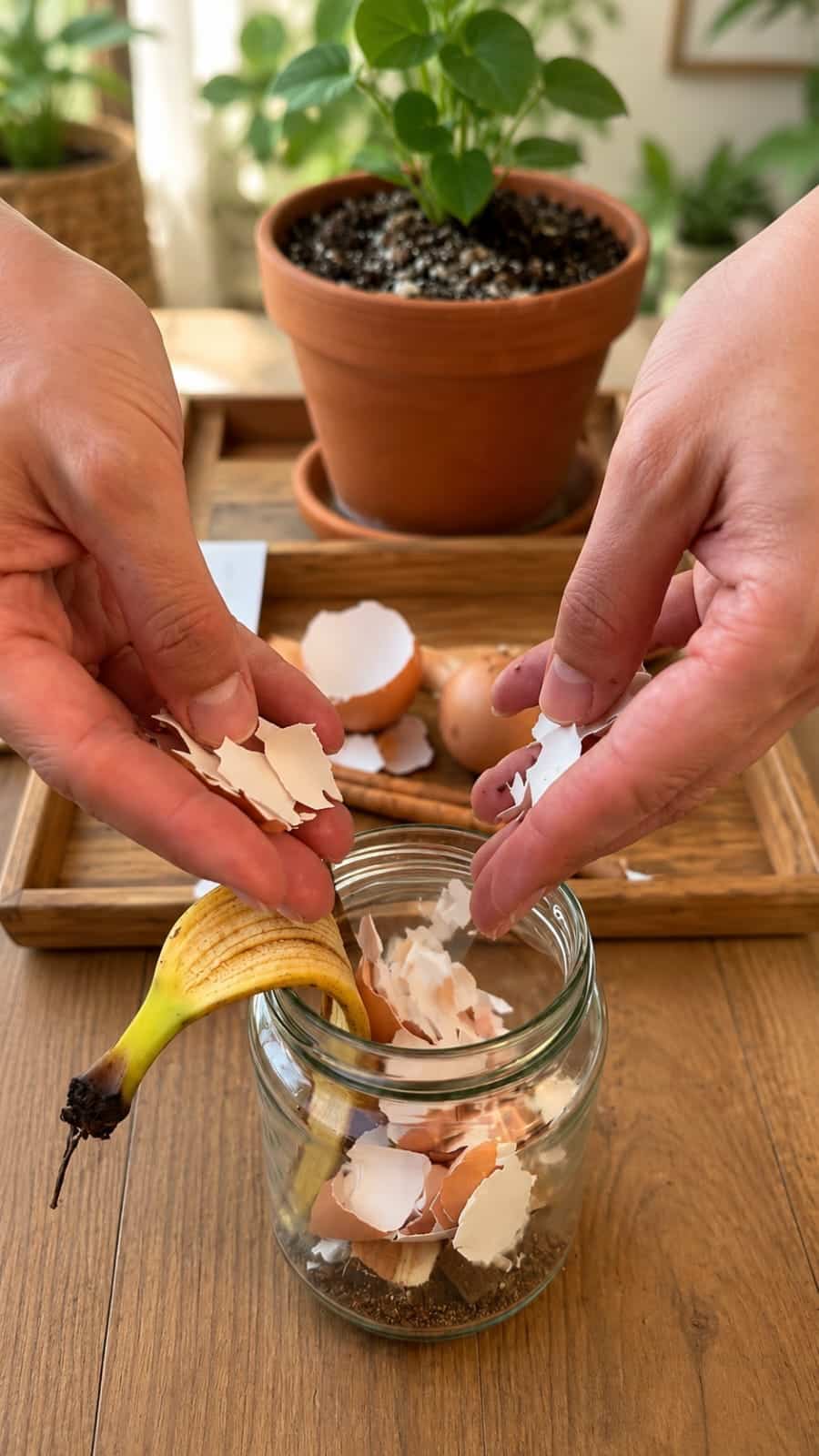
The jade plant in the image appears to be in a terracotta pot, which is an excellent choice. Terracotta helps soil dry faster and reduces the risk of root rot. Using a pot with drainage for succulents is non-negotiable.
Choose a pot with:
- Drainage holes
- A stable base
- Breathable material if possible
- A size only slightly bigger than the root ball
- A removable saucer
A pot that is too large holds excess moisture and can stress jade roots.
How to Water Jade Plants After Fertilizing – Proper Moisture Management
Watering is the most important part of jade plant care. After applying organic fertilizer, do not water too often. This jade plant watering guide after feeding prevents root rot.
Watering Rules
- Let the soil dry completely before watering
- Water deeply until excess drains out
- Empty the saucer
- Do not mist jade leaves
- Water less in winter
- Never keep the soil constantly damp
If the leaves feel soft or wrinkled, check the soil before watering. Wrinkled leaves can mean thirst, but soft yellow leaves can mean overwatering.
Best Light for Thick Jade Plant Leaves – Bright Light is Essential
Fertilizer cannot replace light. Jade plants need bright light to grow thick, compact, and strong. Providing optimal light for jade plant health is essential.
Best light conditions:
- Bright indirect light
- Several hours of gentle morning sun
- South or west window with protection from harsh heat
- Grow light if indoors are dark
- Outdoor bright shade in warm climates
If a jade plant stretches, leans, or grows pale, it usually needs more light, not more fertilizer.
What Happens After Using This Fertilizer? – Jade Plant Growth Timeline
When applied correctly, results appear slowly. Jade plants are not fast plants, so do not expect dramatic overnight changes. This jade plant fertilizer results timeline sets realistic expectations.
After 1 Week
The plant may look the same. This is normal. The fertilizer is beginning to break down slowly.
After 3 to 4 Weeks
If light and watering are correct, leaves may appear firmer and the plant may hold better color.
After 6 to 8 Weeks
You may notice new growth, stronger stems, and a healthier overall appearance.
After Several Months
With correct care, the jade plant may become fuller, more compact, and more resilient.
The real transformation comes from the combination of bright light, dry soil cycles, good drainage, and gentle feeding.
Signs Your Jade Plant Likes the Routine – Positive Indicators
- Leaves feel firm and plump
- New growth appears compact
- Stems become stronger
- Leaves stay green and glossy
- Soil dries normally between watering
- No fungus gnats appear
- No sour smell from the pot
- No mushy leaves at the base
Signs You Used Too Much Fertilizer – Jade Plant Overfeeding Symptoms
If you overuse homemade organic fertilizer, the plant may show stress. Recognizing jade plant overfertilization symptoms helps you act fast.
Warning signs include:
- Yellowing leaves
- Soft leaves
- Leaf drop
- White mold on soil
- Fungus gnats
- Sour smell
- Sticky soil surface
- Slow drying soil
- Black or mushy stem base
If this happens, remove visible fertilizer, let the soil dry, improve airflow, and consider repotting if the soil smells bad.
Can This Fertilizer Make a Jade Plant Bloom? – Flowering Tips
Mature jade plants can bloom, but flowering is not guaranteed indoors. Fertilizer alone will not force blooms. This how to make jade plant flower naturally guide explains what really works.
Jade plants are more likely to bloom when they have:
- Strong bright light
- A mature root system
- Cooler nights in fall
- Dryer conditions before bloom season
- No overwatering
- Stable care for many months
Organic fertilizer may support plant strength, but light and seasonal conditions matter more for flowering.
Can You Use This Fertilizer on Other Succulents? – Safe for Aloe, Echeveria, etc.
Yes, but carefully. Many succulents prefer lean soil and light feeding. This natural succulent fertilizer recipe works for many varieties.
You can use small amounts on:
- Aloe vera
- Echeveria
- Haworthia
- Snake plant
- ZZ plant
- Portulacaria afra
- Other jade varieties
Use less than you would for leafy tropical plants. Succulents are easily damaged by excess moisture and overfeeding.
Can You Use This Fertilizer on Leafy Houseplants? – For Pothos, Monstera, etc.
Yes. Leafy houseplants may tolerate this fertilizer better than succulents if it is diluted and used properly.
Plants that may benefit include:
- Pothos
- Philodendron
- Peace lily
- Spider plant
- Monstera
- Anthurium
For tropical houseplants, you can use a slightly larger amount, but still avoid fresh scraps directly in the pot.
Dry Powder vs Liquid Tea: Which Is Better? – Comparison Table
| Method | Best For | Main Benefit | Main Risk |
|---|---|---|---|
| Dry powder | Jade plants and succulents | Slow release, low moisture | Overuse can build up |
| Liquid tea | Healthy active plants | Easy to apply lightly | Too much water can cause rot |
| Fresh scraps | Outdoor compost bins | Reduces waste | Bad for indoor jade pots |
For jade plants, the dry powder method is usually the safest.
Complete Organic Jade Plant Fertilizer Recipe – Quick Reference
Ingredients
- 1 banana peel
- 3 to 5 eggshells
- Optional: tiny amount of dried used coffee grounds
Instructions
- Rinse the eggshells well.
- Cut the banana peel into small pieces.
- Dry banana peel until crisp.
- Dry eggshells completely.
- Grind everything into a fine powder.
- Store in a dry glass jar.
- Use ¼ to 1 teaspoon per jade plant, depending on plant size.
- Apply only during spring or summer.
- Keep the powder away from the stem.
- Water only when the soil is fully dry.
Jade Plant Fertilizer Care Table – Quick Reference
| Care Factor | Best Method | Why It Matters |
|---|---|---|
| Fertilizer type | Dried banana peel and eggshell powder | Gentle slow-release support |
| Amount | ¼ to 1 teaspoon | Prevents overfeeding |
| Frequency | Every 6 to 8 weeks in growing season | Matches slow succulent growth |
| Soil | Fast-draining succulent mix | Prevents root rot |
| Light | Bright light or morning sun | Keeps growth compact |
| Water | Only when soil is dry | Protects roots |
| Pot | Drainage holes, terracotta preferred | Helps soil dry properly |
Common Mistakes to Avoid – Jade Plant Fertilizer Don’ts
- Putting fresh banana peel directly in the pot
- Adding large eggshell pieces to the soil
- Using too much fertilizer powder
- Fertilizing in winter
- Watering immediately when soil is already damp
- Using a pot without drainage
- Keeping jade plants in dark corners
- Using thick fermented fertilizer tea
- Pouring liquid fertilizer on the stem
- Expecting instant results overnight
Short Caption for This Trick
“To make organic fertilizer for jade plants, dry one banana peel and several clean eggshells completely, grind them into a fine powder, and sprinkle only ¼ to 1 teaspoon on the soil during spring or summer. Keep it away from the stem, water only when the soil is dry, and never bury fresh kitchen scraps in a jade plant pot – this natural succulent fertilizer is gentle and effective.”
Frequently Asked Questions – Jade Plant Organic Fertilizer Q&A
Is banana peel fertilizer good for jade plants?
Yes, but only when dried, powdered, and used lightly. Fresh banana peel can rot in the pot and attract pests.
Are eggshells good for jade plants?
Eggshells can add slow-release calcium when cleaned, dried, and ground into powder. Large shell pieces break down very slowly.
How often should I fertilize a jade plant?
Feed lightly every 6 to 8 weeks during spring and summer. Avoid fertilizing in winter unless the plant is actively growing under strong light.
Can I put fresh banana peel in jade plant soil?
No. Fresh banana peel can mold, rot, attract insects, and keep the soil too wet for succulent roots.
Can homemade fertilizer make jade leaves thicker?
It may support healthier growth, but thick jade leaves depend mostly on bright light, proper watering, and healthy roots.
Why is my jade plant dropping leaves?
Leaf drop is often caused by overwatering, low light, sudden temperature changes, poor drainage, or root stress.
Can I use coffee grounds on jade plants?
Only in very tiny amounts and fully dried. Too much coffee grounds can hold moisture and stress succulent roots.
What is the best fertilizer for jade plants?
A mild succulent fertilizer or a gentle homemade dry powder used sparingly is best. Jade plants do not need heavy feeding.
Should I fertilize a sick jade plant?
No. First check the roots, soil, watering routine, and light. Fertilizer can worsen stress if the plant is already weak.
What happens if I overfertilize a jade plant?
The plant may develop yellow leaves, soft growth, leaf drop, root stress, moldy soil, or fertilizer buildup.
Final Thoughts – The Best Natural Fertilizer for Healthy Jade Plants
The organic fertilizer method shown in the image can be helpful for jade plants when prepared safely. Banana peel and eggshells are useful kitchen scraps, but they should not be added fresh to a succulent pot. Jade plants need dry, airy soil and gentle nutrition, not wet decomposing material around their roots. This best natural plant food for jade plants works perfectly when you follow the right steps.
The best method is simple: clean the eggshells, dry the banana peel, grind everything into a fine powder, and use only a small sprinkle during the growing season. Combined with bright light, a terracotta pot, fast-draining succulent soil, and careful watering, this homemade fertilizer can support stronger roots, firmer leaves, and healthier long-term growth. Following this complete jade plant care guide will keep your plant thriving for decades.
Used correctly, this organic fertilizer is a low-cost, natural way to feed a jade plant. Used too often or too strong, it can cause problems. Keep the mixture dry, mild, and occasional, and your jade plant will have the best chance to grow thick, glossy, and beautiful for years. These professional succulent care secrets will help you succeed with all your jade plants.