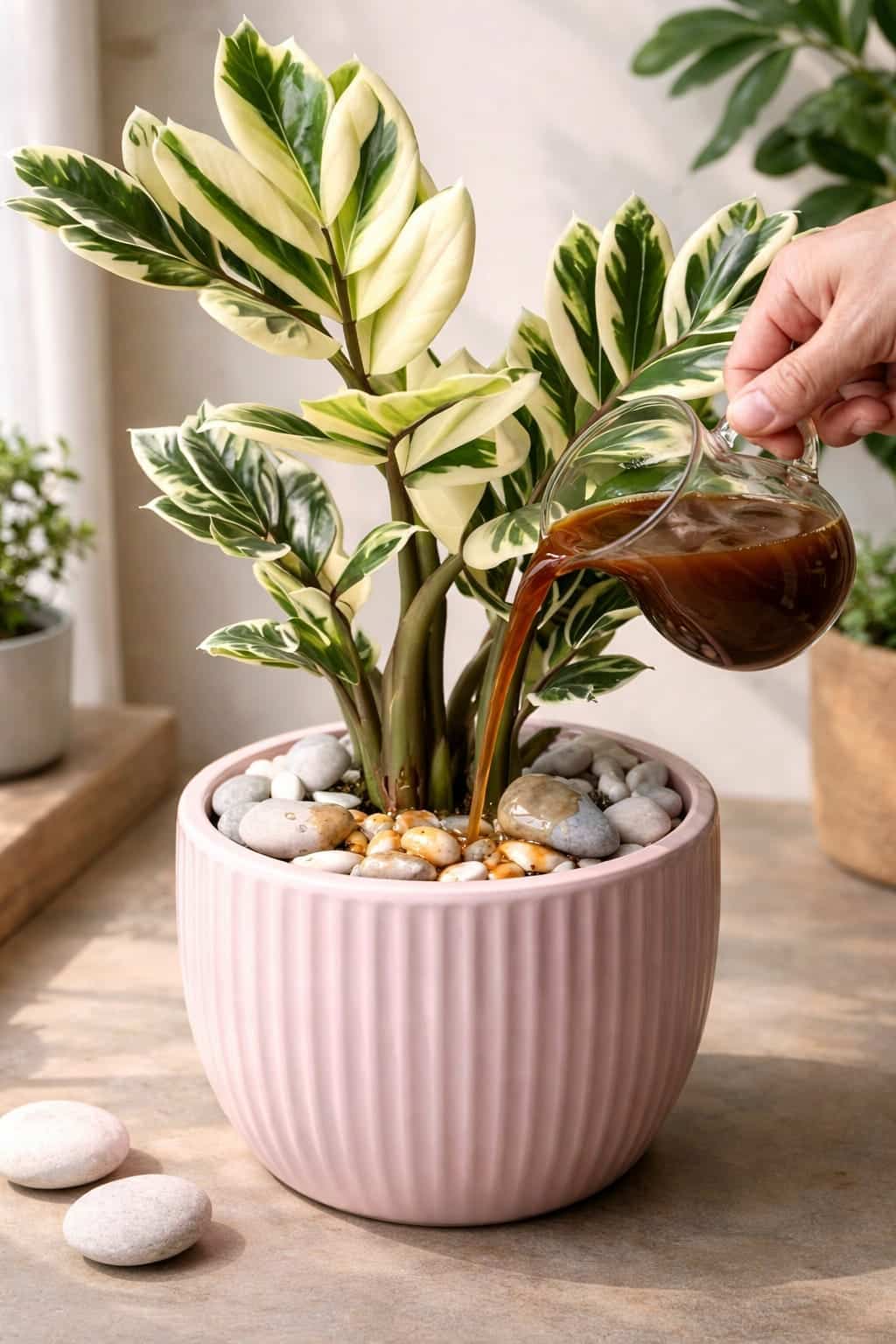
Can a “secret liquid” really make your ZZ plant multiply fast? We separate fact from fiction. Learn the real propagation methods – division, stem cuttings, leaf cuttings – and how a homemade tonic can support healthy growth.
Let’s be honest: ZZ plants (Zamioculcas zamiifolia) are famous for one thing – they look almost too perfect to be real. Their glossy, deep green leaves and upright, architectural stems make them one of the most loved houseplants around. They’re resilient, low‑maintenance, and thrive on neglect. But if you already have one healthy ZZ plant, it is only natural to want more.
That is where the idea of a “secret liquid” comes in.
You have probably seen viral posts showing a dark homemade liquid being poured into the pot with claims that it helps a ZZ plant multiply fast. It sounds exciting, but the truth is more practical than magical.
👉 A ZZ plant does not multiply because of one liquid alone.
👉 It multiplies when propagation is done correctly and the mother plant stays healthy enough to produce new growth.
The good news is that there are real ways to encourage that process, and a gentle liquid feed can play a supporting role. In this complete guide, I’ll explain how ZZ plants actually multiply, what the “secret liquid” really is, and – most importantly – the proven methods to turn one ZZ plant into several.
Let’s separate the viral hype from the horticultural reality.
Can a ZZ Plant Really Multiply? Yes – Here’s How
Yes, absolutely. ZZ plants multiply in a few natural ways:
· By division of the root clumps – splitting a mature plant into separate pots.
· By stem cuttings – rooting a stem in water or soil.
· By leaf cuttings – rooting individual leaves (slowest method).
· By new shoots forming from underground rhizomes – natural offsets.
The rhizomes are the key. These thick, potato‑like underground structures store water and energy, and they are what make ZZ plants so resilient. When conditions are right, they slowly produce new stems and help the plant become fuller over time.
That means if your goal is “multiplying” the plant, what you are really trying to do is:
· Encourage healthy rhizomes.
· Support new shoots.
· Propagate pieces successfully.
What Is the “Secret Liquid” People Use?
In most cases, the dark liquid shown in viral plant posts is some kind of homemade fertilizer or organic tonic. It may be made from:
· Compost tea – steeped compost in water, rich in beneficial microbes.
· Diluted rice water – contains trace minerals and starch.
· Banana peel water – provides potassium and trace nutrients.
· Weak organic fertilizer blends – gentle, slow‑release nutrients.
These liquids may provide trace nutrients and give the plant a small growth boost. They can support root health and help a recovering plant bounce back faster.
But here is the important truth:
👉 No liquid can force instant multiplication.
👉 The liquid only helps if the ZZ plant already has the right conditions for growth.
Think of it as a vitamin supplement for a healthy person – it helps a little, but it won’t fix a broken routine.
The Real Secret to Multiplying a ZZ Plant (No Magic Required)
If you want more ZZ plants, focus on these fundamentals first. The liquid is optional; these methods are essential.
- Start with a Healthy Plant
A weak or stressed ZZ plant is a poor candidate for propagation. The mother plant should have:
· Firm stems.
· Healthy, glossy leaves (no yellowing or spots).
· No signs of root rot (white, firm roots; no foul smell).
If your plant is struggling, fix its light, water, and soil before attempting propagation.
- Use Division for the Fastest Results
The easiest and fastest way to multiply a ZZ plant is to divide it when repotting. If the plant has multiple clusters with separate rhizomes and roots, you can gently split them into new pots.
This is the closest thing to an “instant” multiplication method.
How to Divide a ZZ Plant:
- Remove the plant from its pot.
- Gently shake off excess soil to expose the rhizomes.
- Identify natural clumps – each with its own rhizome and roots.
- Use a clean, sharp knife to separate the clumps (if they don’t pull apart easily).
- Repot each division into fresh, well‑draining soil.
- Water lightly and place in bright, indirect light.
- Try Stem or Leaf Propagation (Slow but Rewarding)
ZZ plants can also be propagated from leaves or stem sections, but this takes patience. The cuttings first need to form roots and tiny rhizomes before real top growth starts. That means:
· It works.
· But it is slow – often 3–6 months before you see new leaves.
Stem Cuttings Method:
- Cut a healthy stem with a few leaves.
- Place the cut end in water or moist propagation mix.
- Keep in bright, indirect light.
- Change water weekly (if using water).
- Wait for roots and a small rhizome to form (4–8 weeks).
- Plant in soil once roots are 1–2 inches long.
Leaf Cuttings Method (Slowest):
- Remove healthy leaves with a small piece of stem base.
- Let the cut end callus for a few hours.
- Place in moist soil or water.
- Wait – roots and tiny rhizomes can take 2–4 months.
- New leaves may take another 2–3 months.
- Keep the Soil Very Well‑Draining
ZZ plants hate soggy roots. If you use any liquid feed, the soil must drain quickly. Wet, heavy soil is one of the fastest ways to damage the rhizomes instead of helping them.
· Best soil mix: Cactus/succulent mix + 30% perlite.
· Pot: Must have drainage holes.
- Give Bright, Indirect Light
ZZ plants tolerate low light, but propagation and new growth happen much better with brighter filtered light.
· Ideal spot: East or west‑facing window.
· Too little light: Slow growth, weak cuttings.
How a Homemade Liquid Can Help (The Supporting Role)
A gentle homemade liquid can support multiplication in a few ways:
· It may lightly feed the mother plant.
· It can support stronger root activity.
· It may help newly divided sections recover faster.
· It can encourage healthier overall growth.
That support matters because a stronger plant is more likely to produce new shoots from the rhizomes.
Still, the liquid is a helper – not the real method.
The Best Way to Use a Homemade Liquid
If you want to try a homemade plant liquid, keep it simple and gentle.
Use it:
· Lightly around the soil (a small amount, not a flood).
· Only occasionally – once a month during spring and summer.
· Never in constantly wet soil – let the soil dry first.
· Never as a replacement for proper care (light, water, soil).
A ZZ plant does not need frequent feeding. Too much liquid, especially organic liquid, can easily create the opposite of what you want – root rot, fungus gnats, and weak growth.
Continue to Page 2
Continue to page 2 for more details about this article and the key points many readers miss on the first page.