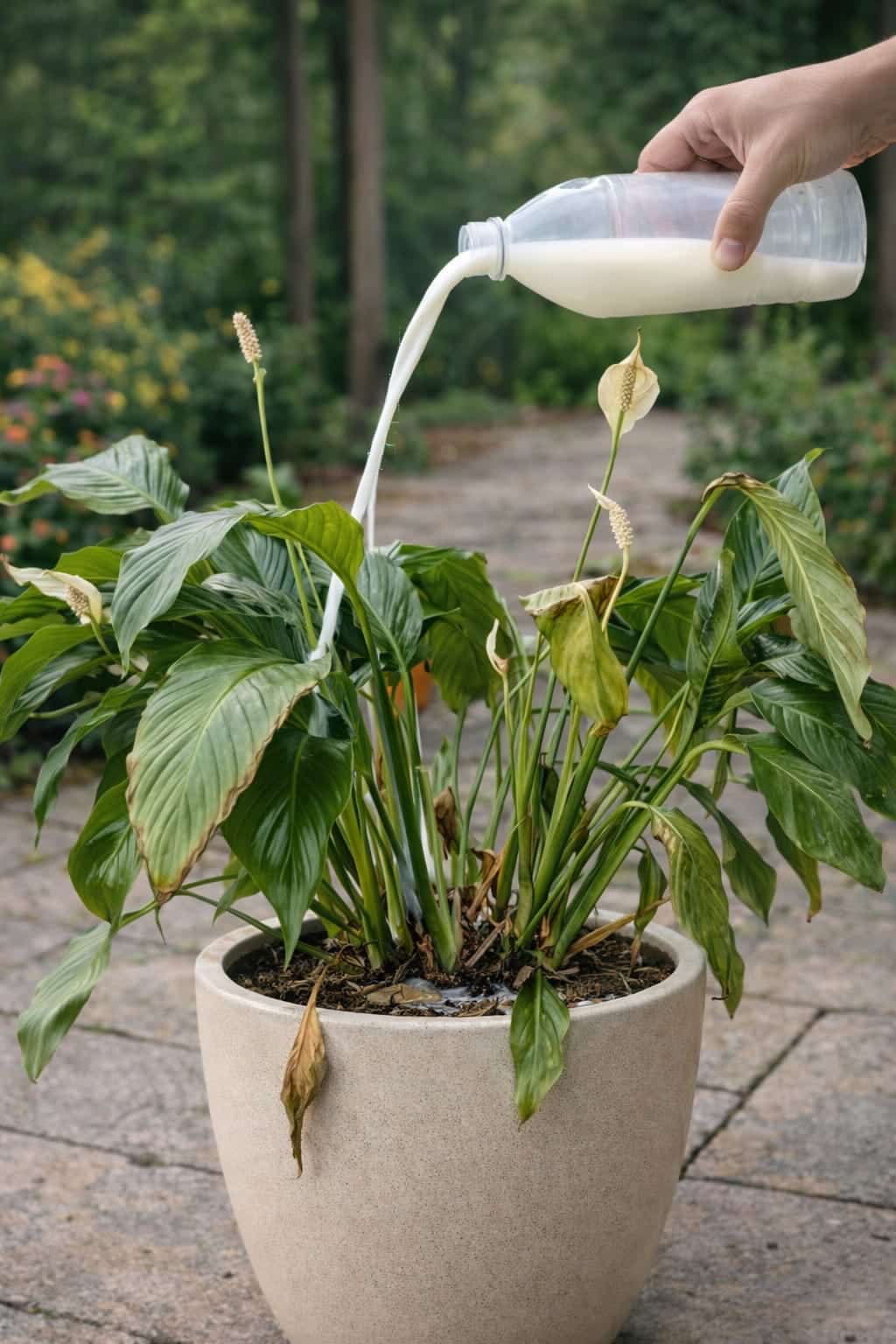
Is your peace lily drooping with brown tips and fading blooms? Learn how to revive it with better watering, light, humidity, and care – no kitchen hacks needed. Longer blooms start here.
Let’s be honest: peace lilies (Spathiphyllum) are beautiful, elegant, and surprisingly expressive. When they are happy, they reward you with glossy green leaves and graceful white blooms. But when they are stressed, they let you know fast. Drooping leaves, browning tips, fading flowers, and tired-looking stems can make it seem like the whole plant is giving up.
That was exactly what happened to mine.
For a while, my peace lily looked like it was slowly declining. Some leaves were limp, a few flowers were aging too quickly, and the whole plant seemed less vibrant than before. I kept thinking it just needed more water, but the real solution turned out to be a combination of better care and one simple shift in routine.
Once I stopped guessing and started giving it what it actually needed, the plant began to recover. The leaves looked stronger, the overall shape became fuller, and the blooms lasted much longer.
In this complete guide, I’ll share exactly what made the difference – from fixing watering habits and improving light to cleaning up the plant and boosting humidity. No kitchen hacks, no mystery liquids. Just practical, proven care that will help your peace lily thrive and keep its blooms longer.
Why Peace Lilies Start to Struggle (The Real Causes)
A peace lily usually declines for a few common reasons. Understanding the cause is the first step to revival.
Cause Effect
Inconsistent watering Leaves droop, yellow, or develop brown tips.
Soggy soil or weak drainage Root rot, foul smell, permanent droop.
Too little light Dark green leaves, no blooms, leggy growth.
Dry air Brown leaf edges, short bloom life.
Worn‑out soil Pale leaves, weak growth, nutrient deficiency.
Stress from temperature swings Bud drop, wilting, slowed recovery.
The tricky part is that peace lilies droop both when they are too dry and when their roots are stressed. That is why so many people misread the signs and make the problem worse.
In my case, the plant was not dying because it needed constant water. It was tired because the roots, soil, and overall environment were no longer balanced.
The First Thing I Fixed: Watering (The #1 Change)
This was the biggest difference maker.
Instead of watering on a random schedule, I started checking the soil first. If the top layer felt slightly dry, I watered thoroughly. If it was still damp, I waited.
That one habit helped a lot.
How to Water a Peace Lily Correctly
· When to water: When the top inch of soil feels dry to the touch.
· How to water: Water thoroughly until it runs out the drainage holes. Empty the saucer.
· Frequency: In typical indoor conditions, every 7–10 days. Adjust based on light and temperature.
· Water quality: Use room‑temperature, filtered or distilled water if your tap water is hard (fluoride causes brown tips).
Peace lilies like evenly moist soil, but they do not want to sit in soggy conditions. Once I stopped overdoing it, the leaves began to hold themselves better and the plant looked less stressed.
Signs of watering problems:
Symptom Likely Cause
Drooping leaves + dry soil Underwatering
Drooping leaves + wet soil Overwatering or root rot
Yellow leaves Overwatering
Brown leaf tips Fluoride, chlorine, or low humidity
I Stopped Pouring Random “White Liquids” into the Pot
A lot of viral plant posts show milk‑like liquids being poured into the soil. This is where people get into trouble.
Heavy kitchen liquids can:
· Sour in the soil – causing foul odors.
· Attract pests – fungus gnats, ants.
· Cause odor – rotten milk smell.
· Stress roots even more – organic matter decomposes too quickly.
What actually helped my peace lily was not a mystery liquid. It was cleaner watering, better drainage, and a light feeding routine that made sense for the plant.
If you want to feed your peace lily, use a diluted balanced fertilizer (e.g., 20-20-10 at half strength) once a month during spring and summer. That’s it. No milk, no rice water, no sugar water.
Continue to Page 2
Continue to page 2 for more details about this article and the key points many readers miss on the first page.