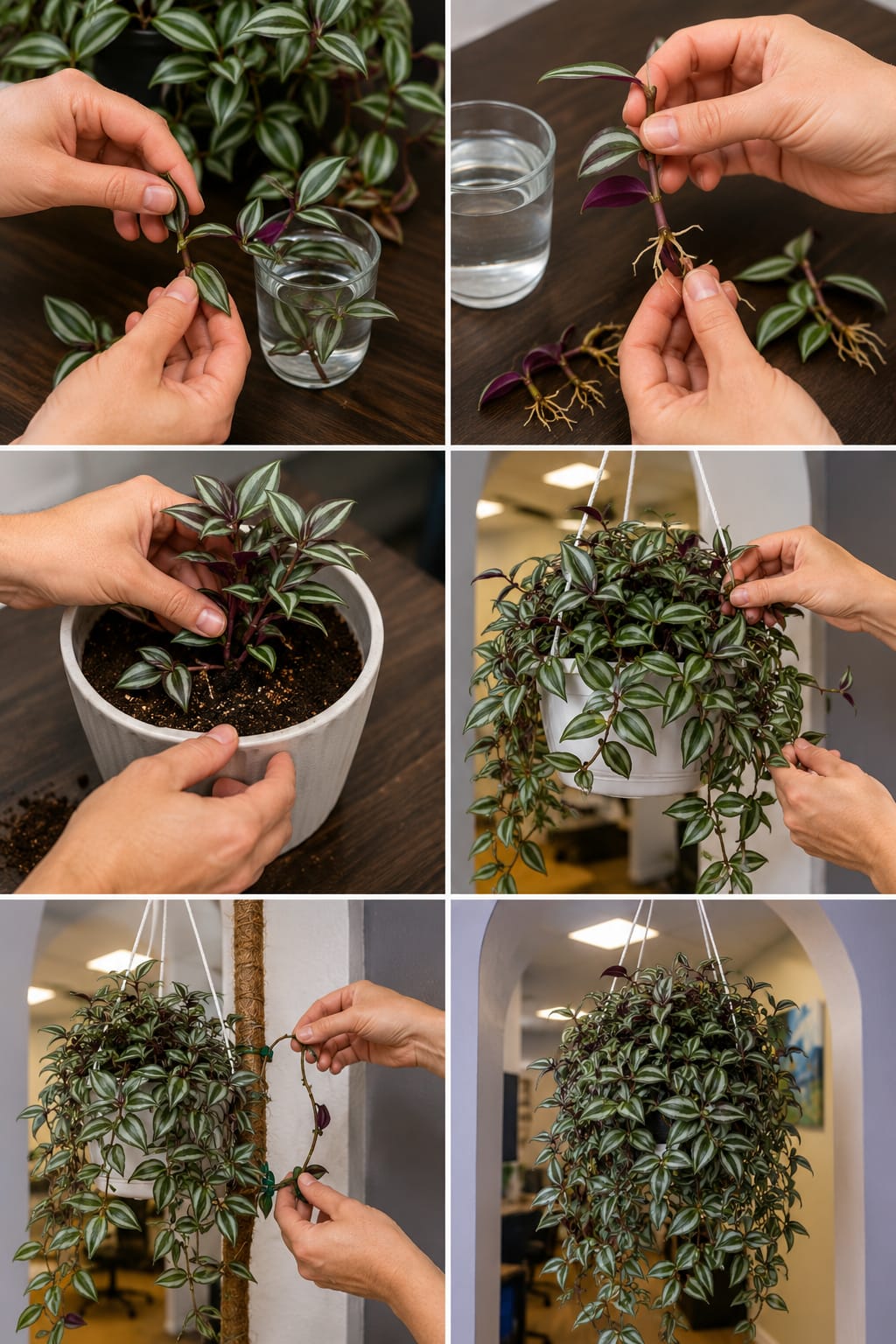
Tradescantia is one of the most attractive trailing houseplants for people who want fast growth, colorful foliage, easy propagation, and a soft cascading look that can brighten shelves, hanging baskets, plant stands, windowsills, home offices, and modern apartment interiors. Its striped leaves, purple undersides, silver-green markings, and long flexible stems make it a favorite for indoor plant styling, balcony decor, plant shelf displays, premium hanging planters, and decorative home greenery. When it is healthy and full, Tradescantia can create a rich waterfall of foliage that looks fresh, vibrant, and full of movement.
This plant is popular because it is easy to multiply from stem cuttings. A small cutting can root in water or soil, and several rooted cuttings can be planted together to create a thicker pot. This is why Tradescantia is often recommended for beginners, renters, apartment gardeners, and anyone who wants a plant that responds quickly to simple care. The plant can look delicate, but it grows with surprising speed when it receives enough bright indirect light, light moisture, and regular trimming.
Propagation should still be done carefully. Tradescantia stems are soft, and the cuttings need clean water, healthy nodes, and the right timing to root successfully. A cutting without a node may not root well. A cutting left in dirty water may rot. A new plant placed in heavy wet soil may decline before it becomes established. The best method is simple, but it needs clean handling, fresh cuttings, and a gentle transition from water or starter soil into a full container.
This guide explains how to propagate Tradescantia safely, how to root cuttings in water, how to plant several cuttings together for a fuller look, how to train trailing stems around a hanging basket or support, how to avoid leggy growth, what problems to watch for, and how to keep the plant healthy, clean, and suitable for living room styling, office plant decor, hanging basket design, commercial interior landscaping, modern apartment decor, and polished property presentation.
Quick Answer
Tradescantia can be propagated by taking healthy stem cuttings with at least one node, placing them in clean water or moist potting mix, waiting for roots to form, and planting several rooted cuttings together in a pot with drainage holes. For a fuller hanging basket, multiple cuttings should be grouped closely so the top of the plant does not look bare. Tradescantia grows best in bright indirect light, light well-draining soil, careful watering, and regular trimming. It should not be left in stagnant water, heavy soggy soil, or very dark corners. The plant becomes fuller when stems are pinched, cuttings are replanted into the pot, and long vines are guided gently around the basket or support.
What Plant This Is
The plant is Tradescantia, a trailing houseplant known for its striped leaves and purple-toned stems. Many popular varieties have silver, green, cream, pink, or purple markings. Some are commonly called wandering dude, inch plant, spiderwort, or Tradescantia zebrina depending on the variety. The leaves are usually oval and pointed, and the stems trail naturally as they grow longer.
Tradescantia is easy to recognize because of its colorful foliage and fast-growing vines. The upper leaf surface may show silver-green stripes, while the underside often has a rich purple color. This contrast gives the plant strong decorative value even without flowers. The plant is often grown in hanging baskets because its stems naturally spill over the pot edge.
Even though Tradescantia grows quickly, it can become thin if it is not pruned and replanted. Older stems may lose leaves near the base, while the tips continue growing. This can create a bare top and long trailing ends. Propagation is one of the best ways to refresh the plant because the trimmed pieces can be rooted and placed back into the pot for a fuller display.
Why Propagation Works So Well
Tradescantia is one of the easiest houseplants to propagate because its stems produce roots from nodes. A node is the point on the stem where leaves grow and where roots can form when the cutting is placed in water or soil. This natural rooting ability makes the plant very forgiving when cuttings are taken correctly.
Propagation is useful for creating new plants, but it is also useful for improving the mother plant. When long stems are cut, the plant often responds by producing side growth. The cut pieces can then be rooted and planted back into the same pot. Over time, this creates a denser, fuller, more attractive plant. This method is especially helpful for hanging baskets that look thin at the top.
Because Tradescantia grows fast, propagation can be repeated during the growing season. Regular trimming and replanting help maintain a lush shape. Without this care, the plant may become leggy, tangled, or uneven. A full Tradescantia display is usually created through active shaping rather than by leaving the plant alone for months.
Choosing Healthy Cuttings
Healthy cuttings should come from stems that are firm, colorful, and free from rot or pests. The best cuttings have several leaves and at least one visible node. A cutting that is too short may struggle, while a cutting that is very long may lose energy before rooting. A moderate cutting is easier to manage and root.
The stem should not be mushy, blackened, or dried out. Cuttings from weak or diseased growth may fail or carry problems into the new plant. It is better to take cuttings from the healthiest parts of the plant. If the mother plant has pests, sticky residue, yellow leaves, or moldy soil, those issues should be corrected before propagation.
The cut should be made with clean scissors or pruning shears. Dirty tools can spread disease. The cutting should be made just below a node so the node can be placed in water or soil. Leaves that would sit below the waterline or under the soil should be removed to prevent rot.
Rooting Tradescantia in Water
Water propagation is popular because it allows the roots to be seen as they develop. A clean glass or jar should be filled with fresh water, and the nodes should be placed below the water surface. Leaves should stay above the water because submerged leaves can rot and make the water cloudy.
The water should be changed regularly. Clean water reduces bacteria and helps the cuttings stay fresh. If the water smells bad, becomes slimy, or turns cloudy, it should be replaced immediately. Cuttings should be placed in bright indirect light, not harsh direct sun. Too much sun can heat the water and stress the cutting.
Roots often appear quickly when conditions are good. Once the roots are long enough to handle, the cutting can be planted into soil. The transition should be gentle because water roots are softer than soil roots. The new potting mix should be lightly moist, not wet and heavy. After planting, the cutting should be kept stable while it adjusts.
Rooting Tradescantia in Soil
Soil propagation is also effective. The cutting can be placed directly into a light, moist potting mix with the node buried under the surface. The soil should hold gentle moisture but still drain well. A dense, soggy mix can cause the cutting to rot before roots form.
Soil-rooted cuttings may adjust faster later because they are already growing roots in the medium where they will continue living. However, the grower cannot see root development as easily. The cutting should be kept in bright indirect light and watered carefully. The soil should not dry completely during early rooting, but it should also not stay soaked.
Several cuttings can be placed in the same pot at once. This is the best way to create a full plant quickly. Tradescantia looks better when multiple stems grow together. A single cutting may survive, but it will not create a lush hanging basket right away.
Planting Rooted Cuttings Together
To create a fuller Tradescantia pot, several rooted cuttings should be planted together. The cuttings can be spaced around the pot so new growth fills the top evenly. This prevents the common problem of long vines with a bare center. A full top is what gives a hanging basket its premium look.
The pot should have drainage holes. This is important because cuttings and young roots can rot if water collects at the bottom. A decorative outer pot or hanging basket can still be used, but the inner pot should drain properly. Extra water should never remain trapped around the roots.
After planting, the soil should be firmed gently around the cuttings. It should not be packed tightly. Roots need contact with the soil, but they also need air. The first watering should settle the mix, and then the pot should be allowed to drain completely. The plant should then be kept in bright indirect light while the roots establish.
Best Soil Mix for Tradescantia
Tradescantia grows best in a light, well-draining potting mix. A standard indoor potting mix can work well if it is not too dense. Perlite, pumice, or fine bark can be added to improve airflow and drainage. The plant likes some moisture, but it does not like sitting in soggy soil.
If the potting mix is too heavy, the lower stems may rot and the leaves may yellow. If the mix dries too quickly, the plant may wilt, curl, or develop crispy edges. The best mix holds light moisture while allowing excess water to leave the pot. This balance supports fast growth and healthy roots.
Garden soil should not be used alone in a container. It can compact, drain poorly, and bring pests indoors. A clean indoor potting mix is safer for plant shelves, hanging baskets, home offices, and indoor decorative displays. A clean soil surface also helps the plant look more polished.
Choosing the Right Pot or Hanging Basket
A Tradescantia pot should have drainage holes and enough width to hold several cuttings. A shallow or medium-depth pot can work well because the plant’s roots are not usually deep and heavy. A hanging basket is ideal when the goal is a cascading look. The basket should be strong enough to hold the pot, soil, water, and mature trailing stems.
White, cream, black, terracotta, stone-effect, or simple plastic hanging planters can all work with Tradescantia. A white pot can make the purple and silver leaves stand out. A dark pot can create a dramatic contrast. A natural fiber basket can create a softer boho or indoor jungle style.
Function should come before decoration. A beautiful hanging pot without drainage can create root rot. If a decorative cachepot is used, the plant should be watered carefully and extra water should be removed. For hanging baskets, dripping water should also be considered so furniture and floors are protected.
Light for Fuller Growth
Bright indirect light is one of the most important factors for Tradescantia. The plant can survive in moderate light, but it becomes fuller, more colorful, and more compact when it receives enough brightness. In low light, stems may stretch, leaves may lose color, and the plant may become thin.
Direct harsh sun can burn the leaves, especially behind hot glass. Gentle morning light or filtered bright light is usually better. A spot near a bright window with indirect light can support strong variegation and steady growth. If the plant is in an office or dark apartment, a grow light can help maintain fullness.
Light also affects watering. A plant in bright light uses water faster, while one in low light dries more slowly. The watering routine should change based on the plant’s location. A low-light Tradescantia should not be watered as often as one growing near a bright window.
Watering Tradescantia Correctly
Tradescantia likes lightly moist soil, but it should not stay soggy. The top layer of the soil can dry slightly before watering again. If the plant dries out too much, the leaves may curl, wilt, or become crispy. If it stays wet too long, stems may rot and leaves may yellow.
Water should be applied to the soil until it drains from the bottom. Extra water should be discarded. The plant should not sit in standing water. In a hanging basket, the pot may dry faster because it has more airflow around it. This means hanging plants may need more frequent checks than plants sitting on a table.
Overwatering is especially risky for newly planted cuttings. Their roots are still developing, so they cannot use water as quickly as a mature plant. The soil should stay slightly moist during establishment, but not soaked. A gentle watering rhythm is better than heavy watering.
Feeding for Better Growth
Tradescantia grows quickly and can benefit from light feeding during active growth. A diluted balanced indoor plant fertilizer can support healthy leaves and steady trailing stems. Feeding should be gentle because strong fertilizer can burn roots or cause weak growth. A half-strength fertilizer is usually safer than a strong dose.
The plant should not be fertilized heavily right after cuttings are planted. Young roots need time to settle. Once the cuttings show new growth, light feeding can begin. Feeding is most useful in spring and summer when the plant is actively growing. During winter or low-light periods, feeding should be reduced.
Homemade fertilizers should be used carefully. Thick organic liquids, kitchen scraps, and sugary mixtures can attract pests and create odor in indoor pots. A clean measured houseplant fertilizer is usually better for maintaining a polished hanging basket display.
Pruning for a Fuller Plant
Pruning is essential for Tradescantia because the plant can become long and bare if it is not trimmed. Cutting the tips encourages branching and helps the pot stay full. The cuttings can be rooted and returned to the pot, making the display thicker over time.
Pruning should be done with clean scissors. Long vines can be shortened just above a node. The removed stem pieces can be propagated if they are healthy. Old, dry, weak, or damaged stems should also be removed to keep the plant tidy. Regular trimming is one of the main secrets behind a lush Tradescantia basket.
A plant that is never pruned may look full at the ends but thin at the top. This is common in hanging baskets. By trimming and replanting cuttings near the crown, the top can be filled again. This gives the plant a more premium and professional look.
Training Vines Around a Support
Tradescantia can trail naturally from a hanging basket, but the vines can also be guided around a support such as a moss pole, coco coir pole, hoop, trellis, or wall hook. The stems are soft and flexible, so they can be arranged gently. They should not be tied tightly because tight ties can crush the stems.
Soft plant ties, clips, or loose string can help guide the stems. The plant should still look natural. Tradescantia is not a stiff climbing plant, so it may not grip a support the same way as a Monstera or pothos. It is usually better to let it cascade while giving light guidance where needed.
Guiding stems can improve the display shape. It can help fill bare areas, create a rounded basket, or direct long vines away from walkways. The plant should be checked regularly so stems do not become tangled, broken, or too heavy on one side.
Possible Damage If Propagation Is Done Incorrectly
Propagation can fail if cuttings are taken without nodes. A stem section needs a node to produce roots. If only a leaf or the wrong part of the stem is placed in water, it may rot instead of growing. Another problem is leaving leaves under water. Submerged leaves break down and make the water dirty.
Dirty water can cause stem rot. If the water smells bad or becomes cloudy, the cuttings may decline. Water should be changed regularly, and the glass should be cleaned if residue builds up. Cuttings should not be placed in direct hot sun because the water can heat up and damage them.
Planting cuttings into heavy wet soil can also cause failure. Young roots need oxygen. If the soil is packed and soggy, the cuttings may collapse. A light potting mix and careful watering are safer. The plant should be protected from stress while it establishes.
Warning Signs to Watch For
Warning signs include mushy stems, blackened nodes, foul-smelling water, yellow leaves, limp cuttings, mold on the soil, fungus gnats, and cuttings that collapse after planting. These signs suggest that the cutting environment is too wet, dirty, dark, or poorly ventilated.
If a cutting rots in water, the damaged part should be removed if enough healthy stem remains. The cutting can be recut below a healthy node and placed in fresh clean water. If rot spreads through the whole cutting, it should be discarded. It is better to save healthy cuttings than to keep rotten ones in the same container.
If planted cuttings wilt badly while the soil is wet, the roots may be stressed. Watering more will not help. The soil should be checked for drainage, and the pot should not sit in water. If the soil is too heavy, the cuttings may need a lighter mix.
Common Mistakes
One common mistake is trying to grow a full pot from one cutting. Tradescantia looks best when several cuttings are planted together. A single stem may survive, but it will not create a lush basket quickly. Multiple cuttings create fullness and better visual balance.
Another mistake is placing the plant in too little light. Low light causes long weak stems and faded leaves. Tradescantia needs bright indirect light to keep its stripes, color, and compact growth. If the plant becomes leggy, it usually needs more light and trimming.
Overwatering is also common. Because Tradescantia grows fast, people may assume it needs constant water. It likes moisture, but not stagnant wet soil. The pot must drain well, and the top layer should be allowed to dry slightly before watering again.
How to Refresh a Leggy Tradescantia
A leggy Tradescantia can be refreshed by cutting back long bare stems and rooting the healthy tips. The older plant should be checked for pests, weak stems, and poor soil. If the soil is old or compacted, repotting may help. The rooted cuttings can be placed back into the pot to fill the top.
This refresh method is one of the easiest ways to improve the plant’s look. Instead of throwing away long vines, they can become new growth. Over time, the pot becomes fuller and more balanced. This is especially useful for hanging baskets that have become thin in the center.
After refreshing, the plant should be moved to brighter indirect light. If it stays in the same dim location, it may become leggy again. Regular pinching and better light help keep the plant compact and attractive.
Repotting Tradescantia
Tradescantia may need repotting when the pot is crowded, the soil has become compacted, water drains poorly, or the plant dries out too quickly. Repotting is also useful when many cuttings have been added and the plant needs a fresh growing base. The new pot should have drainage holes and should not be excessively large.
The plant should be handled gently because the stems can break easily. Broken stems are not always a loss because they can be propagated, but rough handling can make the plant look messy. Fresh soil should be added around the roots and stems, then watered lightly to settle the plant.
Repotting is best during active growth. After repotting, the plant should be kept in bright indirect light and watered carefully. Heavy fertilizer should be avoided until the plant settles. A refreshed pot with several rooted cuttings can become lush quickly when conditions are right.
Indoor Decor Value
Tradescantia has strong indoor decor value because it adds color, texture, and movement. Its striped leaves and purple undersides create visual interest without needing flowers. A full hanging basket can soften shelves, archways, windows, office corners, and plant walls. It brings a relaxed, lush look to indoor spaces.
The plant works well in modern apartment decor, boho interiors, plant shelf styling, home office backgrounds, bright kitchens, and indoor jungle rooms. Its trailing stems can make a small space feel greener and more alive. The plant is especially useful when placed above eye level because the vines can cascade downward.
A clean pot and full top growth make the plant look more premium. Thin, tangled, or bare stems can make it look neglected. Regular trimming and replanting keep the display fresh. Tradescantia is easy to style when it is maintained often.
Room-by-Room Styling
In the living room, Tradescantia can hang near a bright window, sit on a high shelf, or trail from a plant stand. Its silver and purple tones pair well with wood furniture, neutral walls, black accents, and woven baskets. The plant should be easy to reach for trimming and watering.
In the bedroom, Tradescantia adds softness and color. A white hanging basket can make the foliage look clean and bright. The plant should receive enough light, so a bright bedroom window is better than a dark corner. If the room is low light, a grow light may help.
In a home office, Tradescantia can brighten shelves and video-call backgrounds. It grows quickly, so it should be trimmed before vines become too long or tangled. A full basket can make the space feel more creative and relaxed.
In an entryway or hallway, Tradescantia can look beautiful if there is enough light. If the area is dark, the plant may lose color and become leggy. A bright archway, windowed corridor, or well-lit plant hook is a better location.
Office and Commercial Styling
Tradescantia can work well in commercial interior landscaping when it is used in bright areas and maintained regularly. It is suitable for office shelves, cafe corners, boutique interiors, reception displays, plant walls, wellness spaces, and creative studios. Its trailing form adds softness to hard interior lines.
For professional spaces, the plant must be kept tidy. Long vines should not block walkways or workspaces. Dead leaves should be removed, and the pot surface should stay clean. A messy Tradescantia can look neglected quickly because the plant grows fast.
A full hanging basket creates a premium effect when the stems are evenly distributed. Several cuttings planted together and regular pruning are the key to that look. In commercial settings, predictable watering and good light matter more than occasional dramatic care.
Product and Tool Guide
Helpful materials for Tradescantia propagation include clean scissors, a clear glass or jar, fresh water, a light indoor potting mix, perlite, a pot with drainage holes, a hanging basket, soft plant ties, a small trowel, a watering can with good control, and a diluted balanced houseplant fertilizer. A grow light can help in darker rooms, especially for maintaining strong color.
A decorative hanging planter can improve the final display. White, cream, black, terracotta, or woven-style planters all work well depending on the room. A moisture meter can help beginners avoid soggy soil, but the pot weight and soil feel are also useful checks.
These tools keep propagation clean and simple. Tradescantia does not need complicated care, but it does need regular attention. Clean cuttings, good light, and proper watering create better results than neglect followed by heavy correction.
Continue to Page 2
Continue to page 2 for more details about this article and the key points many readers miss on the first page.