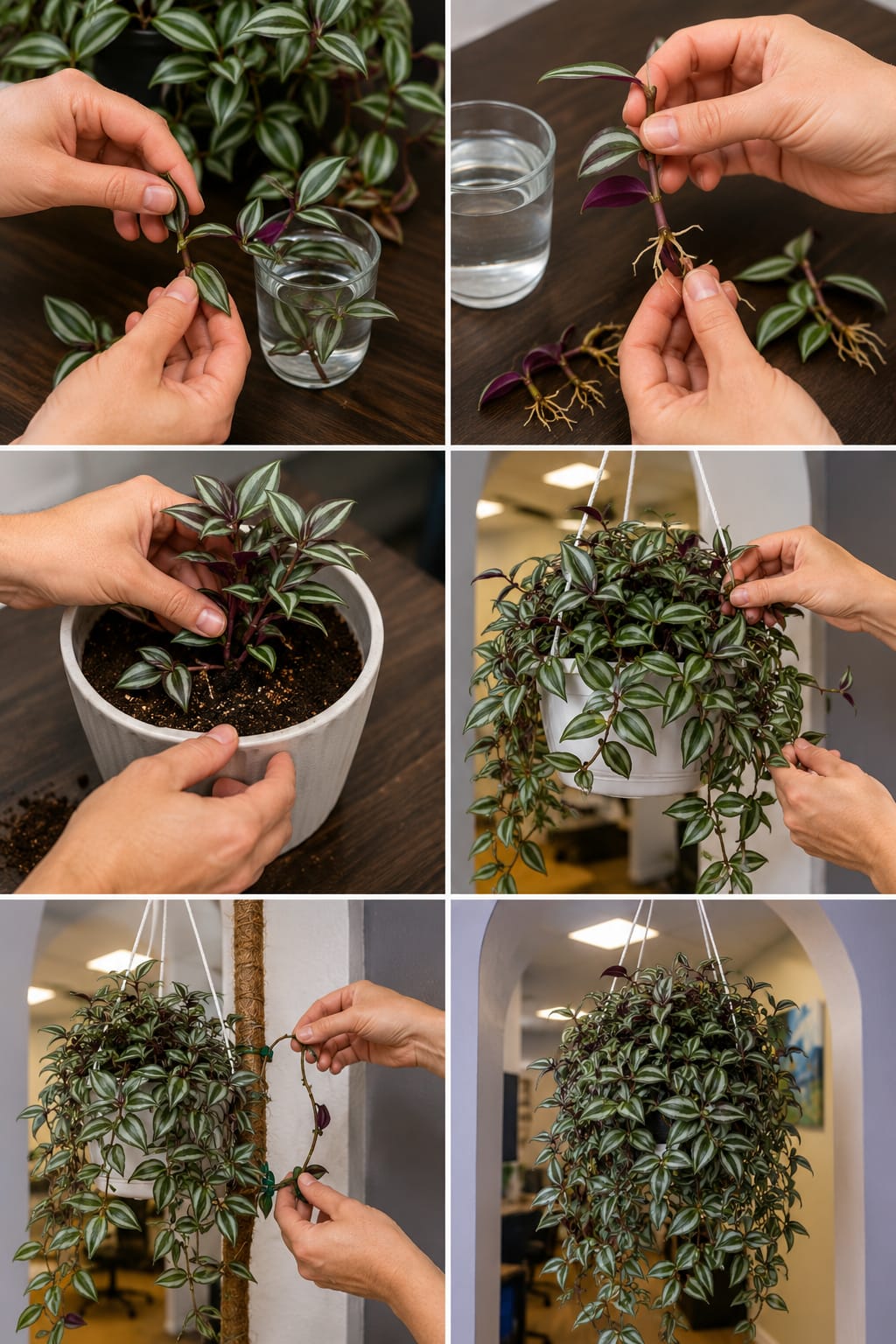
Care Timeline After Propagation
During the first 24 hours, cuttings should be placed in clean water or moist light soil. Leaves should not sit below the waterline or under the soil. The cuttings should be placed in bright indirect light. Direct hot sun should be avoided.
During the first week, water-propagated cuttings should be checked for clear water and early root development. Soil-propagated cuttings should be checked for moisture without overwatering. Any rotting stems should be removed before they affect healthy cuttings.
After two to four weeks, many cuttings may have enough roots to plant. Once planted, they should be kept lightly moist while adjusting. After one to two months, the plant can begin looking fuller if several cuttings were grouped together. Long-term fullness depends on trimming, replanting, bright light, and steady care.
Professional Styling Note
In high-end indoor plant styling, Tradescantia is valued because it creates quick fullness, color contrast, and soft trailing movement. It is useful for modern apartment decor, creative office design, plant shelf styling, hanging basket displays, and property presentation. Its silver-green and purple foliage can make a simple space feel more layered and natural.
However, a premium Tradescantia display requires maintenance. The plant grows fast and can become leggy if ignored. Regular pruning, propagation, and replanting are what keep it looking full. A hanging basket should look rounded and lush, not thin at the crown with only a few long vines.
A beautiful Tradescantia display depends on clean leaves, healthy rooted cuttings, balanced watering, bright indirect light, and a planter that fits the room. The plant is easy, but it rewards active shaping. Simple regular care creates the best decorative result.
Final Thoughts
Tradescantia is one of the easiest and most rewarding houseplants to propagate. Healthy stem cuttings can root in water or soil, and several rooted cuttings planted together can create a full, colorful, cascading basket. The key is to use clean cuttings with nodes, keep water fresh, avoid soggy soil, and provide bright indirect light.
The plant becomes more attractive when it is trimmed regularly. Long vines can be cut, rooted, and returned to the pot to fill bare areas. This simple routine keeps the plant lush and prevents the common problem of thin top growth. Tradescantia does not need complicated care, but it does need consistent shaping and the right light.
With clean propagation and proper presentation, Tradescantia can become a beautiful accent for living rooms, bedrooms, home offices, bright kitchens, plant shelves, hanging baskets, modern apartments, commercial interior landscaping, creative studios, premium indoor plant displays, and polished property presentation. Healthy roots, bright foliage, and a full cascading shape will always create a stronger display than a few long neglected vines.