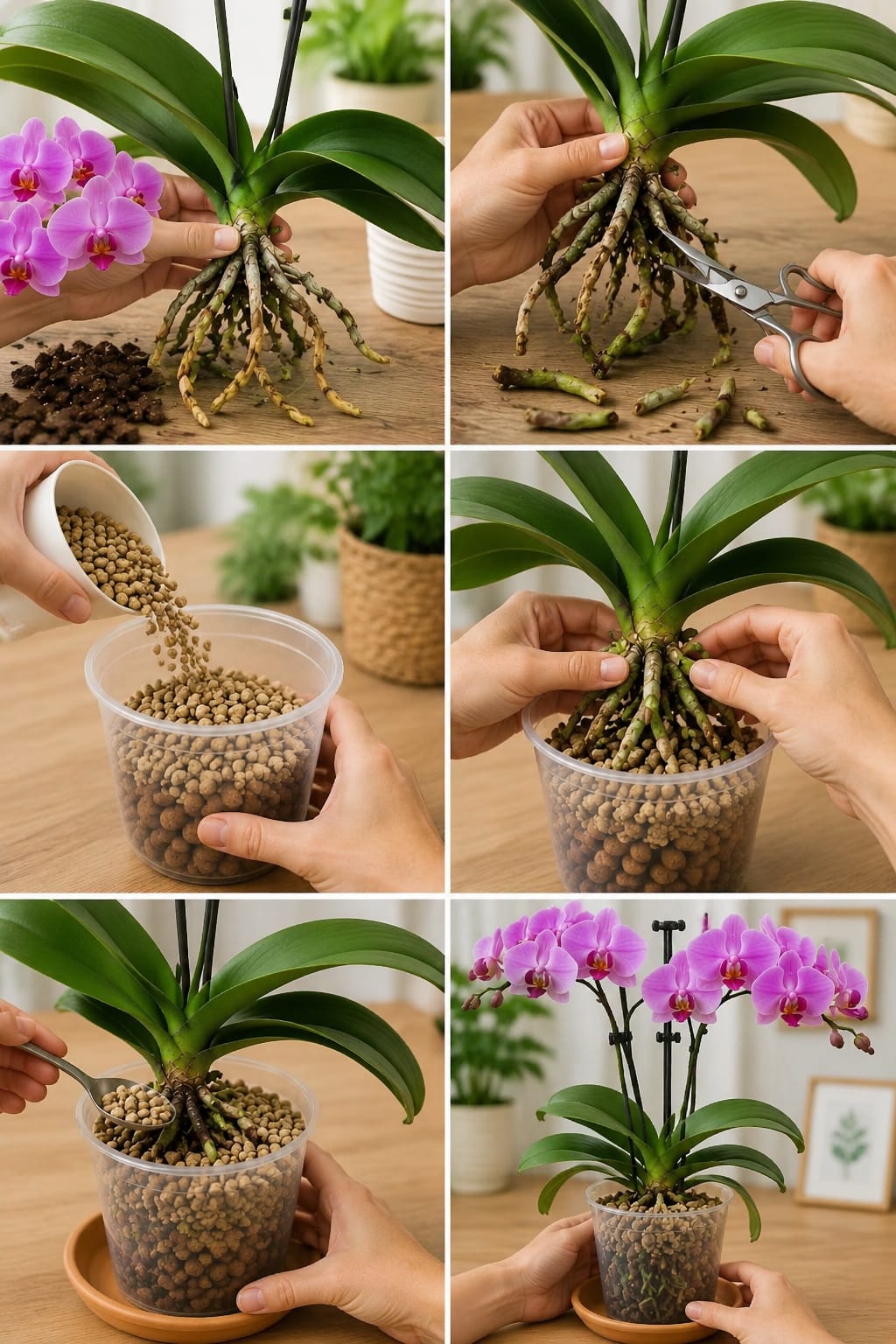
Why This Method Creates a Cleaner Display
A clear pot with visible roots, round clay pebbles, and fresh bark creates a modern botanical look. It makes the orchid appear intentional rather than neglected. The roots become part of the design, especially when they are healthy and green.
For a luxury indoor display, place the clear pot inside a simple outer container in white, stone, beige, black, or terracotta. Keep the pot surface tidy. Remove dead leaves, old flower spikes, and loose debris. Use a slim black stake for flower support instead of bulky clips. Small details make the orchid look more expensive.
On a dining table, windowsill, bathroom shelf, or plant stand, orchids look best when styled with clean lines. Avoid overcrowding the pot with decorations that block airflow. Let the leaves and flowers be the focus.
Common Mistakes to Avoid
Do not plant orchids in regular soil. Do not bury the crown. Do not cut healthy aerial roots just because they are outside the pot. Do not use a pot without drainage. Do not overwater after repotting. Do not feed heavily while roots are recovering.
Also avoid switching care methods too often. Orchids need time to adjust. After repotting, keep the routine simple: bright indirect light, careful watering, airflow, and patience.
How Long Before the Orchid Looks Better?
Root recovery takes time. The orchid may not bloom immediately after repotting, especially if many roots were removed. First, it will focus on stability. New root tips may appear, leaves may become firmer, and the plant may begin to hold moisture better. Flowering usually comes later when the plant has enough strength.
A healthy orchid can bloom again when light, temperature, root health, and maturity are right. Repotting is not an instant bloom trick. It is a foundation-building step that supports future blooming.
Final Thoughts
Refreshing orchid roots with a clean, airy pebble and bark setup is one of the best ways to support long-term orchid health. By removing dead roots, choosing a clear draining pot, and using breathable materials, you give the plant a better environment for new growth.
This method is especially useful for orchids that look tired, sit in old compacted bark, or have roots that are beginning to decline. With patience and balanced care, the orchid can rebuild its root system, grow stronger leaves, and prepare for future blooms.
The beauty of this technique is that it improves both plant health and presentation. The orchid looks cleaner, the root zone becomes easier to monitor, and the entire display feels more refined. For anyone who wants orchids that look elegant indoors and stay healthier over time, root care is the real secret.