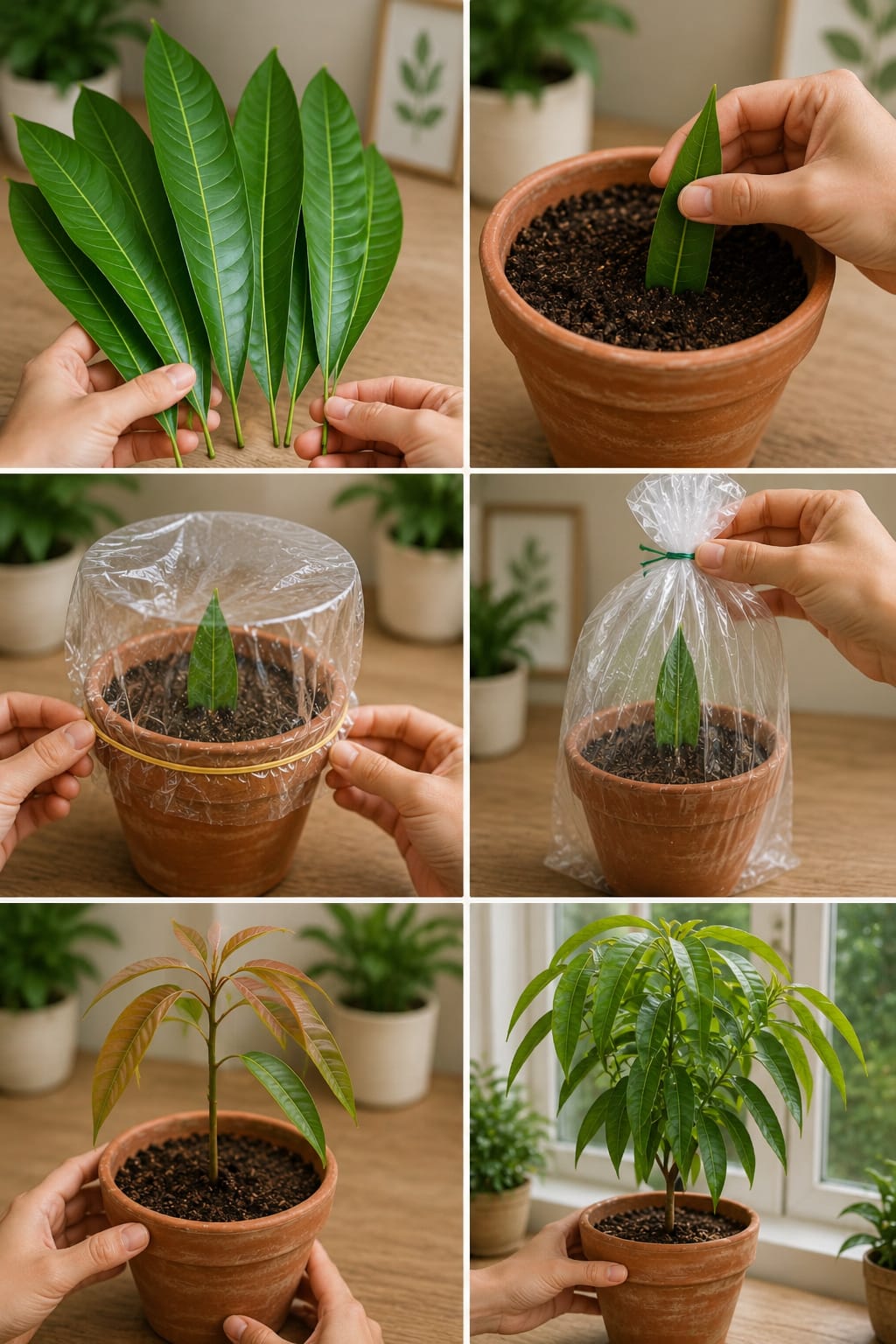
Growing a mango plant at home feels like bringing a small piece of the tropics into your own space. The long glossy leaves, warm bronze new growth, and elegant upright shape make mango seedlings surprisingly beautiful as indoor or balcony plants. Even before they become large trees, young mango plants can add a fresh, expensive-looking green accent to a sunny window, patio corner, or garden shelf.
One of the most interesting mango-growing ideas many plant lovers try is the simple humidity method: starting young mango growth in moist soil, keeping the environment warm, and covering the pot with a light plastic dome or bag to hold moisture around the cutting or sprout. This creates a mini greenhouse effect that helps the new plant stay hydrated while it tries to establish roots and push out fresh leaves.
However, it is important to understand the truth before starting. Mango trees are most reliably grown from seeds or grafted plants. A single mango leaf placed in soil may stay green for a while, but it usually will not grow into a full mango tree unless it has a node, stem tissue, or viable growing point attached. For the best results, this method should be used with a young mango seedling, a stem cutting with a node, or a sprouted mango seed rather than a plain detached leaf.
With the right setup, a warm location, careful moisture control, and patience, you can grow a beautiful mango plant that looks clean, tropical, and decorative. This guide explains how to use the humidity dome approach safely, how to avoid rot, how to care for new mango leaves, and how to style the plant indoors or outdoors for a more refined green display.
Why Mango Plants Make Beautiful Home Decor Plants
Mango plants are not only fruit trees. When young, they can look like elegant tropical foliage plants. Their leaves are long, narrow, glossy, and architectural. New leaves often emerge in shades of bronze, copper, red, or soft orange before turning green. This color change gives the plant a luxury look that many common houseplants do not have.
A young mango plant in a terracotta pot can look warm and earthy on a balcony. In a simple ceramic planter, it can look modern and minimal indoors. In a sunny garden corner, it can create a small tropical feeling even before it grows tall. The plant has a clean vertical shape, making it useful for corners, plant shelves, window areas, and patio groupings.
The biggest reason mango plants look expensive is their leaf texture. Healthy mango leaves are smooth, slightly leathery, and richly colored. When kept clean and evenly lit, the plant can look polished without needing flowers or decorative accessories.
The Secret Behind the Humidity Method
The humidity method works by trapping moisture around the young plant while still allowing light to reach it. A clear plastic bag, plastic wrap, or transparent cover creates a small greenhouse around the pot. This slows moisture loss from leaves and soil, which can be helpful when a young plant is not yet strong enough to absorb water quickly through its roots.
This is especially useful for seedlings, delicate cuttings, and newly sprouted plants. Warmth and humidity encourage active growth. The covered pot keeps the environment more stable, protecting the tender shoot from dry indoor air or sudden temperature changes.
But the method must be balanced. Too much trapped moisture can cause mold, fungus, and stem rot. The cover should not be sealed forever. It needs short ventilation periods. The soil should stay lightly moist, not muddy. The plant should receive bright indirect light, not harsh sun that overheats the plastic cover.
Can You Grow a Mango Tree From a Leaf?
This is one of the most important questions. A mango tree cannot usually grow from a simple leaf by itself. A leaf may remain green in water or moist soil for a while, but without a node, bud, or piece of stem capable of producing roots and shoots, it will not become a full plant.
For real success, use one of these options: a mango seed, a sprouted mango seed, a young seedling, or a cutting with stem tissue and a node. A leaf attached to a small piece of stem has a better chance than a leaf alone, but mango cuttings can still be difficult. Most gardeners grow mangoes from seed or buy grafted plants if they want fruit.
For home decor, a seed-grown mango is perfectly fine. It may not produce fruit indoors, and if it eventually does, the fruit may not match the parent mango. But as a tropical foliage plant, it can be very rewarding.
Best Method: Starting With a Mango Seed
The easiest way to grow a mango plant at home is from a fresh mango seed. After eating the mango, remove the hard husk from the fruit. Wash off the pulp, then carefully open the husk with scissors or a knife. Inside is the actual seed. This seed looks like a large flat bean.
Wrap the seed in a damp paper towel and place it inside a loose plastic bag or container. Keep it warm and check it every few days. Once a root begins to form, plant the seed in a pot with the root pointing downward. Cover it lightly with soil, leaving the top close to the surface.
When the shoot appears, you can use a clear humidity cover for a short period to keep the new growth from drying out. Remove the cover gradually as the seedling becomes stronger.
Choosing the Right Pot
A terracotta pot is a beautiful choice for mango seedlings because it breathes well and gives the plant a natural tropical look. Terracotta also helps excess moisture evaporate, which reduces the risk of waterlogged soil. However, it dries faster than plastic, so you must check moisture regularly.
Choose a pot with drainage holes. Mango plants dislike sitting in stagnant water. A small seedling can begin in a modest pot, but it will eventually need a deeper container because mango roots can grow strongly downward. Avoid using an oversized pot at first. Too much unused soil can stay wet and encourage rot.
A pot about 6 to 8 inches wide is usually enough for a young mango seedling. As the plant grows, move it into a larger container gradually.
Best Soil Mix for Mango Seedlings
Mango plants prefer a loose, well-draining mix. Heavy compact soil is one of the biggest causes of failure. The soil should hold some moisture but still allow air to reach the roots.
A simple mango potting mix can include regular potting soil, perlite, coarse sand, and a little compost. If you live in a humid area, add more drainage material. If your home is very dry, use a slightly richer mix but never let it become soggy.
A good mix should feel light and crumbly. When watered, it should drain within seconds rather than holding water on the surface for a long time.
How to Set Up the Humidity Dome
After planting the sprouted mango seed or young stem piece, water the soil lightly. Then place a clear plastic bag over the pot. The bag should not press tightly against the leaves. If needed, use small sticks or plant supports to hold the plastic away from the plant.
Secure the bottom loosely with a rubber band or string. Do not make the cover completely airtight. The plant needs some airflow. Once a day, open the cover for 15 to 30 minutes to release excess moisture and bring in fresh air.
Place the covered pot in bright indirect light. Do not place it in strong direct sun because the plastic can trap heat and cook the seedling. A warm window with filtered light is ideal.
How Long to Keep the Cover On
The cover is temporary. Keep it on only while the plant is tender and adjusting. Once the seedling begins to grow steadily, slowly reduce humidity. Start by opening the bag longer each day. Then leave the cover loose. Finally, remove it completely.
This gradual transition prevents shock. If you remove the cover suddenly, the tender leaves may wilt because they are used to high humidity.
Most mango seedlings only need the humidity cover for one to three weeks after sprouting, depending on the conditions. If you see mold, remove the cover immediately and improve airflow.
Watering Mango Plants Correctly
Mango plants like moisture when young, but they do not like soggy soil. Water when the top inch of soil begins to dry. Use room-temperature water and water deeply until excess water drains from the bottom. Then let the pot drain fully.
Do not keep the saucer full of water. Constant wetness can damage roots. Young mango roots need both moisture and oxygen.
During warm months, the plant may need water more often. During cooler months, growth slows and watering should be reduced. Always check the soil before watering instead of following a strict schedule.
Light Requirements for Strong Mango Growth
Mango plants need strong light to grow well. Indoors, place the plant near the brightest window you have. A south-facing or west-facing window can work well if the plant is gradually introduced to stronger light. Young seedlings should not be placed in harsh direct sun immediately.
If the plant receives too little light, it may become tall, weak, and pale. Leaves may stretch toward the window. If the plant receives too much sudden sun, leaves can burn or develop dry brown patches.
The best approach is gradual exposure. Start with bright indirect light, then slowly increase morning sun. Outdoor mango plants can handle more sun once established, but young seedlings need protection at first.
Temperature and Humidity
Mango plants love warmth. They grow best in warm rooms and outdoor spaces protected from cold wind. Avoid exposing the plant to cold drafts, winter windows, or temperatures that drop too low at night.
Humidity helps young leaves look smooth and healthy. If the air is very dry, place the mango near other plants, use a pebble tray, or run a humidifier nearby. Avoid constantly misting the leaves if the room has poor airflow. Wet leaves in stagnant air can invite fungal problems.
A warm, bright, airy position is better than a damp dark corner.
Feeding a Young Mango Plant
Do not fertilize immediately after planting a seed. The seed already contains energy for early growth. Wait until the seedling has a few sets of leaves before feeding.
Use a balanced liquid fertilizer diluted to half strength. Feed during the active growing season, usually spring and summer. Avoid overfeeding. Too much fertilizer can burn young roots and cause leaf tip browning.
If the plant is grown mainly as an indoor decor plant, gentle feeding once every four to six weeks during active growth is usually enough.
Understanding Mango Leaf Color
New mango leaves often appear bronze, reddish, copper, or orange. This is normal and beautiful. As the leaves mature, they turn green. Many beginners worry when they see reddish new leaves, but this color is part of the plant’s natural growth cycle.
Yellow leaves, however, can mean stress. Possible causes include overwatering, poor drainage, cold temperature, nutrient deficiency, or lack of light. Brown crispy edges can mean underwatering, dry air, fertilizer burn, or sun scorch.
Watch the whole plant rather than one leaf. One old leaf yellowing is normal. Many yellow leaves at once mean the care routine needs adjustment.
How to Prevent Mold Under the Plastic Cover
Mold appears when moisture is trapped for too long without airflow. To prevent it, open the cover daily, avoid soaking the soil, and place the pot in bright light. Remove fallen leaves or debris from the soil surface.
If mold appears on the soil, remove the cover for a day or two and let the top layer dry slightly. You can also scrape away the moldy surface and replace it with fresh dry mix. Improve air movement around the pot.
Do not keep the seedling sealed tightly. A humidity dome should feel like a gentle greenhouse, not a wet closed container.
Continue to Page 2
Continue to page 2 for more details about this article and the key points many readers miss on the first page.