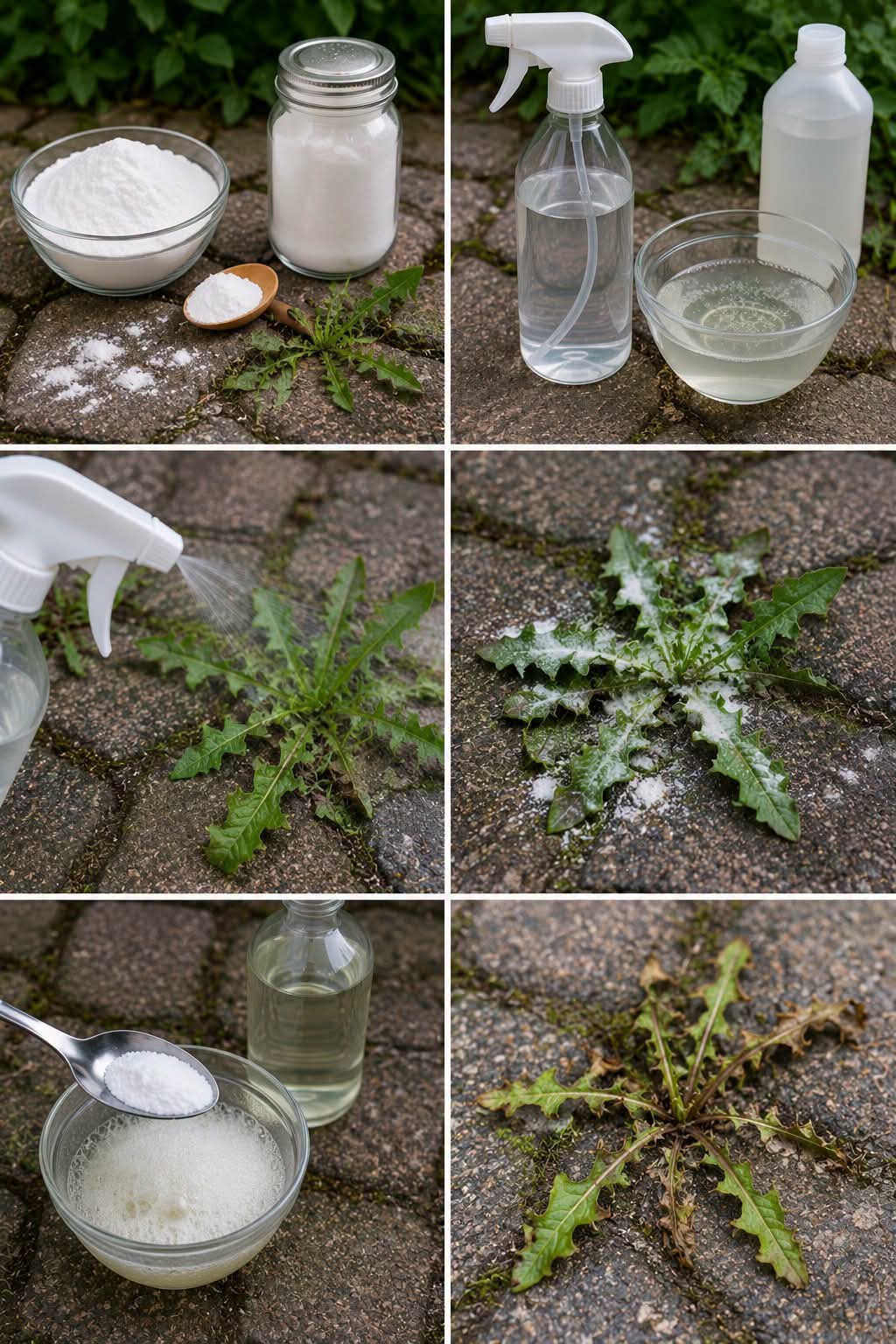
Weeds growing between patio stones, driveway cracks, balcony tiles, garden paths, and wall edges can make even a beautiful outdoor area look messy. A few unwanted plants may seem small at first, but they quickly spread, flower, drop seeds, and return again after rain. For homeowners who want a cleaner outdoor display without immediately reaching for harsh commercial products, a simple white powder weed spray can be a useful spot-treatment idea when used carefully.
This method is often based on common household ingredients such as baking soda, vinegar, or a mild soapy water mix. The goal is not to feed plants, but to dry out and weaken unwanted weeds growing in hard surfaces where you do not want vegetation. It is especially useful for cracks in paving, stone joints, concrete gaps, gravel edges, and small patio corners.
However, this trick must be used with care. Natural does not always mean harmless. Vinegar, salt, and strong alkaline powders can damage nearby flowers, grass, vegetable plants, soil life, and decorative garden plants if they drift or wash into planting beds. The safest way to use this kind of homemade spray is as a targeted weed-control method for hard surfaces, not as a general garden treatment.
When applied correctly, it can help make outdoor spaces look tidier, brighter, and more refined. A clean path instantly improves the appearance of a balcony garden, courtyard, patio, driveway, or entrance area. The difference can be dramatic because removing weeds from cracks creates sharper lines and makes planters, flowers, and outdoor furniture look more expensive.
Why Weeds Make Outdoor Spaces Look Messy
Weeds are not always harmful in wild areas, but in designed outdoor spaces they can interrupt the clean look of the garden. A neat patio with pretty pots can suddenly look neglected when weeds appear between tiles. A balcony edge can look damp and dirty when moss and unwanted seedlings grow along the cracks. A driveway can look older than it is when small weeds spread across joints.
The problem is not only visual. Weeds can hold moisture against paving materials, trap soil and debris, and create more spaces for seeds to settle. Some weeds have strong taproots that widen tiny cracks over time. Others grow flat against the surface and become difficult to pull by hand.
A simple targeted spray helps weaken these plants before they mature. The earlier you treat small weeds, the easier they are to control. Large established weeds may need repeated treatment or manual removal.
What the White Powder Method Usually Means
The “white powder” in many garden weed tricks is usually one of three household materials: baking soda, salt, or a powdered cleaning ingredient. For garden safety, baking soda is the gentlest option, but it can still affect nearby plants. Salt is much harsher and can make soil unsuitable for planting if overused. Strong cleaning powders should not be used in gardens because they may harm soil, pets, insects, and surrounding plants.
For a safer home garden approach, this guide focuses on a baking soda and vinegar-style spot spray for hard surfaces. It is not designed for lawns, flower beds, vegetable gardens, or potted ornamental plants. It should be used only on unwanted weeds in cracks, paths, and non-growing areas.
The mixture works by stressing the weed leaves. Vinegar can dry leaf tissue. Baking soda can create an unfavorable surface condition for tender green growth. A small amount of mild dish soap helps the liquid cling to the leaves instead of rolling off.
Important Safety Rule Before You Start
Do not spray this mixture near plants you want to keep. It does not know the difference between a weed and a flower. If the liquid touches leaves of a rose, geranium, basil, lavender, orchid, peace lily, or any garden plant, it can burn or damage them.
Use it only when there is no wind. Wind can carry mist onto nearby plants. Use a small spray bottle, not a strong pressure sprayer. The goal is controlled application, not wide spraying.
Also avoid using this method before rain. Rain can wash the mixture into garden soil or nearby roots. Choose a dry day when the weed leaves can stay coated for several hours.
Simple Homemade Weed Spray Recipe
For a basic targeted patio weed spray, use the following:
- 1 cup white vinegar
- 1 teaspoon baking soda
- 2 cups water
- 3 to 5 drops mild dish soap
- 1 clean spray bottle
Add the water and vinegar to a bowl first. Slowly add the baking soda because it may foam when mixed with vinegar. Stir gently until the bubbling settles. Add the mild dish soap last and mix carefully. Pour the solution into a spray bottle.
Do not shake the bottle aggressively because the mixture may foam. Label the bottle clearly and keep it away from children and pets.
How to Apply It Correctly
Spray the weed leaves directly until they are lightly wet. Focus on the center of the weed and the green leaves. Avoid soaking the surrounding soil. For weeds growing in concrete cracks, spray only the plant, not the whole path.
After spraying, leave the weed alone for several hours. On a warm sunny day, the leaves may begin to wilt faster. In cool or cloudy weather, the effect may be slower. Some weeds may need a second application after a few days.
Once the weed has wilted or dried, pull it out by hand if possible. Removing the weakened plant helps prevent regrowth and makes the surface look cleaner immediately.
Best Places to Use This Trick
This method works best in places where you do not want plants to grow at all. Good examples include patio cracks, driveway joints, stone pathways, gravel edges, concrete seams, brick paving gaps, and the base of walls.
It can also be useful around outdoor steps or between balcony tiles where tiny weeds appear after rain. Use it as a detail-cleaning method for outdoor presentation. A weed-free patio makes container plants stand out more beautifully.
Avoid using it in lawns, vegetable beds, flower borders, herb gardens, or around tree roots. In planted areas, hand-weeding, mulch, and proper spacing are usually safer.
Why Baking Soda Should Be Used Carefully
Baking soda is common in homes, but it is not a fertilizer. It does not help most plants grow. In fact, if too much is added to soil, it can change conditions around roots and cause stress. That is why it should not be scattered around flower beds or houseplants.
For weed control, baking soda is best used in tiny amounts on unwanted plants in hardscape areas. Do not pour piles of powder into soil. Do not use it repeatedly in the same planted area. Keep it away from roots of desirable plants.
Small controlled use is the key. The goal is to treat the weed, not the entire garden.
Why Vinegar Can Burn Leaves
Vinegar is acidic and can dry out tender green tissue. This is why it can make weeds wilt. But the same effect can damage flowers, vegetables, herbs, shrubs, and houseplants. Even a small amount of spray drift can leave brown marks on leaves.
Household vinegar is usually weaker than commercial horticultural vinegar, but it still needs caution. Never use strong vinegar without proper protection. Stronger vinegar can irritate skin, eyes, and lungs.
For a home patio trick, diluted household vinegar is safer than concentrated products. Even then, wear gloves and avoid breathing mist.
Should You Add Salt?
Salt is sometimes used in homemade weed killers, but it should be avoided in most home gardens. Salt can build up in soil and damage future plant growth. It can also wash into nearby beds and harm roots. Once soil becomes salty, it can be difficult to correct.
For cracks in concrete far away from planting areas, a small amount may work, but it is still risky. A better approach is to skip salt and rely on direct spraying, hand removal, boiling water for certain hard surfaces, or physical barriers.
If you care about nearby plants, soil health, or future planting, do not use salt.
How to Make the Treatment More Effective
Apply the spray when weeds are young. Small weeds are easier to weaken than mature plants with deep roots. Treating early also prevents flowering and seed production.
Choose a dry, warm day. Moisture and rain reduce effectiveness. Sunshine can help the leaves dry faster after spraying.
Pull larger weeds first, then spray any regrowth. This gives better results than trying to kill a large established weed with spray alone.
Repeat only when needed. Overuse can create residue on surfaces or affect nearby soil.
Manual Weeding Still Matters
A spray can help weaken weeds, but manual removal gives the cleanest result. After the leaves wilt, pull the plant from the base. Try to remove the root if possible. For deep-rooted weeds, use a narrow weeding tool, old screwdriver, or patio knife to loosen the crack before pulling.
Manual removal is especially important for weeds with taproots. If the root remains alive, the weed may regrow. Spraying and pulling together creates better control.
After removing weeds, sweep the cracks clean. This removes loose soil and seeds that could start new growth.
How to Prevent Weeds From Coming Back
After the area is clean, prevention is easier. Sweep patios and paths regularly. Remove soil buildup between cracks. Weeds need trapped dust and organic matter to germinate. Keeping cracks clean reduces new seedlings.
For gravel or paving joints, consider adding polymeric sand, fresh gravel, or a suitable joint filler. This makes it harder for seeds to settle. Around garden beds, mulch helps block light and reduce weed germination.
Good drainage also matters. Damp shaded cracks encourage moss and weeds. Improve airflow and reduce standing water where possible.
Using Boiling Water as an Alternative
Boiling water can kill small weeds in pavement cracks without leaving chemical residue. Pour it carefully over weeds growing in hard surfaces. It is especially useful near areas where you do not want to use vinegar or baking soda.
But boiling water is dangerous to skin and will also kill desirable plants. Use it only with caution and only on hard surfaces. Avoid using it near roots of plants you want to keep.
This method works best for small weeds and mossy growth in cracks.
Using Mulch for Garden Beds
In flower beds, mulch is often better than sprays. A layer of bark, straw, composted leaves, or decorative stones can block light and stop many weed seeds from sprouting. Mulch also makes the garden look more finished and expensive.
For ornamental beds, use mulch that matches your design. Bark gives a natural look. Gravel gives a modern look. Light stones brighten dark corners. Organic mulch improves soil over time, while gravel lasts longer but can heat up in strong sun.
Keep mulch slightly away from plant stems to prevent rot.
How This Trick Improves Outdoor Decor
A clean patio or path instantly makes plants look more intentional. Even simple potted flowers look more elegant when the surrounding surface is tidy. Weeds create visual noise. Removing them makes the eye focus on the plants, pots, furniture, and garden structure.
For a luxury-looking balcony, clean the floor, remove weeds, wipe pots, and group plants by height. Use matching planters or a repeated color palette. A weed-free base makes the whole arrangement feel more designed.
For a front entrance, remove weeds from walkway cracks, add two matching pots near the door, and keep the edges swept. This small detail can make the entrance look polished and welcoming.
Continue to Page 2
Continue to page 2 for more details about this article and the key points many readers miss on the first page.