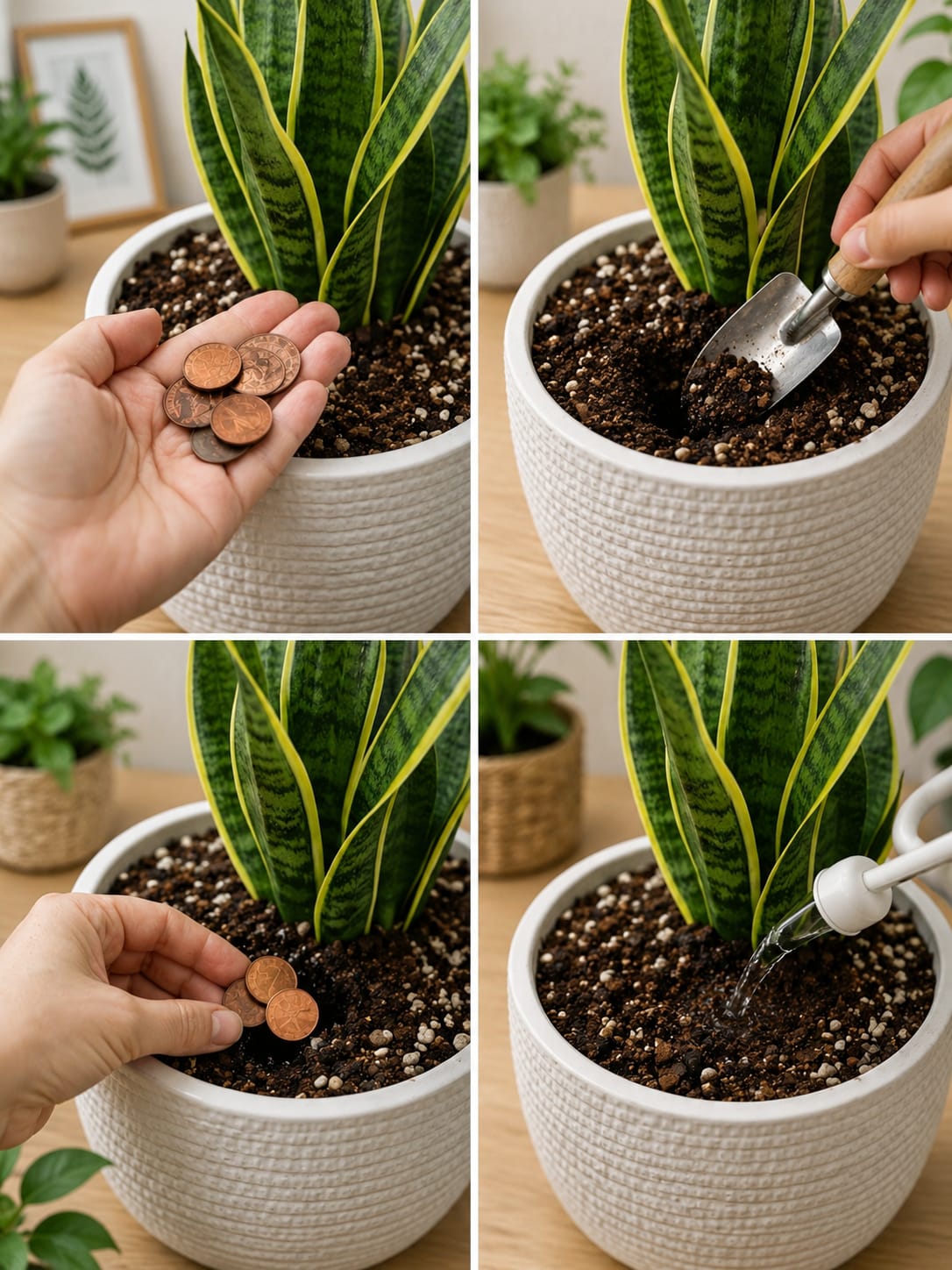
Snake plants are already one of the easiest and most elegant indoor plants to grow, but small styling details can make them look even more intentional. One unusual trick that often catches attention is placing a few copper-colored coins on the soil surface before watering. At first glance, it looks like a simple decorative idea, but many plant lovers also connect it with cleaner pot care, surface freshness, and a neater indoor display.
Before trying this method, it is important to understand what it can and cannot do. Copper coins are not a true fertilizer for snake plants. They will not magically make the plant grow faster, produce taller leaves overnight, or replace proper watering, drainage, and light. Snake plants grow best from healthy roots, a loose potting mix, moderate watering, and bright indirect light. The coin idea should be treated as a small optional styling and surface-care trick, not as the main care routine.
Used carefully, a few clean copper coins can create a unique visual accent on the soil surface and may help remind you to check the top layer before watering. Some people also like the idea because copper is often associated with cleanliness and old garden wisdom. But too many coins, dirty coins, corroded metals, or repeated use in wet soil can create problems. The safest approach is to use this method lightly, keep the coins on the surface, remove them if they discolor heavily, and never bury large amounts of metal near the roots.
Why Snake Plants Are Perfect for Minimal Indoor Styling
Snake plants have strong upright leaves, architectural shapes, and clean green patterns that suit almost any home style. Their tall leaves create structure in a room, while the yellow-edged varieties add brightness without needing flowers. Because the plant already has a sculptural look, even a simple white, black, ceramic, or stone-textured pot can make it feel like a luxury decor piece.
This is why small surface details matter. A messy soil surface with old leaves, crusty minerals, fungus gnats, or random debris can make the plant look neglected. A clean soil surface, a tidy pot rim, and a simple decorative accent can make the same snake plant look more expensive and professionally styled.
Copper-colored coins create contrast against dark soil. The warm tone works beautifully with white pots, terracotta planters, black ceramic containers, and natural wood shelves. For people who enjoy small home decor tricks, the coins can act like a tiny design detail rather than a serious plant treatment.
What the Copper Coin Trick Is Supposed to Do
The basic idea is simple: place a few clean copper coins on top of the soil near the edge of the pot, then water normally. Some plant lovers believe the contact between moisture and copper may support a cleaner soil surface. Others use it mostly as a visual reminder to water carefully and avoid soaking the plant too often.
For snake plants, the biggest care mistake is overwatering. Their thick leaves and rhizomes store moisture, so they do not want constantly wet soil. If a coin trick makes you pay closer attention to watering slowly and checking the soil first, then the real benefit may come from better habits rather than the coins themselves.
That is the safest way to understand this idea. The coins are not the secret. The improved routine is the secret: clean the soil surface, loosen compacted topsoil, water only when needed, keep the pot draining well, and style the plant neatly.
Important Warning: Do Not Bury Too Many Coins
A few surface coins are very different from burying lots of metal in the pot. Snake plant roots do not need coins. Too much copper or metal residue can stress roots over time, especially in a small container where minerals cannot wash away naturally. If you want to try this idea, keep it minimal.
Use only two or three clean copper-colored coins for a medium pot. Place them on the top layer, not deep inside the root zone. Remove them before repotting. If the coins become heavily green, rusty-looking, sticky, or dirty, take them out and clean the soil surface.
Never use unknown metal scraps, batteries, painted objects, jewelry, or coins with heavy corrosion. Indoor plant pots are not a place for random metals or chemical residues.
How to Try the Method Safely
Start by checking your snake plant’s soil. The top layer should be dry before you water. If the soil is already wet, wait. Snake plants prefer a dry-down period between watering sessions.
Next, remove any dead leaves, dust, or debris from the pot surface. Use a small hand trowel, spoon, or chopstick to gently loosen only the top layer of soil. Do not dig deeply into the roots. The goal is to refresh the surface and improve water absorption, not disturb the plant.
Rinse the coins with warm water and mild soap, then dry them. Place two or three coins flat on the soil surface near the outer edge of the pot. Avoid pressing them against the base of the leaves. Then water slowly around the soil, not directly into the leaf crown.
Allow extra water to drain fully from the bottom of the pot. Never let the plant sit in standing water. If your pot has no drainage hole, this trick is not recommended, because snake plants in non-draining containers are already at higher risk of root rot.
Best Watering Routine for Snake Plants
The real foundation of a healthy snake plant is correct watering. Let the soil dry out deeply before watering again. In many indoor homes, this may mean watering every two to four weeks, depending on light, temperature, pot size, and soil mix. In cooler or darker rooms, the plant may need even less water.
When you water, water thoroughly enough that moisture reaches the root zone, then let the pot drain. Light daily splashes are not ideal because they keep the surface damp while the lower roots may stay unevenly hydrated. A proper soak-and-dry rhythm is usually better.
Always check the soil with your finger or a wooden stick. If the stick comes out damp, wait. If it comes out dry, watering may be safe. This habit matters far more than any coin, powder, or homemade trick.
Why Loose Soil Matters
Snake plants need a potting mix that drains quickly. Heavy, compact soil holds too much water and can suffocate the roots. If your snake plant soil looks dense, muddy, or slow to dry, the plant may eventually develop yellow leaves, soft bases, or root rot.
A good mix usually includes regular potting soil combined with drainage materials such as perlite, pumice, coarse sand, orchid bark, or cactus mix. The texture should feel airy, not sticky. When you water, the water should move through the pot instead of sitting on top for a long time.
Loosening the top layer with a small trowel can help water enter evenly, but it does not fix a bad soil mix. If the entire pot is compacted, repotting into a better mix is the real solution.
Can Copper Stop Fungus Gnats?
Some people hope copper coins will stop fungus gnats. In reality, coins alone are not a reliable fungus gnat treatment. Fungus gnats usually appear when soil stays too moist and organic matter remains damp. The best control is letting the soil dry more between watering, removing decaying debris, improving airflow, and using sticky traps if needed.
For snake plants, fungus gnats often indicate overwatering. If you see tiny flies around the pot, reduce watering, check drainage, and clean the soil surface. A dry top layer makes the pot less attractive to gnats.
The coin trick may make the pot look cleaner, but it should not be trusted as the main pest solution.
Can Copper Make Snake Plants Grow Faster?
No, copper coins should not be treated as a growth booster. Snake plants grow at a moderate pace, and their speed depends mainly on light, temperature, root health, pot size, and seasonal growth. They usually grow faster in bright indirect light and slower in low light.
If you want stronger growth, give the plant better light, use a suitable potting mix, avoid overwatering, and fertilize lightly during the active growing season with a balanced houseplant fertilizer. Do not overfertilize. Snake plants are not heavy feeders.
Coins may add decorative charm, but they are not a replacement for plant nutrition.
Best Light for a Strong Snake Plant
Snake plants tolerate low light, but they do not thrive as quickly in dark corners. For stronger upright leaves and better color, place the plant near bright indirect light. A spot near an east-facing window, a few feet from a bright south or west window, or near filtered light is usually ideal.
Direct harsh afternoon sun can scorch leaves, especially if the plant was previously in low light. Move it gradually if you want to increase light exposure.
Variegated snake plants with yellow edges often need brighter light to keep their color strong. In very low light, growth slows and new leaves may appear thinner.
How to Use Coins as Decor Without Harming the Plant
If your main goal is decor, place the coins intentionally. Do not scatter them randomly across the pot. Two or three coins near one side can look like a small accent. For a cleaner look, pair them with a white ceramic pot, dark soil, and a few light-colored stones or perlite pieces.
You can also use coins only temporarily for a photo, plant shelf styling, or seasonal display. Remove them afterward if you do not want metal sitting on damp soil long-term.
For a more refined look, clean the pot rim, wipe dust from the leaves, rotate the plant so the best side faces the room, and remove any yellowing or damaged leaves at the base.
What to Do If the Soil Surface Looks Dirty
Sometimes the top layer of soil becomes crusty, dusty, or uneven. This often happens from hard water, fertilizer salts, old potting mix, or repeated shallow watering. Before adding any decorative detail, refresh the surface.
Remove the top half inch of tired soil if possible and replace it with fresh airy mix. Do not remove too much around the roots. A thin top dressing of pumice, lava rock, fine bark, or decorative stones can make the pot look cleaner.
Top dressing also reduces soil splash when watering. This keeps the pot and nearby table cleaner.
Should You Use Coins With Every Plant?
No. This idea is not suitable for every plant. Moisture-loving plants, delicate seedlings, orchids, African violets, and plants in small pots may not benefit from metal sitting on the soil. It is best kept as a light decorative experiment for sturdy plants and hardier containers.
Snake plants are more tolerant than many houseplants, but even they can suffer from poor drainage or chemical buildup. Keep the trick minimal and optional.
If you are unsure, skip the coins and use decorative stones instead. The plant will not miss them.
A Better “Luxury Look” Alternative
For a more elegant display, try using a clean top dressing instead of coins. White stones, black lava rock, beige gravel, orchid bark, or clay pebbles can make a snake plant look professionally styled. These materials are usually better suited for plant pots than coins because they are designed for gardening or decor.
A white pot with black lava rock creates a modern look. A terracotta pot with bark creates a warm natural look. A textured ceramic pot with beige gravel creates a soft minimalist look. These combinations can make a simple snake plant look like an interior design feature.
The most expensive-looking plant displays are usually simple, clean, and balanced.
How to Clean Snake Plant Leaves
Dust can dull the leaf pattern and make the plant look tired. Wipe leaves gently with a soft damp cloth every few weeks. Support the leaf with one hand while wiping with the other so you do not bend or crack it.
Avoid oily leaf shine products. They can clog leaf surfaces and attract dust. Plain water on a cloth is usually enough.
Clean leaves reflect light better and make the plant look healthier instantly.
Signs Your Snake Plant Is Happy
A healthy snake plant usually has firm upright leaves, strong color, dry-to-lightly-moist soil depending on watering time, and no soft mushy base. New shoots may appear from the soil when the plant is actively growing.
Slow growth is normal, especially indoors. Do not force the plant with too much water or fertilizer. Snake plants prefer steady care.
If new leaves are weak, pale, or floppy, check light and watering first.
Continue to Page 2
Continue to page 2 for more details about this article and the key points many readers miss on the first page.