Best Tools to Keep Nearby
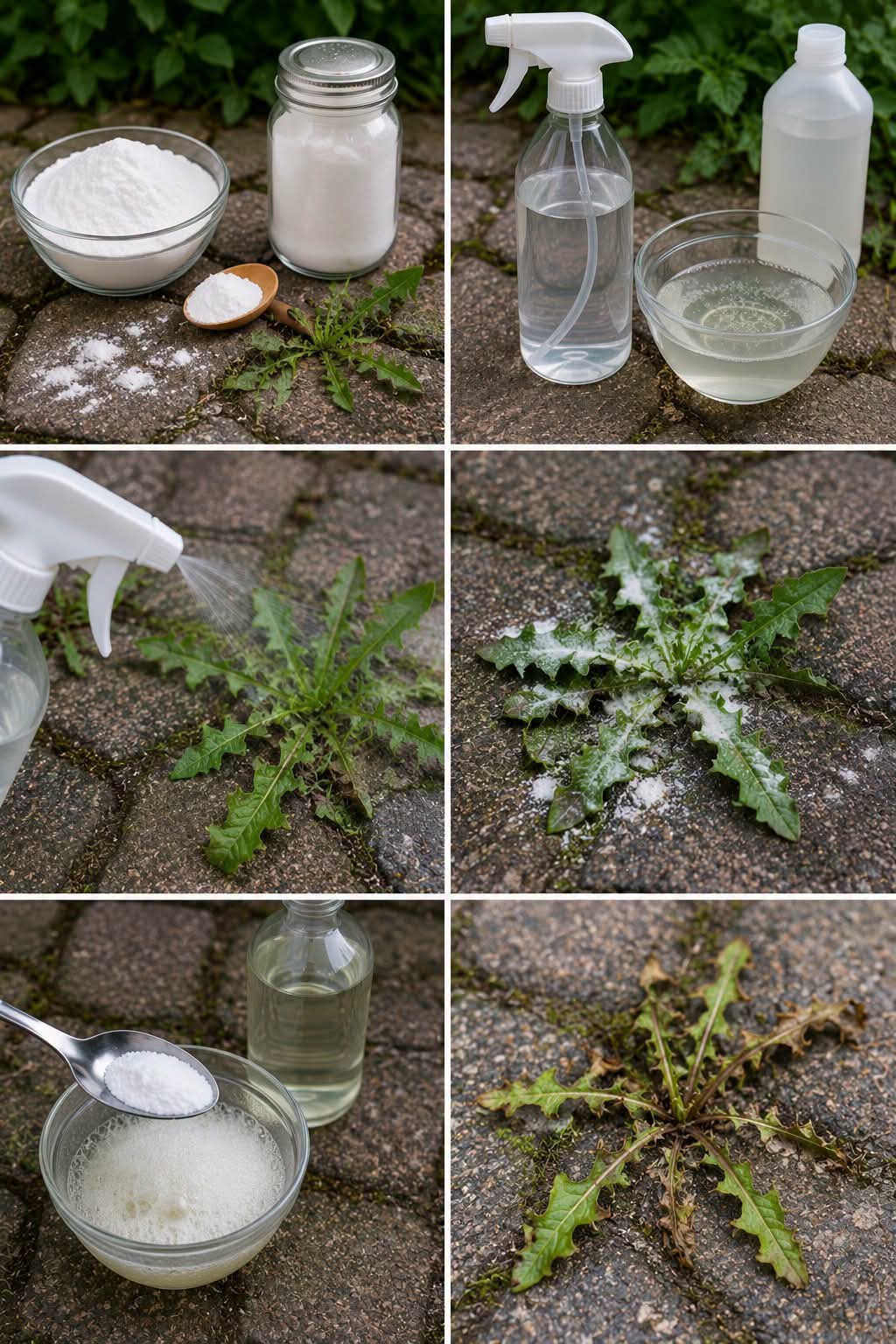
A simple weed-control kit can include a small spray bottle, gloves, a narrow weeding tool, a stiff brush, a broom, and a bucket. These basic tools are enough for most patio and balcony weed problems.
Use the stiff brush after weeds are removed to clean cracks. This removes seedlings and debris. A small hand broom is useful for balcony corners and window ledges.
Keep the spray bottle labeled and store it separately from plant fertilizers or cleaning products.
What Not to Do
Do not pour the mixture directly into flower pots. Do not spray it on houseplants. Do not use it as a leaf cleaner. Do not apply it near vegetable crops. Do not use it on windy days. Do not mix random cleaning chemicals with vinegar, especially bleach-based products, because this can create dangerous fumes.
Do not assume that more is better. A stronger solution can damage surfaces, soil, and nearby plants. Start mild and targeted.
Do not use homemade sprays as the only garden maintenance method. They work best as part of a routine that includes pulling, sweeping, mulching, and improving drainage.
How Often Should You Use It?
Use it only when visible weeds appear. For most patios, treating once every few weeks during active growing season may be enough. In rainy months, weeds may return faster. In dry months, they may slow down.
If weeds keep returning in the same cracks, the area may contain soil buildup or seeds. Clean the cracks deeply and consider filling them with sand or joint filler.
Repeated spraying without cleaning the cracks may only give temporary results.
Can It Kill Weed Roots?
Homemade sprays usually damage the leaves more than the deep roots. Small young weeds may die completely. Larger weeds may regrow from the root. That is why pulling after spraying is important.
For deep-rooted weeds, cut or pull as much root as possible. Then monitor the area. If new green growth appears, treat it early before it becomes strong again.
Patience and repetition are part of natural weed control.
Best Weather for Application
Choose a calm, dry day with mild warmth. Morning after dew has dried is a good time. Avoid spraying before rain. Avoid spraying during strong heat if the surface is near desirable plants, because evaporation and drift can increase damage risk.
Wind is the biggest problem. Even gentle wind can move droplets onto plants you want to keep. If there is wind, wait.
After spraying, keep pets away until the surface has dried.
How to Protect Nearby Plants
If weeds are close to plants you want to keep, use cardboard as a shield while spraying. Hold the cardboard between the weed and the desirable plant. Spray carefully from close range. This reduces drift.
You can also apply the mixture with a small paintbrush or sponge instead of spraying. Brush it directly onto weed leaves. This is slower but safer in tight areas.
For weeds inside flower beds, hand removal is still the safest method.
Cleaning Patio Cracks After Treatment
Once the weeds have wilted, remove them and scrub the cracks. Use a stiff brush to loosen soil and moss. Sweep everything away. If the crack remains filled with dirt, new seeds will grow again.
For a more finished look, refill wide gaps with appropriate material such as sand, gravel, or joint compound. This gives the patio a cleaner, more expensive appearance.
Maintenance is easier when the cracks stay dry and clean.
Eco-Friendly Garden Thinking
Not every wild plant needs to be removed. In some garden areas, low-growing plants can support insects and biodiversity. But in paths, stairs, patios, and entrances, weed control is often necessary for safety and appearance.
The best approach is targeted control. Remove weeds where they cause problems, but avoid unnecessary spraying across healthy soil. Protect pollinator plants and avoid treating flowering weeds when bees are visiting.
A tidy garden can still be nature-friendly when treatments are precise and minimal.
Final Thoughts
A simple white powder weed spray can be a helpful trick for cleaning up patio cracks, driveway joints, balcony edges, and garden paths. Used carefully, it can weaken small weeds and make outdoor areas look fresher, cleaner, and more refined.
The key is control. Use a mild mixture, apply it only to unwanted weeds, avoid windy days, keep it away from plants you love, and follow up with hand removal and sweeping. Do not treat it like a fertilizer or a general garden spray.
For the best outdoor display, combine this method with regular sweeping, mulch, clean pot styling, and good drainage. A weed-free surface makes every planter look better, every flower color stand out more, and every balcony or patio feel more polished.
With a little care and a targeted approach, even a simple homemade weed-control routine can transform the look of your outdoor space and help your garden feel cleaner, calmer, and more beautifully maintained.