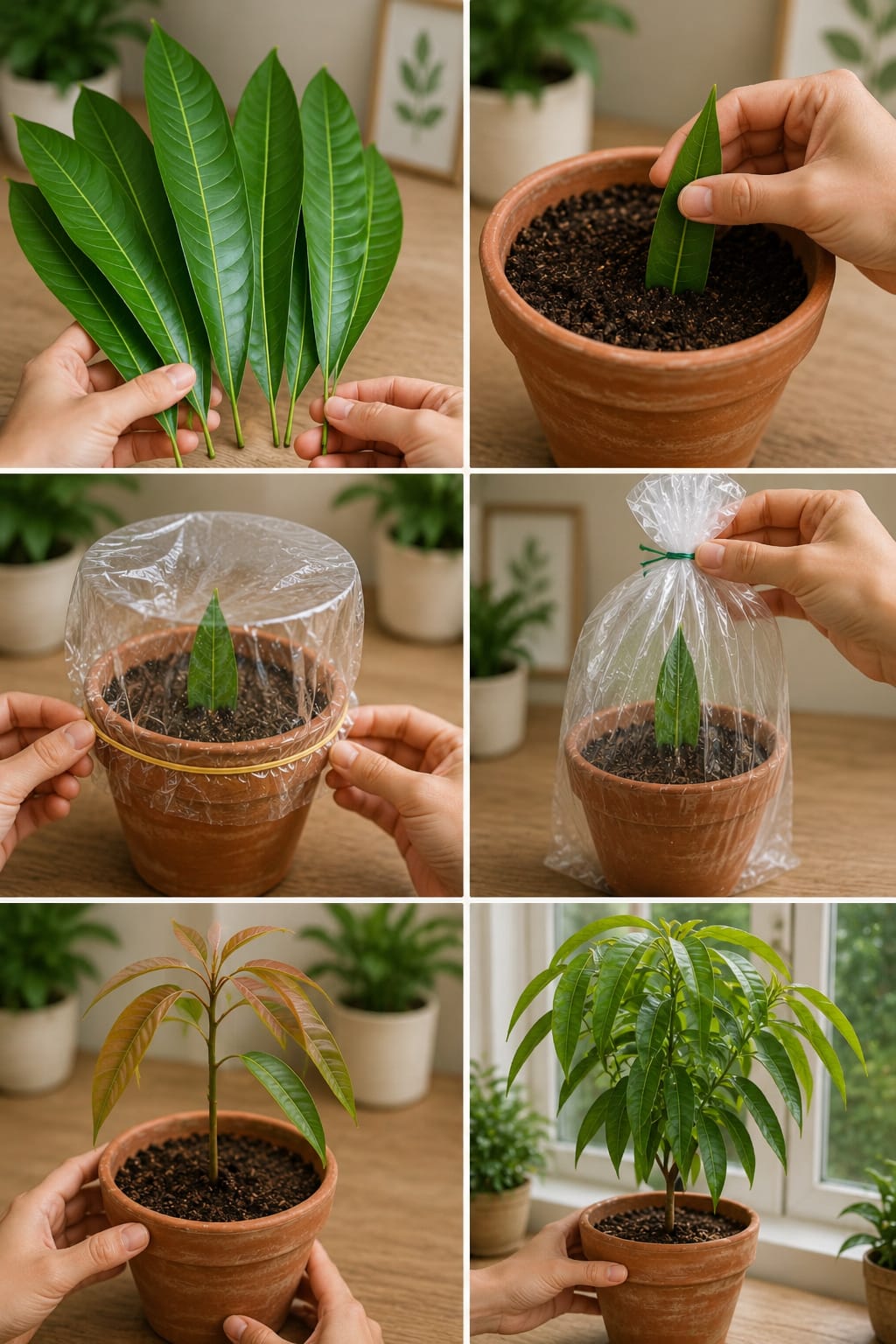
How to Style a Mango Seedling Indoors
A young mango plant looks beautiful in a terracotta pot, especially when placed near natural wood, woven baskets, or warm neutral decor. The long leaves create a tropical look without feeling messy. For a clean modern style, use a matte white or black ceramic outer pot.
Place the plant on a plant stand near a bright window. Pair it with plants that have different textures, such as pothos, snake plant, ZZ plant, or peace lily. The mango’s narrow leaves contrast nicely with rounder or broader foliage.
For a luxury look, keep the soil surface clean. Add a thin layer of small decorative stones only after the plant is established, and make sure the layer does not trap too much moisture. A simple pot and clean leaves often look better than too many decorations.
Balcony Styling Ideas
On a balcony, a mango plant can become the centerpiece of a tropical corner. Use a terracotta pot, a wooden plant stand, and surrounding smaller pots of herbs or trailing plants. The mango’s upright shape gives height to the arrangement.
If your balcony receives hot afternoon sun, protect young plants with light shade during the strongest hours. Morning sun is gentler and excellent for growth. Keep the plant away from strong wind, which can tear tender leaves.
A grouping of terracotta pots with different heights can make the balcony feel like a small garden. Mango, basil, mint, aloe, and ornamental foliage plants can work together for a fresh Mediterranean-tropical look.
Can a Mango Plant Fruit Indoors?
Most mango plants grown indoors will not fruit easily. Mango trees need strong sun, space, maturity, and the right climate. Seed-grown mangoes can take many years to fruit, and indoor conditions are usually not enough.
For fruit, a grafted dwarf mango variety is a better choice. Even then, it needs excellent light and proper care. But if your goal is a decorative tropical plant, a seed-grown mango is still very rewarding.
Think of it as a foliage plant first. The fruit is a bonus, not the main expectation.
Repotting as the Mango Grows
As the mango seedling grows taller, it will need more root space. Repot when roots fill the container or when the plant dries out too quickly. Move up only one pot size at a time. A huge pot can hold too much moisture.
Repot in warm weather when the plant is actively growing. Be gentle with the roots. After repotting, keep the plant in bright indirect light for a few days before returning it to stronger light.
Fresh soil and a slightly larger pot can encourage stronger growth, but repotting too often can stress the plant.
Common Problems and Fixes
If the seedling wilts under the plastic cover, the soil may be too wet, too dry, or too hot. Check the temperature and moisture. If the leaves turn black or mushy, remove the cover and inspect for rot.
If the plant grows tall and weak, it needs more light. Move it closer to a bright window or use a grow light. If leaves curl or crisp, check for dry air, underwatering, or direct sun burn.
If growth stops, do not panic. Mango plants can pause between growth flushes. Keep care steady and avoid overwatering during slow periods.
Important Safety Note
Mango sap and skin can irritate some people, especially those sensitive to poison ivy-related plants. When handling mango husks, stems, or fresh cuts, wash your hands afterward. Use gloves if you have sensitive skin.
Keep pots and plastic covers away from small children and pets. Plastic bags can be dangerous if misused, and some pets may chew young leaves.
Final Thoughts
The mango humidity method is a simple and attractive way to support early growth when used correctly. The real key is starting with viable plant material, such as a sprouted mango seed or a stem section with a growing point. A plain leaf alone is unlikely to become a mango tree, but a young seedling can thrive with warmth, moisture, light, and patience.
For the best results, use a draining terracotta pot, light soil, bright indirect light, and a temporary clear cover to protect tender growth. Vent the cover daily, avoid soggy soil, and remove the dome gradually as the plant strengthens.
With time, the mango plant can become a beautiful tropical feature in your home or balcony garden. Its glossy leaves, warm new growth, and clean upright shape make it look stylish even as a young plant. Whether you grow it for fun, for decor, or for the dream of a future mango tree, this method brings a fresh natural touch to any sunny space.