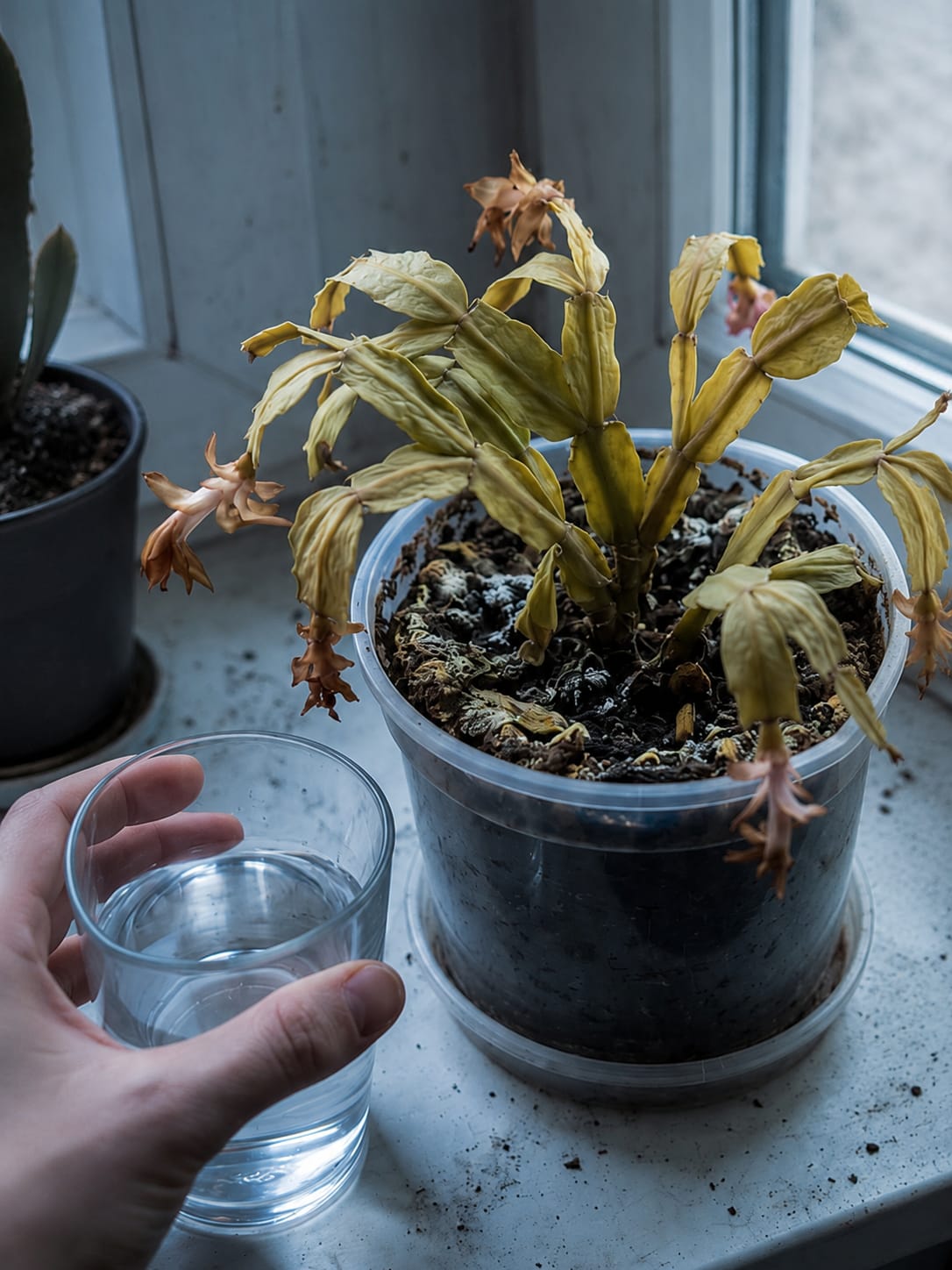
Christmas cactus is one of the most beautiful flowering houseplants you can grow indoors. Its soft segmented stems, arching shape, and bright pink, red, white, orange, or purple flowers make it a favorite plant for windowsills, shelves, plant stands, kitchen corners, and holiday displays. When healthy, it can bloom beautifully year after year and become a long-lasting plant that stays in the home for decades.
But Christmas cactus can also look dramatic when something is wrong. The stems may droop, wrinkle, turn pale, become yellowish, or collapse. Flower buds may dry before opening. Old blooms may hang lifelessly. The plant may look like it is beyond saving. The good news is that many wilted Christmas cactus plants can recover if the real cause is found early.
The secret is not simply adding more water. A wilted Christmas cactus can be thirsty, but it can also be overwatered, root-bound, sitting in poor soil, receiving too little light, or suffering from root rot. Before treating the plant, check the soil, roots, pot, and light conditions. Once you understand the cause, you can bring the plant back to fresh green growth and encourage it to bloom again.
Why Christmas Cactus Wilts
Christmas cactus is not a desert cactus. It is a tropical forest cactus. In nature, it grows in humid, airy places where water drains quickly. That means it likes more moisture than desert cactus, but it still needs oxygen around its roots.
Wilting usually happens when the roots cannot send enough water to the stems. This can happen for two opposite reasons: the soil is too dry, or the roots are damaged from too much moisture. That is why checking the soil is the first step.
If the soil is bone dry and the stems are wrinkled, the plant may need water. If the soil is wet and the stems are limp, the roots may be stressed or rotting.
Step 1: Check the Soil Before Watering
Touch the soil with your finger. Check the top layer and also push slightly deeper. If the soil is dry several inches down, the plant may be dehydrated. If the soil is damp, sticky, or cold, do not add more water yet.
A common mistake is watering a wilted Christmas cactus without checking the soil. If the roots are already sitting in wet soil, more water can make the problem worse.
The soil test helps you choose the correct rescue method.
If the Soil Is Very Dry
If the soil is completely dry and pulling away from the sides of the pot, water the plant slowly. Very dry soil can sometimes reject water at first, so pour a little water, wait a few minutes, then pour again.
Let water drain from the bottom of the pot. Empty the saucer after watering. Do not leave the pot sitting in water.
The stems may take a few hours or a few days to look firmer. Recovery is not always instant.
If the Soil Is Wet
If the soil is wet and the plant is still wilting, stop watering. Wet soil with limp stems often means the roots are not working properly. The roots may be suffocating or rotting.
Move the plant to a bright spot with indirect light and good airflow. Let the soil dry slightly. If the plant smells sour or the base looks soft, remove the plant from the pot and inspect the roots.
Healthy roots are firm. Rotten roots are brown, black, mushy, or smelly.
Step 2: Inspect the Roots
Root health decides whether a Christmas cactus can recover. Gently slide the plant out of the pot. If the root ball is tight, squeeze the sides of the pot or loosen the soil carefully.
Look for healthy roots. They may be light tan, cream, or pale brown and should feel firm. Remove any mushy, black, or rotten roots with clean scissors.
If many roots are damaged, repot the plant into fresh airy soil. Do not reuse sour or soggy soil.
Step 3: Use Fresh Airy Soil
Christmas cactus needs soil that holds light moisture but drains well. Heavy potting soil can stay wet too long and cause root problems.
A good mix can include:
- Indoor potting mix
- Perlite
- Fine orchid bark
- Coco coir
- A small amount of worm castings
The soil should feel loose and airy, not muddy. Airy soil helps roots breathe and recover.
Step 4: Choose a Pot With Drainage
A Christmas cactus pot must have drainage holes. Without drainage, water collects at the bottom and causes root rot.
If you love decorative pots, keep the plant in a nursery pot with drainage holes and place that inside the decorative pot. After watering, always remove extra water from the outer pot.
Good drainage is one of the most important parts of reviving a weak Christmas cactus.
Step 5: Remove Dead or Damaged Stems
Once the plant is stable, remove dead, yellow, mushy, or dried sections. Use clean scissors or gently twist off damaged segments.
Do not remove too much at once if the plant is very weak. Start with the worst parts and leave healthy green sections to continue growing.
Removing damaged growth helps the plant focus energy on recovery.
Step 6: Give Bright Indirect Light
Christmas cactus needs bright indirect light to recover and bloom. A bright window with filtered light is ideal. Morning light can be helpful, but harsh afternoon sun may burn the stems.
Low light slows recovery. The plant may stay pale, weak, and limp if it does not receive enough brightness.
Place it near a window, but protect it from hot direct sun and cold glass.
Step 7: Avoid Fertilizer During Stress
Do not fertilize a Christmas cactus that is wilted, rotting, or freshly repotted. Fertilizer can stress damaged roots.
Wait until the plant shows signs of new growth. Once it begins growing again, use a diluted houseplant fertilizer at half strength during spring or summer.
Recovery comes first. Feeding comes later.
How to Water After Revival
After the plant begins to recover, water when the top inch of soil feels dry. Christmas cactus likes slightly more moisture than desert cactus, but it should never sit in soggy soil.
Water thoroughly, then allow excess water to drain. Empty the saucer. Wait until the top layer begins to dry before watering again.
Do not water by calendar only. Check the soil every time.
Signs Your Christmas Cactus Is Recovering
Recovery can take time. Watch for small positive changes.
- Stems become firmer
- Color becomes greener
- New segments appear
- Roots begin holding the soil better
- Plant stops dropping segments
- New buds may form during bloom season
Do not expect flowers immediately after a serious stress period. First the plant must rebuild strength.
Why Buds Drop
Christmas cactus can drop buds when conditions change suddenly. Moving the plant, watering too much, letting it dry out completely, low humidity, cold drafts, and heat can all cause bud drop.
Once buds appear, keep the plant in a stable location. Avoid turning it too often or moving it from room to room.
Stable care helps buds open fully.
How to Encourage Blooming Again
After the plant is healthy, you can encourage blooming with the right seasonal routine. Christmas cactus usually needs long nights and cooler temperatures to set buds.
In fall, give it bright indirect light during the day and about 12 to 14 hours of darkness at night for several weeks. Keep it away from lamps or bright room lights during the dark period.
Once buds form, return to normal bright indirect light and steady watering.
Best Temperature for Blooming
Christmas cactus likes comfortable indoor temperatures. Cooler nights in fall can help trigger blooms, but freezing cold can damage the plant.
Keep it away from heaters, cold windows, air conditioners, and drafts. Sudden temperature changes can stress the plant and cause buds to fall.
A stable room with gentle cool nights is ideal during bud formation.
Continue to Page 2
Continue to page 2 for more details about this article and the key points many readers miss on the first page.