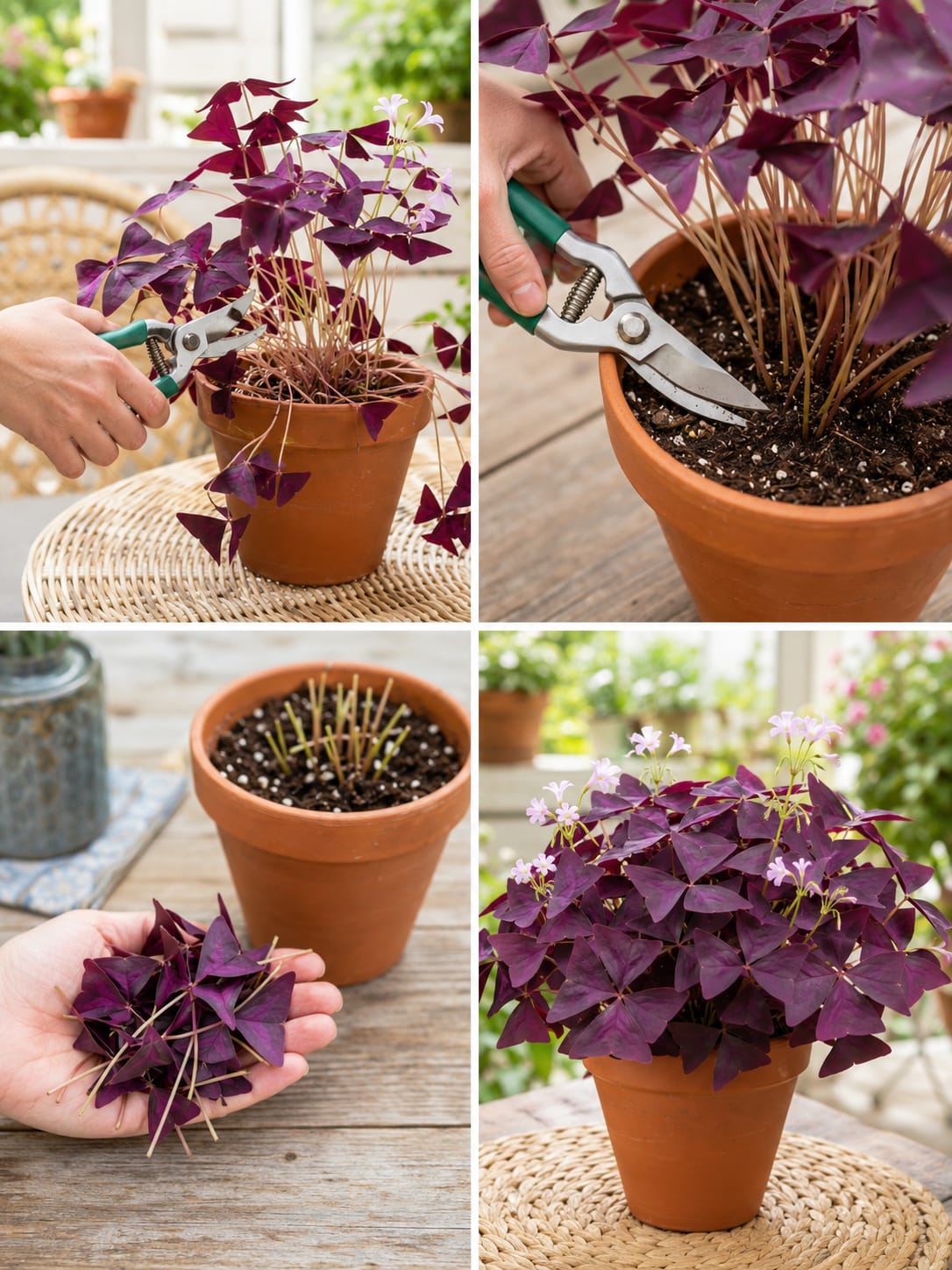
Purple shamrock is one of the most eye-catching houseplants you can grow indoors. Its deep purple triangular leaves, delicate stems, and tiny pale flowers make it look elegant, playful, and dramatic at the same time. Also known as Oxalis triangularis, this plant is loved for its butterfly-like foliage that opens with light and folds gently when the room gets darker. It brings color to windowsills, shelves, tables, plant stands, balconies, and bright indoor corners.
One of the best ways to keep purple shamrock looking full and healthy is regular pruning. This plant grows from small underground bulbs or rhizomes, and its leaves naturally age, fade, droop, and die back over time. That does not always mean the plant is unhealthy. It often means the plant is renewing itself. By removing tired stems and old leaves, you help the plant look cleaner and encourage fresh new growth from the base.
Pruning purple shamrock is simple, but it should be done gently. The stems are thin and delicate, and the bulbs below the soil store the plant’s energy. The goal is not to cut everything randomly. The goal is to remove weak, yellow, leggy, damaged, or spent growth so the plant can redirect energy into new leaves and blooms.
Why Purple Shamrock Needs Pruning
Purple shamrock grows quickly during its active season. New stems rise from the soil, open into triangular leaves, and create a soft mound of purple foliage. Over time, some stems become long, pale, weak, or messy. Old leaves may turn brown, yellow, or dry at the edges. Flower stems may finish blooming and remain bare or tired.
Pruning removes that old growth. It keeps the plant tidy and reduces the chance of dead material sitting on the soil. It also improves airflow around the crown of the plant. Better airflow helps prevent mold, pests, and rot, especially in indoor pots.
A freshly pruned purple shamrock often responds by sending up new stems from the soil. This can make the plant look fuller and more balanced.
When to Prune Purple Shamrock
You can remove dead or damaged leaves at any time. If a stem is yellow, brown, crispy, broken, or collapsed, it can be cut off near the soil line.
For heavier pruning, the best time is during active growth, usually spring and summer. This is when the plant has enough energy to replace old stems with new growth.
If the plant naturally enters dormancy and begins to die back, pruning is also helpful. During dormancy, many leaves may fade at once. Cut them back and allow the bulbs to rest.
Understanding Purple Shamrock Dormancy
Purple shamrock has a natural rest period. Sometimes it suddenly looks tired even when care has been good. Leaves may droop, fade, dry, or collapse. Many beginners think the plant is dead, but the bulbs under the soil may still be alive.
Dormancy is normal. It allows the plant to rest and rebuild energy. During this time, reduce watering and stop feeding. Remove dead leaves and keep the pot in a cool, dry, bright spot. After a few weeks, new growth often appears.
Knowing this prevents panic and overwatering. A dormant purple shamrock needs patience, not constant water.
Signs Your Purple Shamrock Needs Pruning
Look for these signs:
- Yellow leaves
- Brown crispy leaves
- Long weak stems
- Dead flower stems
- Leaves lying flat on the soil
- Thin messy growth
- Faded foliage
- Damaged or broken stems
- Overcrowded center
Removing these parts helps the plant look cleaner and supports healthier new growth.
Tools You Need
Purple shamrock stems are delicate, so you do not need heavy tools. A small pair of clean scissors or pruning snips is enough.
- Clean scissors
- Small pruning snips
- Gloves, optional
- A small bowl for removed stems
- Soft cloth for cleaning the pot area
Always clean your scissors before pruning. This reduces the chance of spreading disease from one plant to another.
How to Prune Purple Shamrock Correctly
Hold the stem gently and follow it down toward the soil. Cut close to the base without digging into the soil or damaging nearby new shoots. If the stem is completely dead, it may pull away easily, but cutting is usually cleaner.
Do not cut healthy leaves just because they are open wide or leaning naturally. Purple shamrock has a soft spreading habit, so some arching is normal.
Focus on the weak, faded, or spent stems first.
Pruning Flower Stems
Purple shamrock can produce small delicate flowers, often pale pink, lavender, or white. After flowers fade, the stems may remain. These spent flower stems can be removed.
Cut the flower stem near the base. This keeps the plant tidy and may help it redirect energy back into leaves and bulbs.
If you enjoy the flowers, leave them while they look fresh. Remove them when they begin to dry.
How Much Can You Cut Back?
If the plant has only a few old leaves, remove only those. If the plant is very tired, leggy, or entering dormancy, you can cut back most or all of the foliage.
Cutting everything back may look dramatic, but purple shamrock can regrow from its bulbs when they are healthy. After a hard cutback, reduce watering until new growth appears.
Do not keep watering heavily when there are no leaves. Without foliage, the plant uses less water, and wet soil can rot the bulbs.
What to Do After Pruning
After pruning, clear away all cut leaves and stems from the soil surface. Dead material can hold moisture and attract pests.
Check the soil moisture. If the plant still has many healthy leaves and the soil is dry, water lightly. If you cut the plant back heavily, wait and water less.
Place the plant in bright indirect light so it can produce fresh growth.
Best Light for Purple Shamrock
Purple shamrock needs bright indirect light to keep its color rich and its growth compact. A bright window is ideal. Morning sun can be helpful, but harsh afternoon sun may scorch the leaves.
If the plant receives too little light, stems may become long, pale, and weak. The leaves may stretch toward the window and the plant may lose its full shape.
Good light is one of the biggest secrets to a full purple shamrock.
Why Leaves Close at Night
Purple shamrock leaves move with light. They often open during the day and fold down at night. This movement is normal and part of the plant’s charm.
Do not mistake folded night leaves for wilting. Check the plant during the day. If the leaves open again in light, the plant is behaving normally.
If leaves remain limp during the day, then check water, light, and root health.
Watering Purple Shamrock
Purple shamrock likes lightly moist soil during active growth, but it does not like soggy soil. Water when the top inch of soil begins to dry.
Water thoroughly, then let extra water drain away. Empty the saucer after watering. Do not let the pot sit in water.
During dormancy or after a heavy cutback, reduce watering. The bulbs need rest, not wet soil.
Signs of Underwatering
A thirsty purple shamrock may droop, curl, or feel dry. The soil will feel dry, and the pot may feel lighter than usual.
If the soil is dry, water slowly and evenly. The plant may perk up after hydration, but very dry plants can take a little time to recover.
Try not to let the plant completely collapse repeatedly, because constant severe dryness can weaken it.
Signs of Overwatering
Overwatering can damage purple shamrock bulbs and roots. Watch for these signs:
- Yellowing leaves with wet soil
- Mushy stems at the base
- Soil staying wet for many days
- Sour smell from the pot
- Fungus gnats
- Soft bulbs
- Sudden collapse
If these signs appear, stop watering and check drainage. Repot if the soil is sour or compacted.
Best Soil for Purple Shamrock
Purple shamrock grows best in light, well-draining soil. The mix should hold some moisture but still allow air around the roots and bulbs.
A good soil mix can include:
- Indoor potting soil
- Perlite
- Coco coir
- Fine bark
- A small amount of compost
Avoid heavy garden soil. Dense soil can stay wet too long and cause bulb rot.
Pot Choice and Drainage
Always use a pot with drainage holes. Purple shamrock bulbs can rot if water collects at the bottom. Terracotta pots are helpful because they allow moisture to evaporate faster.
If using a decorative pot without holes, keep the plant in a plastic nursery pot with drainage and place it inside the decorative cover pot. After watering, remove extra water from the outer pot.
Drainage is essential for long-term health.
Feeding Purple Shamrock
Feed lightly during active growth. Use a balanced liquid houseplant fertilizer at half strength once every 4 to 6 weeks in spring and summer.
Do not fertilize when the plant is dormant or freshly cut back with no leaves. Fertilizer is useful only when the plant is actively growing and can use the nutrients.
Too much fertilizer can cause weak growth or salt buildup in the soil.
How to Make Purple Shamrock Fuller
To make the plant fuller, combine good light, regular pruning, and proper watering. Remove old stems so new shoots have room to grow. Rotate the pot every week so all sides receive light evenly.
If the plant is thin because there are only a few bulbs, repot with more bulbs in the same pot. Purple shamrock looks best when several bulbs grow together.
Fullness comes from healthy bulbs and steady care.
Repotting Purple Shamrock
Repot when the plant becomes crowded, the soil breaks down, or the bulbs multiply. Spring is usually a good time, especially when new growth begins.
Gently remove the plant from the pot and separate the bulbs if needed. Replant them in fresh airy soil. Keep the bulbs covered lightly but not buried too deeply.
Water lightly after repotting and place the pot in bright indirect light.
Dividing Purple Shamrock Bulbs
Purple shamrock spreads through small bulbs or rhizomes under the soil. These can be divided to create more plants.
During repotting, separate healthy bulbs carefully. Plant several bulbs together in each pot for a fuller look. A single bulb may grow, but a group creates a much better display.
Do not divide bulbs that are soft, rotten, or damaged.
Continue to Page 2
Continue to page 2 for more details about this article and the key points many readers miss on the first page.