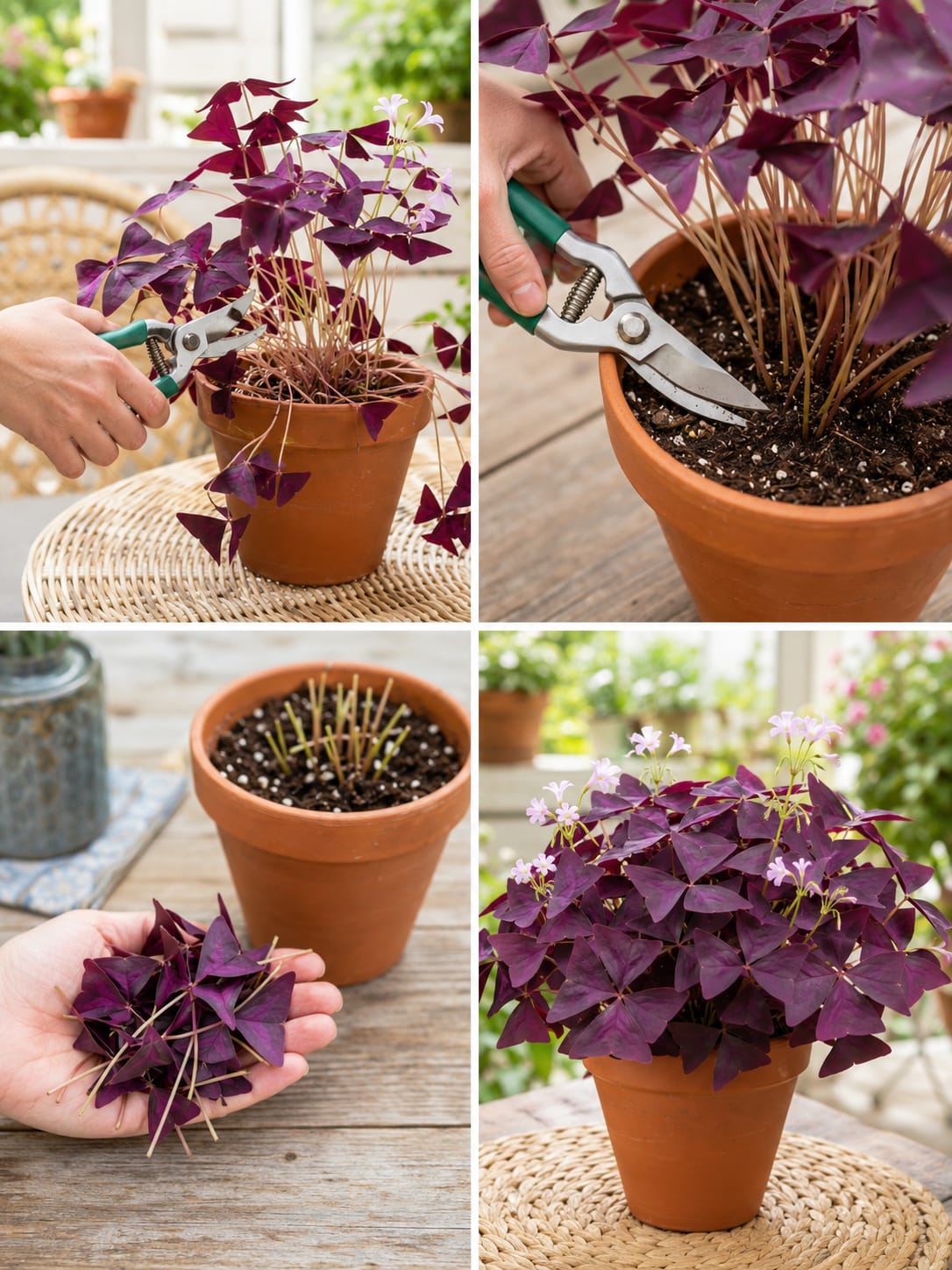
Reviving a Tired Purple Shamrock
If your purple shamrock looks tired, start by removing dead and yellow stems. Then check the soil. If the soil is dry, water. If the soil is wet, allow it to dry and check for rot.
Move the plant to bright indirect light and avoid feeding until fresh growth appears. If most leaves are dead, cut the plant back and let the bulbs rest.
With healthy bulbs, new shoots can return.
Why Purple Shamrock Turns Pale
Pale leaves may be caused by too much direct sun, too little light, lack of nutrients, or natural aging. If leaves are bleached or scorched, move the plant away from harsh sun. If stems are long and weak, increase indirect light.
Old leaves naturally fade before dying. Remove them to keep the plant looking fresh.
Rich color depends on bright but gentle light.
Common Pests
Purple shamrock can attract aphids, spider mites, fungus gnats, and mealybugs. Check the undersides of leaves and the soil surface regularly.
Fungus gnats usually appear when soil stays too wet. Spider mites may appear in dry air. Remove pests early before they spread.
Good airflow, clean soil, and proper watering help prevent pest problems.
Cleaning the Leaves
Purple shamrock leaves are delicate, so avoid rough wiping. If dust collects, gently rinse the plant with room-temperature water or use a soft brush. Let the plant dry in bright indirect light with airflow.
Do not use heavy leaf shine products. The leaves are thin and sensitive.
Clean foliage looks brighter and healthier.
Indoor Decor Ideas
Purple shamrock is a wonderful decor plant because its dark foliage adds contrast. It looks beautiful beside green plants, white pots, terracotta planters, wooden shelves, and light walls.
- Place it in a terracotta pot for warm contrast.
- Use a white ceramic pot to highlight the purple leaves.
- Set it on a bright windowsill with filtered light.
- Pair it with pothos, peace lily, or spider plant for color contrast.
- Use it as a table centerpiece when full and blooming.
- Place it on a plant stand where the leaves can spread naturally.
Its purple color brings depth to indoor plant styling.
Best Rooms for Purple Shamrock
Good rooms include bright kitchens, living rooms, bedrooms, sunrooms, offices, and windowed bathrooms. The plant needs enough light to keep its rich color.
Avoid dark corners. The plant may survive, but it will become thin and leggy. Also avoid hot direct sun that burns the leaves.
A bright window with soft light is ideal.
Common Mistakes to Avoid
- Watering during dormancy as if the plant is actively growing
- Using a pot without drainage
- Leaving dead stems on the soil
- Keeping the plant in low light
- Cutting healthy leaves too aggressively
- Overfeeding
- Using heavy soil
- Ignoring natural dormancy
- Letting the pot sit in water
A little pruning and steady care keep the plant beautiful.
A Simple Purple Shamrock Care Routine
- Place in bright indirect light.
- Water when the top inch of soil begins to dry.
- Use a pot with drainage holes.
- Remove yellow, brown, or spent stems regularly.
- Feed lightly during active growth.
- Reduce watering during dormancy.
- Repot or divide bulbs when crowded.
- Rotate the pot for even growth.
- Keep dead leaves off the soil surface.
This routine helps purple shamrock stay full, colorful, and healthy.
Final Thoughts
Pruning purple shamrock is one of the easiest ways to keep it looking fresh and full. By removing old leaves, spent flower stems, and weak growth, you help the plant focus on new shoots from its underground bulbs. This keeps the pot cleaner and supports a more attractive shape.
The key is to understand the plant’s natural rhythm. Purple shamrock may go dormant, and that is normal. During active growth, it enjoys bright indirect light, lightly moist soil, good drainage, and occasional feeding. During rest, it needs less water and more patience.
With careful pruning and balanced care, purple shamrock can return again and again with rich purple leaves, delicate flowers, and a graceful shape that brings beautiful color to your indoor plant collection.