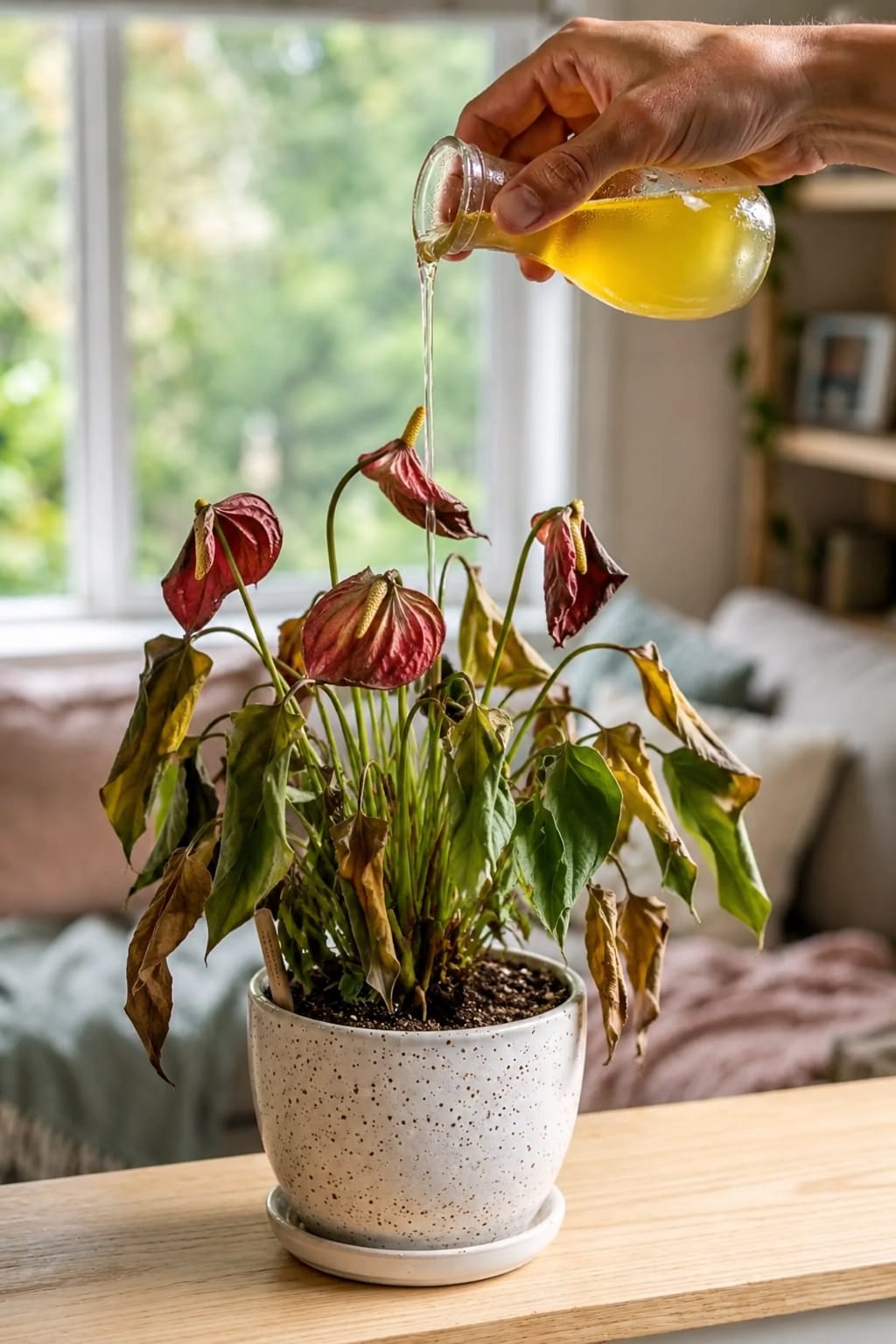
Anthurium plants are famous for their glossy green leaves and dramatic heart-shaped flowers. Their red, pink, white, coral, or burgundy blooms can make any windowsill, side table, bedroom corner, or living room shelf feel more tropical and elegant. But when an Anthurium begins to wilt, the change can feel sudden and disappointing. The leaves droop, the flowers bend, the colors fade, and the whole plant can look weak almost overnight.
A gentle yellow plant tonic can be used as part of a rescue routine for a tired Anthurium, but it must be used carefully. This kind of tonic should never be treated like a miracle cure. A wilting Anthurium usually needs a full care check first: soil moisture, root health, drainage, light, humidity, temperature, and feeding habits. The tonic can support recovery only when the plant’s basic needs are corrected.
The safest yellow tonic for indoor plants is usually a very diluted natural plant tea, such as mild banana peel water, weak rice water, or a gentle compost-style liquid. These liquids may offer small amounts of nutrients, but they can also cause trouble if they are too strong, too old, too sweet, or poured into soil that is already wet. Anthurium roots need oxygen as much as moisture, so adding more liquid to a soggy pot can make the plant worse.
This guide explains how to use a yellow plant tonic safely, how to diagnose the real reason your Anthurium is wilting, how to rebuild the root zone, how to water correctly, how to improve light and humidity, and how to style a recovering Anthurium beautifully indoors.
Why Anthuriums Wilt Indoors
Anthuriums are tropical plants, but they are not swamp plants. They like warmth, humidity, bright indirect light, and an airy potting mix. In nature, many Anthuriums grow with roots that receive plenty of oxygen. Indoors, they often struggle when planted in dense soil or watered too often.
Wilting can happen for several reasons. Sometimes the plant is truly thirsty. Sometimes the roots are rotting from too much water. Sometimes the plant is cold. Sometimes the air is too dry. Sometimes the soil has become compacted and the roots cannot breathe. The leaves may look similar in many of these situations, so the first step is always diagnosis.
A plant that is dry and wilted needs water. A plant that is wet and wilted may need rescue from root rot. These two problems look alike above the soil, but they need very different solutions.
The First Rule: Check the Soil Before Using Any Tonic
Before pouring anything into the pot, touch the soil. Push your finger about one inch into the mix. If the top layer is dry and the pot feels light, the Anthurium may need moisture. If the soil feels wet, heavy, cold, or smells sour, do not add more liquid.
This is the most important step. Many weak Anthuriums are damaged by kindness. A plant owner sees drooping leaves and assumes the plant needs water. They pour more liquid into already wet soil. The roots lose more oxygen, rot spreads, and the plant collapses further.
A yellow plant tonic should be used only when watering is appropriate. If the soil is wet, skip the tonic completely and focus on drainage, airflow, and root health.
What a Yellow Plant Tonic Can Be
A yellow plant tonic usually refers to a mild homemade liquid made from natural ingredients. The color may come from banana peel, rice water, weak compost tea, turmeric-colored plant mixtures, or other organic materials. For Anthuriums, the safest approach is to keep the tonic extremely weak and simple.
The best options are gentle and diluted. Banana peel water can be used occasionally if it is strained well and diluted heavily. Rice water can be used if it is plain, unsalted, and diluted. A weak worm casting tea can also be helpful if it is fresh and mild.
Strong, thick, fermented, sugary, salty, or oily liquids should never be poured into an Anthurium pot. They can attract gnats, feed mold, suffocate roots, and create bad smells in the soil.
Safe Yellow Tonic Recipe for Anthurium
Here is a gentle version that is safer for a stressed Anthurium:
- 1 small piece of clean banana peel
- 2 cups room-temperature water
- Soak for 12 to 24 hours
- Strain very well
- Dilute 1 part banana water with 3 to 4 parts clean water
Use only a small amount around the outer soil area when the plant needs watering. Do not pour the tonic into the crown where the stems meet the soil. Do not use it every week. Once every 4 to 6 weeks during active growth is enough.
This tonic is not meant to replace regular plant food. It is only a gentle boost. If your Anthurium is severely stressed, fresh soil and root care matter more than any homemade liquid.
Another Gentle Option: Weak Rice Water
Plain rice water can be used as a mild plant tonic if it contains no salt, oil, spices, butter, or seasoning. Use the water from rinsing rice, not salty cooking water. Dilute it before applying.
- Use plain rice rinse water only
- Dilute with equal parts clean water or more
- Apply only to soil that is ready for watering
- Use rarely, not every watering
- Stop if the soil smells sour or gnats appear
Rice water can become cloudy and may encourage microbial growth if overused. That is why dilution and moderation are important.
What Not to Use on a Wilting Anthurium
When a plant looks weak, it is tempting to try every home remedy. But Anthuriums are sensitive, and strong liquids can make stress worse.
- Do not use salt water.
- Do not use milk.
- Do not use sugary drinks.
- Do not use coffee as a rescue liquid.
- Do not use vinegar.
- Do not use cooking water with salt or oil.
- Do not use strong fertilizer.
- Do not use thick banana paste.
- Do not use fermented liquids with a bad smell.
- Do not use unknown homemade mixtures.
A stressed plant needs gentle care. The goal is to reduce stress, not add more.
How to Apply the Tonic Safely
Use the tonic only after checking that the soil is dry enough for watering. Pour slowly around the outer edge of the pot. Avoid the center crown. Anthurium stems can rot if moisture sits around the base for too long.
Use a small amount first. For a small pot, a few tablespoons may be enough. For a medium pot, use about half a cup to one cup, depending on pot size and soil dryness. Let extra liquid drain from the bottom. Empty the saucer after watering.
If the pot has no drainage holes, do not use a tonic. Move the Anthurium to a proper pot first. Drainage is essential for recovery.
Why Drainage Is More Important Than Any Tonic
A beautiful Anthurium can decline quickly in a pot without drainage holes. Water collects at the bottom, roots stay wet, and oxygen disappears from the root zone. The leaves may droop even though the pot is full of moisture.
A proper pot should have drainage holes. If you love decorative planters, place the Anthurium in a plastic nursery pot inside the decorative pot. After watering, remove the nursery pot and let it drain fully before returning it to the cover pot.
This simple habit prevents many root problems.
How to Know if the Anthurium Is Underwatered
An underwatered Anthurium usually has dry soil, a light pot, drooping leaves, and sometimes crispy edges. The flowers may bend, and leaves may feel thinner or slightly curled.
If the soil is dry throughout much of the pot, water slowly and thoroughly. A gentle tonic may be used in this case if the plant is actively growing and the roots are not damaged. After watering, the plant may begin to lift slightly within a day or two.
If the plant perks up after watering, the main problem was likely dryness or uneven watering.
How to Know if the Anthurium Is Overwatered
An overwatered Anthurium can also droop, but the soil will feel wet or heavy. Leaves may yellow, stems may soften, and the soil may smell sour. Fungus gnats may appear around the pot. The plant may look limp even though the soil is damp.
In this case, do not use yellow tonic. More liquid will not help. Remove the plant from the pot and inspect the roots. Trim mushy roots and repot into a chunky airy mix.
Overwatering is one of the most common reasons Anthuriums wilt indoors.
Root Check for a Wilting Anthurium
If your Anthurium stays wilted even after proper watering, check the roots. Gently slide the plant from the pot. Healthy roots are firm and may be cream, tan, pale brown, or slightly greenish. Rotten roots are black, mushy, slimy, hollow, or smelly.
Trim rotten roots with clean scissors. Remove old soggy soil. Repot the plant into fresh airy mix. Do not fertilize immediately after major root trimming. Give the plant time to recover.
A root check can save a plant that would otherwise keep declining.
Best Soil Mix for Anthurium Recovery
Anthuriums need a chunky mix that holds light moisture but drains quickly. Dense all-purpose potting soil can stay wet too long, especially indoors.
A good recovery mix includes:
- 2 parts orchid bark
- 1 part light indoor potting mix
- 1 part perlite
- 1 part coco coir
- A small handful of horticultural charcoal
- A small amount of worm castings, optional
This mix allows air to reach the roots. It also reduces the risk of soggy soil. Healthy roots are the foundation of fresh leaves and flowers.
Repotting a Weak Anthurium
Repot only when needed. If the soil is rotten, compacted, or staying wet too long, repotting is the best rescue step. Choose a pot only slightly larger than the root ball. A large pot holds too much extra soil and moisture.
Place some fresh mix at the bottom. Set the plant so the crown sits above the soil line. Fill around the roots gently. Do not bury the stems too deeply. Water lightly after repotting only if the roots and mix need moisture.
Keep the plant in bright indirect light and avoid fertilizing for a few weeks.
Light for Recovery
A wilting Anthurium needs bright indirect light. Light helps the plant produce energy, rebuild roots, and grow new leaves. Low light slows recovery and keeps soil wet longer.
Place the plant near a bright window with filtered light. Morning sun can be gentle, but harsh afternoon sun can burn weak leaves. If the room is dim, use a grow light for several hours a day.
Good light helps the plant use water properly. A plant in low light often stays wet too long, even with careful watering.
Humidity for Anthurium Revival
Anthuriums enjoy moderate to high humidity. Dry air can make leaves curl, edges brown, and flowers fade faster. If the plant is already weak, dry air can slow recovery.
Use a humidifier nearby, group plants together, or place the pot on a pebble tray. Make sure the pot is not sitting directly in water. The pebble tray should raise humidity around the plant without soaking the roots.
Avoid heavy misting if your room has poor airflow. Wet leaves in still air can invite fungal problems.
Temperature and Draft Protection
Anthuriums like warm, stable conditions. Cold drafts can cause drooping and yellowing. Hot dry air from heaters can also stress the leaves.
Keep the plant away from open winter windows, air-conditioning vents, heaters, and cold glass. A stable room temperature helps the roots function better.
Sudden temperature changes can cause flowers to wilt or leaves to yellow.
Pruning Dead Leaves and Flowers
Remove fully dead, crispy, or collapsed leaves. This helps the plant look cleaner and reduces places where pests or mold can hide. Use clean scissors and cut close to the base.
If a leaf is partly green, do not rush to remove it. Green tissue still helps the plant make energy. Remove only leaves that are mostly dead or diseased.
Faded flowers can also be removed to help the plant focus on recovery.
How Long Recovery Takes
Anthurium recovery is not instant. If the plant was only thirsty, it may look better within 24 to 48 hours after proper watering. If roots were damaged, recovery may take several weeks or even months.
New leaves are the best sign of real recovery. Old damaged leaves may not become perfect again. The goal is to create better conditions so new growth emerges healthy.
Be patient and avoid trying too many remedies at once.
Signs the Yellow Tonic Is Helping
A mild tonic may support the plant if the roots are healthy and the soil is not soggy. Look for slow positive changes:
- Leaves feel firmer.
- Drooping slows down.
- New growth begins.
- The plant holds moisture better.
- Flowers last longer.
- Soil does not smell bad.
- No mold appears on the surface.
These signs should appear gradually. If the plant worsens after using tonic, stop immediately.
Signs the Tonic Is Causing Problems
- Soil smells sour.
- Fungus gnats appear.
- White mold grows on the soil.
- Leaves yellow faster.
- Stems become soft.
- Roots look brown and mushy.
- The pot stays wet for many days.
If these signs appear, flush or replace the soil depending on severity. Homemade tonics should always be mild and occasional.
How Often to Use a Yellow Plant Tonic
Use a gentle yellow tonic only once every 4 to 6 weeks during spring and summer. Do not use it every time you water. Anthuriums do better with consistency than constant feeding.
During fall and winter, stop or reduce tonic use because growth often slows. Extra nutrients during slow growth can build up in the soil and stress roots.
Clean water should be used for most watering sessions.
Regular Watering Routine After Recovery
Once the plant begins to recover, return to a simple watering routine. Water when the top inch of the potting mix feels slightly dry. Pour slowly until water drains from the bottom. Empty the saucer.
Do not follow a strict calendar. A plant may need water every few days in warm bright conditions or much less often in cooler low-light conditions.
The soil should be lightly moist, not constantly wet.
Feeding Anthurium the Right Way
Anthuriums are moderate feeders, but they dislike strong fertilizer. Use a balanced houseplant fertilizer diluted to half or quarter strength during active growth. Feed once every 4 to 6 weeks in spring and summer.
If using homemade tonic, do not also use strong fertilizer at the same time. Too many nutrients can create salt buildup.
When in doubt, feed less. Healthy roots and good light matter more than heavy feeding.
Continue to Page 2
Continue to page 2 for more details about this article and the key points many readers miss on the first page.