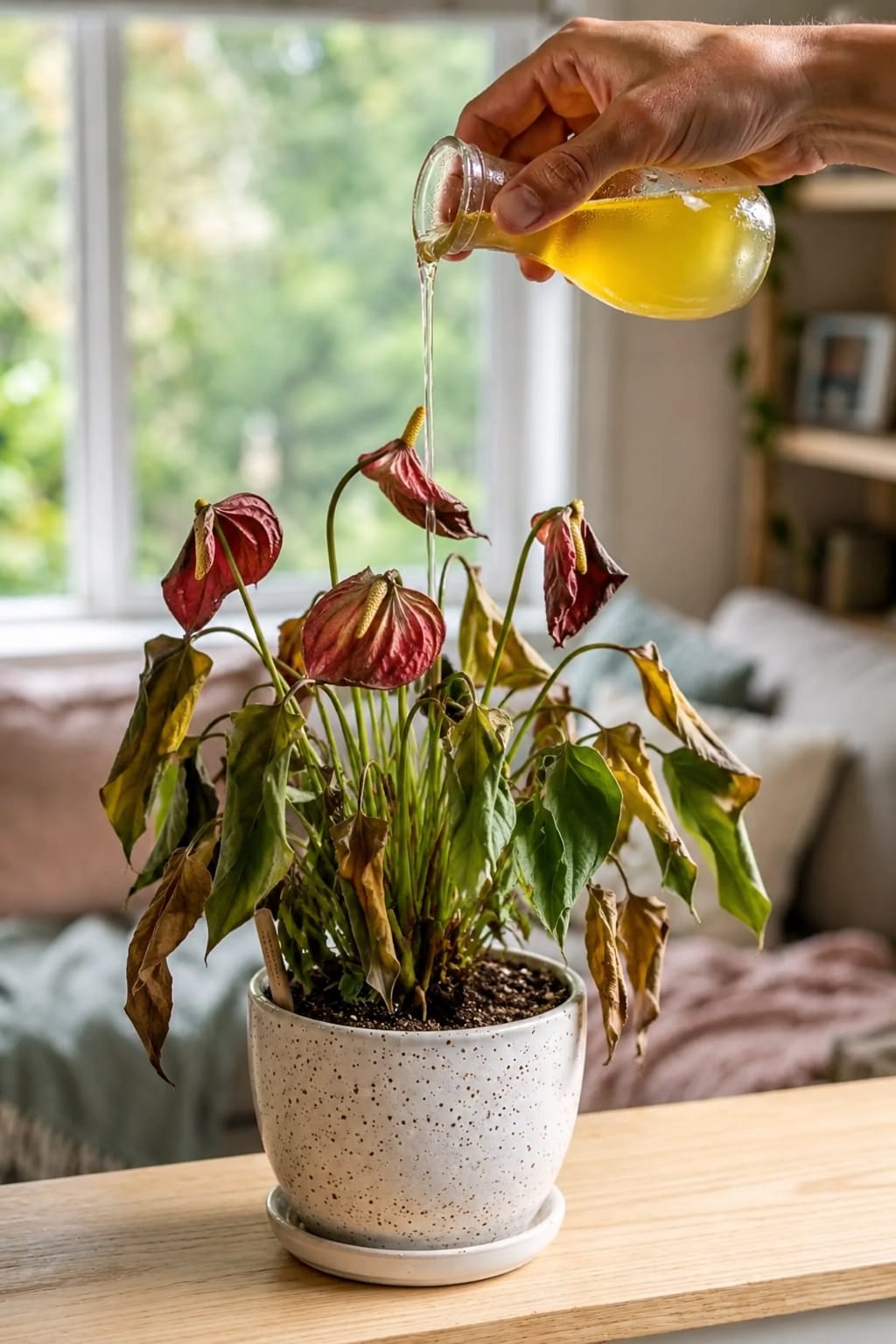
How to Encourage Anthurium Blooms Again
After the plant recovers, blooms may return when conditions are right. Anthuriums need bright indirect light, warm temperatures, healthy roots, and light feeding.
- Give bright filtered light.
- Use an airy potting mix.
- Water evenly.
- Keep humidity moderate.
- Feed lightly during active growth.
- Remove old faded flowers.
- Keep the plant away from stress.
If your Anthurium has stopped blooming, the most common reason is not enough light.
Pest Check During Recovery
Weak plants can attract pests. Check the underside of leaves, stems, and flower bases. Look for spider mites, mealybugs, aphids, scale, or sticky residue.
If you find pests, isolate the plant and treat gently. Wipe leaves with a damp cloth. Use insecticidal soap if needed. Do not combine pest treatment with heavy feeding or strong tonics, because the plant may become more stressed.
A clean plant recovers better.
Cleaning the Leaves
Anthurium leaves are glossy and beautiful, but dust can block light. Wipe leaves gently with a damp cloth. Support each leaf with your hand while cleaning so it does not tear.
Avoid oily leaf shine products. They can clog leaf surfaces and attract dust. Plain water is usually enough.
Clean leaves make the plant look fresher and help it use light better.
Indoor Decor Ideas for a Recovering Anthurium
A recovering Anthurium can still be styled beautifully. Choose a bright location with soft light and a pot that complements the flower color. A white ceramic pot makes red blooms stand out. A terracotta pot gives a warm natural look. A speckled pot creates a modern handmade style.
- Place it on a wooden table near filtered light.
- Use a cream or white pot for a clean look.
- Place it beside pothos and peace lily for a tropical corner.
- Add a pebble tray for humidity and style.
- Use a woven basket cover for soft natural decor.
- Place it on a bedroom shelf away from cold drafts.
- Use it as a centerpiece after it recovers.
Good styling also helps care because the plant is easier to monitor when placed where you can see it often.
Best Rooms for Anthurium
Anthuriums do well in bright rooms with stable warmth. A living room near a window, a bright bedroom, a warm kitchen corner, or a bathroom with natural light can work well.
Bathrooms are often good because humidity is higher, but only if there is enough light. A dark bathroom is not suitable. Kitchens can work if the plant is away from heat, grease, and cold drafts.
Choose a place with comfort for both the plant and your decor style.
Seasonal Anthurium Care
Spring
Spring is a good time for repotting, light feeding, pruning, and gentle tonic use. Growth begins to increase with longer days.
Summer
Water may be needed more often in warm bright conditions. Keep the plant away from harsh direct sun. Humidity support may help.
Fall
Growth may slow. Reduce feeding and check soil before watering. Use tonic less often.
Winter
Protect the plant from cold windows and heating vents. Water less often and avoid heavy feeding. Use clean water instead of tonics unless the plant is actively growing.
Simple Rescue Plan
- Check the soil moisture.
- If soil is wet, do not add tonic.
- If soil is dry, water gently.
- Use only a diluted yellow tonic if roots are healthy.
- Keep liquid away from the crown.
- Let extra water drain fully.
- Move the plant to bright indirect light.
- Raise humidity gently.
- Trim dead leaves and flowers.
- Check roots if wilting continues.
- Repot into chunky mix if needed.
- Wait patiently for new growth.
Common Mistakes to Avoid
- Pouring tonic into wet soil.
- Using strong banana peel water.
- Using salty cooking water.
- Keeping the plant in a pot without drainage.
- Placing the plant in direct hot sun.
- Moving it to a dark corner after watering.
- Using fertilizer on damaged roots.
- Removing every leaf at once.
- Ignoring root rot.
- Expecting damaged leaves to become perfect again.
Final Thoughts
A yellow plant tonic can be a gentle support for a wilting Anthurium, but only when used wisely. The tonic should be weak, strained, diluted, and applied only when the soil is dry enough for watering. It should never be poured into soggy soil or used as a replacement for good plant care.
The real secret to reviving Anthurium is balance. The plant needs bright indirect light, a pot with drainage, airy soil, careful watering, warm temperatures, and moderate humidity. If the roots are damaged, the best solution is root cleaning and fresh mix, not more liquid.
Use the yellow tonic as a small boost, not a cure. Watch the plant closely, respond to what the soil and roots are telling you, and give the Anthurium time to recover. With patient care, a tired plant can slowly return to firm leaves, fresh growth, and beautiful colorful blooms.