How to Encourage Orchid Blooms After Recovery
Do not rush blooms. A recovering orchid should grow roots first. Flowers take energy. Once the plant has firm leaves and healthy roots, it may bloom again with the right conditions.
Bloom Support Checklist
- Strong root system
- Bright indirect light
- Stable watering routine
- Light fertilizer during active growth
- Slightly cooler nights for several weeks
- Healthy leaves
- No active root rot
When roots are strong, blooms become much easier.
Indoor Styling With Orchids
Orchids are beautiful decor plants. Even when not blooming, their thick leaves and graceful roots can look elegant in a clean pot.
- Use a clear inner pot inside a ceramic cover pot.
- Place on a bright windowsill with filtered light.
- Style with a wooden tray and small stones.
- Group with ferns for a soft tropical look.
- Use white ceramic for a modern clean style.
- Use terracotta for a warmer natural feel.
- Place in a bright bathroom for humidity.
- Style a blooming orchid on a dining table.
Best Rooms for Orchids
- Bright living room
- Bedroom near a window
- Bathroom with natural light
- Home office
- Kitchen windowsill away from heat
- Dining room with filtered light
- Sunroom with sheer curtains
- Plant shelf with grow lights
The best room is bright, warm, and free from cold drafts.
Seasonal Orchid Recovery Care
Spring
Spring is a good time for repotting and root recovery. New growth often begins as light increases.
Summer
Warmth helps root growth, but watch humidity and avoid harsh sun. Water when bark dries.
Fall
Cooler nights can help future blooming, but weak orchids should focus on root strength first.
Winter
Water less often because bark dries more slowly. Keep orchids away from cold windows and drafts.
Weekly Orchid Recovery Routine
- Check root color through the pot.
- Feel bark moisture.
- Look for new root tips.
- Open humidity cover for airflow if used.
- Check crown for trapped water.
- Wipe leaves if dusty.
- Keep the plant in bright indirect light.
Monthly Orchid Recovery Routine
- Inspect bark condition.
- Check for mold or sour smell.
- Adjust watering based on season.
- Begin weak fertilizer only after new roots appear.
- Remove dead flower spikes if needed.
- Clean the outer pot and saucer.
- Review humidity and airflow.
Frequently Asked Questions
Can an orchid survive with only a few roots?
Yes, if the crown is healthy and the plant receives humidity, bright indirect light, and careful watering. Recovery may take months.
Is cinnamon safe for orchid roots?
Cinnamon is safe only when used lightly on cut areas. Do not coat all live roots with cinnamon because it can dry them out.
Can aloe help orchids grow roots?
Aloe can be used as a mild support, but it does not replace proper bark, light, humidity, and watering.
Should I cut off yellow orchid leaves?
Wait until the leaf is fully yellow and loose. If it is still attached firmly, let the plant finish absorbing energy from it.
How long does orchid root recovery take?
It can take several weeks to several months. Orchids grow slowly, especially after root damage.
Can I use regular potting soil for orchids?
No. Most common indoor orchids need orchid bark or a similar airy mix, not regular soil.
Final Thoughts
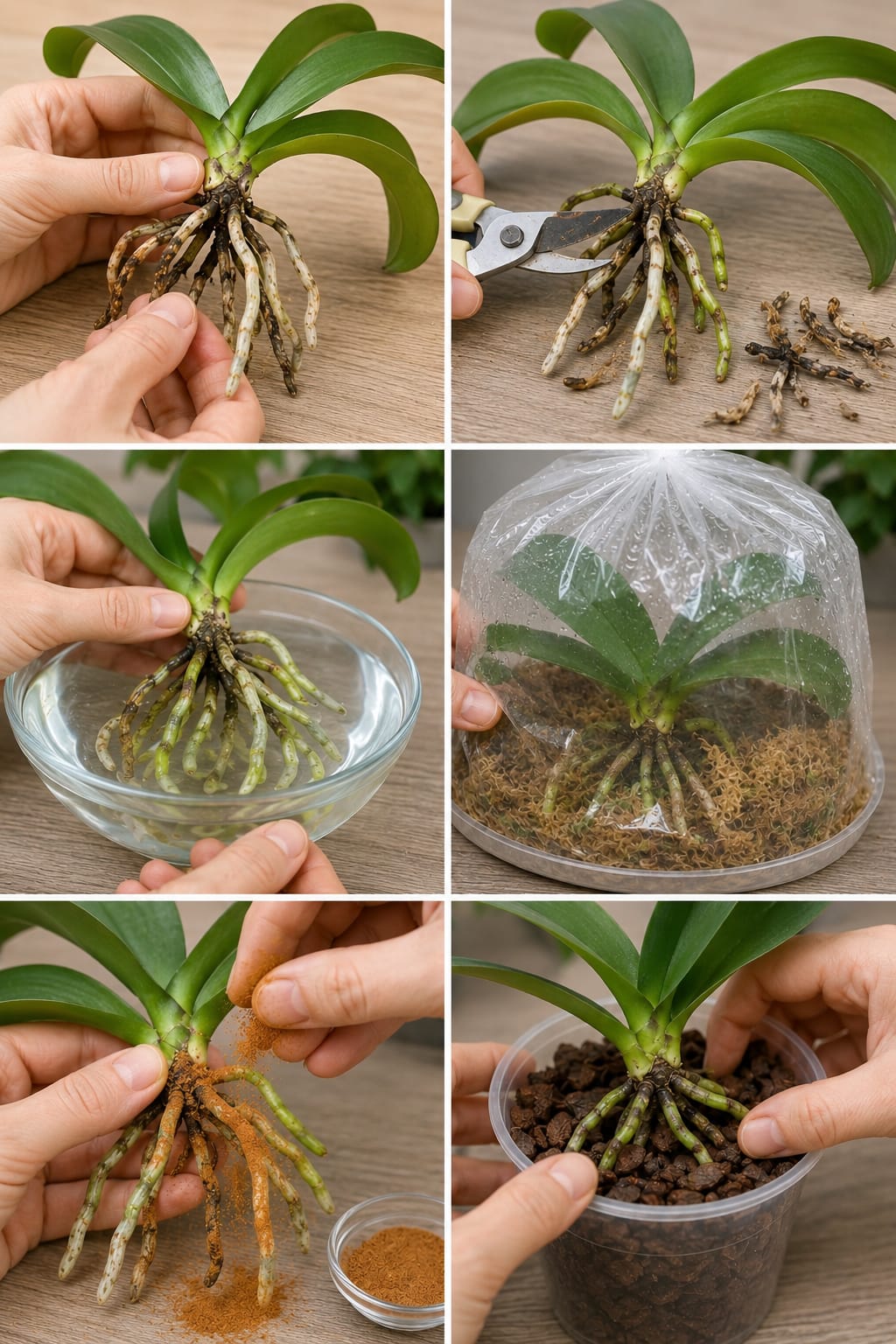
Saving an orchid with weak roots is possible when you focus on the root system first. Remove old wet media, trim rotten roots, use cinnamon only on cut areas, apply aloe gently if desired, and repot into fresh airy orchid bark. Keep the crown dry, provide bright indirect light, and water only when the bark is nearly dry.
The real secret is not one ingredient. It is balance. Orchids need air, moisture, light, warmth, and patience. Too much water, too much powder, too much fertilizer, or too much closed humidity can slow recovery instead of helping it.
With gentle care, a struggling orchid can grow new roots, firm leaves, and eventually fresh flower spikes. Give it time, keep the roots healthy, and let the plant rebuild itself naturally.