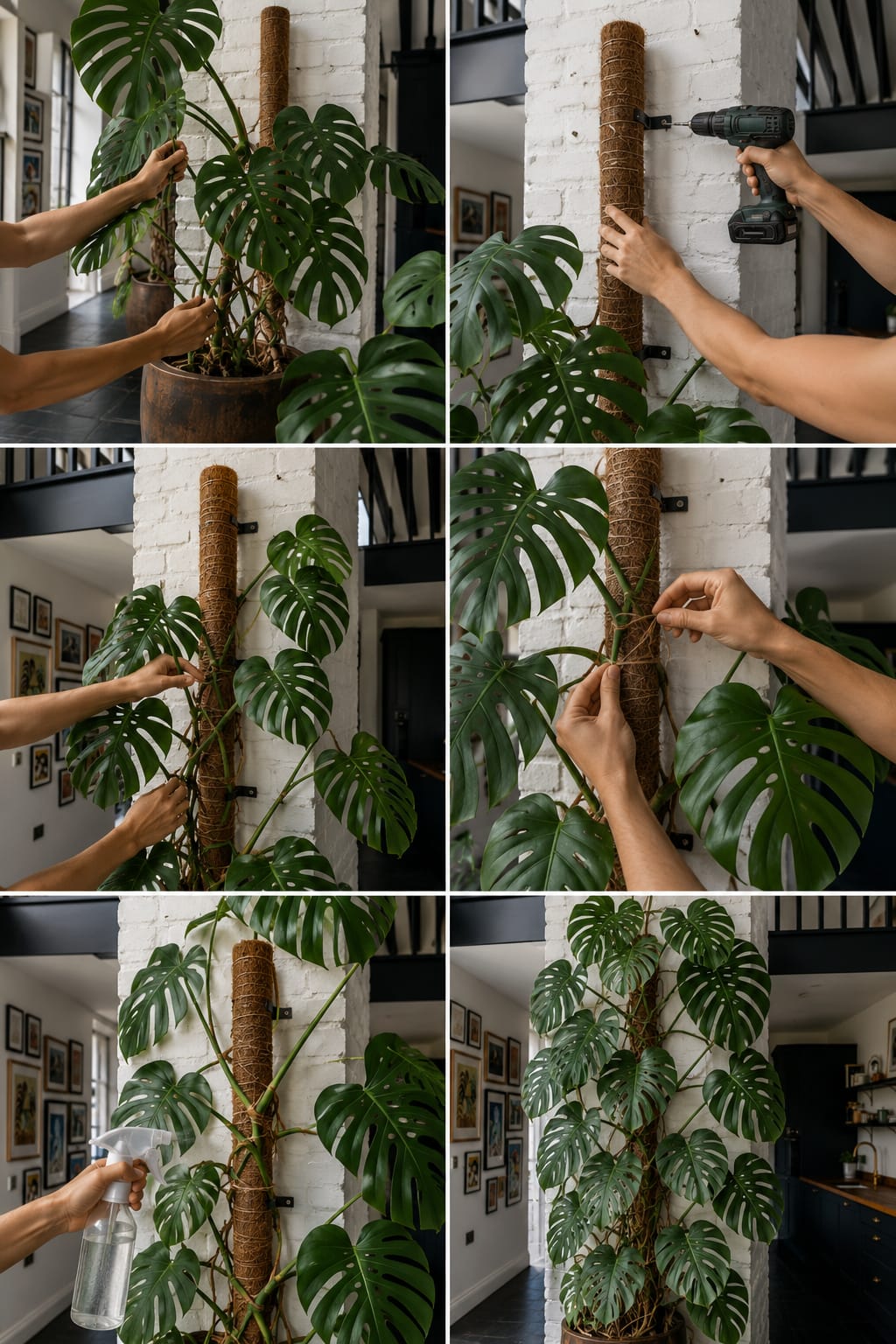
Repotting a Climbing Monstera
A Monstera trained on a pole or wall support can be harder to repot than a small unsupported plant. This is why planning matters. The plant should be placed in a pot that is stable and large enough to hold the support securely. A heavy ceramic planter or strong nursery pot inside a decorative cachepot can help prevent tipping.
Repotting is usually needed when roots fill the pot, water runs through too quickly, soil becomes compacted, or the plant becomes top-heavy. During repotting, the support should be handled carefully so stems do not snap. If the pole is inside the pot, it may need to move with the root ball. If the support is wall-mounted, the plant may need to be untied partially before repotting.
A fresh chunky mix should be used to support root health. The plant should be placed at the same depth as before, and the support should remain stable. After repotting, watering should be careful and the plant should be protected from stress. A large climbing Monstera may need time to adjust after being disturbed.
Indoor Decor Value
A wall-trained Monstera has strong decorative value because it combines natural growth with interior architecture. The large leaves can soften brick, concrete, white walls, wood panels, and modern kitchen or living room spaces. The plant brings vertical greenery, which makes the room feel taller, fresher, and more connected to nature.
In a living room, a climbing Monstera can become a dramatic green feature beside a sofa, near a window, or along an accent wall. In a dining area, it can create a relaxed tropical mood. In a home office, it can form a beautiful background for video calls and make the space feel calmer. In a loft or hallway, it can fill height that would otherwise look empty.
The planter matters as much as the plant. A large terracotta pot, stone-effect planter, black ceramic container, or rustic metal pot can change the mood of the display. A natural coco pole creates a warm organic look, while a metal trellis can feel more modern. The best styling choice depends on the room, but the plant should always remain easy to water, inspect, and maintain.
Office and Commercial Styling
Monstera is highly valuable in commercial interior landscaping because it creates a strong biophilic design effect. A mature climbing Monstera can make reception areas, creative studios, boutique interiors, wellness spaces, restaurants, and modern offices feel more alive. It adds natural texture and large-scale greenery without needing many small plants.
For professional spaces, the climbing system must look clean and safe. Wall brackets should be neat, ties should be discreet, and the support should match the interior style. Loose string, wet walls, messy soil, or unstable poles can reduce the premium look. A professional plant display should feel intentional and well-maintained.
Maintenance access is also important. Staff or plant-care professionals should be able to water, prune, clean leaves, and adjust ties without difficulty. A Monstera wall can look luxurious, but it should not be installed in a way that makes routine care impossible. Good design considers both beauty and long-term plant health.
Product and Tool Guide
Helpful materials for training a Monstera include a sturdy moss pole, coco coir pole, wooden plank, trellis, wall brackets, soft plant ties, jute string, clean pruning shears, a chunky aroid potting mix, a stable planter, and a watering can with good control. A moisture meter can help beginners avoid overwatering, especially in large pots. A humidifier may help in dry rooms.
A drill and wall anchors may be needed for a wall-mounted support, but the right hardware depends on the wall type. Brick, drywall, plaster, concrete, and wood all need different installation methods. If the plant is large or the support is heavy, the installation should be strong enough to hold future growth, not just the current plant.
Leaf cleaning tools are also useful. A soft cloth can remove dust and keep the leaves glossy. Clean leaves look better and can receive light more efficiently. Leaf shine products are usually unnecessary and may leave residue. The best premium look comes from healthy leaves, natural shine, and a clean support system.
Care Timeline After Training
During the first day after training, the plant should be checked for broken stems, tight ties, and unstable support. The stems should sit naturally against the pole or trellis. If anything looks forced, the tie should be loosened or repositioned. The plant should not be moved into harsh sun after training because stressed stems and leaves may need time to adjust.
During the first week, the plant should be monitored for wilting, leaning, or ties slipping. The soil moisture should be checked normally. The plant should not be overwatered just because it has been trained. Support training changes the plant’s shape, not its basic watering needs.
After two to four weeks, new growth may begin to follow the support. Aerial roots may move toward the pole if the surface is suitable. Ties can be adjusted as needed. After several months, the plant may appear more upright, fuller, and better integrated into the room design. Long-term success depends on regular maintenance, good light, and stable care.
Professional Styling Note
In high-end indoor horticulture, Monstera is valued because it creates a bold tropical statement with large sculptural leaves. When trained upward, it becomes even more useful for luxury interior architecture, biophilic office design, premium apartment styling, loft decor, and property presentation. It can turn a simple wall into a living green feature.
However, a premium Monstera wall must look controlled. The support should be secure, the ties should be neat, the pot should be stable, and the leaves should be clean. A messy climbing setup can make the plant look neglected instead of luxurious. Good styling depends on both plant health and visual order.
A well-trained Monstera does not need to look artificial. It should still have a natural shape, with stems guided gently and leaves facing the light. The best result is a balance between wild tropical growth and clean interior design. With patience, the plant can become one of the strongest decorative features in the room.
Final Thoughts
Training a Monstera to climb indoors is one of the best ways to support stronger growth, larger leaves, and a cleaner decorative shape. The plant naturally wants to climb, and a stable moss pole, coco coir pole, trellis, or wall-mounted support can help guide that habit in a safe and attractive way. The stems should be tied gently, aerial roots should be handled carefully, and the support should be strong enough for future growth.
The most important foundations are still proper plant care. Monstera needs bright indirect light, a chunky well-draining potting mix, controlled watering, moderate humidity, and regular maintenance. Training alone will not create a healthy plant if the roots are wet, the room is too dark, or the support is unstable. A strong climbing display begins with healthy roots and continues with careful shaping.
With the right setup, a Monstera can become a stunning living wall accent for living rooms, loft interiors, modern apartments, home offices, entryways, creative studios, commercial interior landscaping, luxury home staging, and polished property presentation. A secure support, clean ties, healthy leaves, and thoughtful placement can turn this tropical houseplant into a dramatic vertical feature that brings natural beauty and premium indoor greenery into the space.