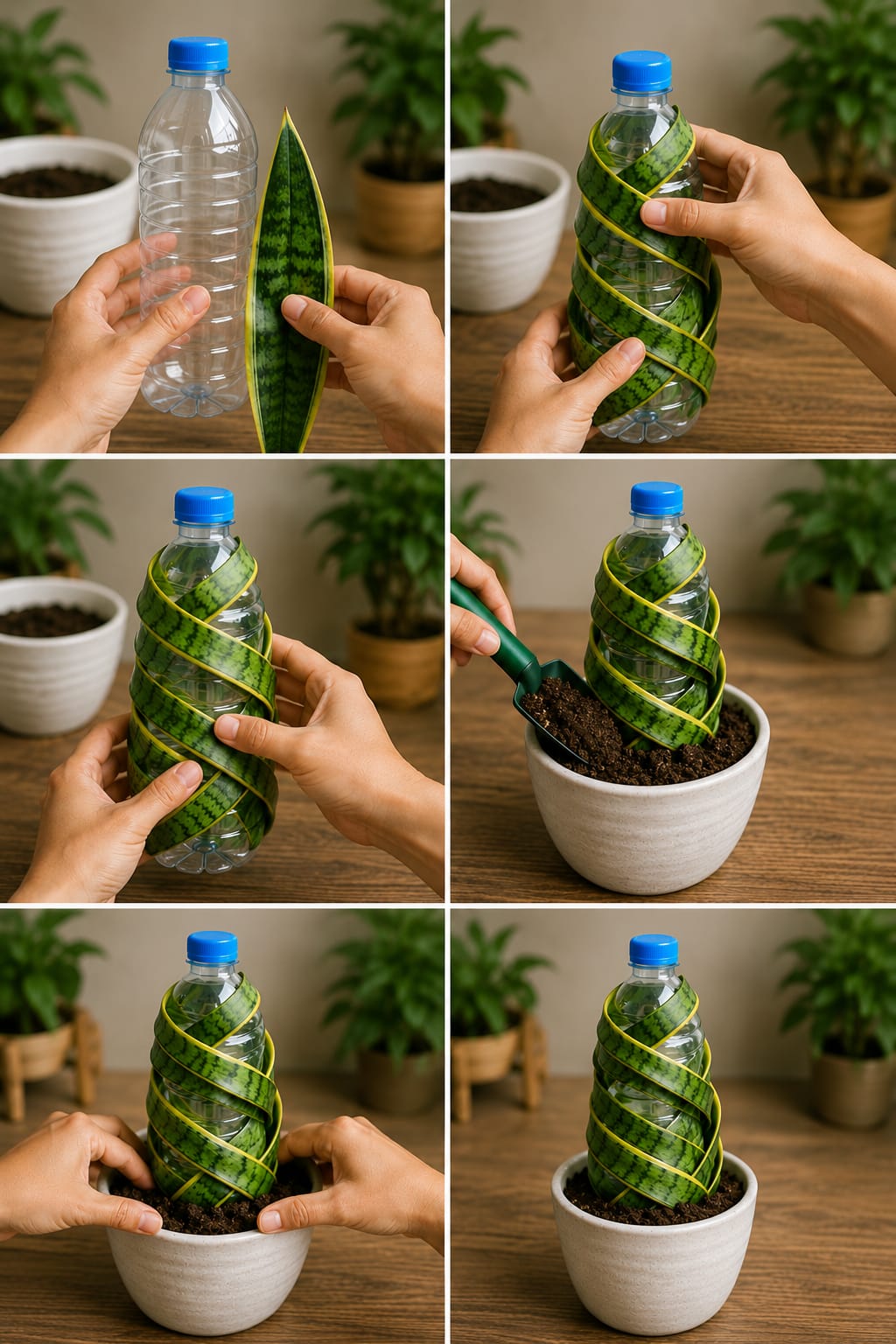
How Long Will the Display Last?
If the leaves are healthy, supported gently, and not overwatered, the display can last a long time. Snake plant leaves are durable. However, if the leaves were cut without roots, the display depends on whether they root successfully. Rooted divisions will last much longer and grow more reliably.
Over months, the plant may change shape. Leaves may loosen, new pups may appear, or older leaves may age. This is normal. A living plant display is never completely frozen in time. You may need to adjust ties, remove damaged leaves, or refresh the soil later.
When to Avoid This Project
Avoid this method if your snake plant is already weak, yellowing, mushy, or recovering from root rot. A stressed plant should not be shaped or bent. It needs basic care first. Also avoid this project during cold weather if your room is chilly, because snake plants recover more slowly in cold conditions.
Do not try this with very expensive or rare snake plant varieties unless you are confident. Start with a common healthy plant first. This way, you can learn how much the leaves can bend without risking a treasured specimen.
A Safer Alternative for Beginners
If you love the spiral look but do not want to risk damaging a real leaf, you can create a similar decorative effect by arranging multiple small snake plant pups around a central bottle without bending them tightly. Place the pups at slight angles around the support so they create a visual twist. This gives a spiral impression while keeping each leaf more natural.
You can also use a rosette snake plant variety, such as Bird’s Nest Snake Plant, if you prefer a sculptural shape that forms naturally. Rosette varieties create layered growth without needing a bottle support.
Final Care Routine
After the spiral display is finished, keep the plant in bright indirect light and let the soil dry completely between waterings. Check the hidden wrapped areas regularly. Keep the leaves dry, avoid misting the spiral, and do not fertilize immediately after shaping. Wait until the plant looks stable and healthy before feeding lightly during the growing season.
Use a weak cactus or houseplant fertilizer only during spring or summer. Snake plants do not need frequent feeding. Too much fertilizer can cause weak growth or salt buildup in the soil. A small amount once or twice during the warm season is usually enough.
Final Thoughts
The snake plant bottle spiral is a creative indoor plant styling idea that turns a simple houseplant into a living sculpture. It looks modern, unusual, and highly decorative. The green patterned leaves and yellow borders create a natural ribbon effect around the bottle, making the display look almost handmade and artistic.
The most important part is to protect the plant while creating the design. Snake plants are strong, but their leaves are not vines. They should not be forced, twisted sharply, tied tightly, or kept wet against plastic. Use gentle curves, soft support, dry leaves, airy soil, and careful watering.
If you want the display to last, use rooted divisions whenever possible. If you use cut leaves, give them time to callus and root slowly. Keep the pot in bright indirect light and avoid overwatering. With patience and gentle handling, this bottle spiral snake plant can become a beautiful conversation piece that adds style, greenery, and creativity to your indoor garden.