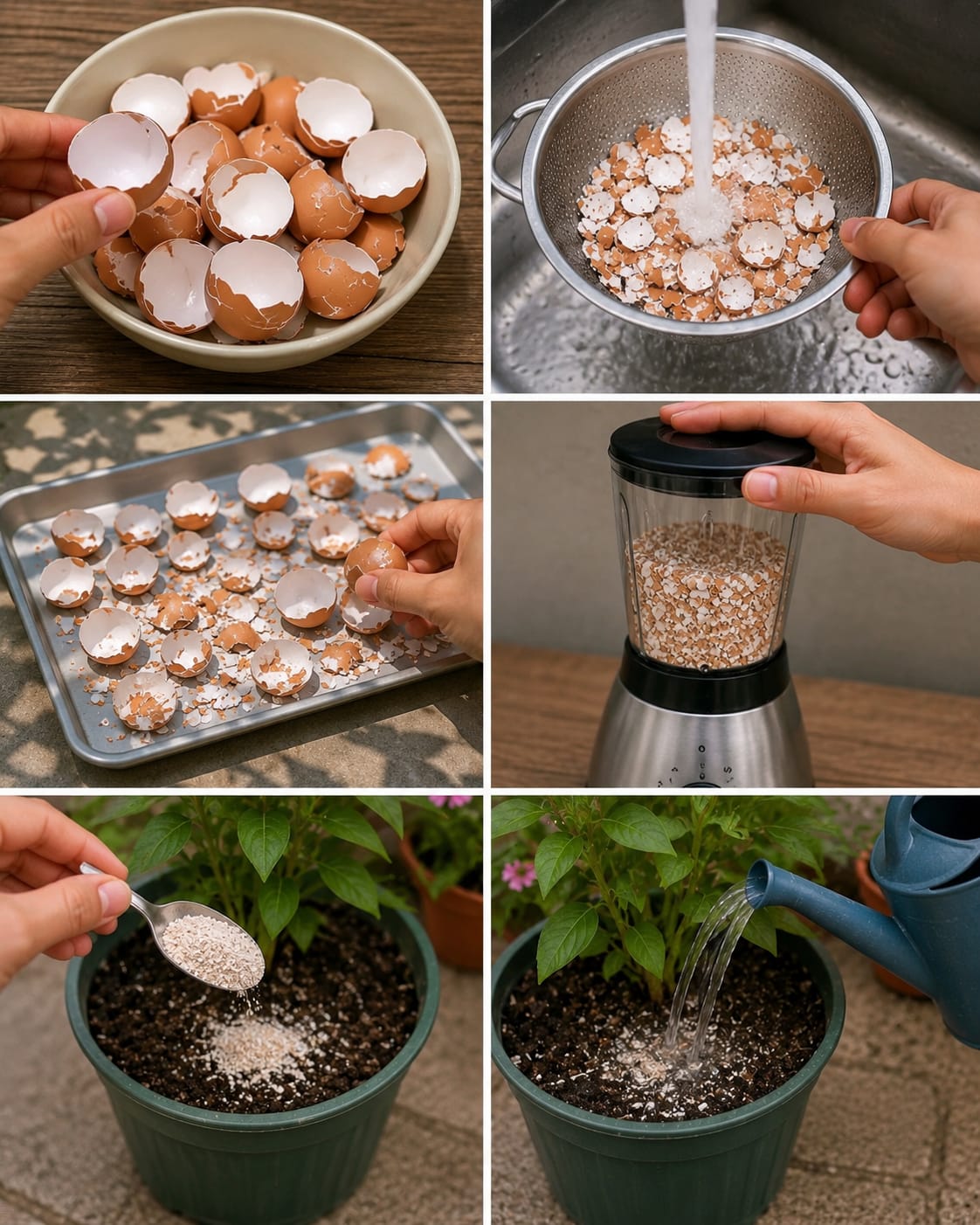
Eggshells are one of the easiest kitchen scraps to reuse in the garden. Instead of throwing them away, you can clean, dry, crush, and turn them into a gentle soil amendment for potted plants, vegetables, herbs, and flowers. The image shows a clear step-by-step process: collect eggshells, rinse them, dry them, crush or blend them into small pieces, sprinkle the powder on the soil, and water it in.
This method is popular because eggshells contain calcium carbonate. Calcium is an important plant nutrient that helps support strong cell walls and healthy growth. However, eggshells are not an instant miracle fertilizer. They break down slowly in soil, so they work best as a long-term soil support, not a fast rescue treatment.
The safest rule is simple: use eggshell powder lightly. Too much can build up on the soil surface, attract pests if not cleaned well, or change the soil balance over time. Clean, dry, and finely crushed eggshells are much better than large dirty shell pieces.
What Eggshells Do for Plants
Eggshells mainly add calcium to the soil. Calcium helps plants build strong tissues. It can be useful for tomatoes, peppers, eggplants, leafy greens, herbs, and many flowering plants. But calcium deficiency is not always caused by a lack of calcium in the soil. Sometimes it happens because watering is uneven, roots are damaged, or soil pH is not right.
This means eggshells can help as part of a good care routine, but they should not replace proper watering, drainage, light, and balanced fertilizer.
What You Need
- Clean eggshells
- Colander or strainer
- Baking tray
- Blender, grinder, or rolling pin
- Small spoon
- Watering can
- Healthy potted plant or garden bed
Step 1: Collect Eggshells
Save eggshells after cooking. Brown or white shells both work. Try to remove leftover egg from inside the shell because raw egg residue can smell bad and attract insects.
Step 2: Rinse the Shells
Place the shells in a strainer and rinse them under running water. This removes sticky egg residue. Clean shells are safer for indoor plants because they are less likely to smell or attract pests.
Step 3: Dry the Eggshells
Spread the rinsed eggshells on a tray. Let them dry completely. You can air-dry them for a day or place them in a low oven for a short time until they are dry and brittle.
Dry shells crush more easily and store better. Never store wet shells in a closed container because they can smell or grow mold.
Step 4: Crush or Blend Into Powder
Large eggshell pieces break down very slowly. For best results, crush them as finely as possible. A blender, coffee grinder, food processor, mortar and pestle, or rolling pin can work.
Best Texture
- Fine powder for potted plants
- Small crushed pieces for garden beds
- Avoid huge shell halves on soil
Step 5: Sprinkle Lightly on Soil
Add a small amount of eggshell powder around the plant. For a medium potted plant, use about 1 teaspoon. For a larger outdoor container, use 1 to 2 tablespoons. Do not cover the whole soil surface with a thick white layer.
Keep the powder away from the direct base of soft stems. Sprinkle it around the root zone and gently mix it into the top layer of soil if possible.
Step 6: Water It In
After adding the powder, water the soil lightly. This helps settle the eggshell powder into the top layer. It will still break down slowly, but watering helps it begin mixing with the soil.
How Often to Use Eggshell Powder
Eggshell powder should not be used every day or every week. It is a slow soil amendment. For most potted plants, once every 1 to 2 months during active growth is enough. For garden beds, you can mix it into the soil before planting or add a light amount during the season.
Best Plants for Eggshell Powder
- Tomatoes
- Peppers
- Eggplants
- Beans
- Leafy greens
- Herbs
- Roses
- Geraniums
- Peace lilies, lightly
- Snake plants, very lightly
Plants That Need Caution
Some plants prefer more acidic soil. Eggshells may slowly raise soil alkalinity if used too much. Use very small amounts or avoid frequent use for acid-loving plants.
- Azaleas
- Blueberries
- Gardenias
- Camellias
- Hydrangeas grown for blue flowers
Eggshells for Tomatoes and Peppers
Many gardeners use eggshells for tomatoes and peppers because calcium is linked with strong fruit development. However, blossom end rot is often caused by uneven watering, not just low calcium. If tomatoes develop black sunken bottoms, check watering first.
Better Tomato Routine
- Water consistently
- Mulch the soil
- Avoid letting soil swing from dry to soaked
- Use balanced fertilizer
- Add eggshell powder as slow calcium support
Can Eggshells Stop Blossom End Rot?
Eggshells may help support calcium over time, but they do not fix blossom end rot instantly. Since eggshells break down slowly, they are better added before planting or early in the season. For quick correction, gardeners usually need to improve watering and root health first.
Can You Put Eggshells Directly in Plant Pots?
Yes, but they should be cleaned, dried, and crushed first. Large shell pieces in indoor pots can look messy and may take a very long time to break down. Fine powder is better for houseplants.
Eggshell Tea for Plants
Some gardeners soak crushed eggshells in water and use the liquid on plants. This is called eggshell tea. It may release a small amount of minerals, but it is still mild. It should not be treated like a strong fertilizer.
Simple Eggshell Tea Method
- Rinse and dry eggshells.
- Crush them into small pieces.
- Add them to a jar of water.
- Let sit for 24 to 48 hours.
- Strain the liquid.
- Water the soil lightly.
Do not use smelly eggshell water. If it smells bad, throw it away and clean the container.
Eggshell Powder vs. Eggshell Pieces
Powder works better than large pieces because it has more surface area and breaks down faster. Large shell halves may remain in the soil for months. If your goal is calcium support, grind the shells as finely as possible.
Can Eggshells Replace Fertilizer?
No. Eggshells mainly provide calcium. Plants also need nitrogen, phosphorus, potassium, magnesium, and trace minerals. Use eggshells as a supplement, not as the only plant food.
Common Mistakes to Avoid
- Adding dirty eggshells with egg residue
- Using too much powder at once
- Leaving large shell halves in small pots
- Expecting instant plant recovery
- Using eggshells instead of balanced fertilizer
- Adding them too often to acid-loving plants
- Putting thick powder directly against stems
- Ignoring watering problems
Signs You Are Using Too Much
- White crust building on soil
- Soil becoming compacted on top
- Poor water absorption
- Plant still yellowing despite treatment
- Soil pH becoming too alkaline
How to Store Eggshell Powder
After drying and grinding, store eggshell powder in a clean dry jar. Keep the lid closed and store it in a cool dry place. Label the jar so it is not confused with kitchen ingredients.
Continue to Page 2
Continue to page 2 for more details about this article and the key points many readers miss on the first page.