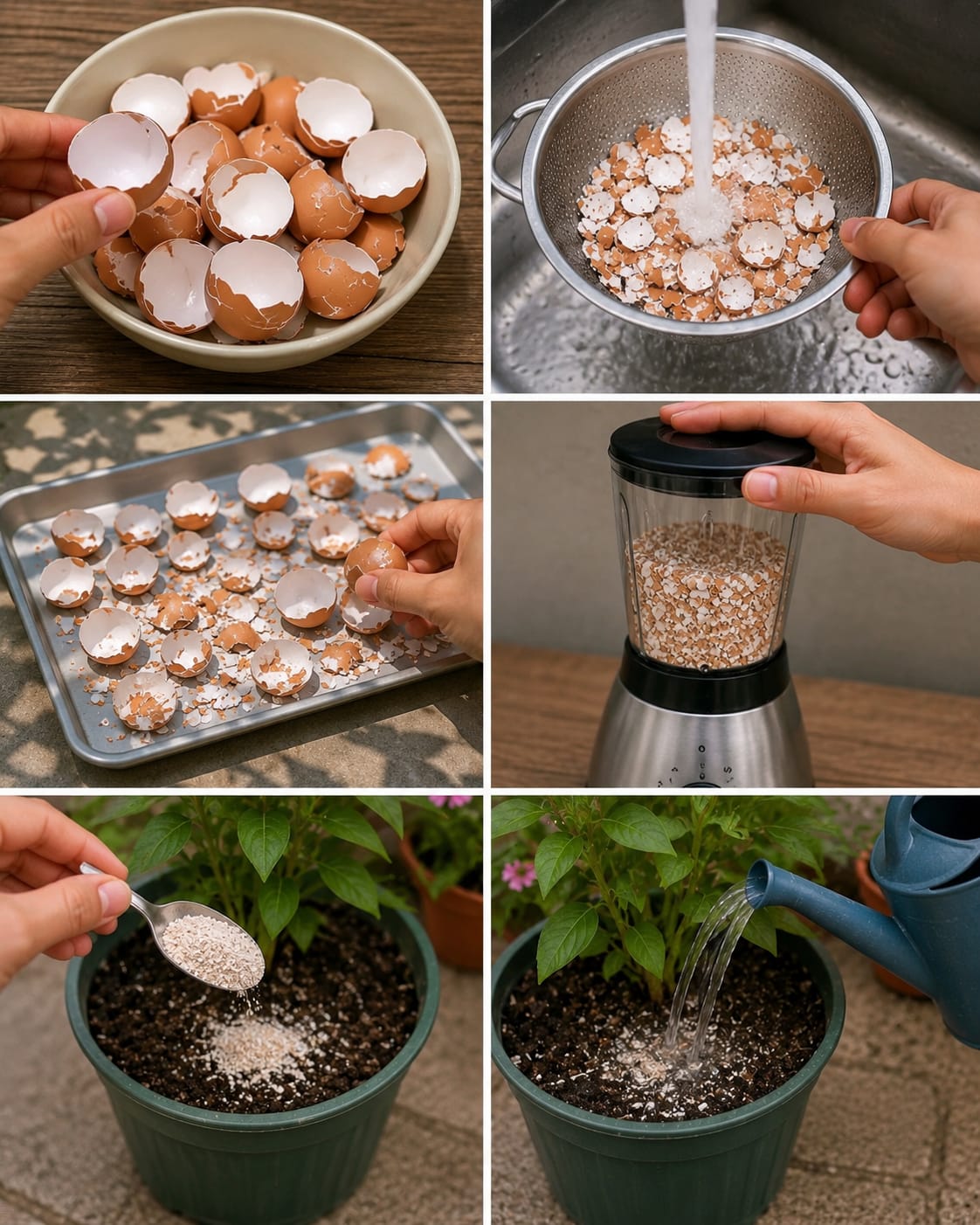
Simple Eggshell Fertilizer Summary
- Collect eggshells after cooking.
- Rinse them well.
- Dry them completely.
- Crush or blend into powder.
- Sprinkle lightly on soil.
- Water gently.
- Repeat only occasionally.
Frequently Asked Questions
Are eggshells good for plants?
Yes, eggshells can be useful because they contain calcium carbonate. They work slowly and should be used as a soil supplement.
Can I use eggshells for indoor plants?
Yes, but clean, dry, and grind them first. Use only a small amount in pots.
How often should I add eggshell powder?
For most potted plants, once every 1 to 2 months during active growth is enough.
Do eggshells work immediately?
No. Eggshells break down slowly, especially if the pieces are large.
Can eggshells burn plants?
Eggshells are usually gentle, but too much powder can affect soil balance. Use lightly.
Should I bake eggshells before using them?
You can dry them in a low oven to remove moisture and make them easier to grind.
Can eggshells prevent blossom end rot?
They may support calcium over time, but blossom end rot is often linked to uneven watering. Fix watering first.
Can I mix eggshell powder into potting soil?
Yes. Mix a small amount into soil before planting for slow calcium support.
Final Thoughts
Eggshell fertilizer is a simple, natural, and budget-friendly way to reuse kitchen waste in the garden. When cleaned, dried, and ground into powder, eggshells can add slow-release calcium to soil and support healthier plant growth over time.
The key is moderation. Eggshells are not an instant cure, and they do not replace balanced fertilizer or proper watering. Use them lightly, mix them into the soil, and keep your plants in the right light, pot, and soil conditions.
With steady care, eggshell powder can become a helpful part of your gardening routine. It is simple, safe when used correctly, and a smart way to turn everyday kitchen scraps into plant support.